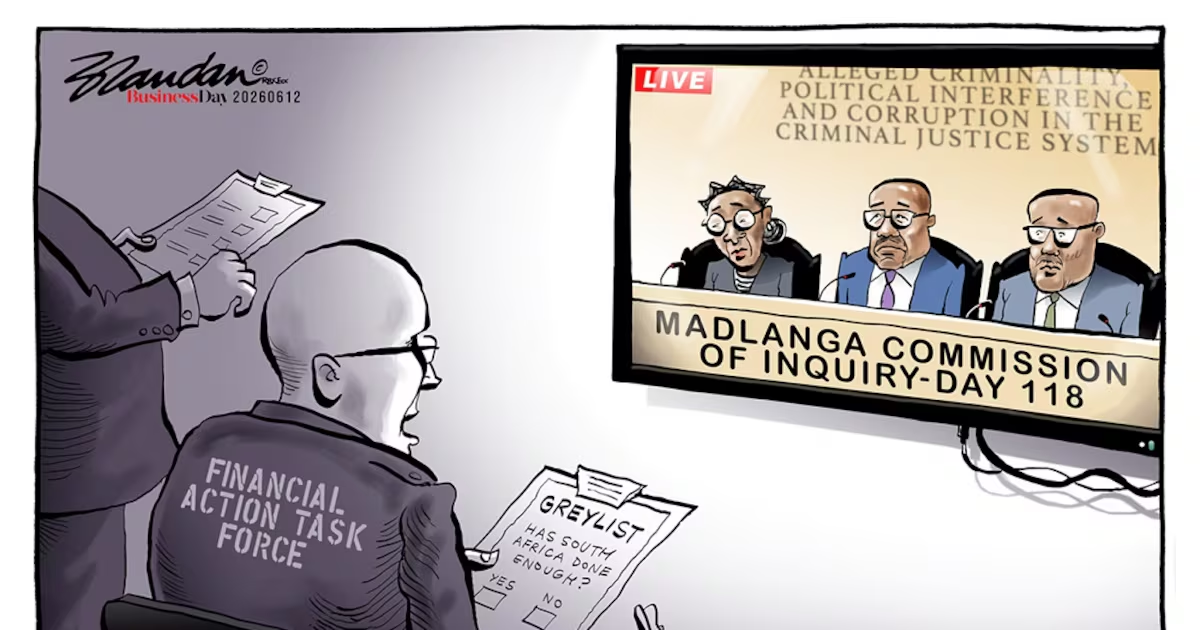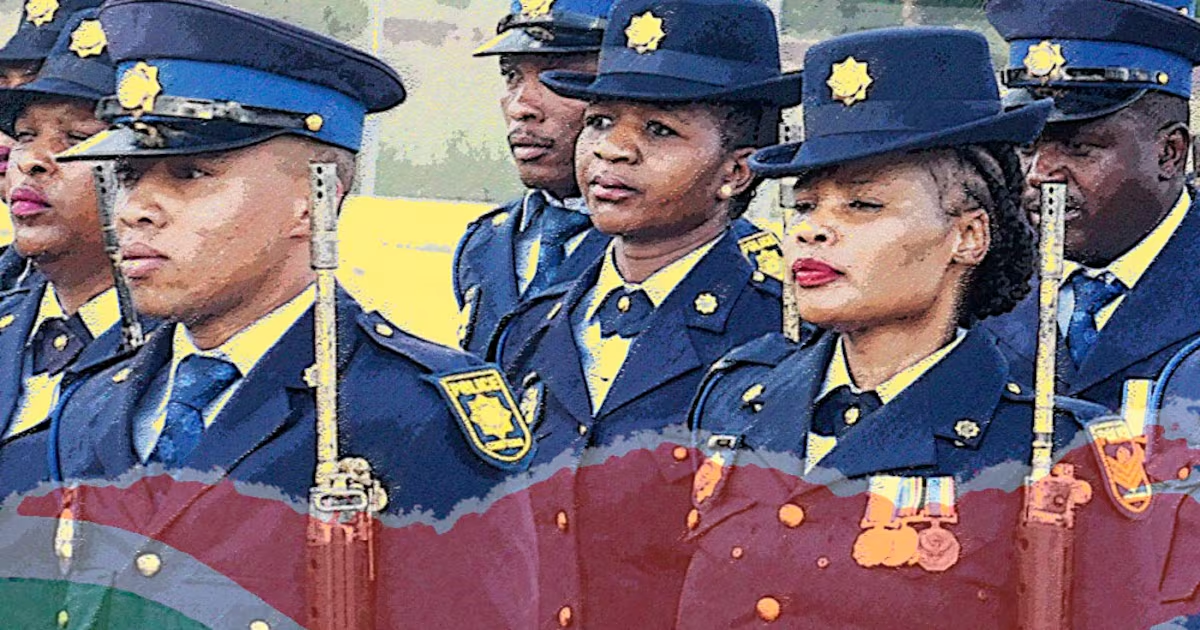
It was with a huge sigh of relief in October last year that we greeted the news that the plenary of the Financial Action Task Force (FATF) had decided to lift the greylisting it had imposed on South Africa more than two years before. FATF sets global standards for regimes to combat money-laundering, terrorism financing and counter-proliferation financing. It found after an extended evaluation that South Africa’s regime was deficient on two fronts ― its inadequate legislative and regulatory system and the lack of effectiveness of its police investigations, prosecutions and convictions of serious financial crimes as well as the recovery of assets. The government mobilised all its resources and set up a dedicated task force involving numerous entities to address the weaknesses, promulgating an omnibus law which, among other things, tightened up the reporting of beneficial ownership of companies and trusts. But effectiveness in implementation was a key weakness that was more difficult to overcome and took longer to address. Lifting the greylisting was not a permanent reprieve, however. FATF would continue monitoring South Africa to see if the noted improvements were sustained over a prolonged period. It is now undertaking another evaluation of South Africa’s regime, which will culminate in a report to the October 2027 FATF plenary. (Brandan Reynolds) In anticipation, the National Treasury has tabled another omnibus bill in parliament to address remaining legislative deficiencies and is confident that South Africa will achieve technical compliance on sufficient legislation and regulation. It is hoping that the bill can be adopted before the November deadline for FATF’s technical compliance assessment. However, the evaluation will not be plain sailing. As the leader of South Africa’s delegation to FATF and consultant to the National Treasury Ismail Momoniat told parliament’s finance committee this week the country’s ability to investigate serious financial crimes such as money-laundering has been compromised by the close ties between the top echelons of the police force and organised crime syndicates as exposed during proceedings of the Madlanga commission of inquiry. This he warned posed a danger for South Africa’s assessment by the FATF. The commission has heard how crime investigations have been subverted by senior police officers for personal enrichment and in return for pay-offs. The National Prosecuting Authority (NPA) and the Investigating Directorate Against Corruption have also not covered themselves in glory in prosecuting high-profile corruption cases that emerged from the years of state capture. Hopefully the NPA under recently appointed head Andy Mothibi will put it on a more successful trajectory. He certainly achieved gains in asset recovery as head of the Special Investigating Unit. It could rightfully be argued that the Madlanga commission, in shining a light on the criminal behaviour of police officers, is laying the foundation for the system to be cleaned up and that this would be viewed favourably by FATF. However, FATF takes a five-year view of the effectiveness in implementing the law of the land. Furthermore, re-establishing the police force on a sound, ethical footing will take time, leaving a vacuum in the interim in a situation where fraud, corruption and money-laundering are so pervasive. South Africa’s greylisting caused reputational and financial damage, raised the cost of doing business, imposed more onerous due diligence obligations and made cross-border correspondent banking relationships more difficult. It is not something we can afford to have again and every effort must be made to restore the credibility of the police force under a permanent minister of police as soon as possible.
EDITORIAL | Greylisting cloud hovers over SA
FATF evaluates risks associated with police exposures made at the Madlanga commission
578 words~3 min read