Insider Brief
Rice University researchers developed new controls for a trapped-ion quantum simulator that allow independent tuning of temperature and dissipation in engineered molecular environments.
The system uses controlled heating signals and cooling lasers to study how thermal conditions affect molecular electron transfer processes.
The researchers say the added control over ion thermal states expands the range of experiments possible with trapped-ion quantum simulators.
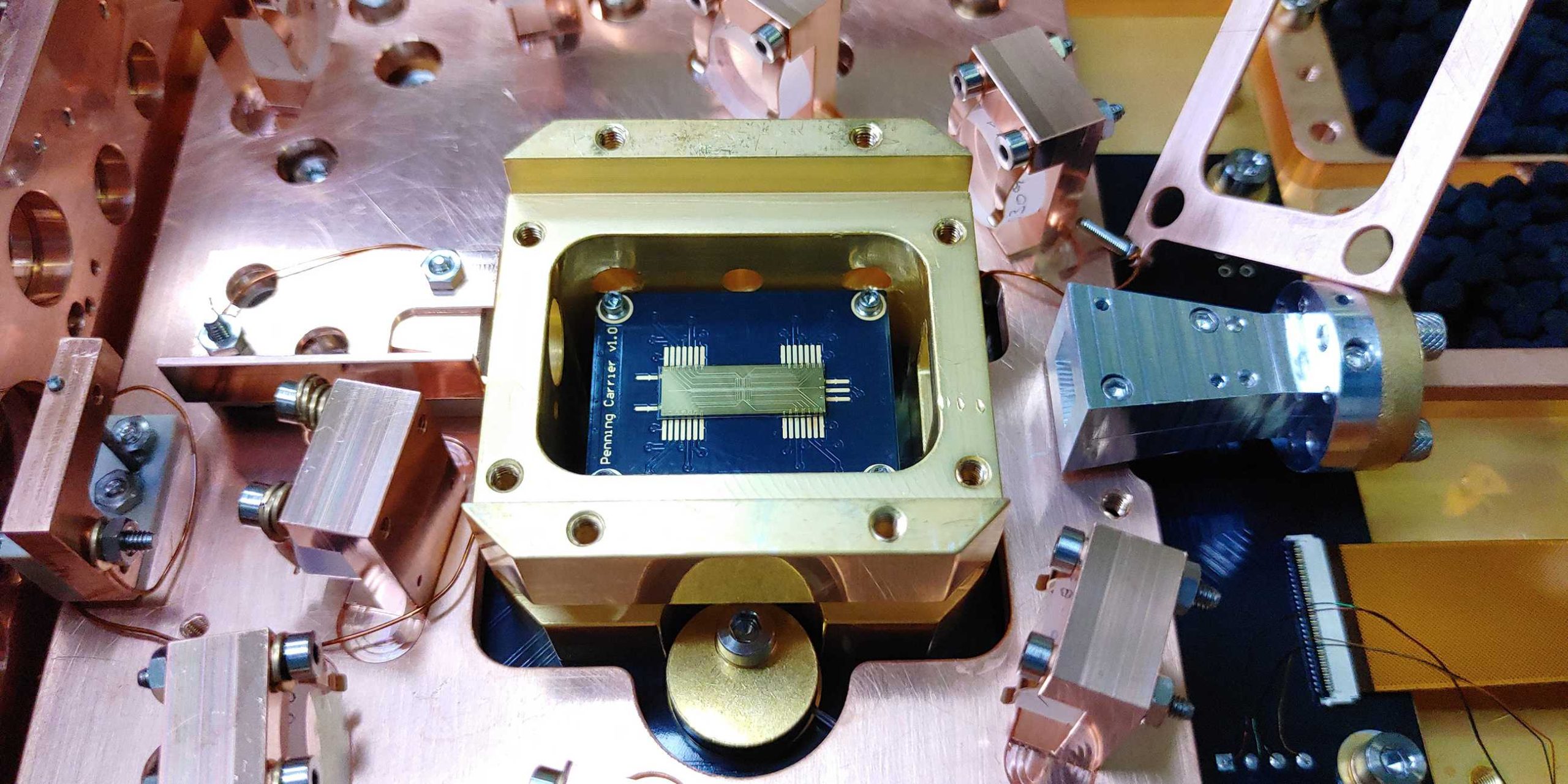
Press release – Rice University physicist Guido Pagano and his team use a trapped-ion quantum simulator, which involves manipulating an ion crystal trapped in a vacuum system with electromagnetic fields, to study molecular electron transfer, or the way electrons travel from one molecule to another. While they have been able to precisely control many variables, previous work was limited to two types of environments: one that drives the vibrations of molecules to their ground state, a very cool and stable state, or one that continually heats up the system. Now, in a study recently published in Physic Review Letters, they unveiled a new, two-knob addition that allows them to individually control the temperature and dissipation of the engineered environment for vibrational degrees of freedom in their simulator.