Story audio is generated using AI
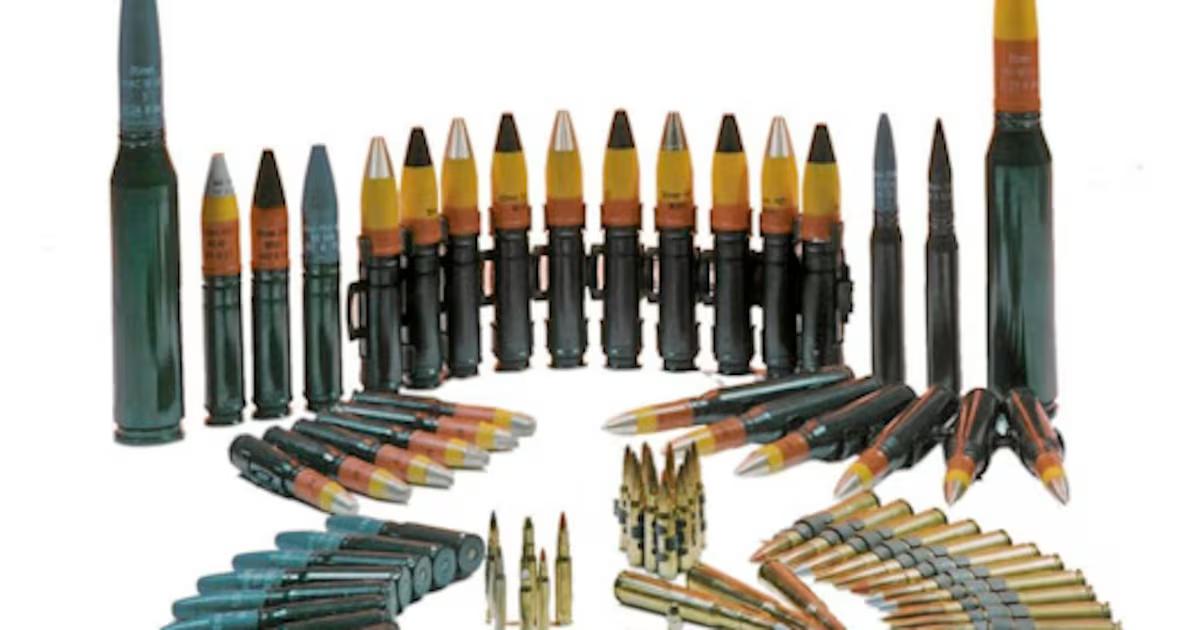
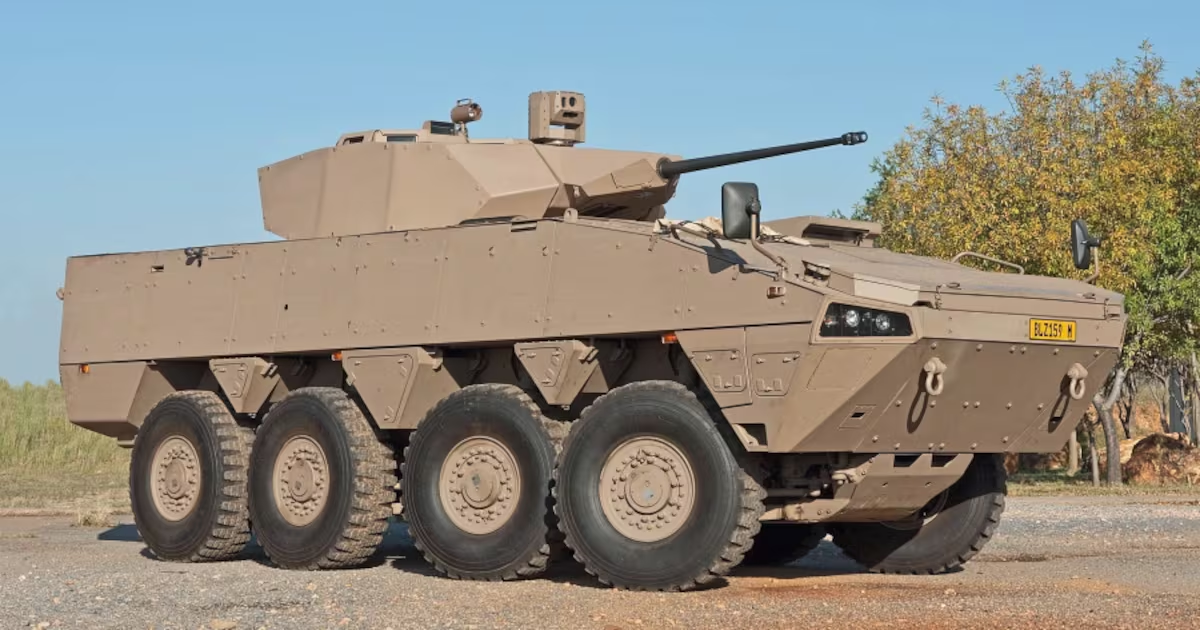
State-owned Armaments Corporation of South Africa (Armscor) is looking to rope in consultants to review its intellectual property (IP) portfolio, technical expertise and facilities as it develops a profitable business case.Part of this process could include licensing its IP. According to DefenceWeb, an Armscor study in 2016 found that its IP portfolio was worth more than R400bn if industrialised.This is as the country’s defence industry stands at the crossroads and toys with private sector partnerships.Armscor, the procurement arm of the department of defence, has gone to market in search of consultants to identify underutilised assets and benchmark the company’s opportunities against comparable defence procurement and ultimately draft a three-year implementation plan. “Armscor seeks to systematically expand its value proposition by pursuing sustainable, noncore revenue streams that leverage its unique assets, accumulated expertise and specialised infrastructure, without compromising its mandated defence obligations or national security responsibilities,” the request for proposal reads. “This will enable Armscor to attract and secure new customers, generate sustainable income streams and enhance long-term financial resilience.“The preferred bidder scope encompasses identifying revenue streams leveraging Armscor’s assets, assessing domestic and international opportunities, developing profitable business cases with financial viability … providing implementation recommendations, including partnerships and commercialisation strategies.” According to the request for proposal, the revenue generation opportunities Armscor is looking for are in the following areas:Research and development and IP licensing;Cybersecurity;Specialised facility leasing; Engineering support; andDefence export facilitation.“All reports, data, financial models and intellectual outputs produced under this assignment will be the property of Armscor,” the tender document reads.“The consultant must provide all underlying editable models and supporting assumptions to enable Armscor to review, update and reuse the outputs after completion of the assignment.” Armscor last month participated in a defence industry lekgotla, aimed at providing a strategic platform to diagnose structural challenges, identify critical interdependencies across the South African defence ecosystem and develop practical and collaborative solutions to strengthen the sector.Trade minister Parks Tau told the lekgotla that the country must confront the long decline of its defence industry after three decades of shrinking procurement, collapsing research funding, the loss of tens of thousands of jobs and an exodus of skills that will be hard to replace.Deputy defence minister Bantu Holomisa told the lekgotla that South Africa must explore innovative funding models and public-private partnerships to strengthen the country’s defence capability, warning that the SANDF cannot rely solely on additional allocations from the National Treasury to address growing infrastructure, equipment and modernisation challenges.South Africa’s defence force acquisition from the domestic industry fell to R850m in 2017 from R26.2bn in 1989/90.Read: Skills gone and not replaced: Tau urges hard reset to defence industryArmscor in its 2025 annual report said it has taken the lead in exploiting “several substantial export opportunities” as arms manufacturer Denel struggles to burnish its reputation in international markets following years of underperformance.Armscor’s primary clients are South Africa’s department of defence, the police and the Border Management Authority. Denel was spun off from Armscor in the early 1990s as a state-owned aerospace and military technology and arms manufacturing company under the department of public enterprises.Denel is also laying the groundwork for private sector players to invest in its equally troubled Pretoria Metal Pressings (PMP) plant, which manufactures ammunition that supports the operational needs of the SANDF and the police.Denel PMP, Africa’s largest ammunition manufacturer, traces its roots to 1934. The company has seen better days, including playing a key role in World War 2, where more than 45% of the .303 rounds used by the Allied Forces came from South Africa. However, like its parent company, PMP has decayed, losing the confidence of domestic and export markets. PMP manufactures small- and medium-calibre ammunition, detonics, brass products and power cartridges. Denel last month issued an expression of interest to test investor appetite, asking “suitably qualified strategic partners and investors” to submit their expressions of interest for partnership opportunities aimed at “modernising the manufacturing capabilities for the PMP brass foundry”.Denel, in the document, said it is exploring partnerships for technology upgrades and automation opportunities and for the brass foundry to reliably supply products to the PMP ammunition factory and meet other country requirements.Business Day