Nigeria’s economic reforms are restoring macroeconomic stability, but experts say success depends on creating jobs, raising incomes and improving living standards. SAMI TUNJI examines why the next reform phase must deliver tangible benefits for ordinary Nigerians
Three years into one of Nigeria’s most ambitious economic reform programmes in decades, the debate among policymakers is changing. The initial focus was on correcting deep macroeconomic distortions. Today, attention has shifted to a more difficult challenge: how can those reforms translate into higher incomes, decent jobs and better living standards for millions of Nigerians?
That question dominated discussions at the 7th Africa Emerging Markets Forum in Abuja, where central bankers, finance ministers, economists and development experts examined how African economies can navigate geopolitical tensions, shifting trade patterns, artificial intelligence and tighter global financial conditions. Rather than debating whether reforms were necessary, speakers concentrated on how governments could ensure that difficult policy decisions ultimately improve citizens’ welfare.
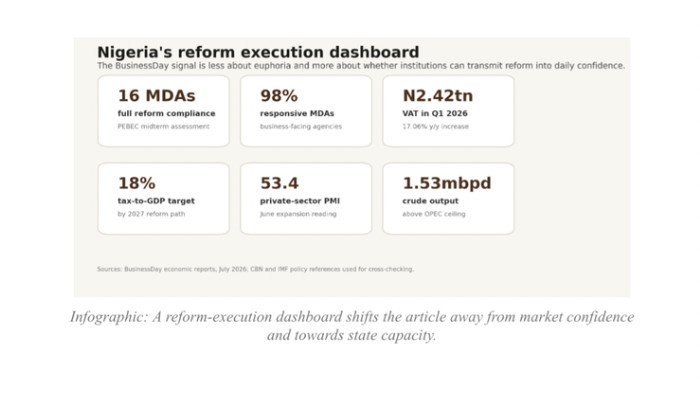
For Nigeria, the timing is significant. Since 2023, the Federal Government and the Central Bank of Nigeria have implemented major fiscal and monetary reforms, including the removal of petrol subsidies, foreign exchange market reforms, tighter monetary policy, banking sector recapitalisation and tax reforms. Official data indicate that some macroeconomic indicators are improving. Nigeria’s economy grew 3.89 per cent in the first quarter of 2026, external reserves remained above $50bn and inflation eased marginally to 15.91 per cent in June after three consecutive monthly increases. Meanwhile, the Monetary Policy Committee has retained the benchmark interest rate at 26.5 per cent in its effort to preserve price stability.