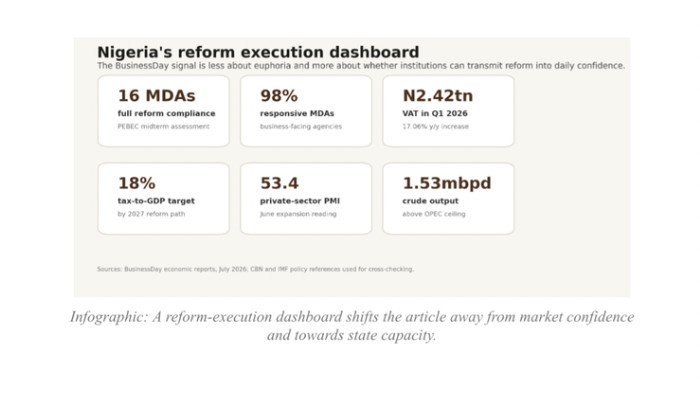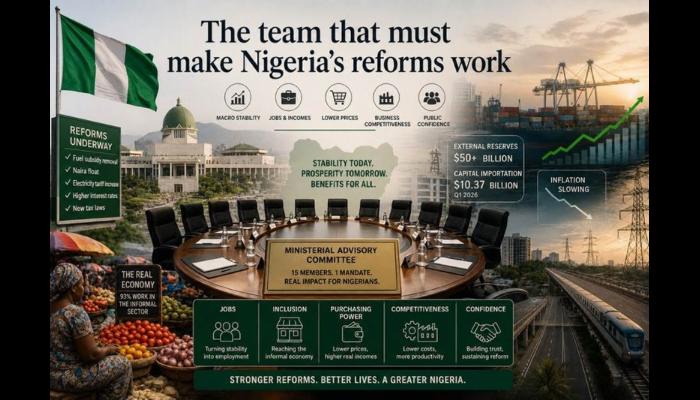
Nigeria’s economic debate has become strangely repetitive. Every few years, a new reform package is unveiled, markets react, economists argue, and attention shifts to implementation. Implementation is precisely where Nigeria’s development story has repeatedly stalled.
Successive administrations have launched programmes to diversify exports, stabilise the currency, improve tax collection, expand infrastructure and stimulate private investment. Despite these efforts, many of the country’s most persistent economic constraints remain remarkably familiar. The reason lies beyond policy itself. Nigeria has devoted considerable attention to changing economic rules while paying far less attention to strengthening the institutions responsible for enforcing them.
This distinction is more important than it first appears. Economic policy determines what governments hope to achieve; institutions determine whether those ambitions become reality. Where institutions are weak, even well-designed reforms struggle to produce lasting results. Where they are competent, ordinary policies often deliver extraordinary outcomes through consistency, credibility and effective execution.
Nigeria’s development debate rarely reflects this reality. Public discussion is dominated by inflation, exchange rates, fiscal deficits, debt levels and taxation. These are important indicators of economic performance, but they reveal outcomes rather than underlying capability. Long before inflation rises or investment slows, institutional weaknesses have already begun shaping those results through delayed implementation, fragmented regulation, administrative inefficiency and weak coordination across government.