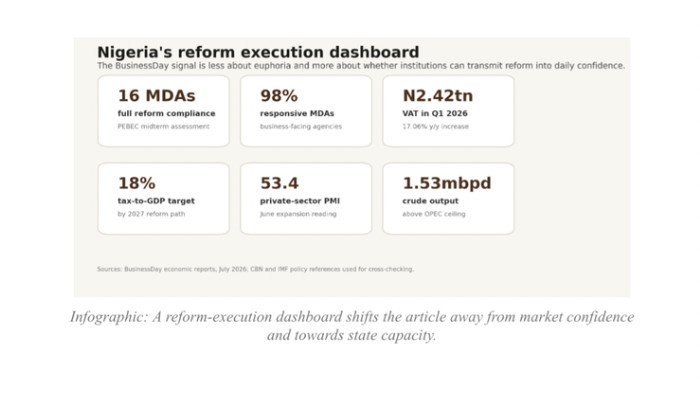
For years, economists, business leaders and policymakers have agreed that macroeconomic stability is essential for sustainable growth. Stable exchange rates, manageable inflation, fiscal discipline and investor confidence create the conditions for economic expansion. It is therefore encouraging that Nigeria’s recent reforms have attracted positive assessments from international institutions, suggesting that the economy is becoming more stable after years of structural distortions.
Indeed, stability alone does not guarantee prosperity. As the Centre for the Promotion of Private Enterprise (CPPE) has cautioned, an economy may improve on paper while millions of citizens continue to struggle with unemployment, rising living costs and declining purchasing power. The real test of any reform programme is whether it improves the lives of ordinary people.
Recent gains are evident. The foreign exchange market has become more stable, external reserves have improved, investor confidence has strengthened and capital inflows have increased. Many listed companies have also reported stronger financial results. These developments suggest that the reforms have restored a measure of confidence and predictability to the economy.