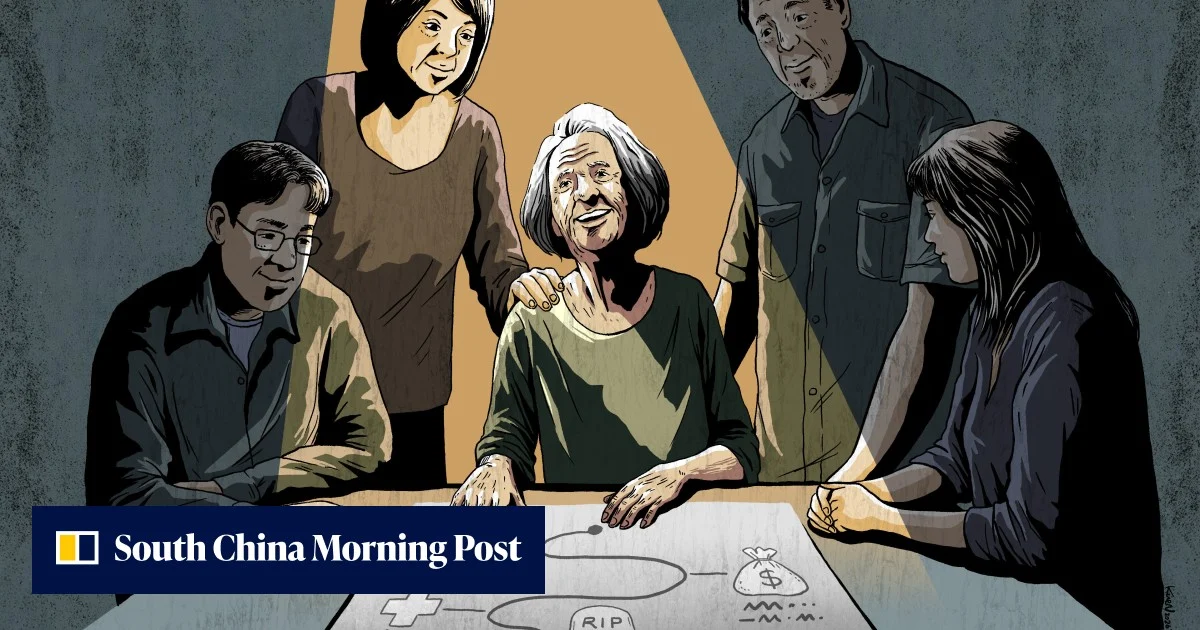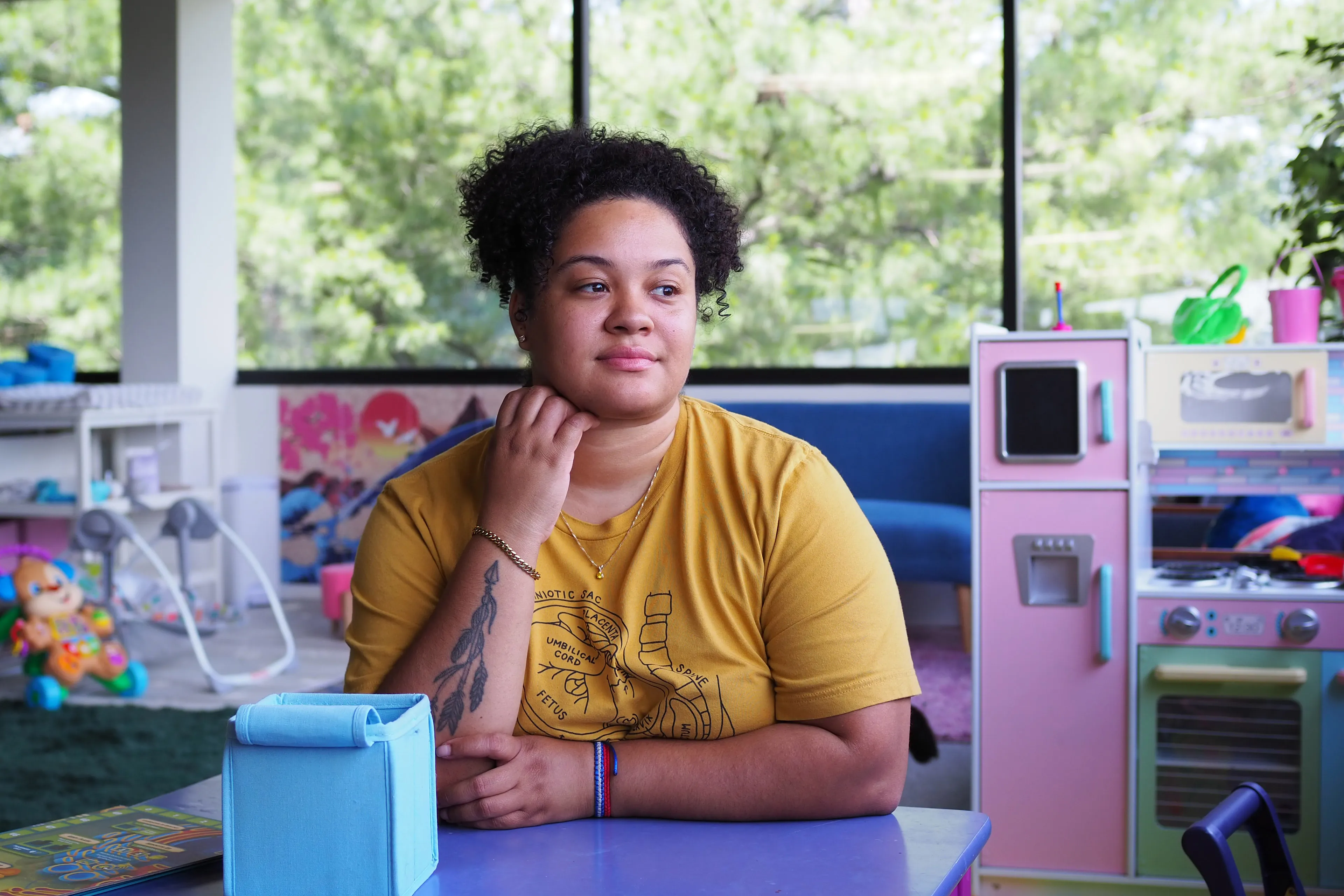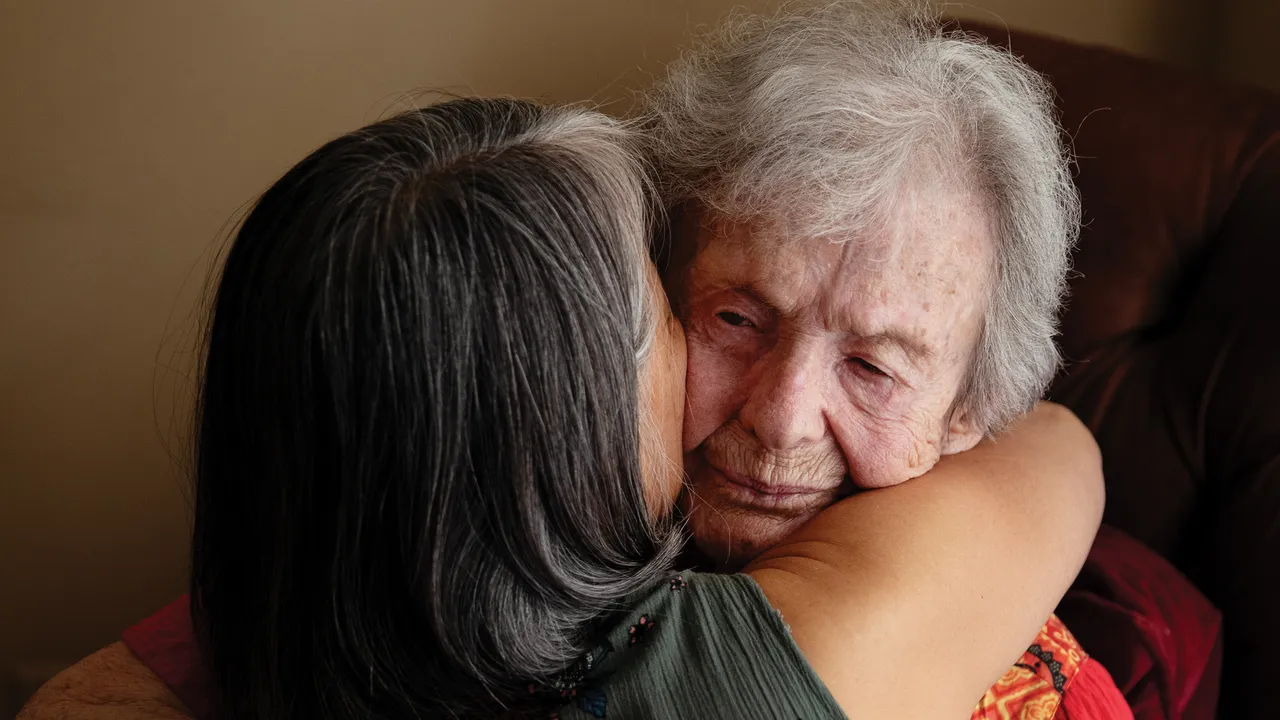
Virginia Chang with one of her clients, the hundred-and-one-year-old Eleanor.Photograph by Lauren Lancaster for The New YorkerIn this week’s issue, the staff writer Alexandra Schwartz reports on the rise of a new profession: the end-of-life doula. These workers help the dying plan their final moments, figuring out where they want to die and who should be there. They offer support throughout the process, allowing their clients space to reflect on their life and what it meant. “I’m not fixing what’s happening, at all,” one doula tells Schwartz. “But I’m not turning away.”Schwartz spent several months shadowing these doulas and exploring their work. We caught up on the phone to discuss the job, and how reporting this story changed her perspective on death.The following conversation has been edited and condensed.What exactly is a death doula?It’s a non-medical caregiver who attends to someone as they are reaching the end of life. A doula can help coördinate medical care and help someone understand a diagnosis and the course an illness might take. They can also help clients understand their end-of-life options, and help them come up with a death plan: Where do you want to be when you die? Who do you want to be there? What sounds do you want to be in the room? What should the lighting be like?Death doulas can also help someone try to make meaning of their life at the end of it. They can do something called a life review, which entails going over the story of a person’s life to help someone find coherence and meaning in their story—to help them feel that they’ve achieved something, and that they have come to a sense of completion as they’re about to die.This is a relatively new phenomenon, right?Definitely. I mean, on the one hand, a caregiver for the dying is an ancient thing. But the doula role itself is new.How did it come about? And what does it say about us, culturally, that it did?In a very practical sense, this emerged because there were needs that weren’t being met at the end of life. In the twentieth century, in the United States, death moved from the home, and from the community, into the hospital. When people die in hospitals, a kind of care and attention that comes from loved ones, close family, and community can get lost.Hospice emerged in the U.S. in the nineteen-seventies to give people a less medicalized death—one that wasn’t about trying to cure the medical condition, that was about accepting that this was the end, and creating physical and emotional comfort. But hospice could be stretched thin. And so a hospice worker named Henry Fersko-Weiss created a special program that was focussed on the emotional-care component.We live in a highly sophisticated and industrialized society, but we also are dealing with total atomization. We talk all the time about the loneliness crisis, and yet, where death is concerned, we tend to have an attitude of fixing things. Let’s try to get ahead of this. Let’s throw another thing at the disease. And while that can be really good, death comes for us all.The doula movement is about acceptance and about compassion. Sometimes, for example, our society writes off old people. We have such a youth-focussed culture. In the end-of-life-doula world, you’re trying to create a good quality of life and a good experience for people up to the end.The other thing going on socially with us is that we are hitting the moment when the boomers are reaching the end of life. Boomers have remade American society around themselves from birth, and now that they’re contemplating death, they’re doing it again.How long have you been reporting this story?I’ve been poking around since March.So you’ve spent the spring and summer thinking a lot about death. What has changed about your perspective?I feel a lot more comfortable speaking about death, and just a lot more comfortable addressing it. I had to talk to my young son tonight, actually, about the imminent death of our dog.Oh, I’m sorry.Yeah, it’s a tough one. I feel now that death is something to acknowledge and to be open about, starting at a very young age. A sense of avoidance that was natural to me has melted away quite a bit. I think I was interested in this topic because I was interested in challenging myself to think in a much more direct way about death. That’s one very concrete result.“The frustration and disappointment of the young, educated, and downwardly mobile middle class has become the defining force in Democratic politics,” Jay Caspian Kang writes. If A.I. takes their jobs, the political ramifications could be extreme. Read or listen to the story »More Top StoriesWhether crawling through the streets of New York in a suit or painting with peanut butter, the artist Pope.L remained loyal to his own impish curiosity. The TV host Lior Schleien was known as the Israeli Jon Stewart. Now he’s trying to save his country’s democracy. Could the auto-racing movie “Fast” be Rob Tregenza’s breakout film? We’re following tonight’s primary-election results in Wisconsin, Minnesota, and South Carolina. The most-clicked item in yesterday’s newsletter was about how “House of the Dragon” has taken the fun out of “Game of Thrones.”
A Death Doula Helps to Say Goodbye
From the daily newsletter: in an aging America, thousands of people are supporting those confronting the end of their lives.
873 words~4 min read