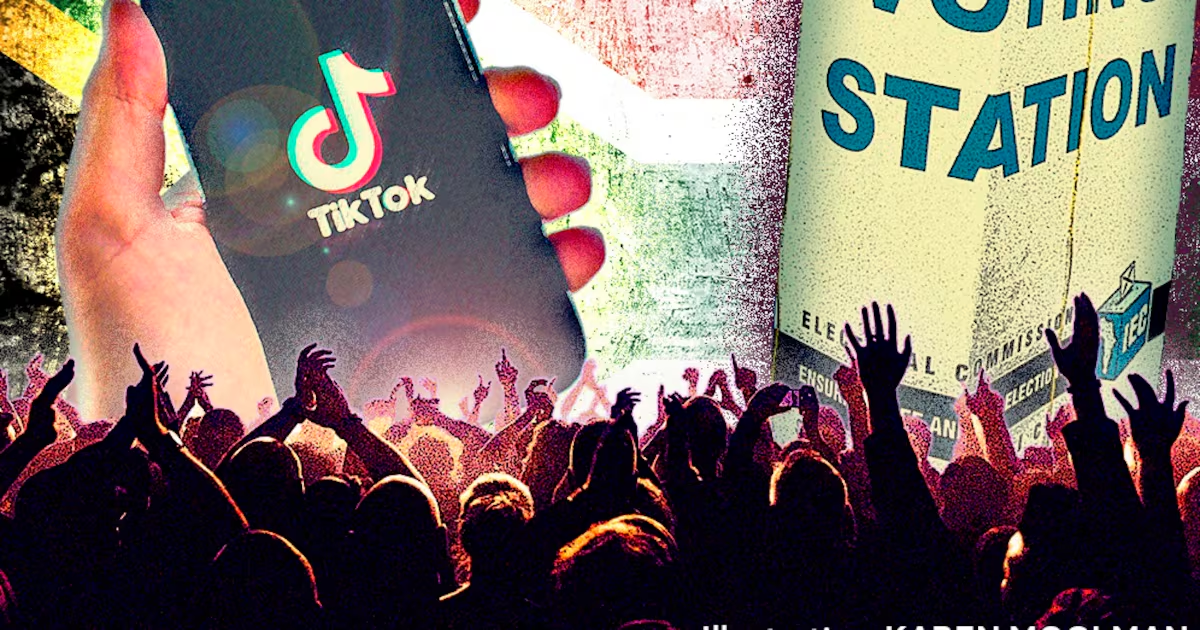
As South Africa prepares for local government elections, the writer highlights the need to counter fake news and paid influencers' growing impact on elections. She argues that protecting the integrity of elections can no longer be the responsibility of electoral authorities alone..
If the name Calin Georgescu rings a bell, you’re either Romanian or unusually good at pub quizzes. Until November 2024, Georgescu was an obscure presidential candidate. Within weeks, he had topped the first round of Romania’s presidential election. Days later, the election itself was annulled by Romania’s Constitutional Court.
Investigators concluded that his meteoric rise had been fuelled by a remarkably sophisticated online influence operation. More than 25,000 TikTok accounts – many dormant until shortly before the election – suddenly began posting exclusively pro-Georgescu content. Paid influencers amplified campaign messaging. Recommendation algorithms ensured that millions of voters encountered it. Romania’s intelligence services ultimately concluded that the campaign formed part of a broader foreign (read Russian) interference operation.
The story has an unexpected South African dimension.
The company alleged to have coordinated payments to online influencers was reported to be South African digital marketing agency, FA Agency – although subsequent investigations suggested that the company’s real operational base was Warsaw. And the businessman alleged to have financed much of the operation had previously worked for cryptocurrency businesses owned by a Romanian entrepreneur who is a dual South African national.