MIn Seong-jae200
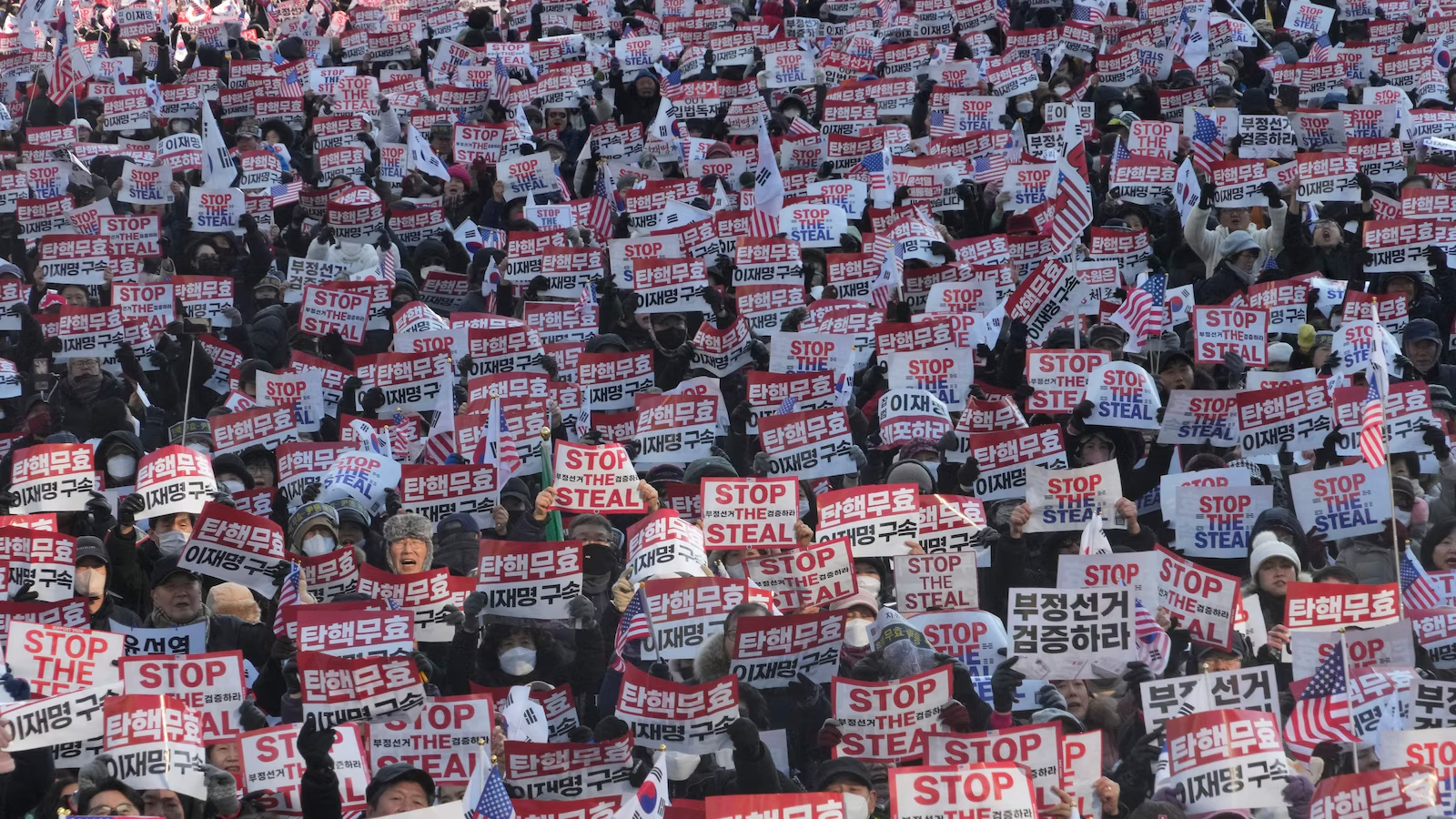
Korea has engineered some of the most stringent anti-fake news measures among the world's democracies. Recent revisions to election laws impose severe fines and prison terms on those who create or distribute political deepfakes during election campaigns. Other legislation allows courts to impose substantial punitive damages on those who deliberately spread false information. In addition, Korea's long-standing defamation laws punish individuals who disseminate false information that harms others' reputations and, in some cases, even truthful statements deemed damaging. These laws target not only organizations but also individual creators and distributors of misinformation. Together, they reflect Korea's broader willingness to regulate harmful information that threatens the healthy functioning of democracy.
Given the seriousness of misinformation in modern society, such laws are understandable and, in many respects, necessary. During elections, false information can distort public understanding, manipulate voters and undermine trust in democratic institutions. Yet these measures have also generated significant criticism. Critics argue that they may create chilling effects on journalism, satire, political criticism and legitimate public debate. Others point out that determining what constitutes "fake" information is often inherently subjective and therefore vulnerable to political misuse. Democracies around the world continue to seek a delicate balance between regulating false information and preserving freedom of expression.