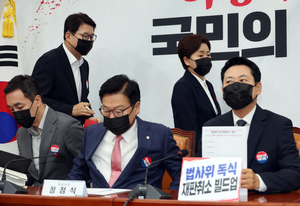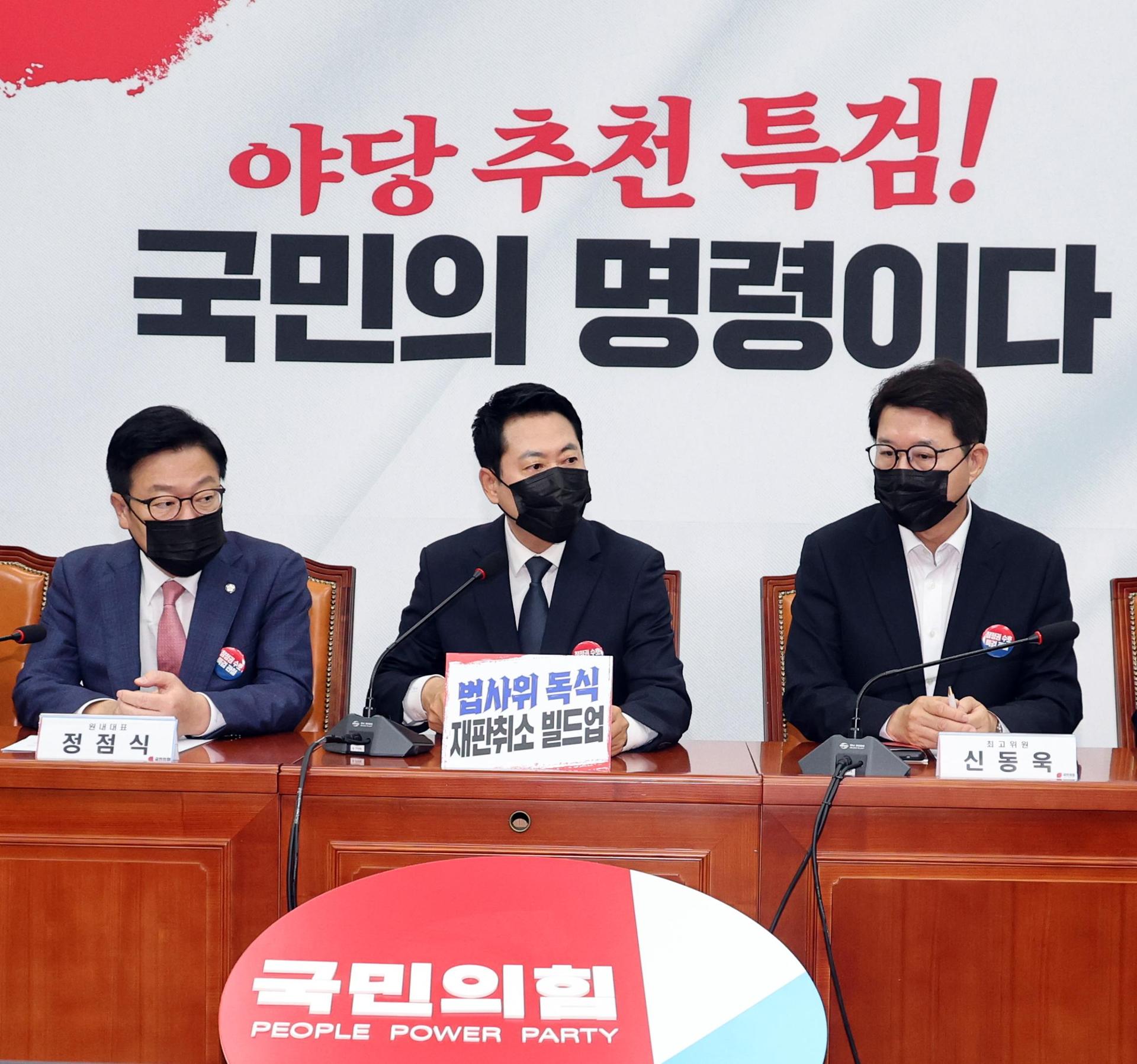
Leaders of the conservative People Power Party wear black masks in protest of the new “fake news” law during a press conference at the National Assembly in Seoul, Monday. Newsis
Korea’s revised Information and Communications Network Act, also dubbed the “fake news” law, came into force on Tuesday, reshaping how unlawful information is handled online.
Under the new rules, “false or manipulated” information is defined as content whose whole or partial substance is untrue, or altered in a way that misleads audiences into believing it is factual. The revision also introduced a new category of illegal hate or discriminatory expression which covers posts that incite violence, discrimination or hatred against individuals or groups based on traits such as race, nationality or gender.
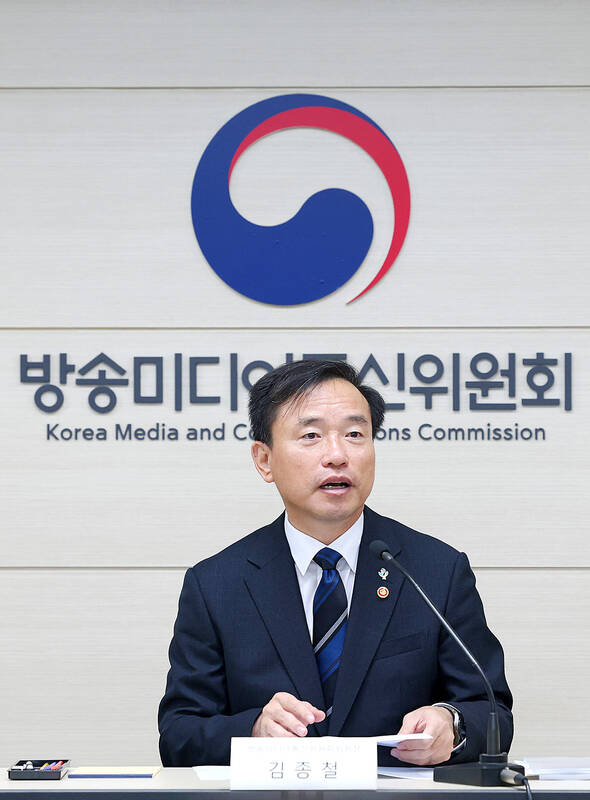
Amid concerns over vague legal definitions and potential conflicts with constitutional free-speech protections, the state-run Korea Media and Communications Commission (KMCC) provided answers to frequently asked questions to address key issues.
Q. What should I do if I suffer harm from false or manipulated information?