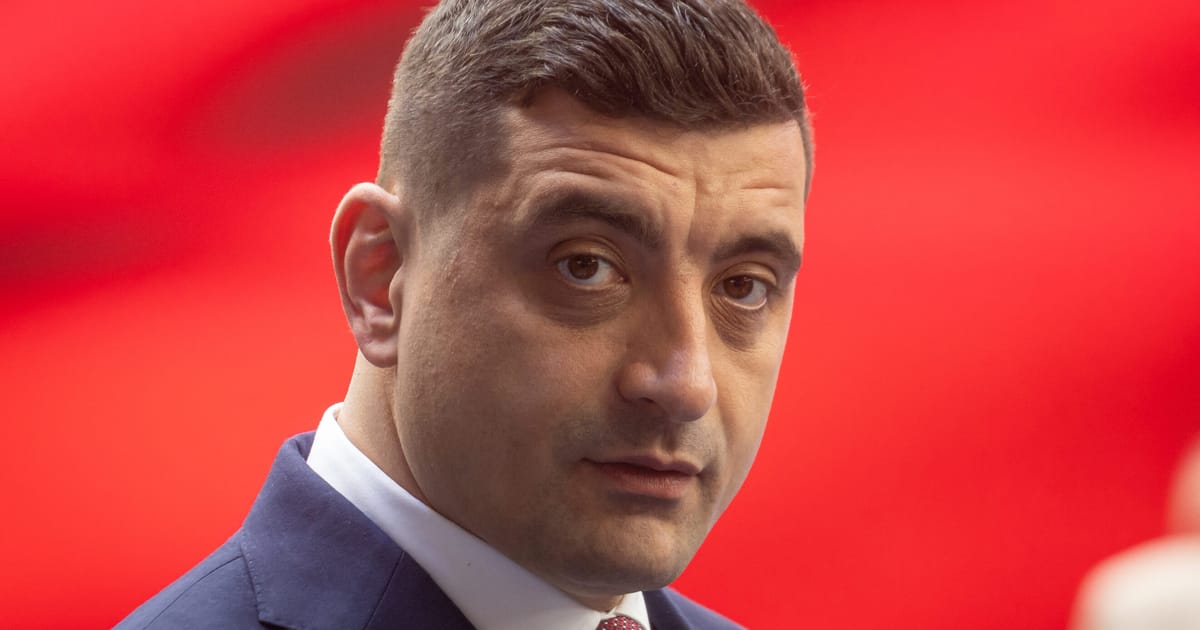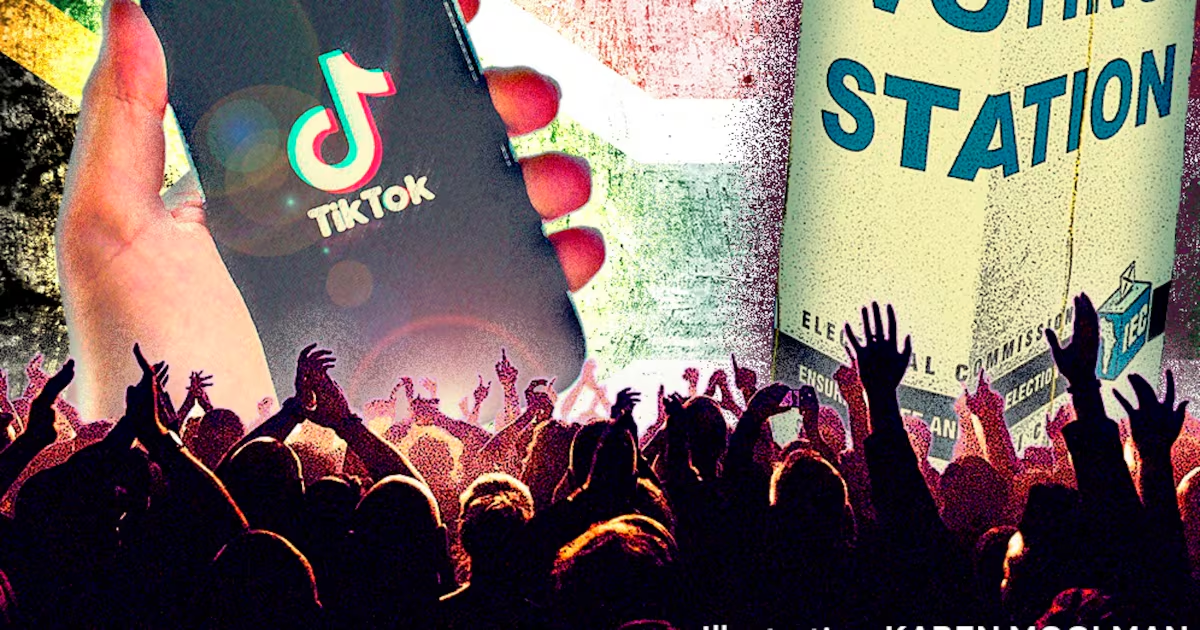
If the name Călin Georgescu rings a bell, you’re either Romanian or unusually good at pub quizzes. Until November 2024, Georgescu was an obscure presidential candidate. Within weeks, he had topped the first round of Romania’s presidential election. Days later, the election itself was annulled by Romania’s Constitutional Court.Investigators concluded that his meteoric rise had been fuelled by a remarkably sophisticated online influence operation. More than 25,000 TikTok accounts – many dormant until shortly before the election – suddenly began posting exclusively pro-Georgescu content. Paid influencers amplified campaign messaging. Recommendation algorithms ensured that millions of voters encountered it. Romania’s intelligence services ultimately concluded that the campaign formed part of a broader foreign (read Russian) interference operation.The story has an unexpected South African dimension.The company alleged to have coordinated payments to online influencers was reported to be South African digital marketing agency, FA Agency – although subsequent investigations suggested that the company’s real operational base was Warsaw. And the businessman alleged to have financed much of the operation had previously worked for cryptocurrency businesses owned by a Romanian entrepreneur who is a dual South African national. Would that were all South Africa had to fear of these types of deceptive coordinated online campaigns —as a curious footnote in another country’s democratic crisis.But as study of online messaging in the period preceding the so-called 30 June deadline for foreign nationals to leave South Africa showed, there was highly coordinated activity amplifying xenophobic narratives, inflammatory content and attacks on journalists. Much of that activity appeared designed not to express political opinion or to persuade but to incite outrage, exploit platform algorithms and create the impression of overwhelming public consensus. The techniques differed from those in Romania but the underlying logic did not.Against this backdrop, South Africa’s Electoral Commission has quietly published what may prove to be one of the most significant pieces of election reform South Africa has seen in years: a draft Electoral Code of Conduct on Countering Disinformation. Remarkably, however, it has attracted almost no public debate.It should.The Commission deserves considerable credit for recognising a reality that many democracies have been slow to confront. Elections are no longer contested by affixing posters to street lights, by television debates or through townhall rallies. They are increasingly fought in algorithmically curated newsfeeds, encrypted messaging groups and recommendation systems designed not to strengthen democratic deliberation, but to maximise engagement. Artificial intelligence now makes it possible to fabricate convincing audio and video recordings at negligible cost. Influencer marketing, anonymous accounts and highly targeted advertising have blurred the distinction between authentic political support and deceptive online operations.The old rules for regulating electoral conduct generally don’t apply. But if the Commission has identified the right problem, regulating it presents one of the most difficult constitutional questions of our time.Democracy depends upon robust political speech. Politicians, by their nature, exaggerate – even if ours seem especially galling on this score. They speculate and make extravagant promises. They accuse each other of ghastly misdeeds, of corruption and betrayal and they predict the apocalypse should their opponents prevail – although South Africans are pretty apocalypse-resilient. Much of what flows from their mouths is neither objectively verifiable nor intended to be (however much we may wish it otherwise). It is the stuff of democratic contestation and the Constitution quite properly protects it.Now imagine something rather different.Imagine an AI-generated video appearing on social media the evening before polling day in which the Chief Electoral Officer, Sy Mamobolo announces that voting has been postponed because of security concerns. Or a fabricated audio recording in which Helen Zille appears to concede defeat and urges supporters to stay at home. Or a coordinated network of thousands of anonymous accounts falsely claiming that voting stations in particular communities have closed early or that the old green bar-coded ID will not be accepted.That is not political rhetoric. It is deliberate deception directed at the integrity of the electoral process itself.South African law has recognised this distinction for many years, albeit largely unnoticed. The Electoral Act and Municipal Electoral Act already make it a criminal offence to publish false information, knowing it to be false or without reasonable grounds to believe it to be true, with the intention of disrupting or preventing an election, or in order to influence the conduct or outcome of an election. Conviction carries a potential sentence of up to ten years’ imprisonment.But who decides whether a statement is false? What distinguishes an intentionally false statement of fact from political exaggeration, prediction or opinion? When does a campaign promise become deception? How should satire, parody and rhetorical flourish be treated? And should these questions be determined by courts, by the Electoral Commission, by an online complaints mechanism, or by digital platforms applying their own content moderation rules?These critical questions – all of which the draft Electoral Code would have us consider – point to the fact that the cure may be as dangerous as the disease.No democracy should hand public institutions broad powers to determine political truth. Equally, no democracy can simply shrug when coordinated campaigns seek to manipulate voters through fabricated content or sophisticated influence operations.In our submissions on the draft Code, the Campaign for Free Expression and the Campaign on Digital Ethics argued that this balance begins with legal certainty. The line between lawful political advocacy and prohibited conduct should be drawn as clearly as possible. The law should concern itself with demonstrably false statements of fact directed at the electoral process—not opinion, satire, political rhetoric, predictions or genuine error. Political parties and candidates should know precisely what standards apply, what procedures will be followed and what sanctions may result. TransparencyCurrent debates about disinformation often proceed on the assumption that the answer lies largely in removing content. But by the time false information has spread to millions of users, removal is often too little and too late. Worse still, broad powers to determine what may remain online inevitably generate accusations of censorship and political bias.Transparency is often the better democratic response.Voters should know when political content has been generated or materially altered using artificial intelligence. They should know when influencers have been paid to promote political parties or candidates. They should know who has funded online political advertisements, how widely those advertisements have been disseminated and, where possible, the audiences they have been designed to reach.South Africa already possesses the beginnings of such an approach. Ahead of the 2024 general election, the Electoral Commission and Media Monitoring Africa (now Moxii Africa) established the Political Advert Repository (PADRE), enabling parties voluntarily to upload campaign advertisements to assist researchers and the public in distinguishing authentic campaign material from manipulated content. The concept is an excellent one. It should now be expanded into a comprehensive, publicly accessible repository of online political advertising, requiring parties and candidates to disclose who paid for advertisements, where they appeared, how long they ran, whether influencers were involved and, where reasonably available, how widely they were viewed.An Election Integrity ForumFinally, we should recognise that protecting elections can no longer be the responsibility of electoral authorities alone.Many of the greatest risks arise not from political parties themselves but from the architecture and processes of the platforms through which political communication now occurs. While the Electoral Commission may not have powers to force large platform companies to comply with its codes, it could convene an Election Integrity Forum during election periods, bringing together major technology platforms, researchers, journalists, election observers and civil society organisations to share information about emerging threats, platform design, coordinated manipulation and practical responses. Such an initiative would not be about determining what is true or false, nor about regulating lawful political speech. Instead it would be an acknowledgement that safeguarding democratic elections in the digital age requires cooperation across institutions that have traditionally operated in isolation.The Electoral Commission’s draft Code is not the finished product. It raises difficult constitutional questions that deserve careful scrutiny and refinement. Here’s hoping it gets that careful scrutiny. Not just a “hot take”.Fritz is the executive director of the Campaign for Free Expression.
NICOLE FRITZ | Paid influencers and fake news threaten SA democracy
Draft code seeks balance between political speech and combating deliberate electoral deception
1,340 words~6 min read