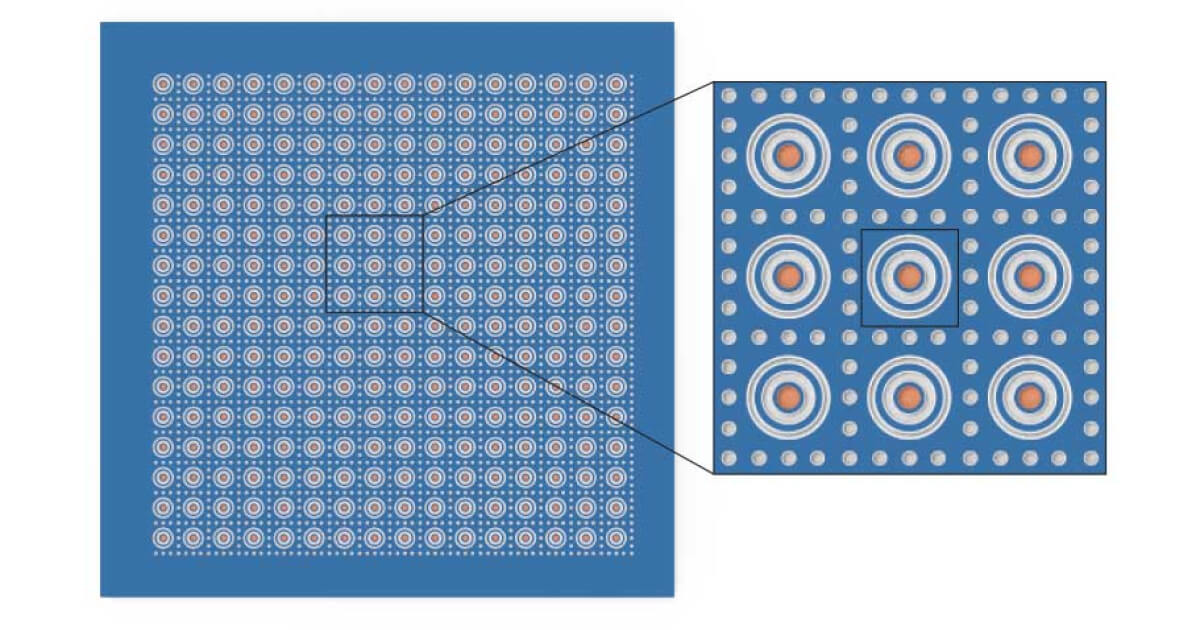
Representative imageSilicon chips have long been the backbone of computing, but a Harvard-led research team has given them an entirely different job: writing DNA. As reported by Science Daily, a study published in Nature Electronics, Harvard researchers have unveiled a silicon chip DNA writer capable of synthesising DNA using electricity and water-based enzymes. The innovation marks a major departure from traditional phosphoramidite chemistry, which relies on hazardous organic solvents. The chip can simultaneously produce 64 different DNA sequences, each up to 39 nucleotides long, offering a cleaner and more scalable approach to DNA manufacturing.The project involved Harvard, the Broad Institute, DNA Script, and POSTECH, with funding from IARPA, Horizon Europe, and Samsung Research. Intellectual property has been filed by Harvard’s Office of Technology Development.How the silicon chip worksThe chip assembles DNA strands one nucleotide at a time. A temporary blocking group halts growth until removed under acidic conditions. By applying tiny electrical currents, the chip generates protons that lower pH locally, enabling DNA synthesis to continue. Each site is confined by concentric ring electrodes, allowing parallel construction of multiple sequences. This precise control makes the process safer and more efficient than conventional methods.Synthetic DNA is essential for diagnostics, genome engineering, and cancer research. Current methods require centralized facilities and involve toxic solvents. The Harvard chip’s water-based enzymatic process could enable portable DNA-writing devices, making the technology more accessible to labs and clinics worldwide.From neuroscience to biotechnologyInterestingly, the chip’s design originated in neuroscience research, where it was used to record electrical activity in neurons. Researchers later repurposed its precision current injection technology to control chemical conditions for DNA synthesis, bridging the gap between brain science and biotechnology.Potential applications* Portable DNA-writing devices for labs and hospitals* DNA data storage, demonstrated by encoding a 169-byte text* Synthetic biology and diagnostics with reduced environmental impactChallenges aheadScaling the technology will require new chemistry. Current limitations stem from intermediate molecules drifting between synthesis sites during deprotection. Researchers are working on more direct acid-driven chemistry to overcome this hurdle, aiming for longer and more complex DNA sequences.
Scientists build a silicon chip that writes DNA with electricity, paving the way for cleaner gene synthesis and DNA-based data storage
Silicon chips have long been the backbone of computing, but a Harvard-led research team has given them an entirely different job: writing DNA. As reported by Science Daily, a study published in Nature Electronics, Harvard researchers have unveiled a silicon chip DNA writer capable of synthesising DNA using electricity and water-based enzymes.
340 words~2 min read