Free daily briefing on global business news.
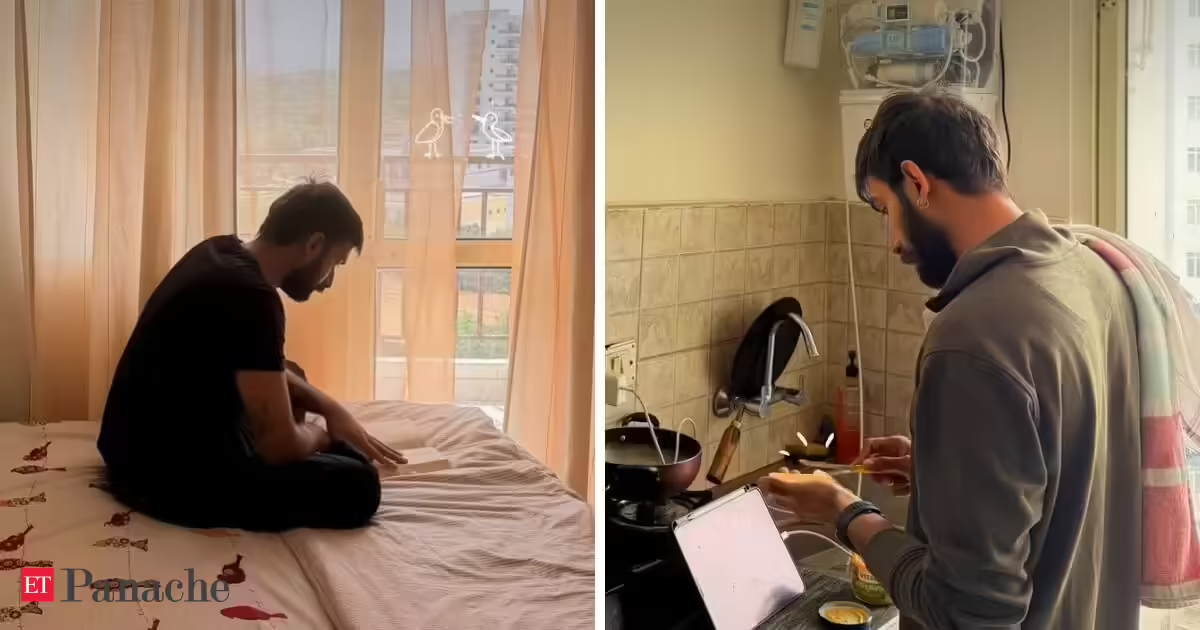
Silence isn't loneliness, structure has to be self-imposed, and cooking for one is a skill — the specific realizations that reshape how people actually live once nobody else is around
Vitaly Gariev / Pexels
Living alone for the first time is a specific transition that most people underestimate in advance, expecting either a straightforward continuation of their previous living arrangement minus a roommate or family member, or a more dramatic emotional adjustment than actually tends to occur. The reality that people who have lived alone consistently describe is more specific than either expectation: a set of genuine, practical realizations about structure, solitude, cost, and self-management that only become apparent through the actual experience, and that nobody adequately explains in advance because most advice about living alone focuses on logistics (finding an apartment, splitting utilities you no longer need to split) rather than the specific behavioral and psychological adjustments the arrangement actually requires.
The realizations in this list are drawn from the recurring patterns that people who have lived alone for an extended period consistently describe, distinguished from generic "benefits and drawbacks of living alone" content by their specificity: each one names a particular adjustment or discovery rather than a general observation, and several directly contradict the assumption a person might reasonably have going in.