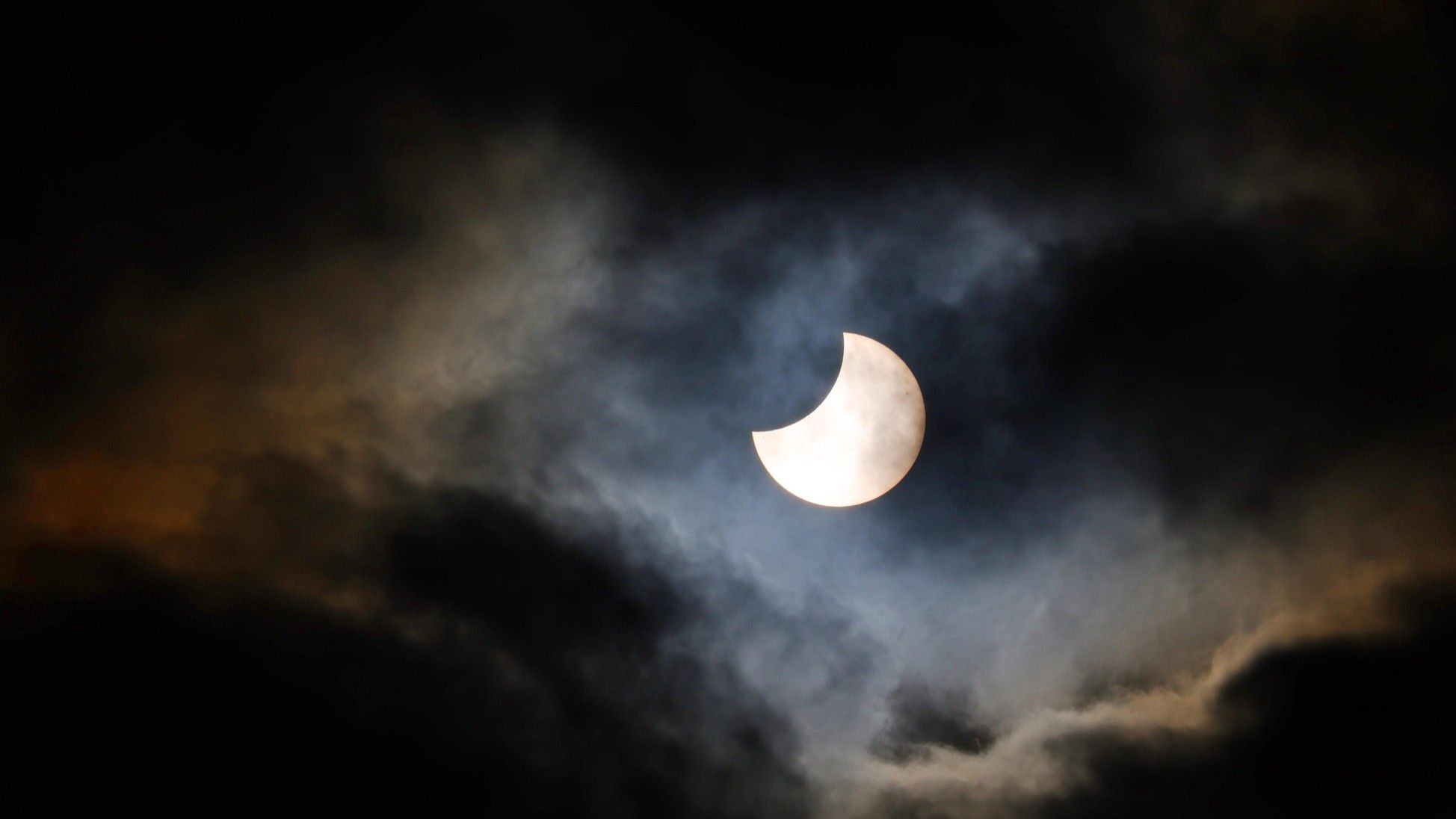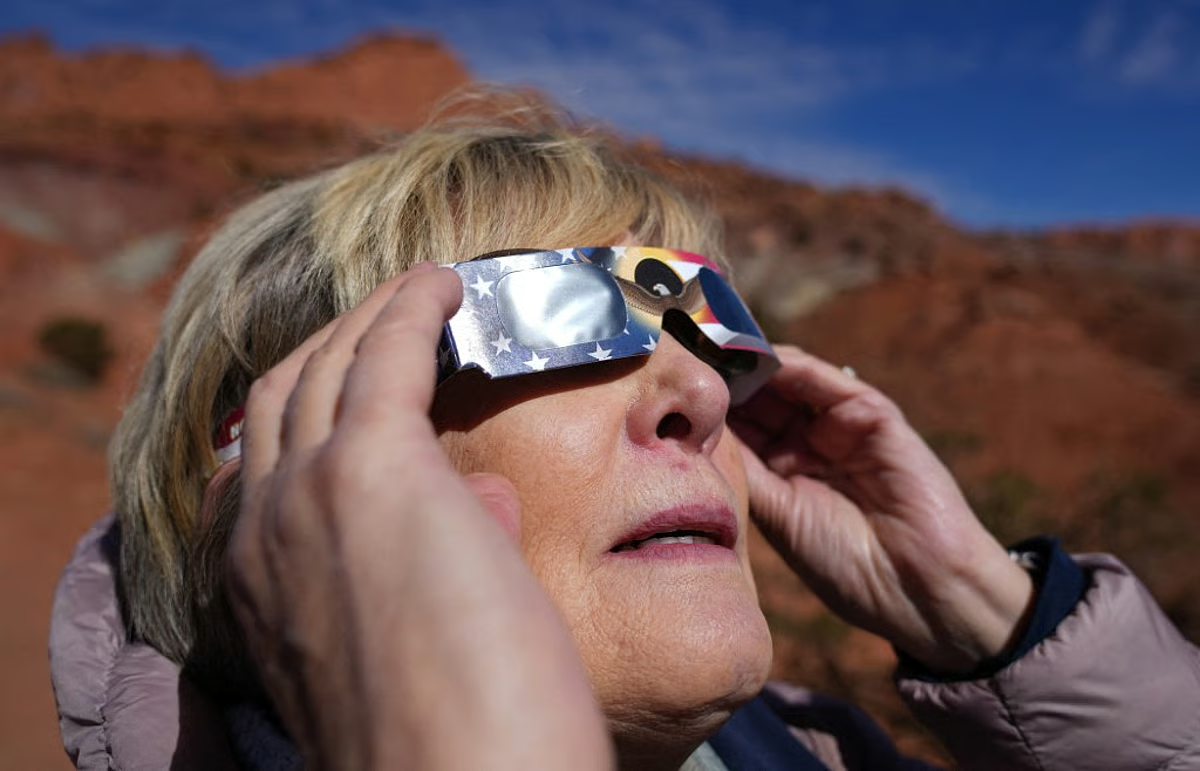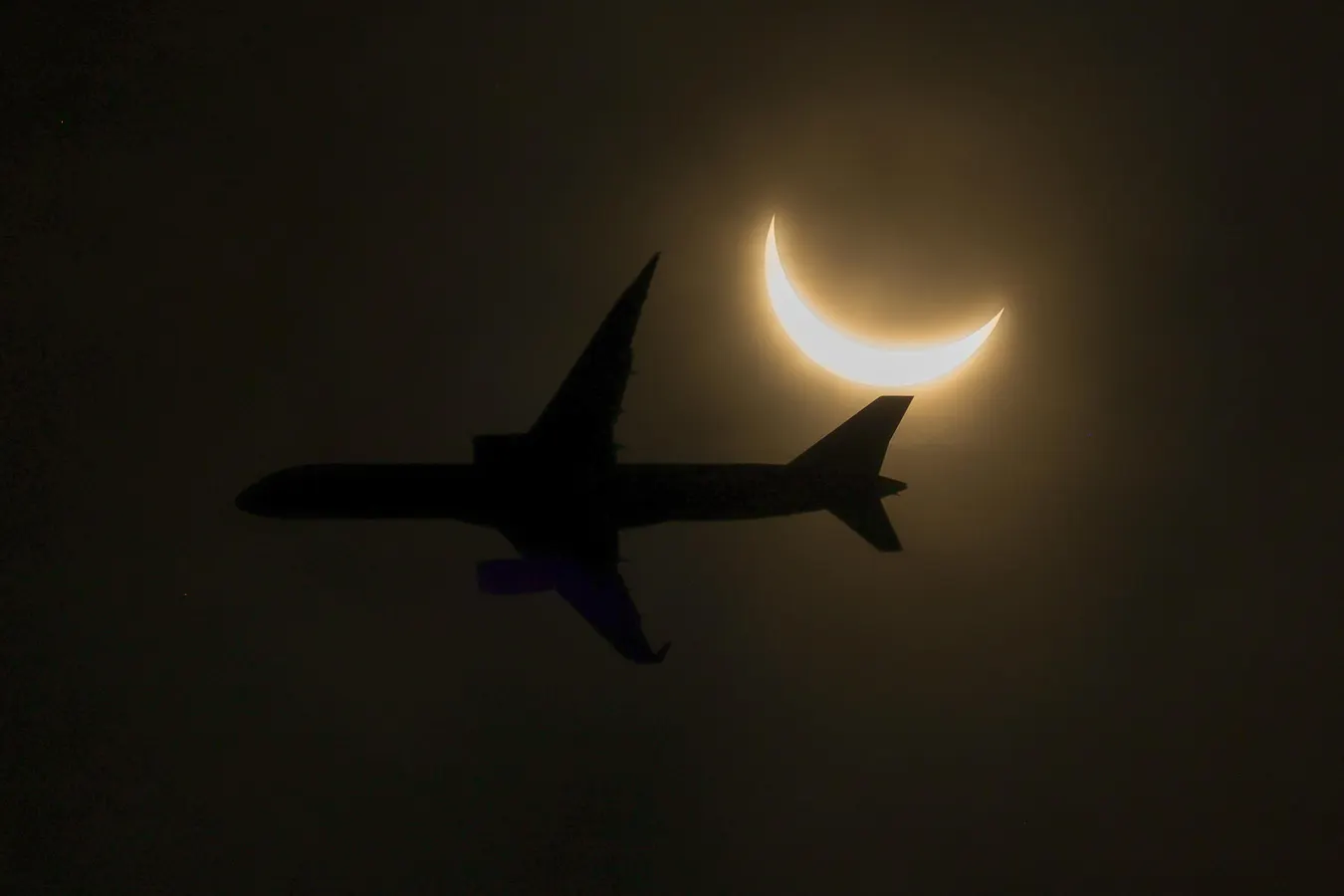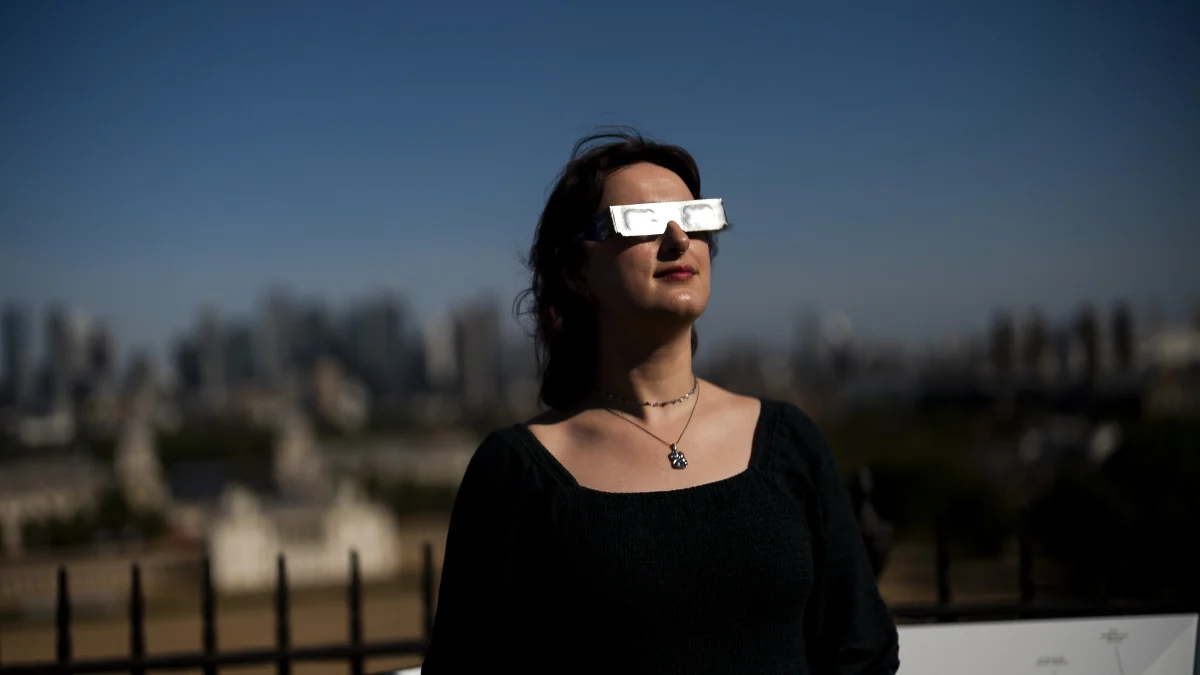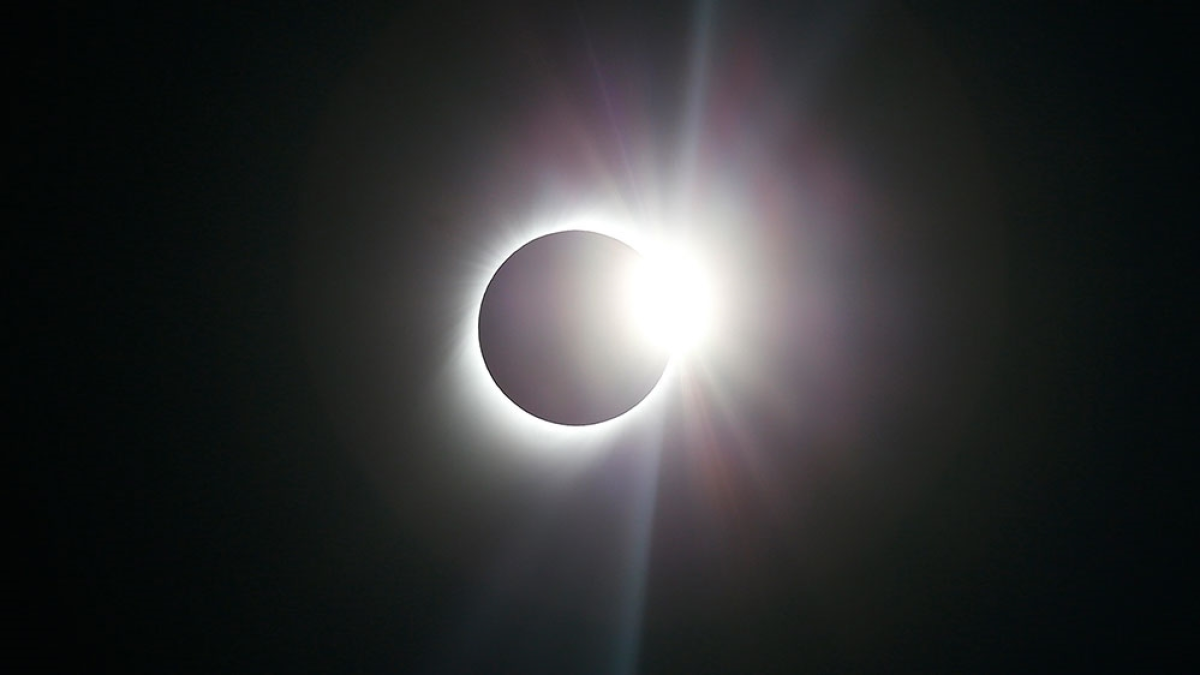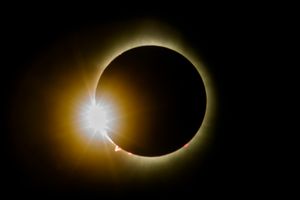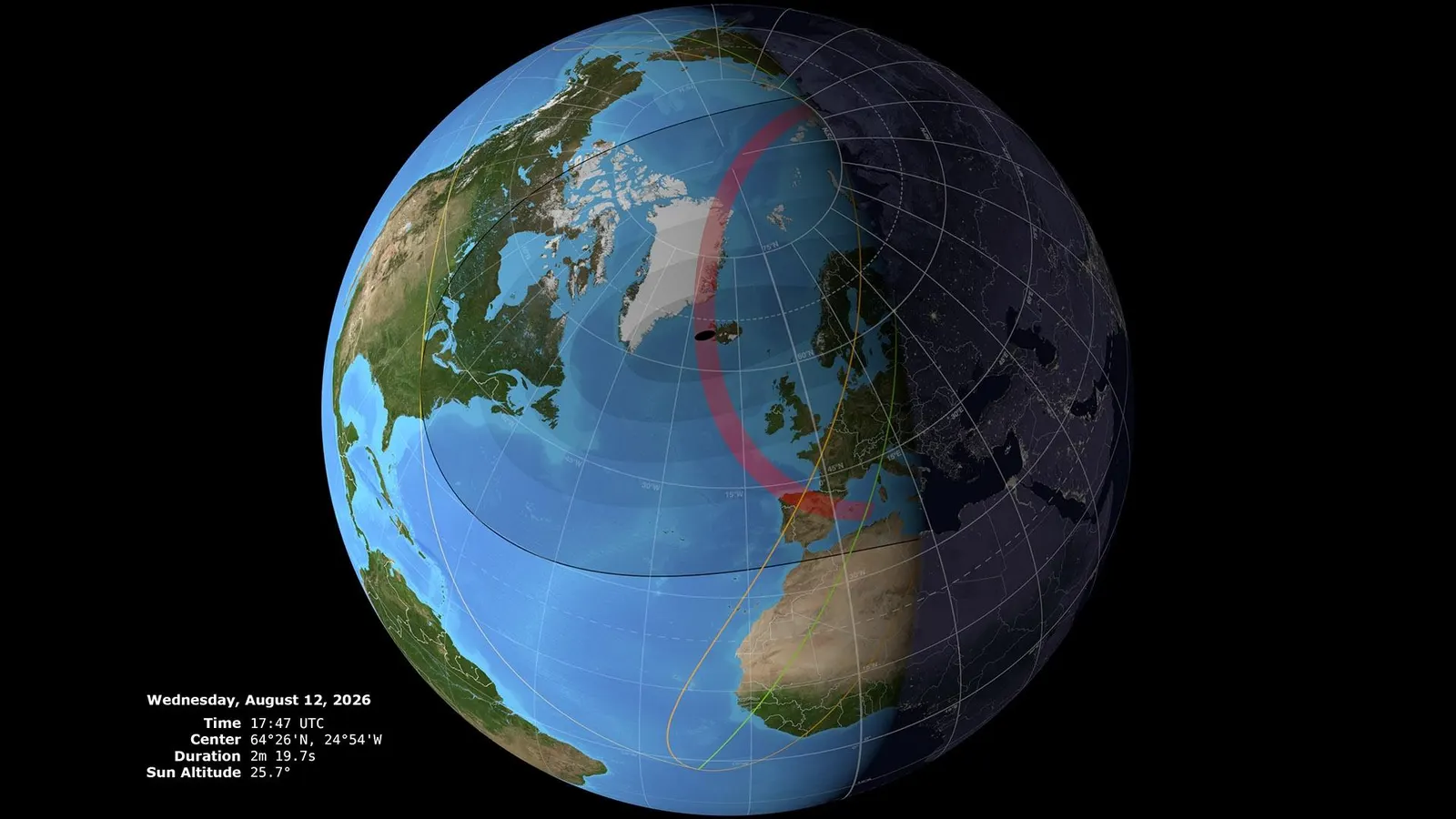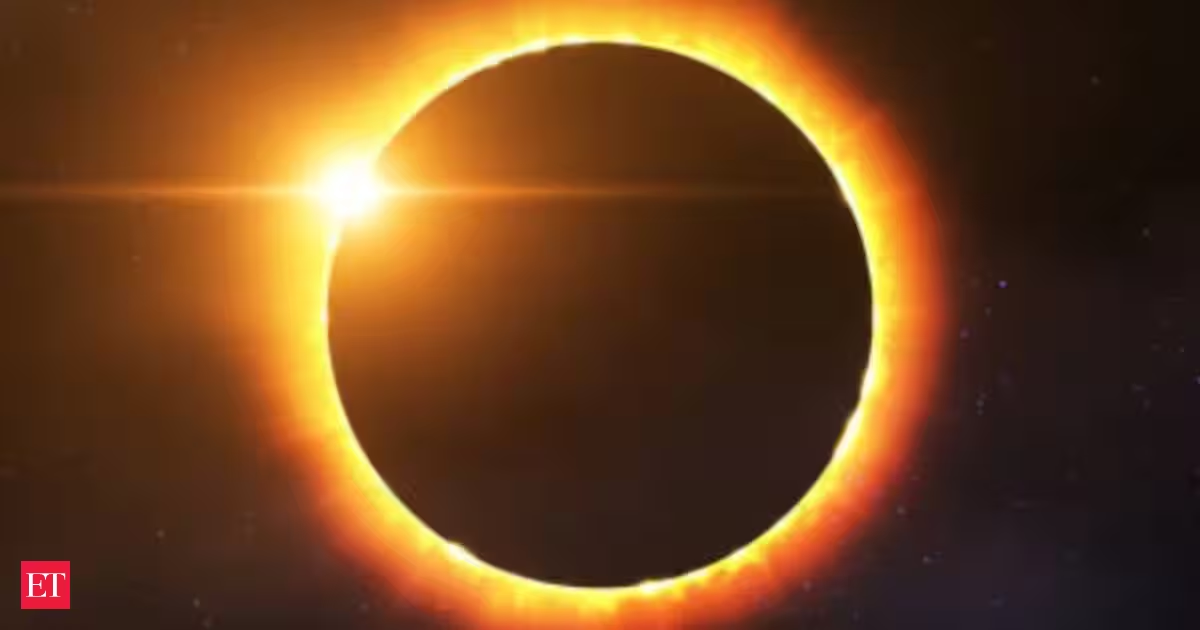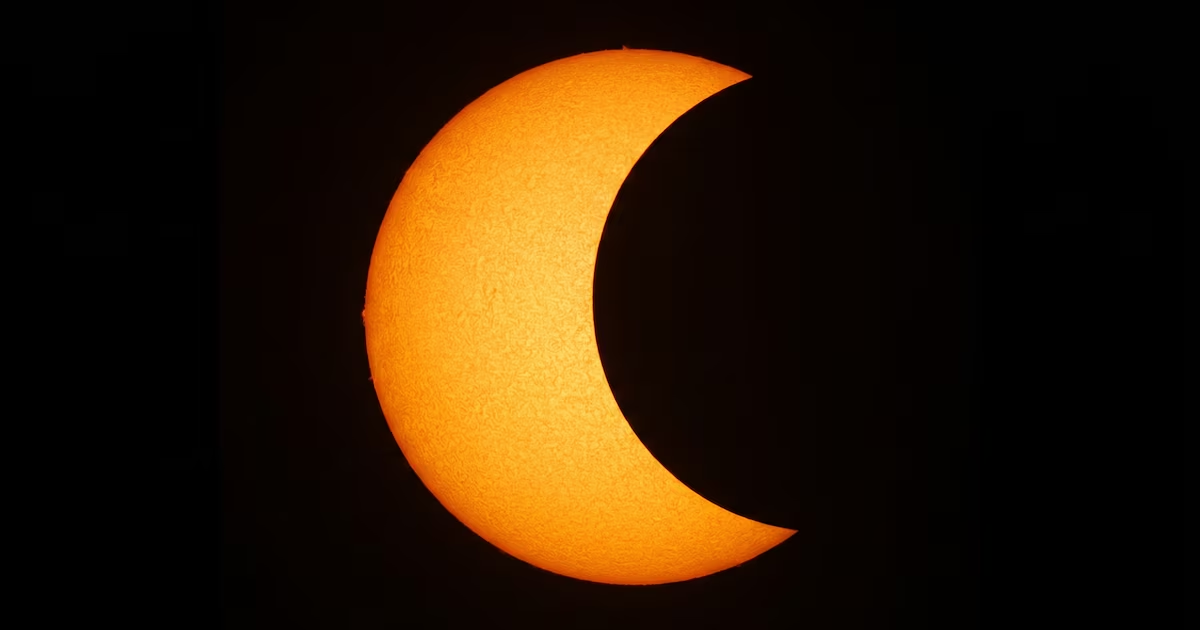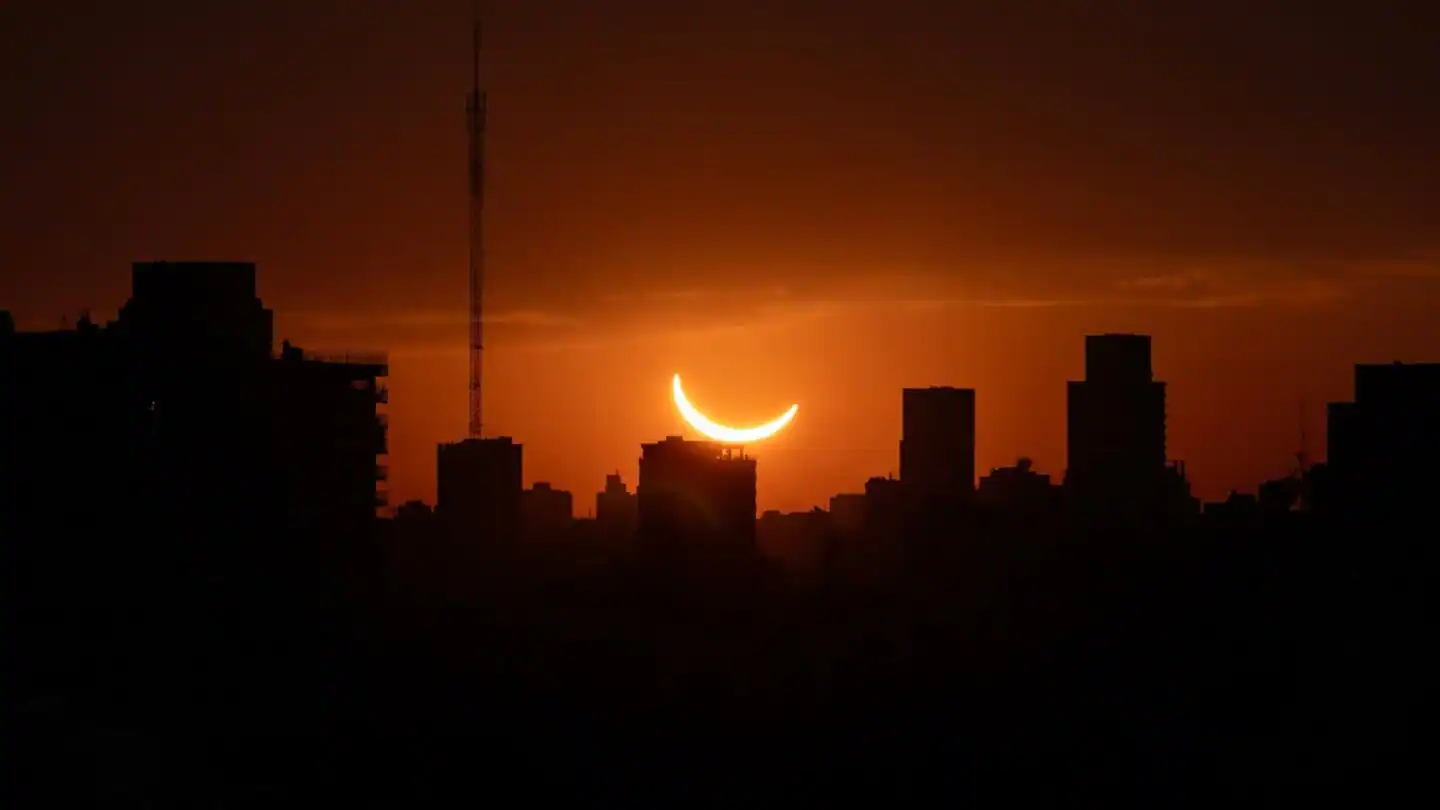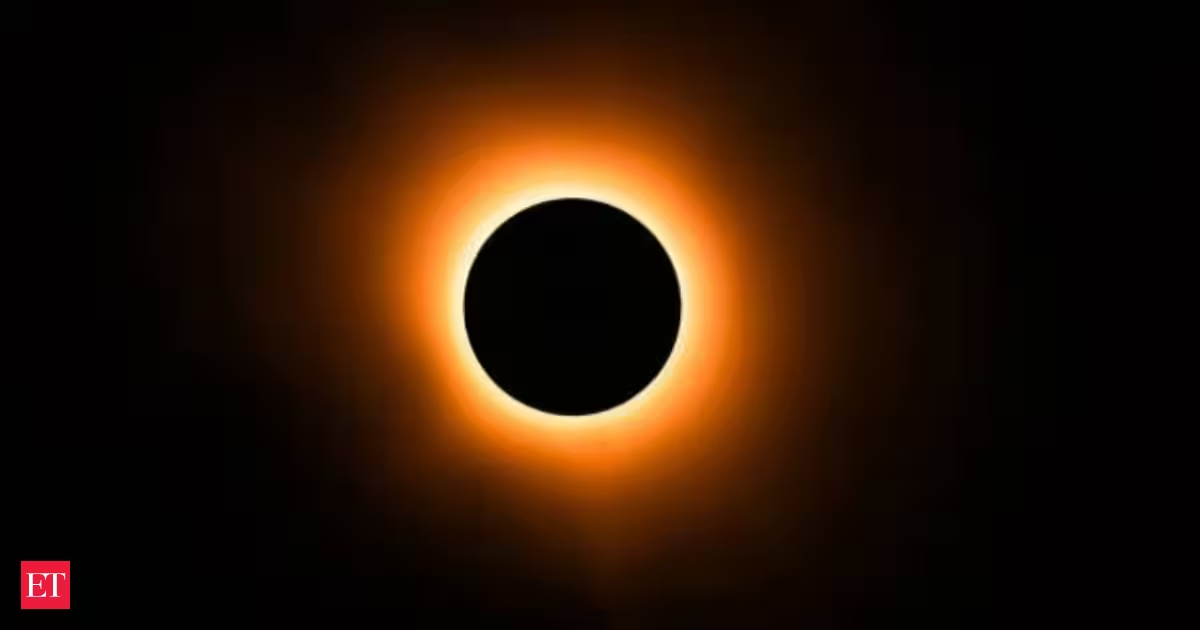
The August 12, 2026 solar eclipse will be visible as a partial solar eclipse across parts of the United States and most of Canada, while a narrow path across Greenland, Iceland and Spain will experience a total solar eclipse. For skywatchers in North America, the eclipse will occur from the morning into the afternoon, depending on location.The eclipse will be the first total solar eclipse visible from mainland Europe since 1999. Around 15 million people are expected to live within the path of totality, where the Moon will completely cover the Sun. However, people across a much wider area, including parts of the US and Canada, will see the Moon cover at least part of the Sun.August 12 eclipse time in the USThe August 12 solar eclipse will be visible as a partial eclipse across parts of the northern United States. NASA says the partial eclipse will extend from Alaska across the northern US toward North Carolina, although the amount of the Sun covered will vary significantly by location.Here are the key eclipse timings for selected US cities, according to NASA:US cityEclipse beginsMaximum eclipseMaximum coverageEclipse endsAnchorage, Alaska7:36 a.m.8:21 a.m.28%9:09 a.m.Fairbanks, Alaska7:37 a.m.8:27 a.m.37%9:18 a.m.Juneau, Alaska7:41 a.m.8:24 a.m.17%9:08 a.m.Bangor, Maine12:54 p.m.1:53 p.m.24%2:49 p.m.Portland, Maine12:57 p.m.1:53 p.m.19%2:27 p.m.Boston, Massachusetts1:01 p.m.1:55 p.m.16%2:46 p.m.New York City1:07 p.m.1:54 p.m.9%2:38 p.m.Philadelphia1:11 p.m.1:53 p.m.7%2:35 p.m.Washington, DC1:17 p.m.1:53 p.m.4%2:27 p.m.Detroit, Michigan1:03 p.m.1:36 p.m.3%2:08 p.m.All times are local. The deepest partial eclipse among the listed US locations will occur in Fairbanks, Alaska, where about 37% of the Sun will be covered. In northeastern Maine, coverage will reach about 24%, while New York City will see about 9%.For much of the central and southern United States, the eclipse will be very limited or not visible. The event is therefore expected to be much more noticeable in Alaska and the northeastern US.August 12 eclipse time in CanadaMost of Canada will experience a partial solar eclipse on August 12, with the greatest coverage occurring in the country's northern and eastern regions. NASA's timings show that the eclipse will take place in the morning in western and northern Canada and during the afternoon in eastern provinces.Key timings for Canadian cities include:Canadian cityEclipse beginsMaximum eclipseMaximum coverageEclipse endsEdmonton, Alberta10:02 a.m.10:38 a.m.6%11:15 a.m.Winnipeg, Manitoba11:25 a.m.12:02 p.m.5%12:40 p.m.Montreal, Quebec12:50 p.m.1:45 p.m.18%2:38 p.m.Toronto, Ontario12:55 p.m.1:40 p.m.8%2:23 p.m.Halifax, Nova Scotia1:58 p.m.3:00 p.m.31%3:58 p.m.St. John's, Newfoundland2:28 p.m.3:35 p.m.53%4:37 p.m.St. John's will be among the best places in Canada to watch the partial eclipse, with about 53% of the Sun covered at maximum eclipse. Halifax will see about 31%, while Montreal and Toronto will see approximately 18% and 8%, respectively.Is the August 12 eclipse total in the US or Canada?No. The August 12, 2026 eclipse will not be total anywhere in the US or Canada.The path of totality will pass through Greenland, Iceland, northern Russia, Spain and a small part of Portugal. In the US and Canada, observers will see only a partial eclipse, meaning the Moon will cover only a portion of the Sun.The total phase will last less than two minutes for most locations along the path, although it can last a little longer near the center of the path. The maximum duration is around two minutes and 18 seconds.Where will the August 12 solar eclipse be total?The Moon's shadow will cross the Arctic before moving through Greenland, Iceland and Spain. A small section of Portugal will also fall within the path of totality.In Spain, cities including León, Valencia and Zaragoza will experience totality. NASA gives the following local timings:León: Totality begins at 8:28 p.m. and ends at 8:30 p.m.Valencia: Totality begins at 8:32 p.m. and ends at 8:33 p.m.Zaragoza: Totality begins at 8:29 p.m. and ends at 8:30 p.m.Reykjavík, Iceland: Totality begins at 5:48 p.m. and ends at 5:49 p.m.Madrid and Barcelona will miss totality but will still experience an eclipse with about 99% of the Sun covered.Why is the August 12 eclipse special?A total solar eclipse occurs when the Moon moves directly between Earth and the Sun and completely blocks the Sun's bright disk. During totality, daylight can briefly turn to twilight and the Sun's outer atmosphere, known as the corona, becomes visible.The August 12 event is particularly significant for Europe because it will mark mainland Europe's first total solar eclipse since 1999.The eclipse will also be widely visible as a partial eclipse. NASA estimates that parts of the northern US, most of Canada, Europe, Africa and other areas of the Northern Hemisphere will experience at least part of the event.What are the four types of solar eclipse?Solar eclipses are classified into four types:Partial solar eclipse: The Moon covers only part of the Sun.Total solar eclipse: The Moon completely covers the Sun's visible disk.Annular solar eclipse: The Moon is farther from Earth and appears too small to cover the Sun completely, leaving a bright ring.Hybrid solar eclipse: The eclipse changes between total and annular along different parts of its path.The apparent similarity in the sizes of the Sun and Moon in Earth's sky makes total solar eclipses possible. Although the Sun is about 400 times wider than the Moon, it is also roughly 400 times farther away from Earth.Can you look directly at the August 12 eclipse?No, not during the partial phase.NASA advises observers to use certified solar-viewing glasses or other safe solar filters when viewing the Sun during the partial eclipse. Regular sunglasses are not safe for eclipse viewing.People using cameras, telescopes or binoculars should also use specially designed solar filters attached to the front of the optical equipment. Looking at the Sun through an unfiltered optical device can cause serious eye injury.During the brief period of totality, people inside the path of totality can look directly at the completely eclipsed Sun. However, eye protection must be used again as soon as any part of the bright solar disk becomes visible.When is the next total solar eclipse?The next total solar eclipse will occur on August 2, 2027. Its path will cross southern Spain, North Africa, Saudi Arabia and Yemen. NASA lists the 2027 eclipse as a total solar eclipse, with a partial eclipse visible across a much larger region.For US and Canadian viewers, the August 12, 2026 eclipse will therefore be a partial event rather than another total eclipse like the spectacular April 8, 2024 eclipse. Still, locations such as Fairbanks, Alaska, St. John's and Halifax will see a significantly larger portion of the Sun covered than many other North American cities.
August 12, 2026 solar eclipse time in US, Canada: When and where to watch
A remarkable celestial event is approaching, as a partial solar eclipse will grace much of Canada and the northern United States. Meanwhile, those in Greenland, Iceland, and Spain will be treated to a breathtaking total solar eclipse, marking mainland Europe's first since 1999. Although viewers in North America will only witness a partial phenomenon, it's crucial to prioritize safe viewing practices for a memorable experience.
1,066 words~5 min read