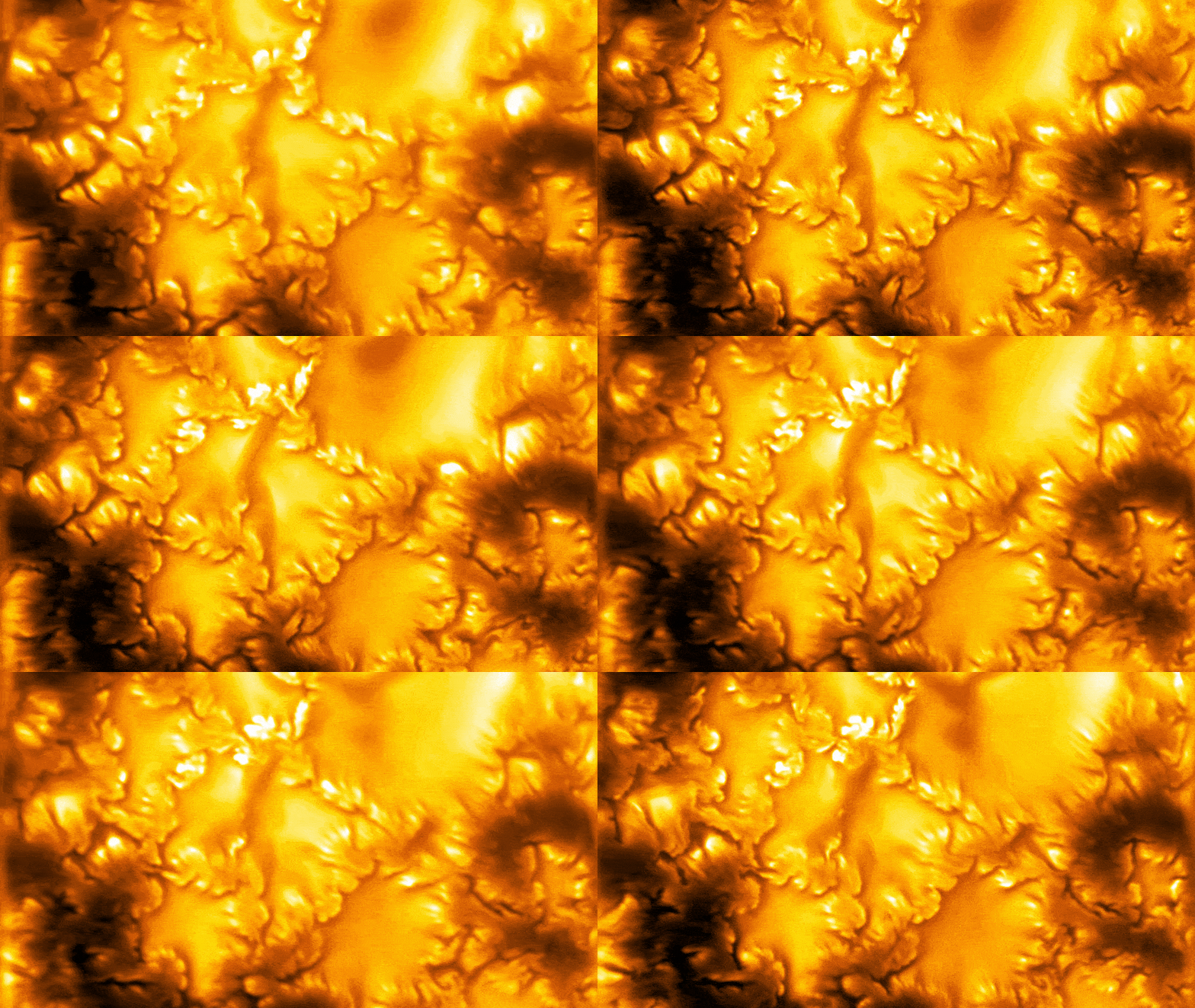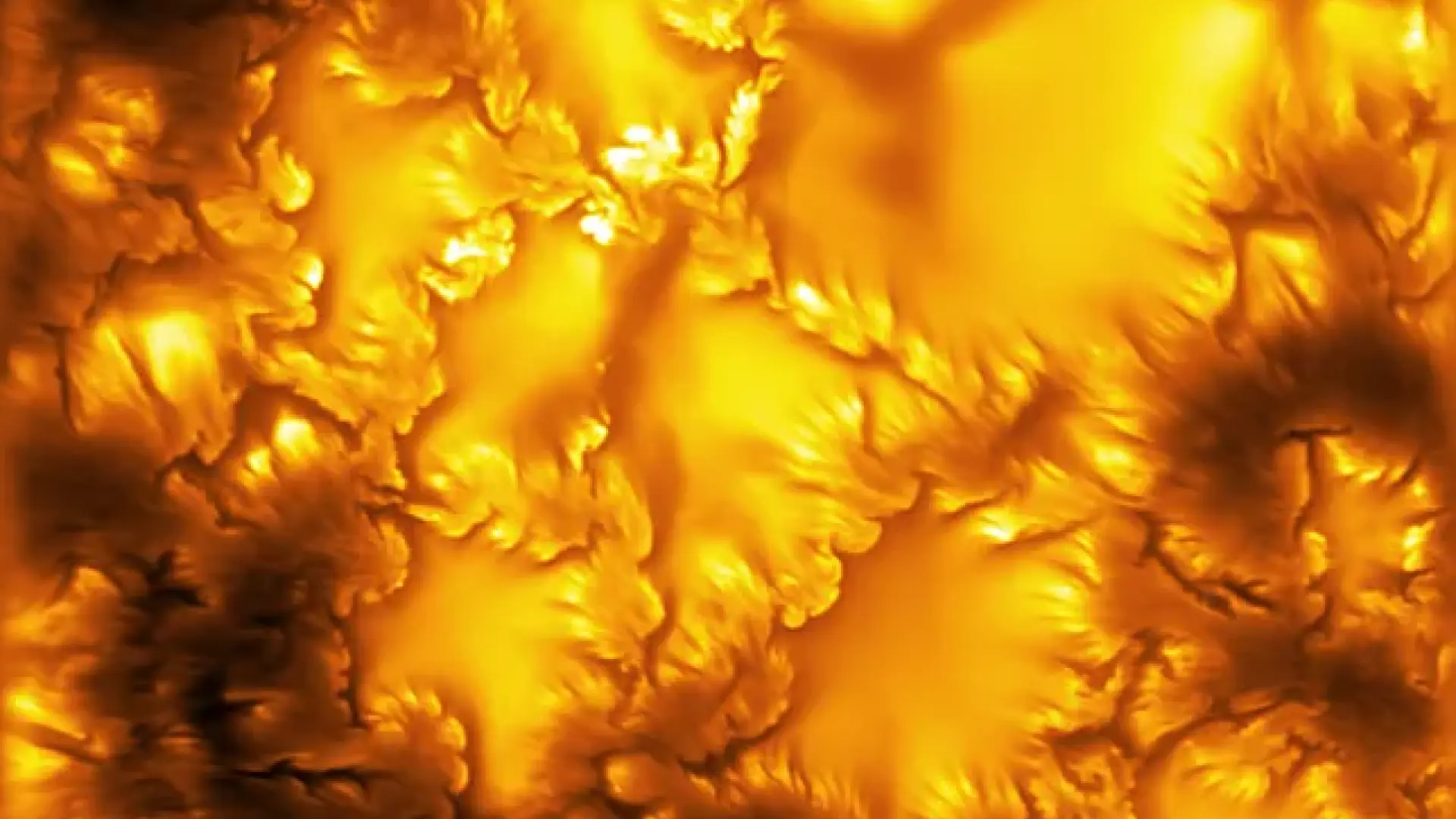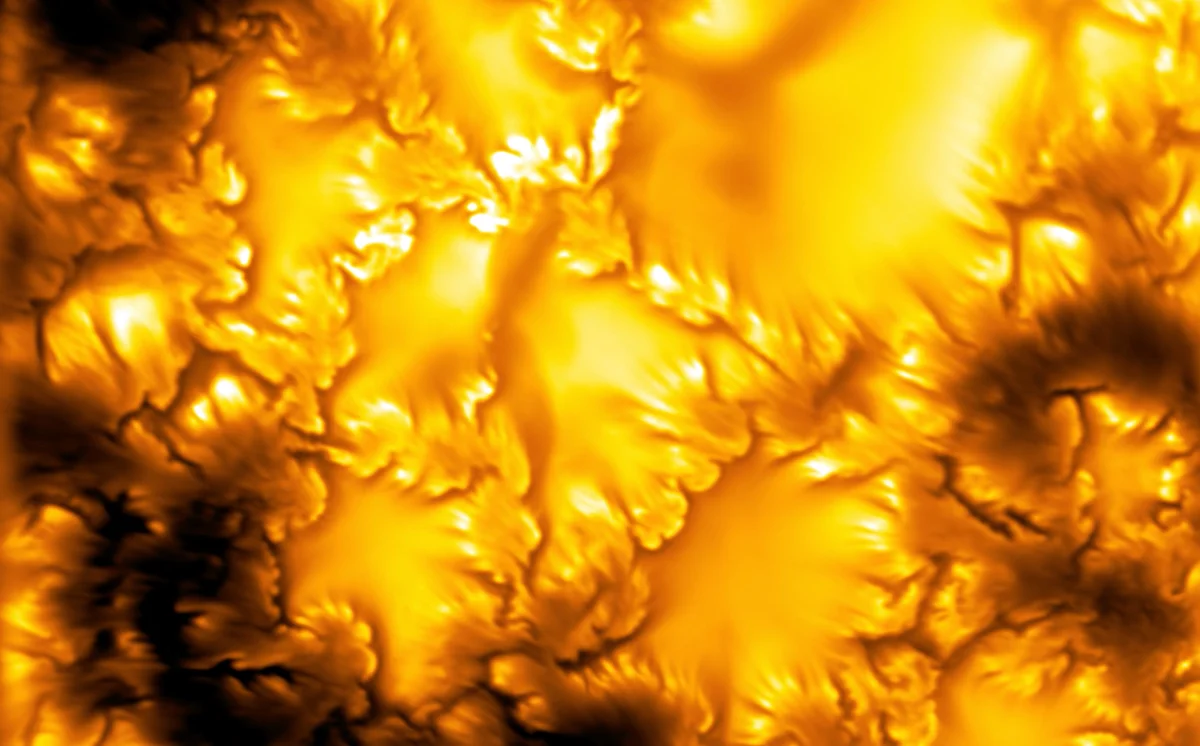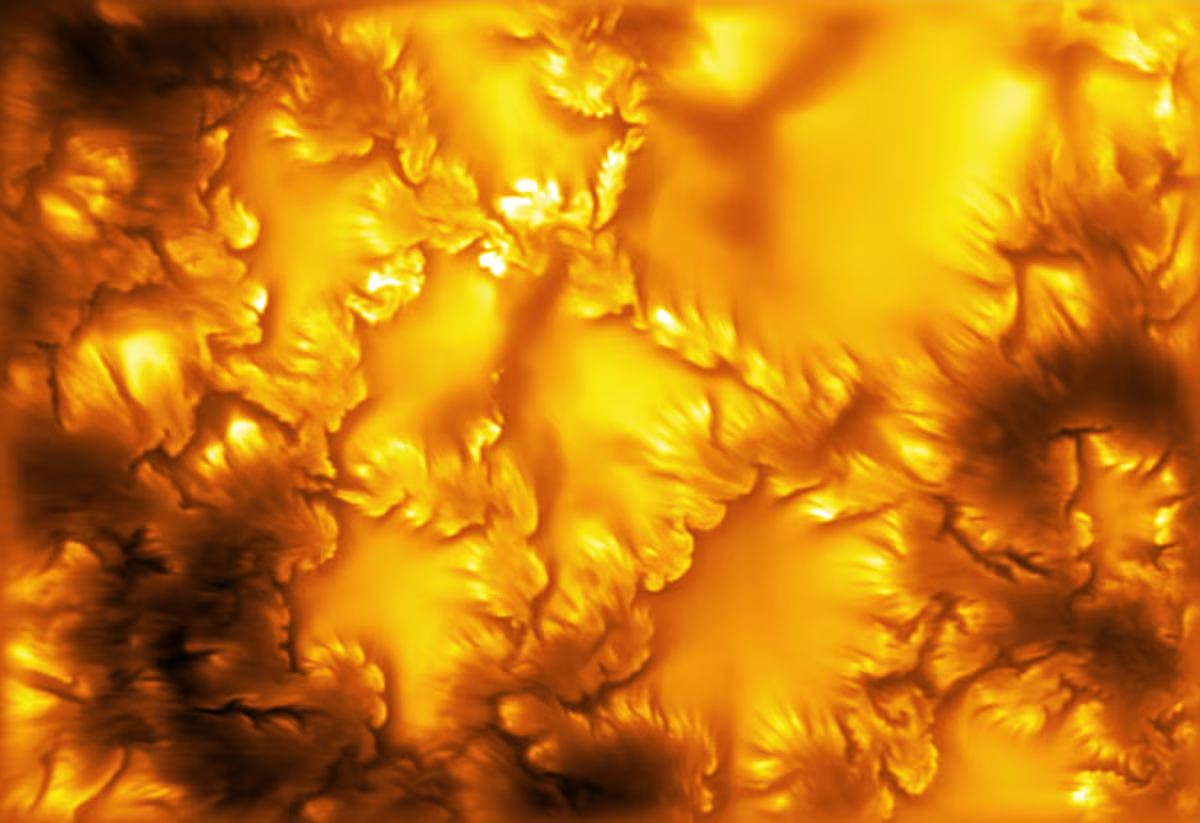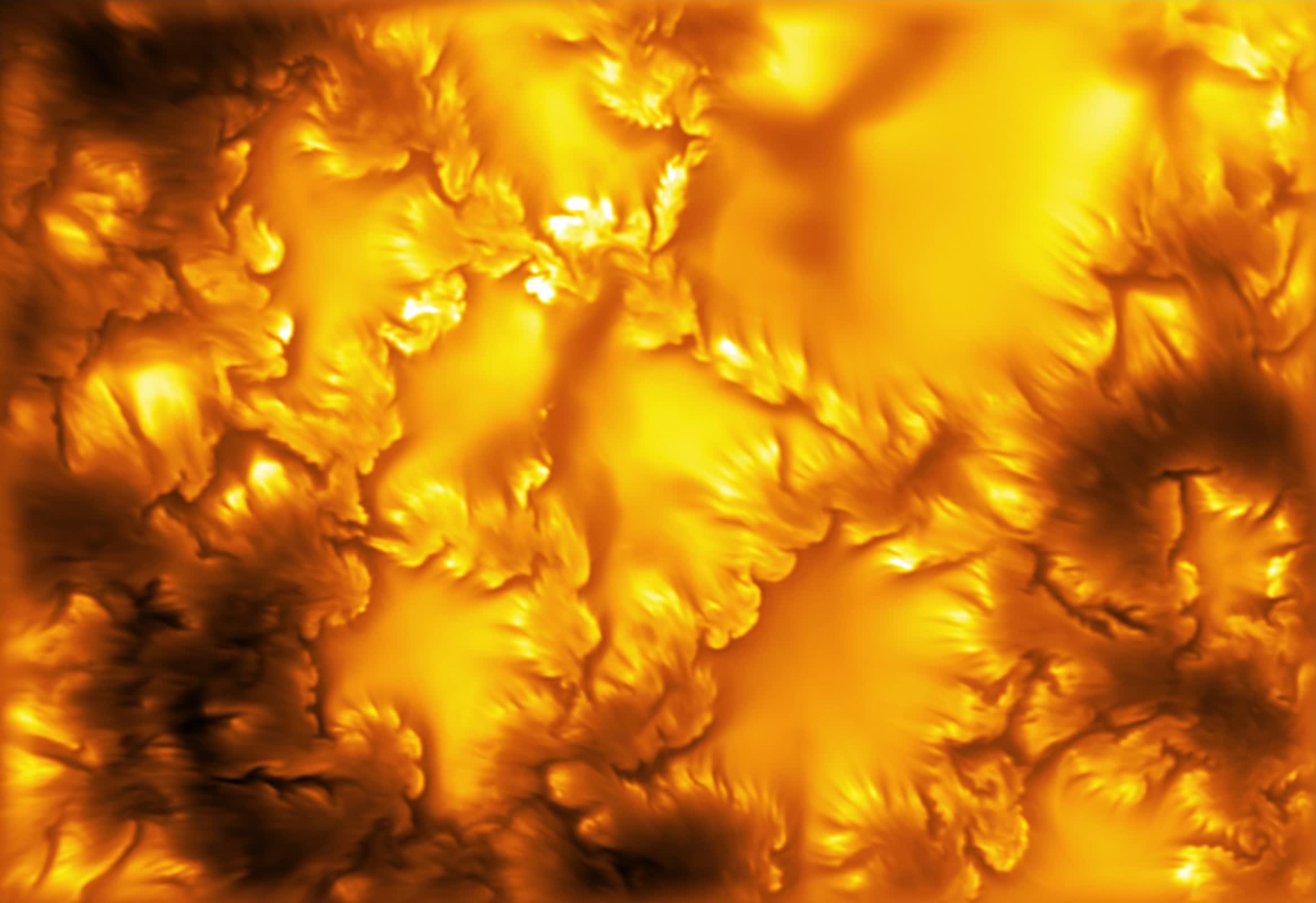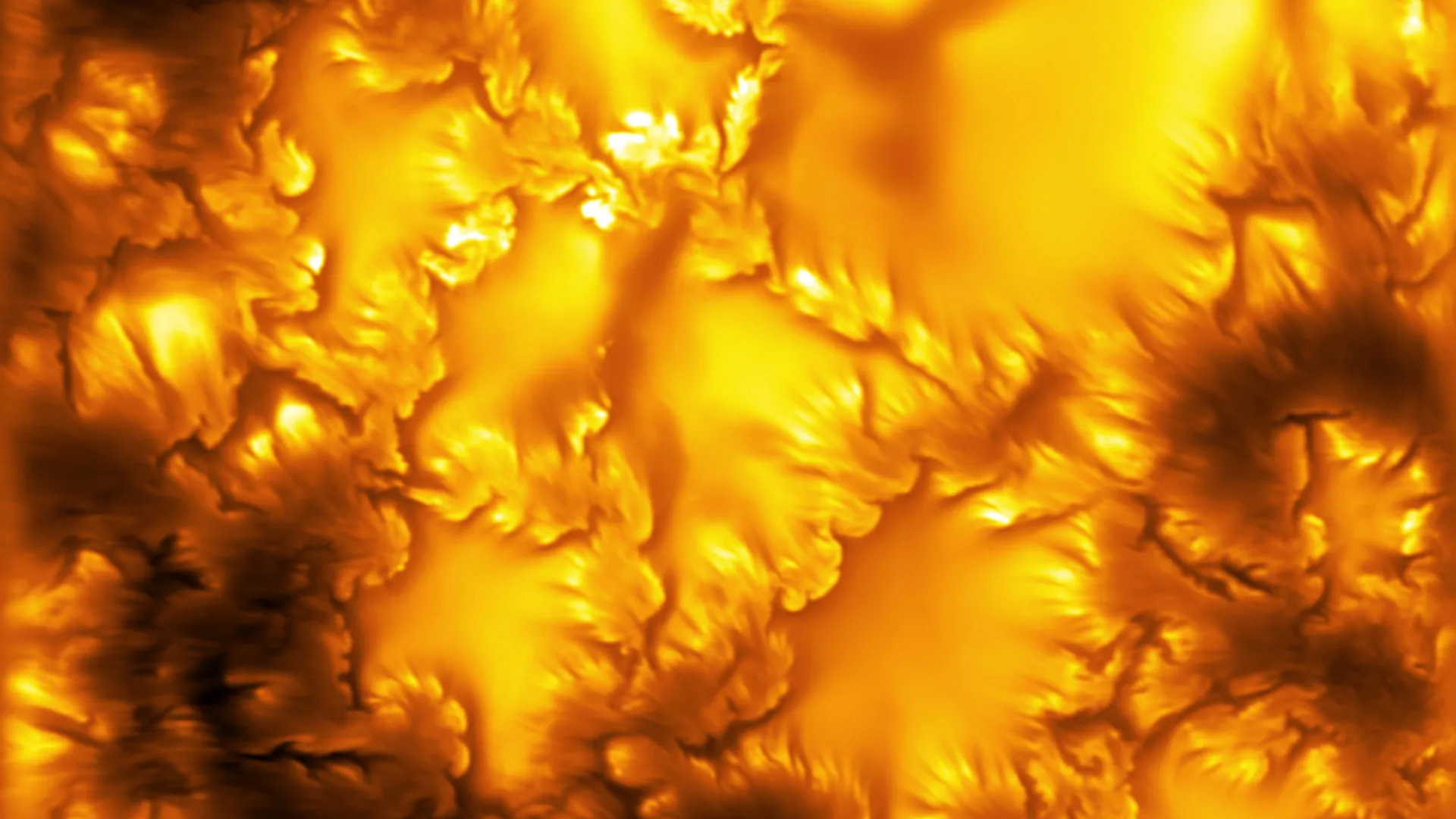
Scientists have captured previously unseen plasma vortices swirling across the surface of the Sun, revealing tiny structures that could help explain how our star stores, moves, and releases magnetic energy.
The discovery comes from researchers at the U.S. National Science Foundation National Solar Observatory (NSF NSO), the Max Planck Institute for Solar System Research (MPS) in Germany, and the High Altitude Observatory (HAO) in the USA. The team combined observations from the NSF Daniel K. Inouye Solar Telescope, the world's largest solar telescope, with advanced computer simulations. Built and operated by the NSO in Hawaii, the telescope provided images detailed enough to expose plasma motions that had never previously been visible.
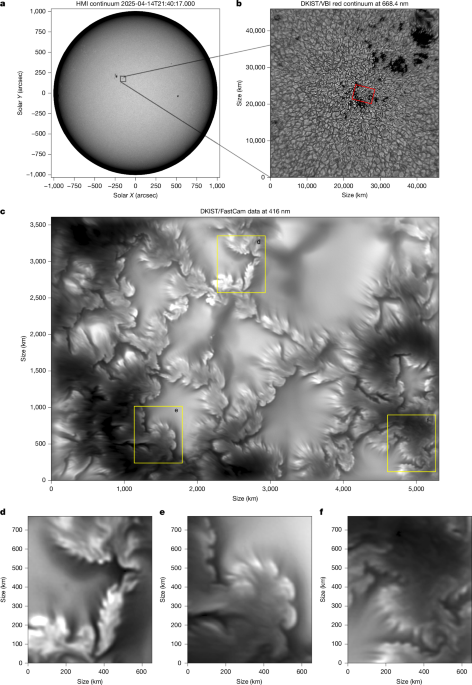
"To detect the vortices, we needed to resolve structures on the solar surface about 20 kilometers in size. That is at the limit of what even the world's largest solar telescope and state-of-the-art simulations can achieve," said MPS scientist and co-author of the new publication Michiel van Noort, who contributed to the observations as well as the data reduction and image restoration. The researchers used a broadband imaging camera provided by the Max-Planck-Institute for Solar System Research (MPS).