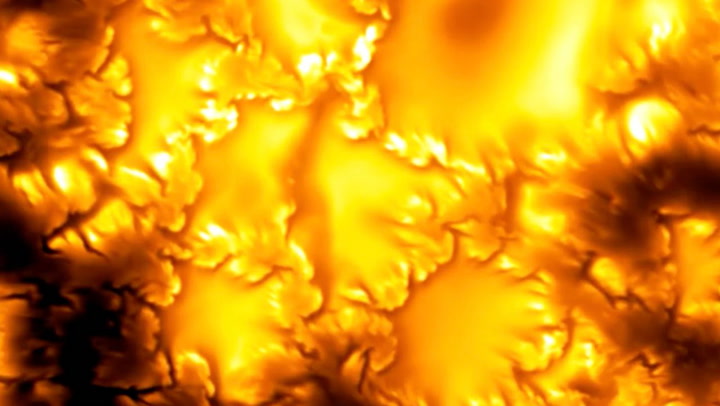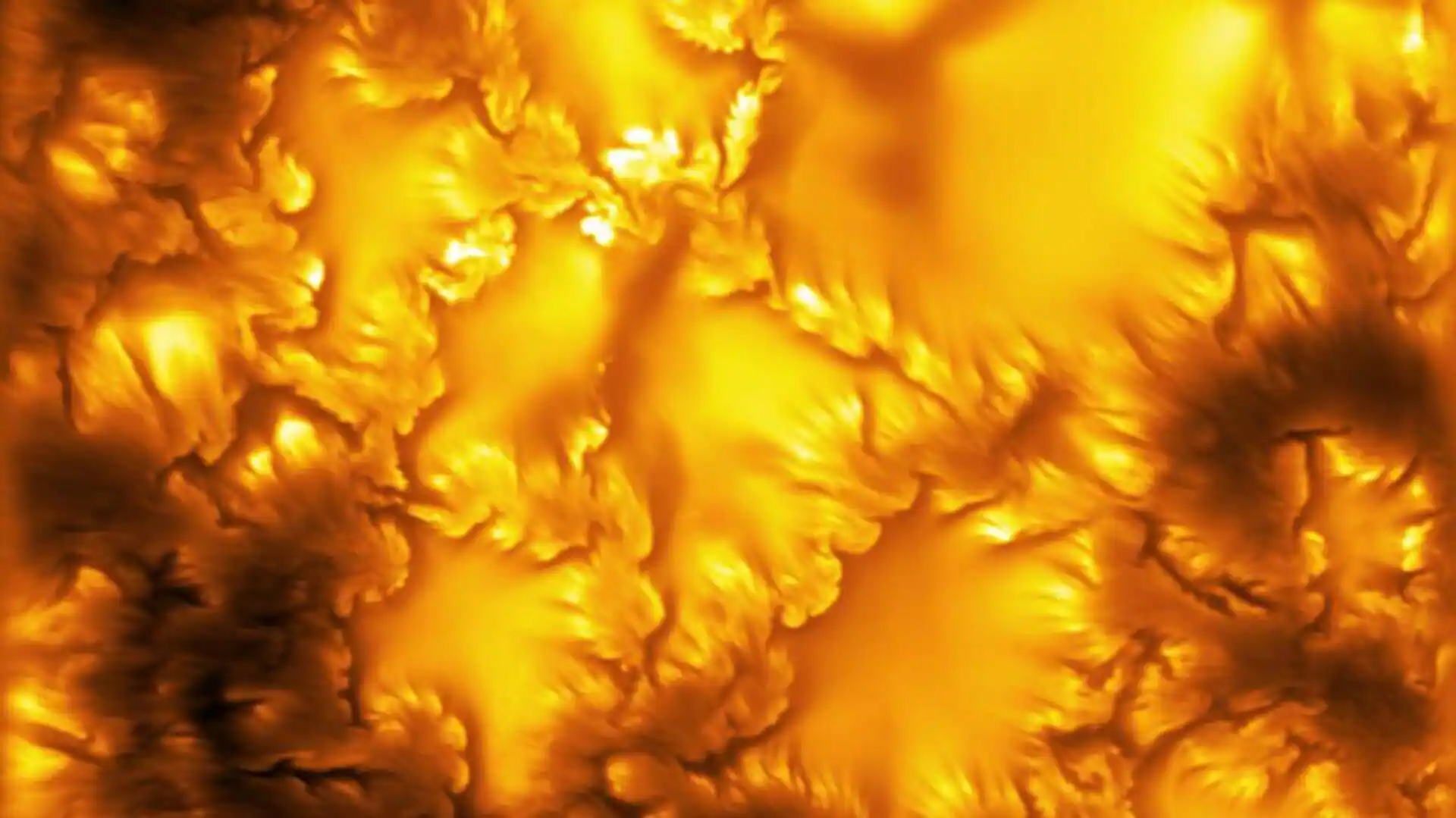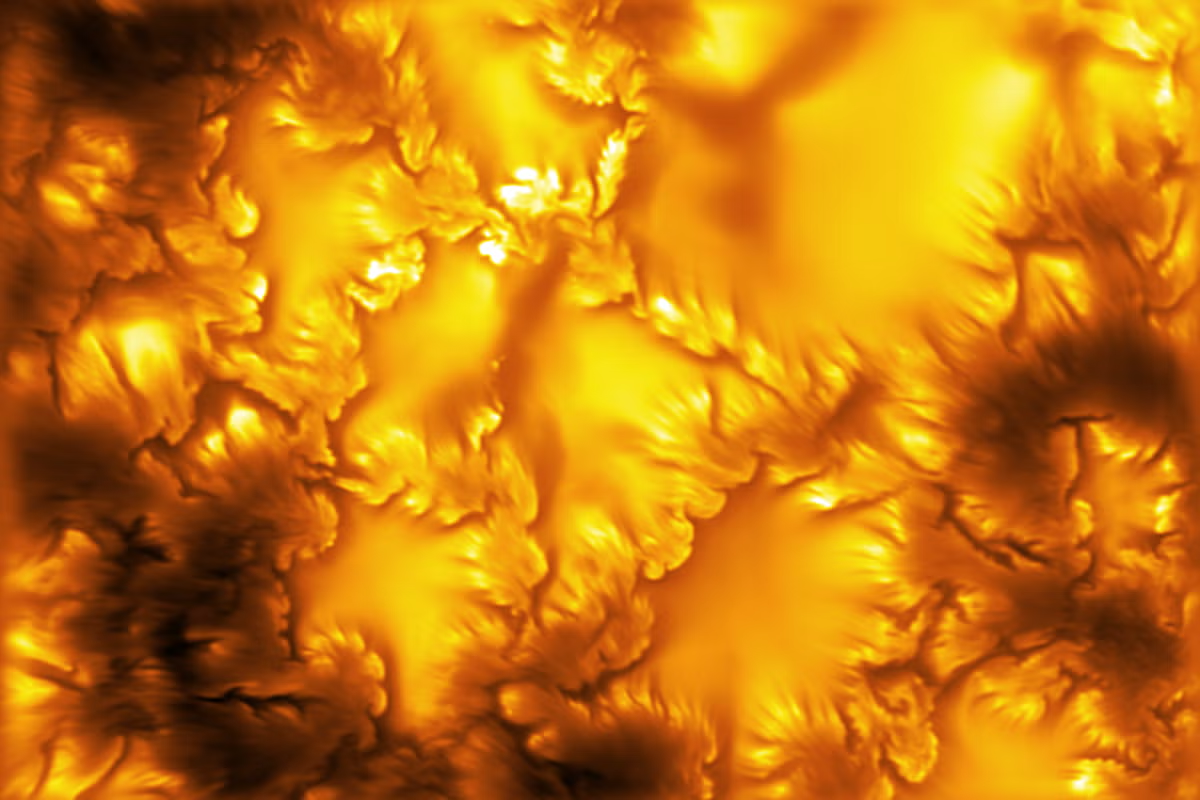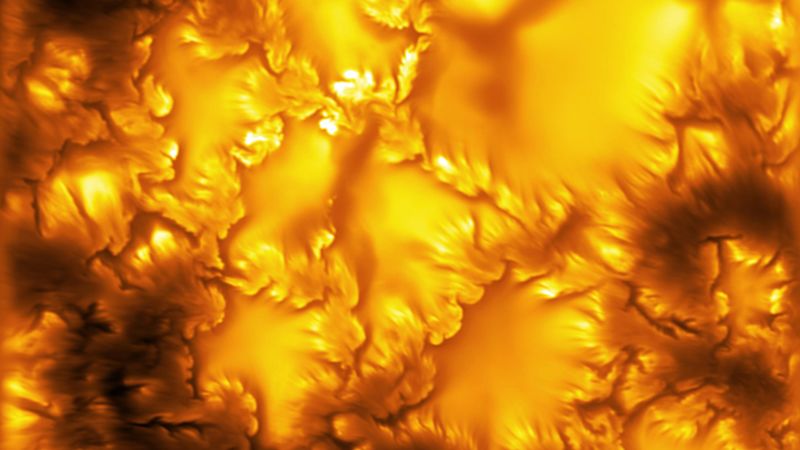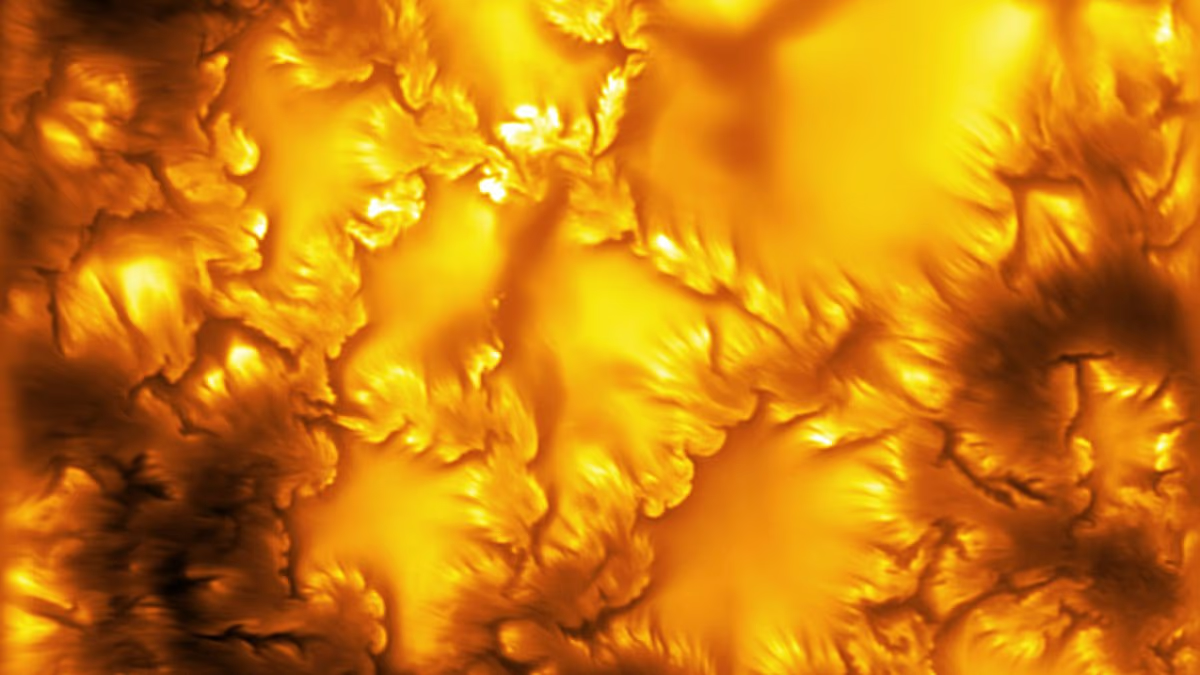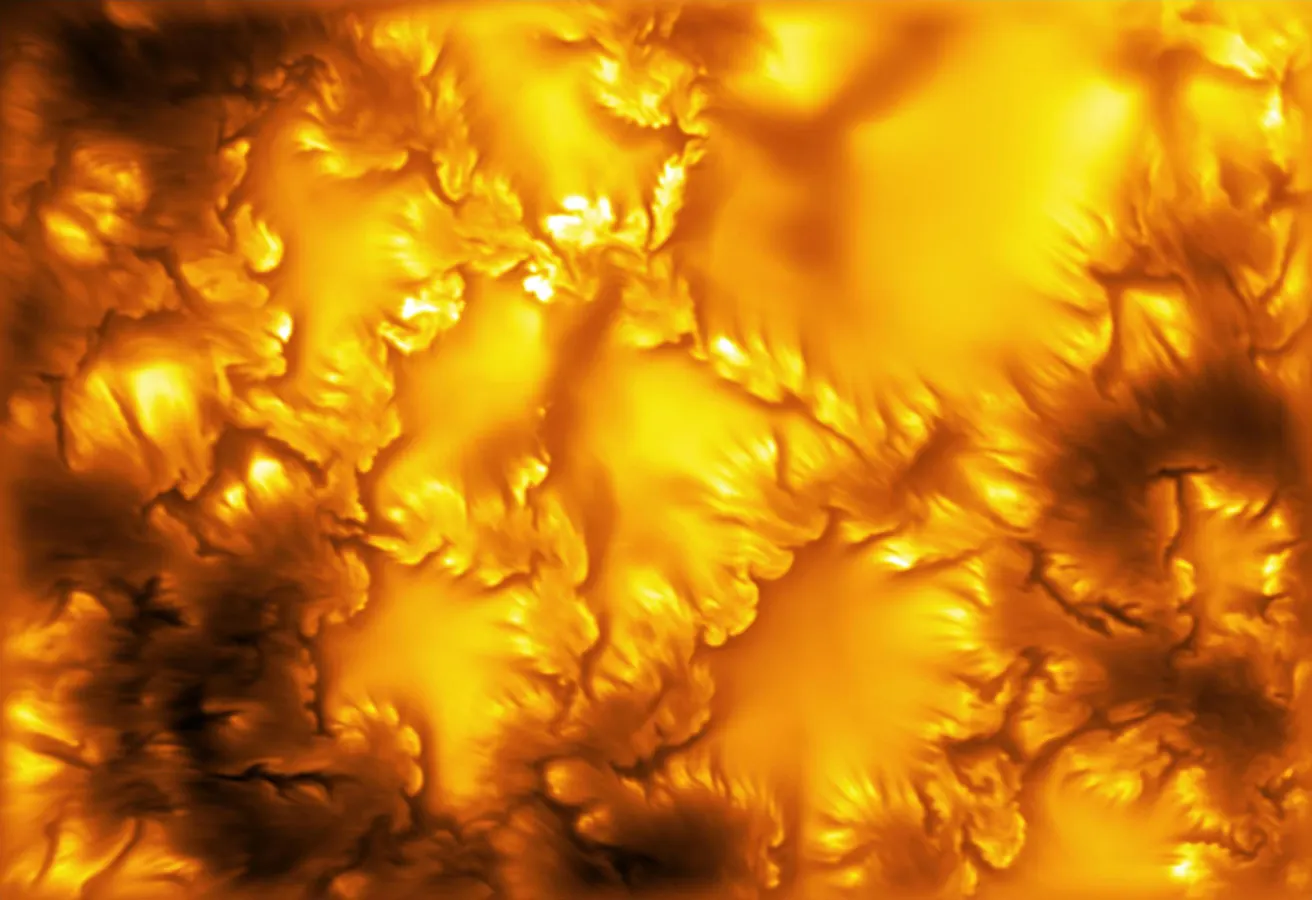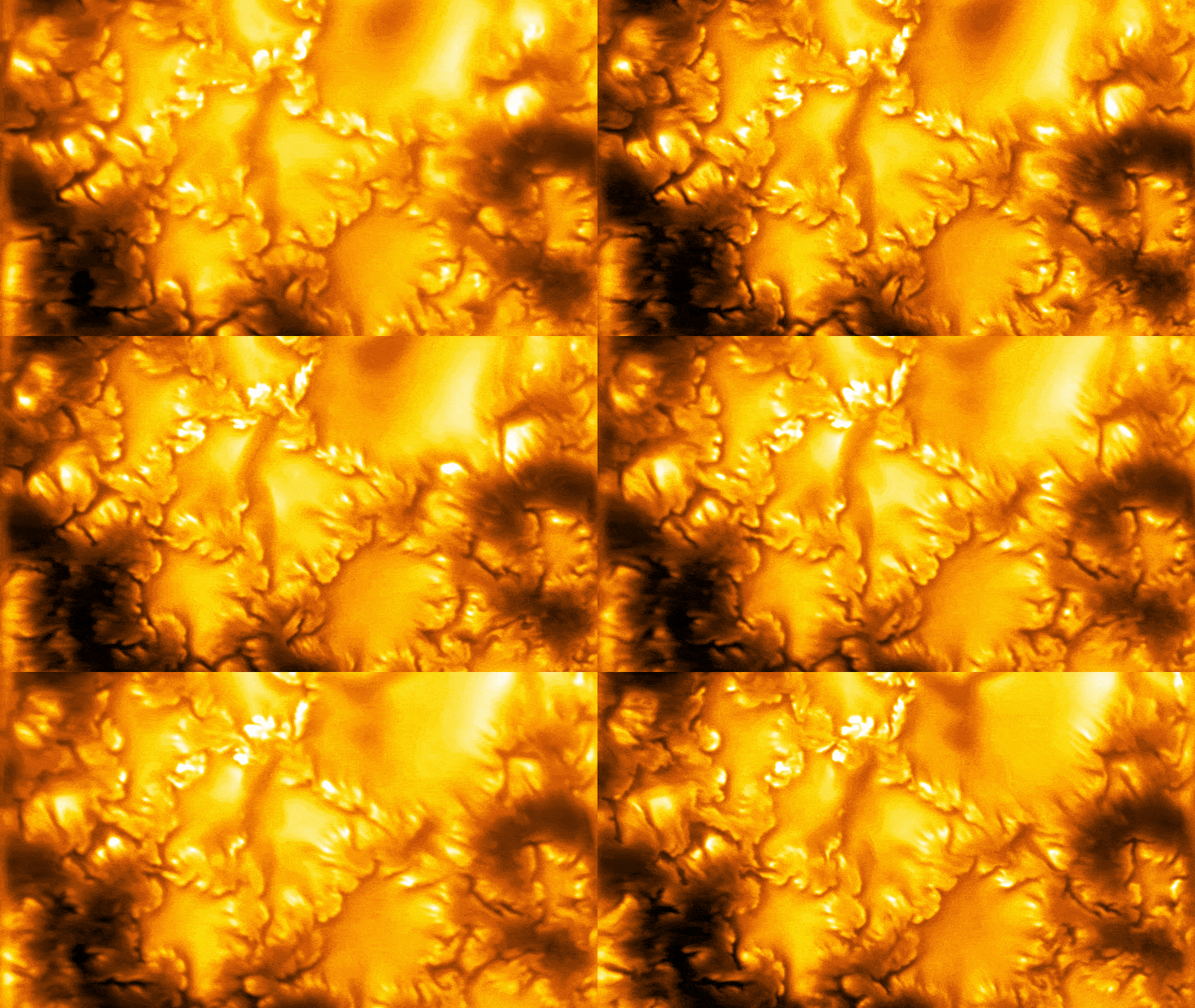
The highest-resolution observations of the Sun's surface ever captured. (NSF/NSO/AURA/MPS )
The visible surface of the Sun is defined by turmoil.Vast towers of heat surge upwards from deep inside the Sun, spreading outwards, cooling, and falling away at the edges of convection cells about the size of Texas.The most powerful solar telescope on Earth, the NSF's Daniel K. Inouye Solar Telescope located in Hawaii, has already dramatically changed our understanding of the Sun.Now, it's taken a massive leap forward. In the highest-resolution images of the Sun ever captured, Inouye has exposed a hidden landscape of eddying whirlpools swirling around the Sun's magnetic boundaries.These features are known as Kelvin-Helmholtz instabilities (KHI). They have been predicted by theory for decades but had never before been observed on the Sun.The new observations aren't merely a confirmation of the theory, though – they suggest that KHI are not isolated disturbances, but an almost ubiquitous feature of the solar surface."We were truly amazed by the incredible amount of small-scale detail and dynamic activity visible in the high-resolution images," solar physicist David Kuridze of the US National Solar Observatory told ScienceAlert."What really surprised us was just how many KHI events we found. Seeing how truly omnipresent they are across the magnetic surface was something we really didn't expect at all."Kelvin-Helmholtz instabilities are spiral-like patterns that form at the boundary where two fluids slide past each other, like ocean waves or certain cloud formations.Because the Sun's plasma is so turbulent, scientists expected KHI to appear there, too, but previous instruments and observations lacked the resolution to see them.That changed with Inouye. In April 2025, the telescope was deployed to stare at a magnetically active region not far from a sunspot to capture a timelapse of the solar plasma in roiling action.