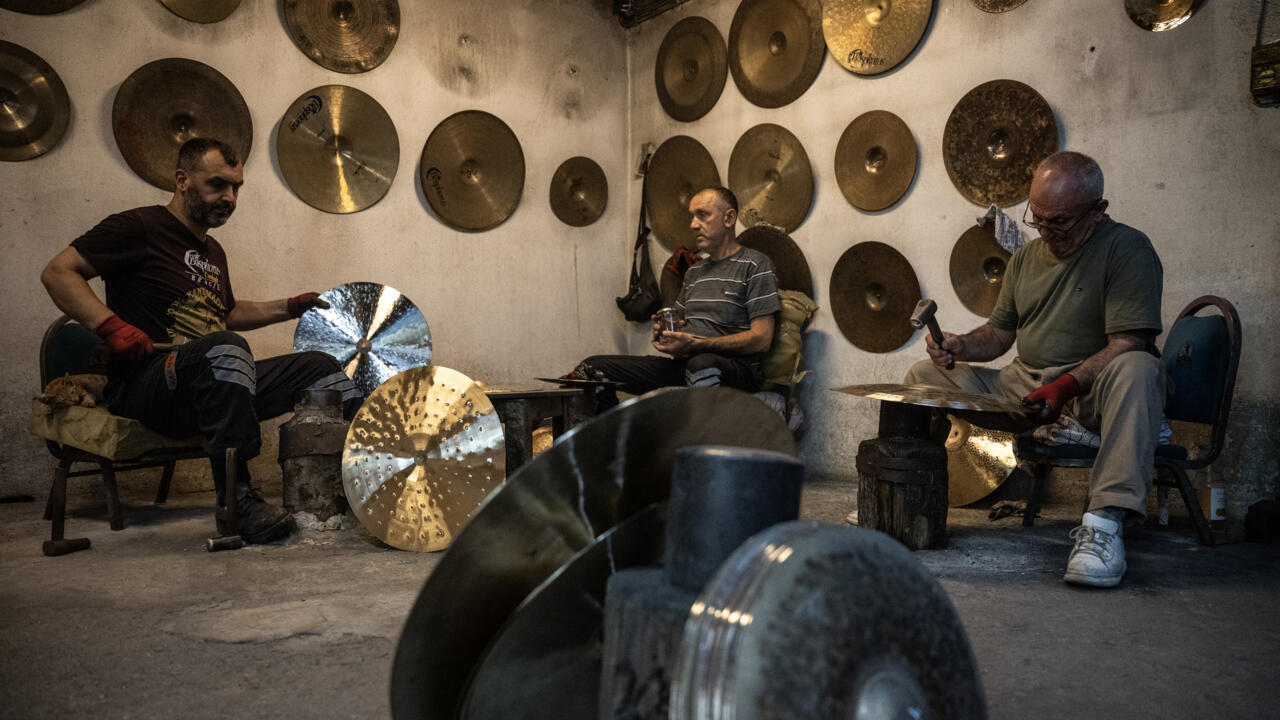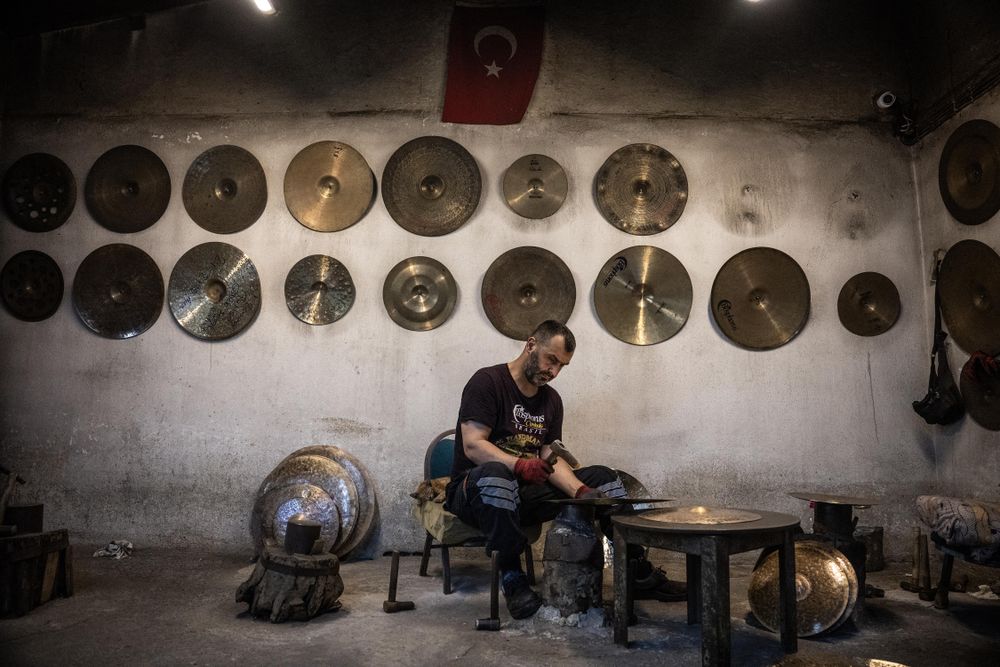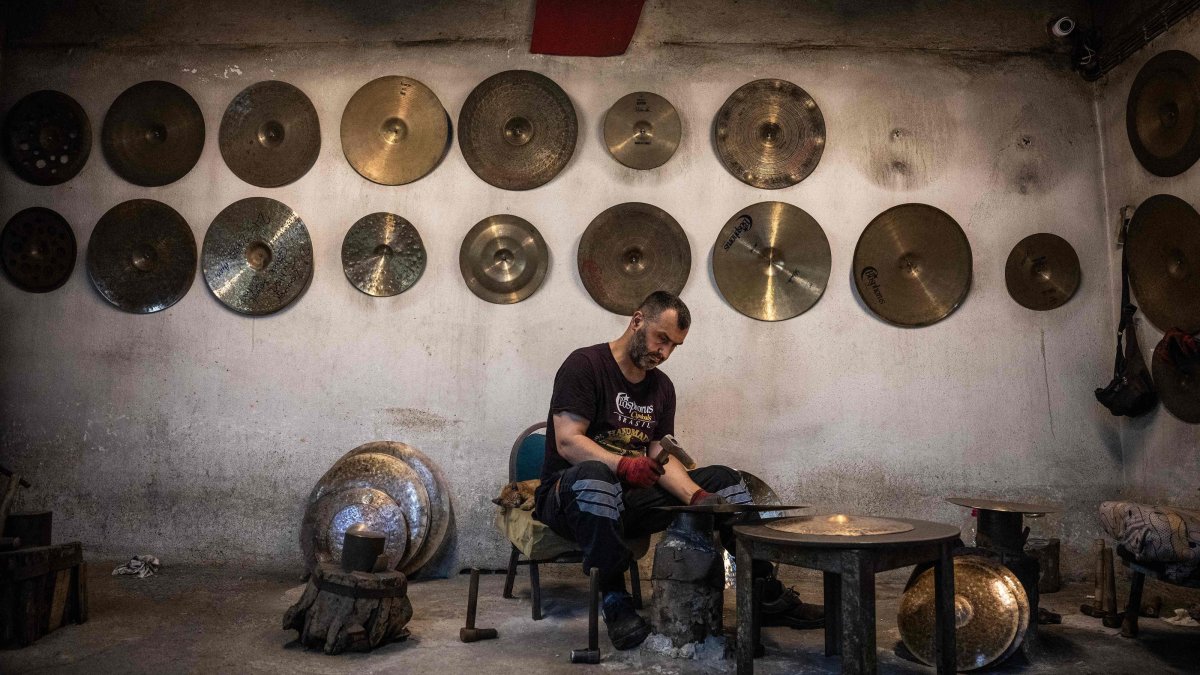
A centuries-old craft born in the Ottoman Empire continues to thrive in Istanbul, where master cymbalsmiths still handcraft bronze cymbals using techniques developed more than 400 years ago and sought after by musicians worldwide.
First used by Ottoman military "mehter" bands to frighten and demoralize the enemy, cymbals were a useful tool for an empire on the warpath.
But it would take the skill of a 17th-century Armenian alchemist called Avedis Zildjian to transform them into a percussion instrument whose sound would first captivate Europe's classical composers and then shape the world of jazz.
Although cymbals existed long before Zildjian, he developed a unique alloy and special process for treating the metals that made them less fragile, winning plaudits in 1623 from the Ottoman sultan who let him set up a workshop.
"It's really hard to make good cymbals because they're consistently being crashed, so to make something that wasn't brittle which could withstand continuous use is quite an achievement," explains ethnomusicologist Audrey Wozniak, who specializes in Turkish musical traditions.