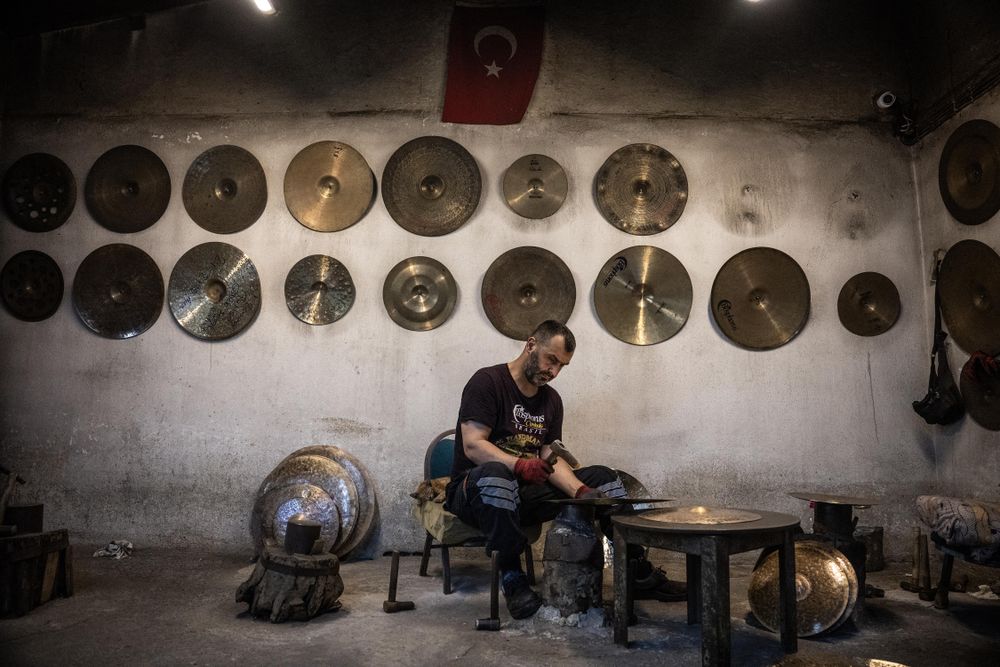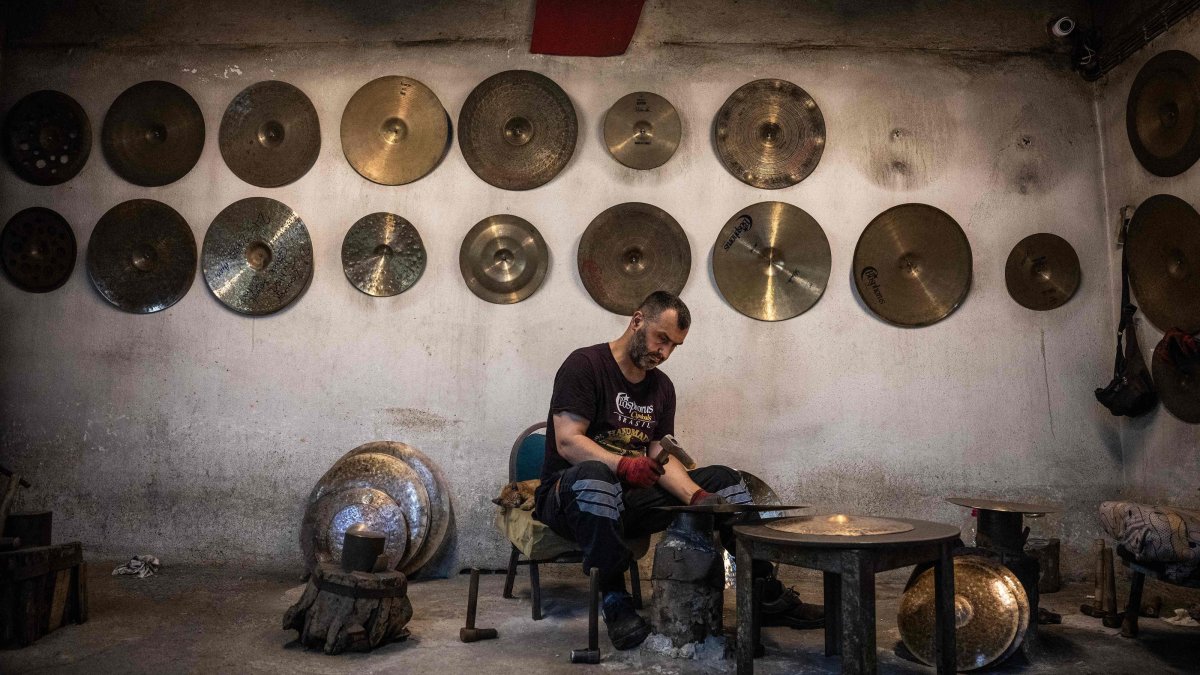
First used by Ottoman military "mehter" bands to frighten and demoralise the enemy, cymbals were a useful tool for an empire on the warpath. But it would take the skill of a 17th-century Armenian alchemist called Avedis Zildjian to transform them into a percussion instrument whose exotic sound would first captivate Europe's classical composers and then shape the world of jazz.Although cymbals existed long before Zildjian, he developed a unique alloy and special process for treating the metals that made them less fragile, winning plaudits in 1623 from the Ottoman sultan who let him set up a workshop.
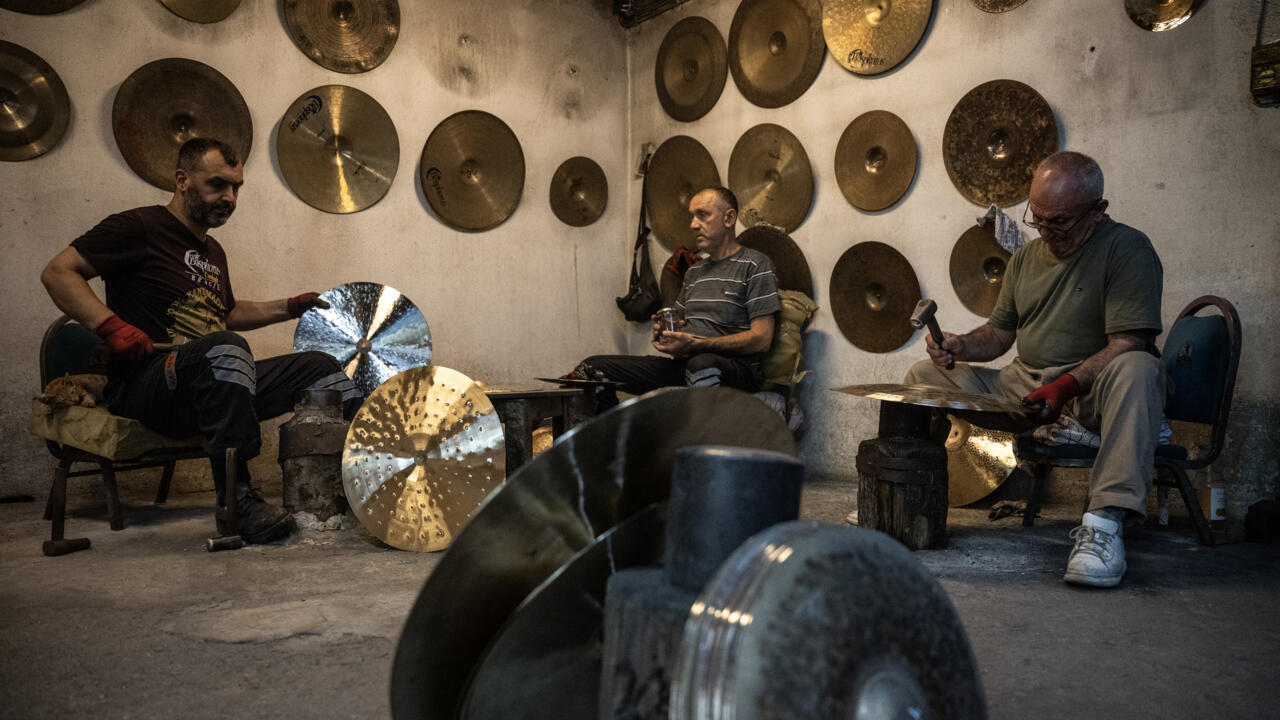
Today, Istanbul remains the centre of excellence for cymbals © Ozan KOSE / AFP
"It's really hard to make good cymbals because they're consistently being crashed, so to make something that wasn't brittle which could withstand continuous use is quite an achievement," explains ethnomusicologist Audrey Wozniak, who specialises in Turkish musical traditions. The secret was passed down through the generations and although the original Zildjian operation left Istanbul for America in the dying days of the Ottoman Empire, others who learned from the Zildjian masters have continued the tradition.Today, Istanbul remains the centre of excellence for cymbals, where a handful of brands still produce hand-hammered bronze using techniques developed more than 400 years ago.'A cymbal's soul'"We are producing 100-percent handmade cymbals with traditional methods, without using electricity or gas, only coal and wood," explains Mehmet Ozturk, sales rep at Bosphorus Cymbals on Istanbul's northern outskirts, who says casting a cymbal takes up to a week.First is the casting stage. Most cymbals are made of a copper and tin alloy that is melted into molten bronze which is poured into moulds and cooled into disc-shaped blanks.Moving swiftly, a worker using a long-handled peel places the blanks into the glowing furnace then removes others that are put through a rolling mill in a cycle repeated up to 15 times to compress and spread the metal which is then water tempered.