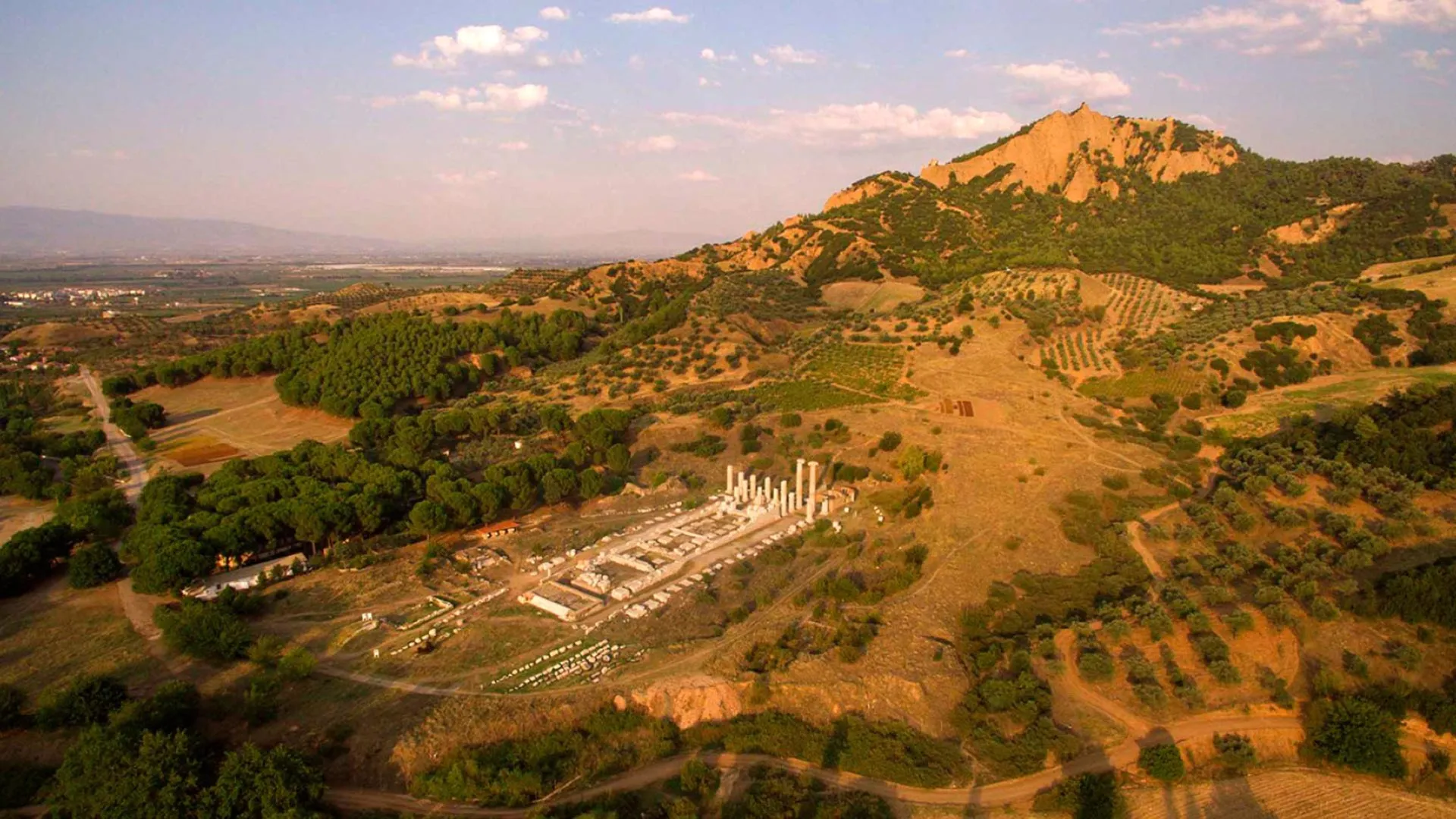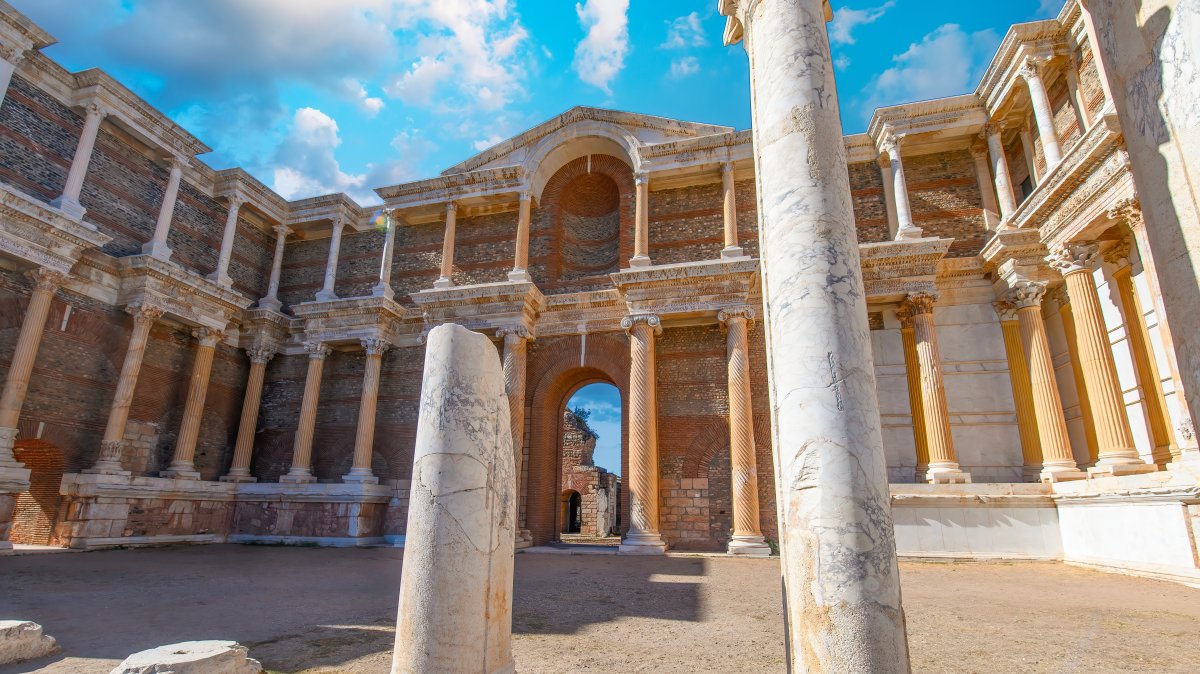
Listed as a UNESCO World Heritage Site, the ancient city of Sardis, the capital of the Lydian Kingdom and the place where the world's first coins were minted, is drawing growing numbers of visitors with its rich archaeological heritage.
Located in Manisa, western Türkiye, Sardis is considered one of Anatolia's most important archaeological sites. Its history dates back to around 1200 B.C.
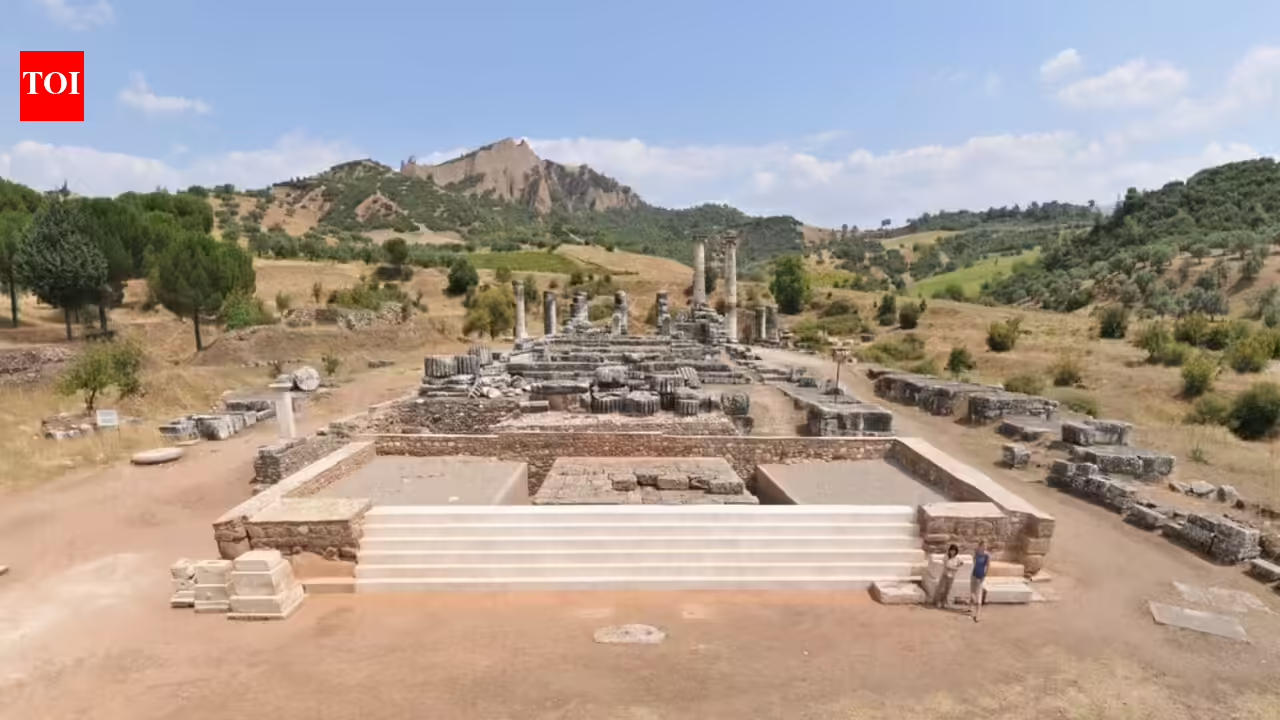
The ancient city contains numerous structures from the Lydian, Persian, Hellenistic, Roman and Byzantine periods. Visitors can explore the Temple of Artemis, the largest synagogue recorded from the ancient world, the church mentioned in the Gospel of John and the remains of the monumental Roman bath and gymnasium.
Excavations continue at Sardis, where archaeological layers from the Byzantine, Roman, Hellenistic, Persian and Lydian periods lie one beneath another. Archaeologists have been working at Sardis for nearly 120 years, uncovering artifacts that continue to shed light on the city's long history.
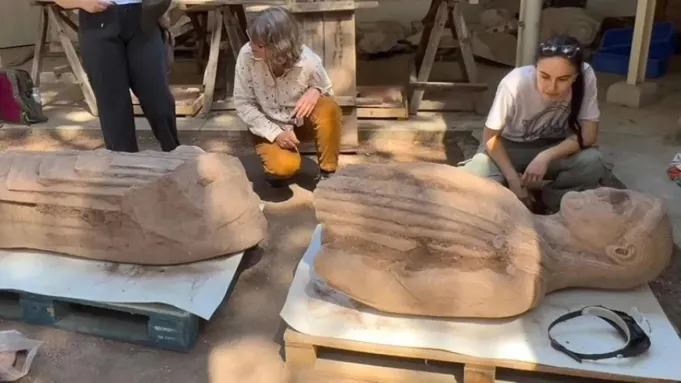
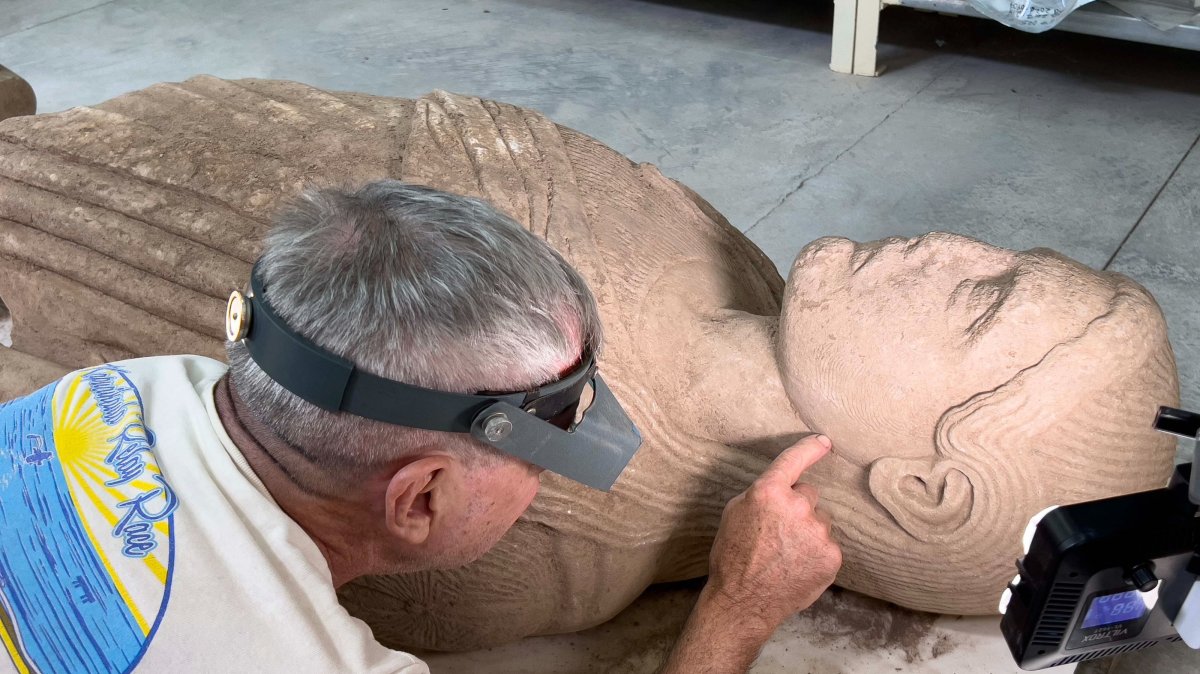
The latest discovery is a 2,500-year-old statue of a young man measuring 2.2 meters (7.2 feet) tall. The statue was reused as spolia in the paving of the city's colonnaded street during the Roman period. It is considered as one of the rare examples of sculpture from its era due to its monumental size, well-preserved condition and remarkable details.