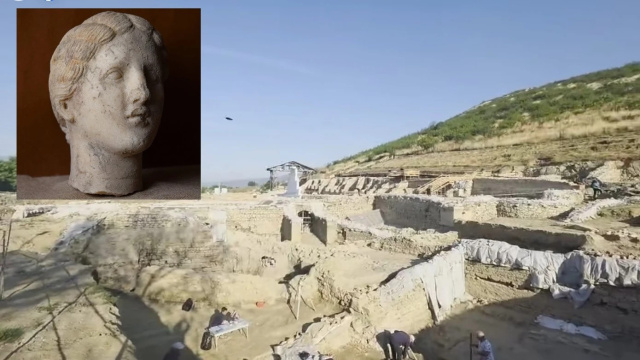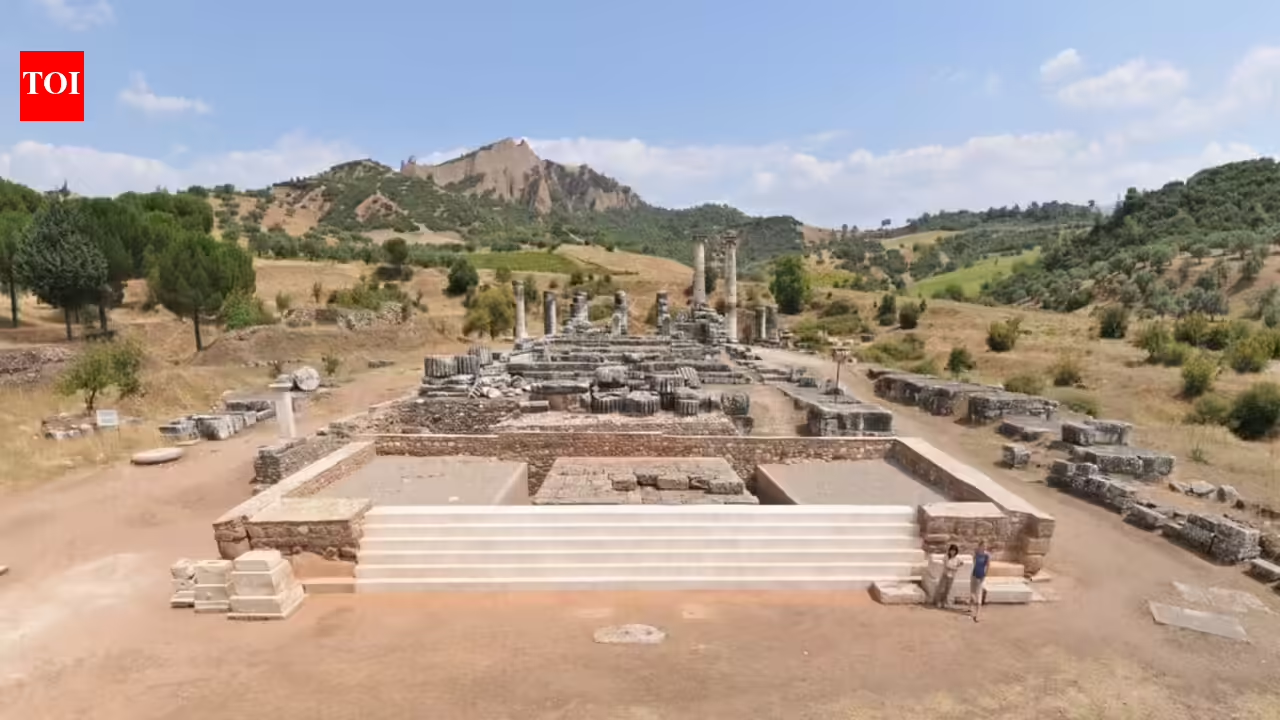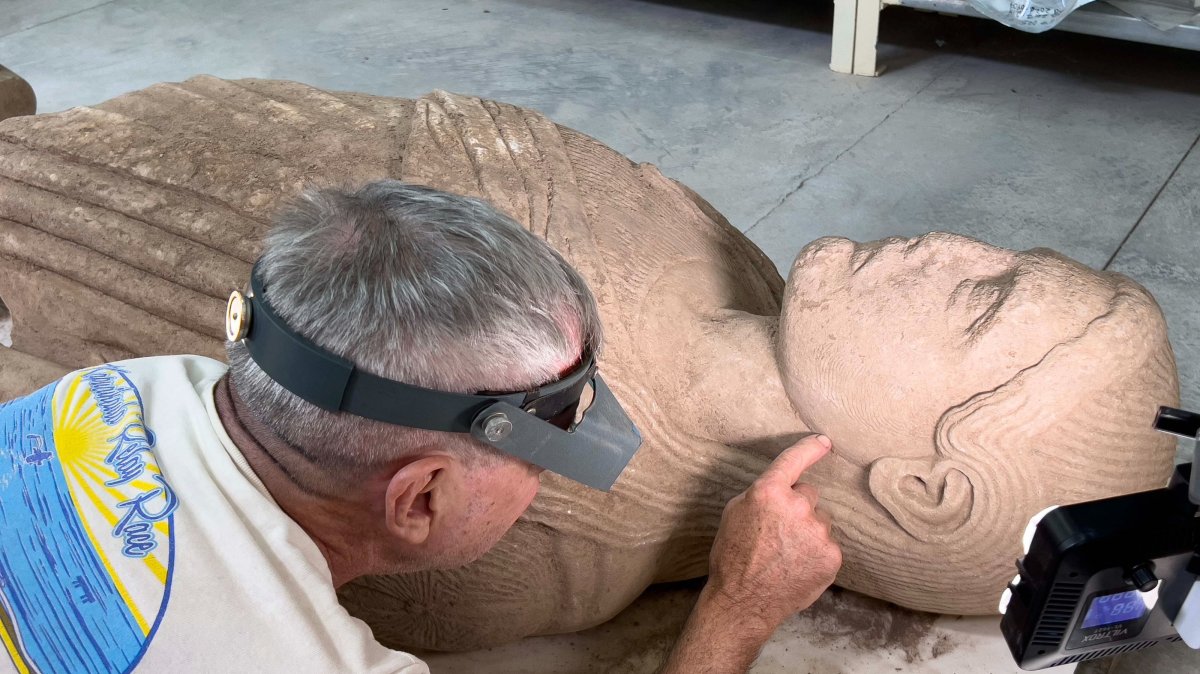
Archaeologists excavating the ancient city of Sardis in western Türkiye have uncovered a monumental marble statue of a young man dating back approximately 2,500 years, in what officials described as one of the most significant recent discoveries in Anatolian archaeology.
The 2.2-meter (7.2-foot) statue was found during ongoing excavations at the UNESCO World Heritage Site in Manisa's Salihli district, carried out under the coordination of Türkiye's General Directorate of Cultural Heritage and Museums.
Culture and Tourism Minister Mehmet Nuri Ersoy announced the discovery on social media, saying the statue dates to the first half of the fifth century B.C. and is among the rare surviving examples of monumental sculpture from the period because of its remarkable state of preservation and impressive craftsmanship.
The statue was discovered in two large pieces, with its feet and several smaller fragments missing. Researchers believe it originally stood as a monumental sculpture before being repurposed during the Roman period as paving material in the city's colonnaded street.
Its face-down placement within the pavement helped protect its facial features and fine details for centuries, officials said.