Limited evidence of generalisation of inflationary pressures, favourable impact of the measures to attract capital flows reduced the urgency to hike rates
| Photo Credit:
sommart
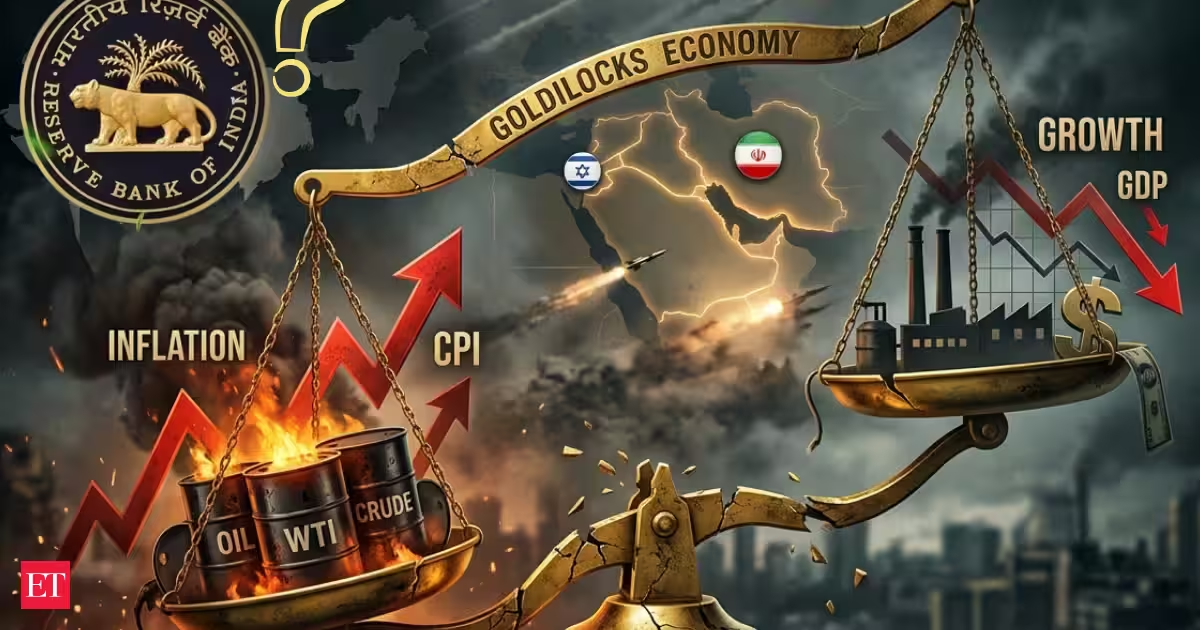
The Monetary Policy Committee’s (MPC’s) decision to maintain status quo in the August meeting was a foregone conclusion. Limited evidence of generalisation of inflationary pressures, favourable impact of the measures to attract capital flows announced in June amid continued uncertainty around geopolitical tensions and monsoon outcomes reduced the urgency to hike rates. Overall, the tone of the policy document was relatively more benign, in contrast with the hawkish commentary in June.Amidst the global uncertainty that has prevailed since March 2026, the MPC’s latest forecasts exude a degree of confidence. The MPC expects GDP growth to be 6.7 per cent in FY27, 10 basis points (bps) higher than its previous forecast, with an upward revision in the forecasts for H1 FY27. High frequency indicators for the last few months continue to belie the uncertainty generated by the West Asia conflict, and the monsoon, which have taken a toll on both rural and urban consumer confidence. However, Q1 corporate results do reveal that margins have borne the brunt of commodity price inflation and supply chain disruptions.Simultaneously, the Committee has pared the CPI inflation projection for the fiscal by 10 bps to 5 per cent, led by a lower-than-expected print for Q1 and a cut in the forecast for Q2 FY27. We broadly concur with the Committee’s growth and inflation forecasts and believe that these are appropriate for an average crude oil price of $80-85/barrel and a mild YoY fall in kharif sowing.Evenly balancedBesides, the MPC’s assessment of risks around the growth and inflation forecasts for FY27 shifted to ‘evenly balanced’ from adverse in the June meeting, reducing the likelihood for an impending rate tightening in the upcoming October policy review. However, adverse geopolitical developments resulting in a sharp rise in crude oil and commodity prices, and unfavourable domestic monsoon outcomes remain a cause for concern. Thereafter, we believe that the December meeting would be live for policy action.While inflation has only just crossed the 4 per cent mark, i.e., the mid-point of the Committee’s medium term target range of 2-6 per cent, and trimmed core inflation remains surprisingly benign, an adverse base means that inflation prints are certainly set to harden appreciably in the next few months. In line with this, the MPC’s CPI inflation projections from Q3 FY27 through Q1 FY28 remain anchored between 5 per cent and 6 per cent.This suggests that the real policy rate would be inverted during that period, if kept unchanged, supporting the case for a rate hike in December or later. Further any confirmation around generalisation of inflationary pressures beyond the food and fuel basket in the near term, notwithstanding the adverse base effect in Q3 FY27, would strengthen the case for a rate hike.In contrast, a favourable rainfall in the remaining part of the Southwest Monsoon season, along with sustainable dip in crude oil prices to $70-75/barrel, could lead to a delay in the onset of the rate hike cycle, even if these do not lead to material revisions in the near-term CPI inflation projections. This would augment the case for looking through a transient supply-led inflation spike, if inflation projections beyond Q1 FY28 dip below 5 per cent.Mirroring the geopolitical volatility, as well as tempestuous FPI flows, bond yields have fluctuated over the last six months. After rising to 7.13 per cent on May 18, 2026, India’s 10-year G-Sec yield cooled to 6.70 per cent in early-July, following softening in crude oil prices, favourable measures introduced by the RBI to attract capital flows, and the removal of capital gains and withholding taxes on G-Sec investments by FPIs. Thereafter, it has hovered around the 6.80 per cent mark, amid intermittent renewal of tensions in West Asia and consequent inflationary and fiscal risks. Yields were largely unchanged after the August 2026 status quo policy outcome. We expect the 10-year G-Sec yield to trade at 6.70-6.90 per cent in the near term, until a rate hike appears imminent.The writer is Chief Economist, Head-Research & Outreach, ICRAPublished on August 6, 2026