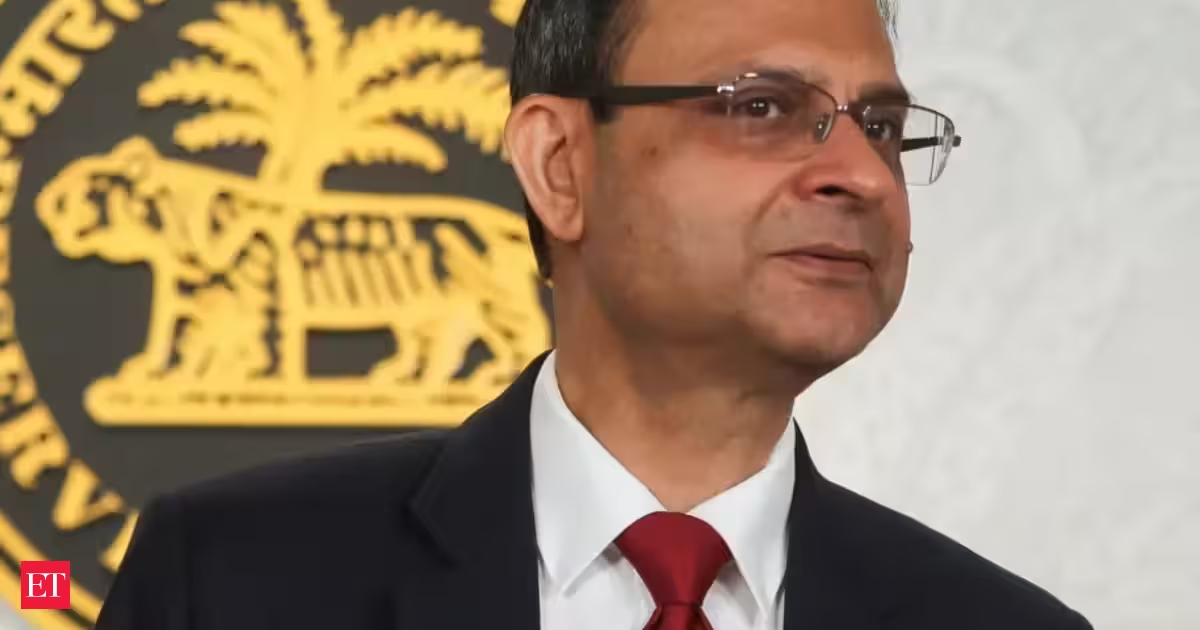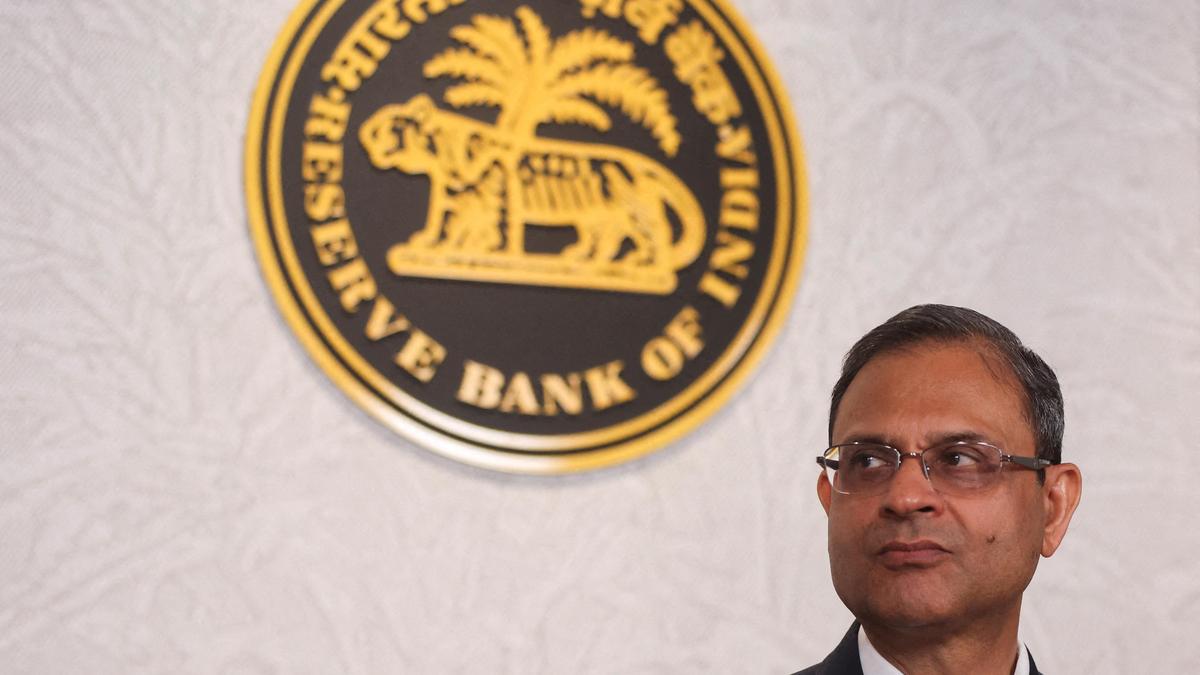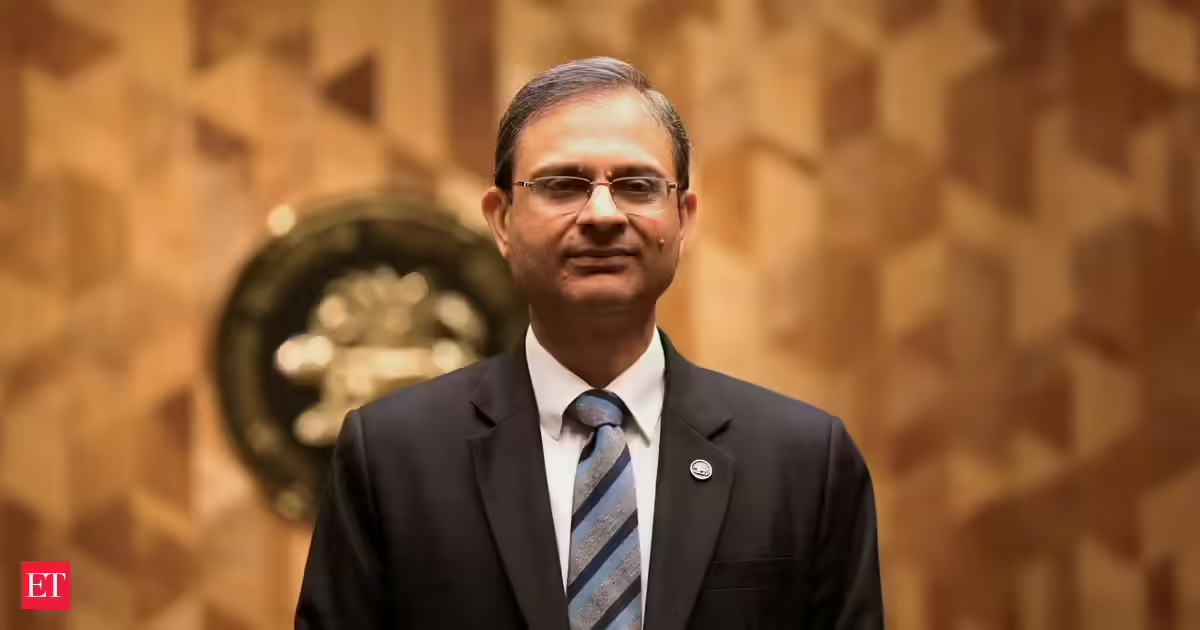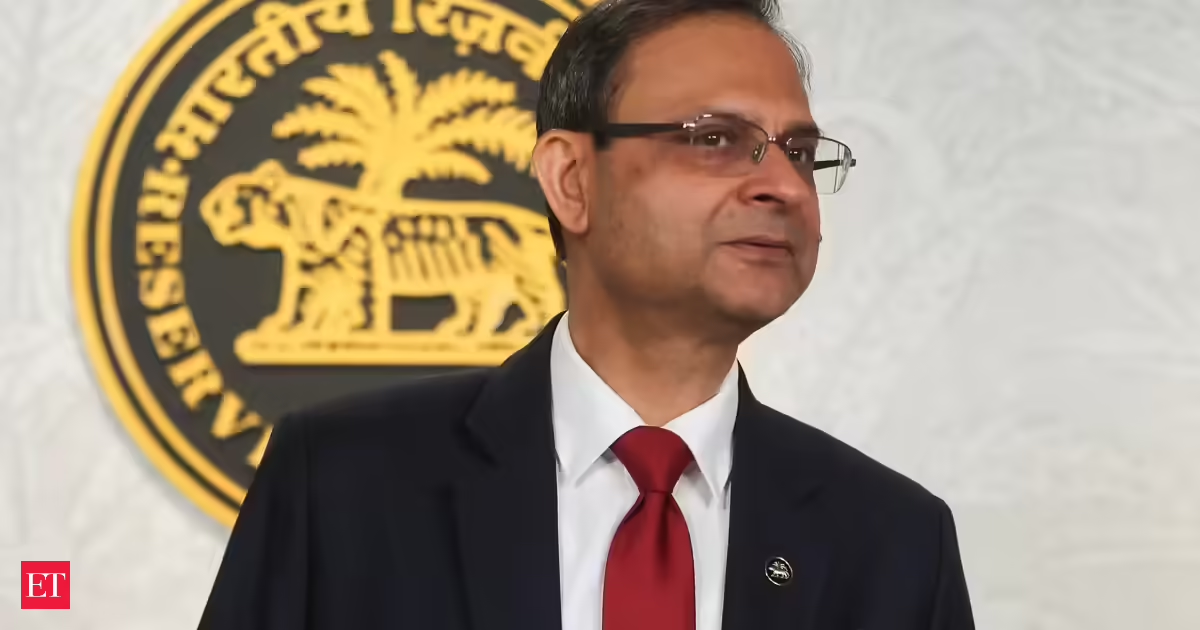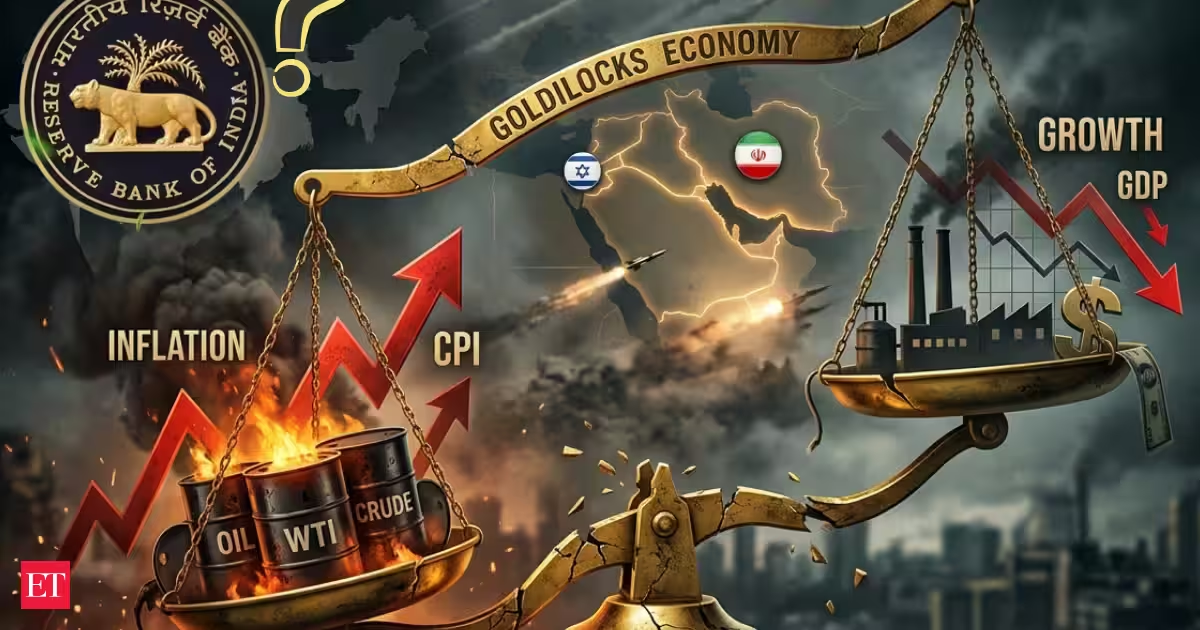
The Reserve Bank of India's Monetary Policy Committee on Wednesday voted unanimously to keep the repo rate unchanged at 5.25 per cent, even as Governor Sanjay Malhotra's growth and inflation outlook came with a stark warning: Global conditions remain "hostage to the rapidly oscillating developments" of the West Asia conflict.War, tariff concerns cloud global outlookOpening his statement, Malhotra said the West Asia conflict continued to challenge the global economy by disrupting key trade routes and supply chains, amplifying market volatility and denting business sentiment.Also read: RBI MPC Meeting 2026: Sanjay Malhotra & team keeps repo rate at 5.25% as global risks linger with Iran war flare-upTrade uncertainty lingered as the US imposed fresh tariffs, he said, adding that the global economic environment had become increasingly unstable, with global growth projected to soften while inflation is forecast higher in 2026 than in 2025.In its resolution, the MPC noted that relief from a temporary ceasefire in West Asia had dissipated quickly after the conflict resumed in July, adding to a global backdrop already marked by sharp market swings, persistent inflation concerns and shifting central bank policy stances.The committee said several central banks had raised rates in response to inflationary pressure while others remained watchful, even as the US dollar strengthened on elevated yields, a hawkish Federal Reserve and AI-driven productivity gains in the American economy.Global equity markets, it said, stayed volatile as investors repriced exposure to AI-linked stocks.Malhotra noted that supply-side pressures from the West Asia conflict had actually eased somewhat since June, prompting the government to withdraw temporary measures and normalise key input supplies, including the removal of restrictions on non-domestic packed LPG in late June.However, he said, the re-escalation of the conflict since the first week of July had amplified volatility in energy prices and renewed uncertainty about supply chains.Reacting to the policy, Madhavi Arora, Chief Economist at Emkay Global Financial Services, described the MPC's tone as cautious yet constructive, balancing risks from the Middle East conflict, tighter global financial conditions and El Niño against resilient domestic growth and strong FCNR+ inflows.She noted that even though Q1 inflation had come in below the RBI's own forecast, the committee had kept its focus on El Niño-related risks, while maintaining that near-term price pressures were largely supply-driven and would only prompt policy action if they broadened into second-round inflation effects.Domestic economy holds steady despite headwindsDespite the external headwinds, the committee assessed the Indian economy as resilient, reaffirming India's position as the world's fastest-growing major economy. Malhotra pointed to healthy Q1 corporate results in manufacturing, an expansionary PMI, and sustained momentum in services on the back of strong domestic demand.Private consumption was driven by buoyant discretionary spending, while investment activity stayed steady on the back of robust government infrastructure spending. Merchandise exports rebounded with double-digit growth, and services exports sustained their momentum.Agriculture: Monsoon deficit, El Niño flagged as risksOn agriculture, the MPC flagged a deficient and uneven south-west monsoon amid El Niño conditions as a key risk to the outlook. As of August 3, the cumulative monsoon deviation from normal stood at 11.9 per cent. Reservoir levels offered some comfort, with water storage across 166 major reservoirs at 44.4 per cent of capacity, though this was down from 69.3 per cent a year earlier and below the decadal average of 47.7 per cent.Also read: RBI GDP Growth 2026-27: Malhotra & Co lift FY27 GDP forecast to 6.7% from 6.6% on growth resilienceThe MPC said government initiatives on crop diversification, including a push toward short-duration and climate-resilient crop varieties, along with water harvesting and conservation measures, were expected to mitigate the impact of deficient rainfall.Inflation outlookOn prices, the MPC noted that CPI inflation rose to 4.4 per cent in June 2026, ending 16 consecutive months of readings below target, though the reading came in 30 basis points lower than the committee's own earlier projection for the quarter.The increase was driven mainly by higher food and fuel inflation, with food price pressures broad-based across most constituents during May-June, and fuel inflation rising following a revision in retail prices after a sharp spike in international energy prices, which also pushed up costs in categories such as restaurant services.Rationale for holding ratesExplaining its decision, the MPC said headline inflation was expected to rise further in the near term and peak in the third quarter, largely due to food and fuel prices rather than any broad-based increase, while core inflation excluding precious metals remained benign and was likely to converge with headline core inflation by the end of the financial year.The MPC said it needed greater clarity, particularly on the path and composition of inflation, before considering any change in rates, and would also factor in the need to recalibrate policy as underlying inflation normalises from its recent benign levels.MPC composition, next stepsThe MPC, chaired by Malhotra and comprising Dr Nagesh Kumar, Saugata Bhattacharya, Prof Ram Singh, Dr Poonam Gupta and Indranil Bhattacharyya, held its 62nd meeting from August 3 to 5. The panel kept the standing deposit facility rate at 5 per cent and the marginal standing facility rate and Bank Rate at 5.5 per cent, while retaining its "neutral" policy stance.Malhotra said the Reserve Bank would "do whatever it takes" to preserve stability of prices, the financial system and the currency, adding that the stronger macroeconomic fundamentals of the Indian economy were helping the country navigate the global shock resolutely.The MPC said it would maintain close vigil on macroeconomic developments and remain committed to aligning inflation with its target.The minutes of the meeting will be released on August 19, and the next MPC meeting is scheduled for October 5 to 7, 2026.
RBI's rate, GDP and inflation verdict also comes with a stark warning
2026 RBI MPC Meeting: The Reserve Bank of India maintained its repo rate at 5.25 percent on Wednesday. This decision marks the fourth consecutive meeting without a change in the key interest rate. The central bank cited sticky inflation and geopolitical risks as reasons for its cautious approach. Global economic instability and trade uncertainties also influenced the committee's deliberations. The Monetary Policy Committee retained its neutral policy stance, reflecting ongoing external uncertainties.
936 words~4 min read