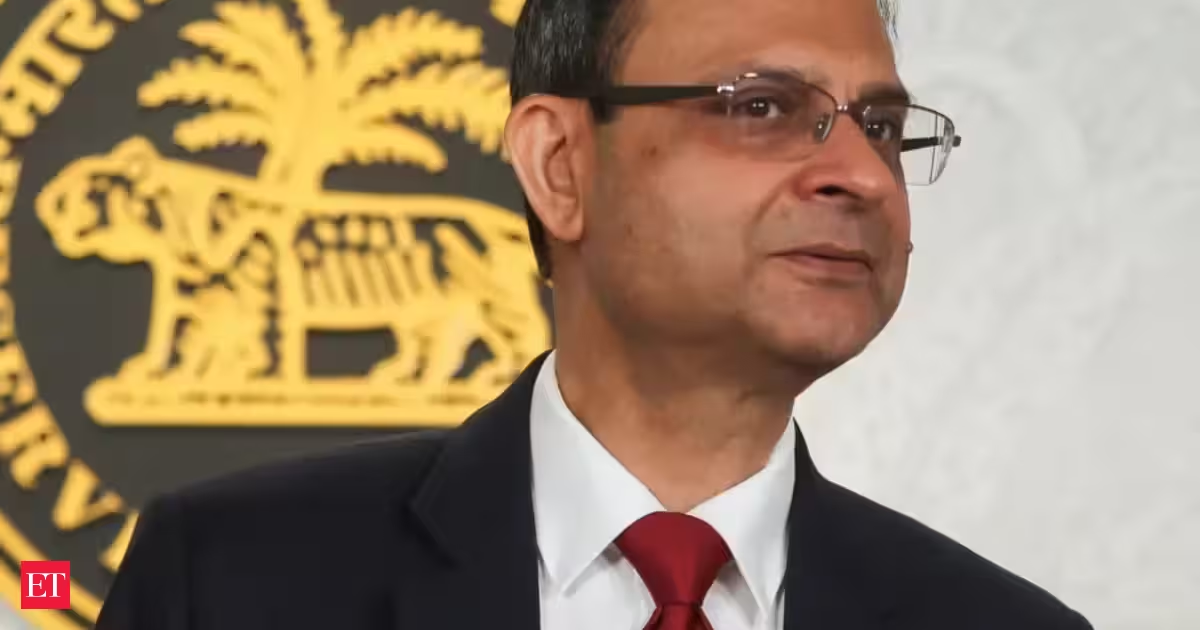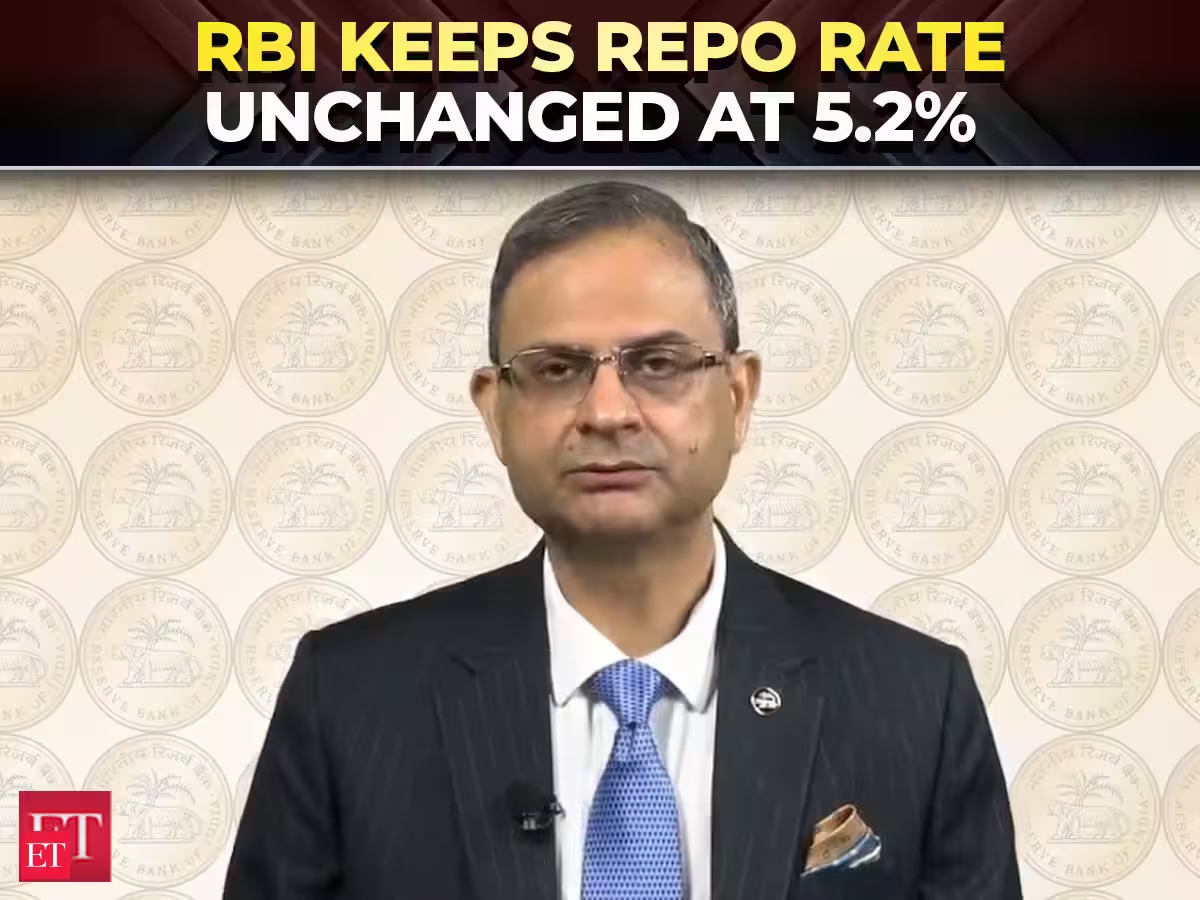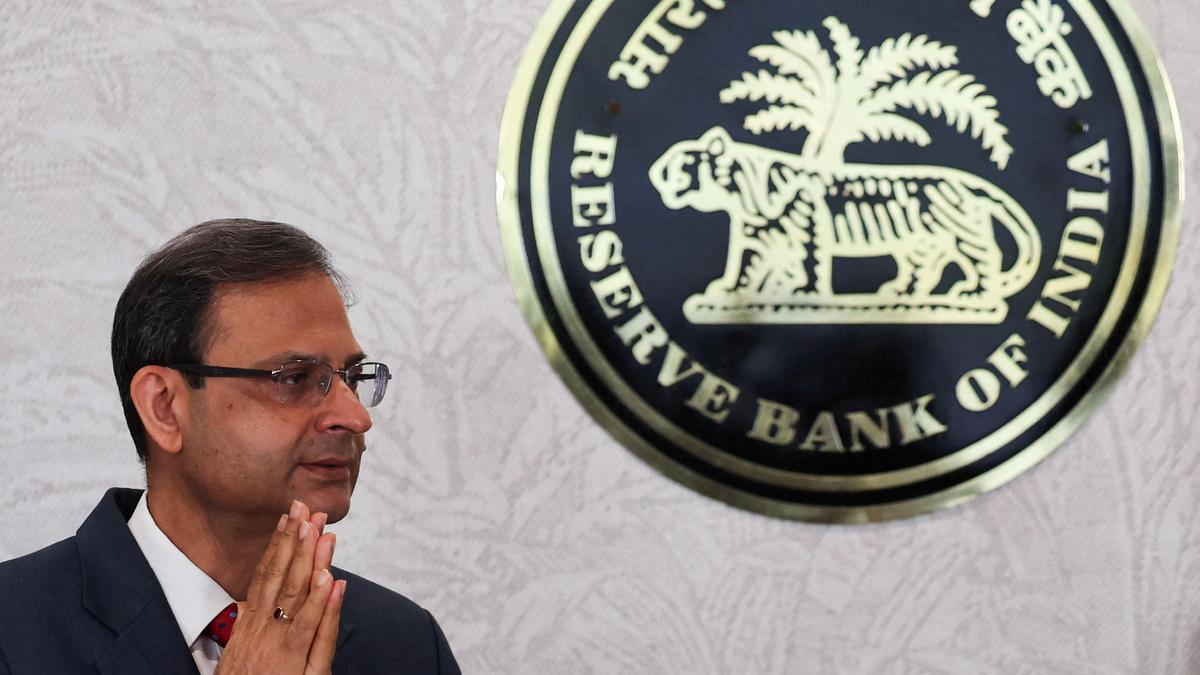
The three-day Monetary Policy Committee (MPC) meeting wrapped up today (Wednesday, August 5, 2026), and Reserve Bank of India (RBI) governor Sanjay Malhotra announced that the repo rate remains steady at 5.25%. This marks the fourth consecutive MPC where the RBI has opted to keep the rate unchanged, with the last adjustment being a 25 bps cut back in December 2025. While the RBI’s decision not to raise the repo rate might have reduced the possibility of an immediate FD rate hike, it can’t be ruled out altogether because of the high inflation at present. Given the consumer price index inflation, at 4.38% in June with the July data yet to be released, is moving towards the RBI’s upper tolerance band of 6%, the probability of another repo rate hike in the upcoming MPC can’t be ruled out as well. Repo rate since Feb 2025 DateBefore you continue readingHow financially free are you?Most people overestimate their financial freedom. Discover your Financial Freedom score through a quick survey Repo rate (%) Change (%) 07-Feb-25 6.25% -0.25% 09-Apr-25 6.00% -0.25% 06-Jun-25 5.50% -0.50% 06-Aug-25 5.50% 0.00% 05-Dec-25 5.25% 0.25% 06-Feb-26 5.25% 0.00% 08-Apr-26 5.25% 0.00% 05-Jun-26 5.25% 0.00% 05-Aug-26 5.25% 0.00% Beside high inflation, many other factors are also at play that influence banks’ decision to raise FD rates. Factors including deposit-credit ratio, 10-year G Sec yield and attractive interest rates offered by small savings schemes also have an impact on banks' decision to raise FD rates. It’s hard to predict how long it will take banks to increase FD rates, but here are a few points suggesting that an increase is definitely possible. Rising inflationHow inflation has risen in the past few months can be gauged from the fact that in October 2025, it was 0.25. It rose to 1.33 in December, 3.4 in March 2026 and 4.38 in June. Adhil Shetty, CEO, BankBazaar.com, told ET Wealth Online that geopolitical tensions due to Iran-US conflict and concerns around the monsoon kept inflationary pressures elevated. Anand K Rathi, co-founder, MIRA Money, says energy shock and higher crude oil prices made transportation more expensive, which also made inflation worse. For how long inflation will keep rising, according to Shetty, will depend on the progress of the monsoon, food supply conditions, crude oil prices and global developments. When inflation rises for a long term, the RBI reacts by increasing the repo rate. However, it may not be possible by just looking at the inflation data of one or two months. But if inflation remains elevated over the coming months or moves closer to 6%, the possibility of a repo rate hike would increase.When the RBI increases the repo rate, it may provide some cushion for banks to increase FD rates on some of its deposits. CPI inflation since June 2025 Month Inflation rate Oct-25 0.25% Nov-25 0.71% Dec-25 1.33% Jan-26 2.74% Feb-26 3.21% Mar-26 3.40% Apr-26 3.48% May-26 3.93% Jun-26 4.38% Deposit-credit growthSince liquidity is an important factor for banks to run their business, they also monitor deposit growth and credit demand before raising FD interest rates. As per the RBI data for the fortnight ended July 15, 2026, bank credit climbed by 17.7% (at Rs 217.3 lakh crore) year-on-year, while deposit growth slowed by 12.7% (at Rs 262.9 lakh crore). The credit-deposit ratio for the banking sector stood at 82.68% as on July 15. The same ratio for the December 15 fortnight was 81.61%. The gap between credit and deposit growth has widened in recent months, meaning banks are lending faster than they are mobilising deposits. “When the gap persists, banks may need to attract more deposits to support future lending, and offering higher FD rates is one way to do that, says Shetty. However, other than the credit-deposit ratio, liquidity conditions and each bank's funding position also influence how quickly fixed deposit rates move. Top 5 FD interest rates from public sector banks Bank Highest FD rate Tenure Bank of India 6.85% 999 days Punjab & Sind Bank 6.85% 666 days Indian Bank 6.80% 555 days Bank of Baroda 6.75% 555 days – BoB Golden Goal Deposit Scheme Central Bank of India 6.70% 444 days Top 5 FD rates from private sector banks Bank Highest FD rate Tenure DCB Bank 7.50% 24 to <25 months; 34 to <35 months; 60 to 61 months Bandhan Bank 7.45% 2 years to less than 3 years CSB Bank 7.35% 18 months Jammu & Kashmir Bank 7.30% 888 days SBM Bank India 7.30% Above 18 months to less than 2 years 3 days Top 5 FD rates from small finance banks Bank Highest FD rate Tenure Suryoday Small Finance Bank 8.10% 30 months Utkarsh Small Finance Bank 8.10% 666 days Equitas Small Finance Bank 8.00% 3 years 1 day (Maxima FD) Jana Small Finance Bank 8.00% Above 2 years to 3 years Shivalik Small Finance Bank 8.00% 23 months 1 day to 27 months FD interest rate source: Paisabazaar10-year G-Sec yield is highBanks also try to keep their fixed deposit rates higher than government securities to attract investors. Government securities are of various tenures, but the 10-year G-Securities yield is considered to be an important benchmark for many interest rates in India. For banks offering FDs, it also works as a competitive rate, and they want to keep their deposit rates higher than the 10-year G-Sec yield. The 10-year G Sec yield as of July 31 stood at 6.833. It was 7% in early June and has been hovering around that mark since then. A high 10-year G-Sec rate also indicates that banks are likely to consider raising FD interest rates due to competitive pressure. High interest rates on small savings schemesSmall savings schemes offered by banks and post offices also produce stiff competition for bank FDs. High small savings scheme interest rates mean banks also need to keep FD rates high to attract depositors. Looking at the current small savings scheme rates, many of them have been offering over a 7% rate to their depositors with the Senior Citizen Small Savings Scheme (SCSS) and the Sukanya Samriddhi account offering the highest at 8.2% each. Since many retail investors also invest in small savings schemes, the government wants to keep the interest rates high to benefit them. Despite many indicators suggesting so, the government hasn’t cut interest rates of small savings schemes since December 2024. If banks want to raise more deposits, they will have to compete with interest rates offered by small savings schemes and they will be compelled to consider raising FD rates. Post office small savings scheme interest rates Scheme Interest Rate (%) Tenure / Maturity Senior Citizen Savings Scheme (SCSS) 8.20% 5 years Sukanya Samriddhi Account (SSA) 8.20% 21 years (maximum) National Savings Certificate (NSC) 7.70% 5 years Kisan Vikas Patra (KVP) 7.50% 115 months Monthly Income Scheme (MIS) 7.40% 5 years Post Office Time Deposit (5-year) 7.50% 5 years Public Provident Fund (PPF) 7.10% 15 years Source: Post office When can banks increase FD interest rates?Raj Khosla, founder & managing director, MyMoneyMantra.com, says although there is no mandated timeframe, as soon as the RBI brings any policy change, banks typically revise their FD rates within a few days to 4-6 weeks. The exact speed of revision depends on several banking operational factors, says Khosla. Shetty says some banks revise FD rates within a few days of an RBI policy change, while others may wait for several weeks depending on their funding requirements and liquidity position. “Private sector and small finance banks often respond faster when they need deposits, whereas larger public sector banks may take longer if they already have sufficient liquidity,” explains Shetty. Khosla says it has been noted that banks often adjust short and medium-term FD rates more quickly than long-term rates. Rathi says banks may not increase rates on long-term deposits as they may think that the current inflationary forces are only temporary and so these banks may not want to lock in higher interest rates for a long time. Despite many indicators showing that banks may increase interest rates on certain FD tenures, lenders may still take some time to make such a move. They may wait for the RBI policy change, look at the credit-deposit ratio, internal liquidity conditions and a few other factors before going for a FD rate hike for select tenures.
RBI policy: Will high-interest rate cycle return for FD investors as RBI holds repo rate amid rising inflation? - The Economic Times
RBI MPC repo rate: The Reserve Bank of India maintained its repo rate at 5.25 percent today. Inflation is nearing the upper tolerance band, which could prompt future rate hikes. Banks monitor deposit-credit ratios and government security yields for rate decisions. High interest rates on small savings schemes also influence bank deposit offerings. Lenders may adjust fixed deposit rates soon based on these economic indicators.
1,388 words~6 min read