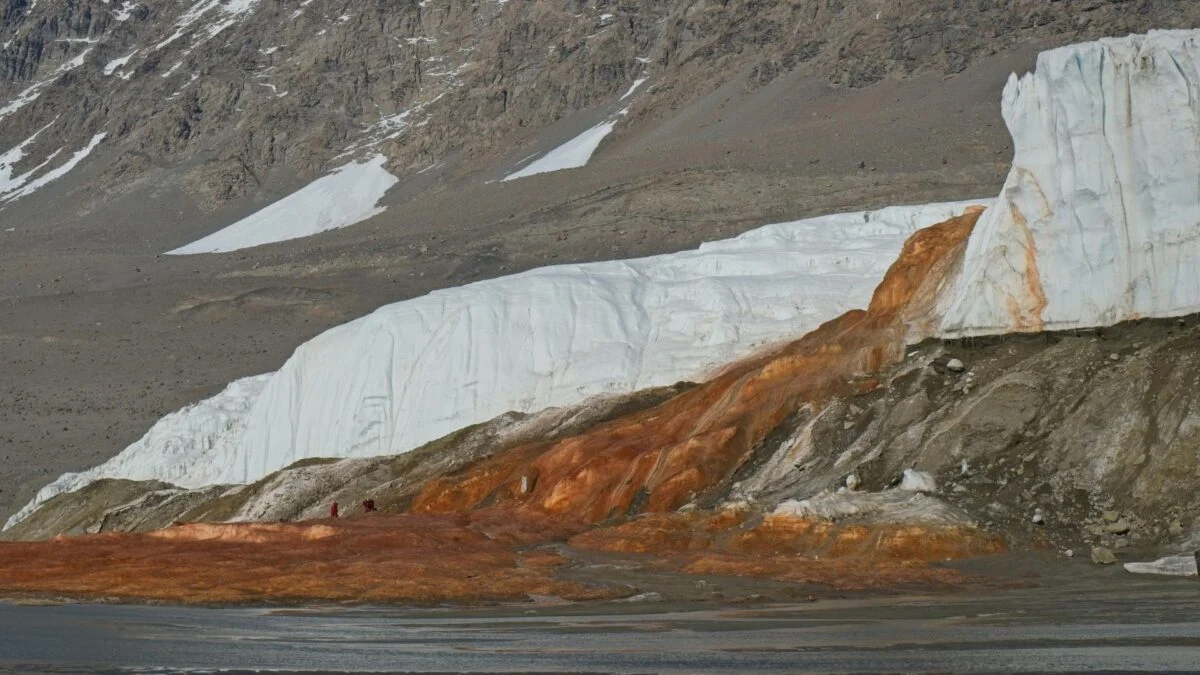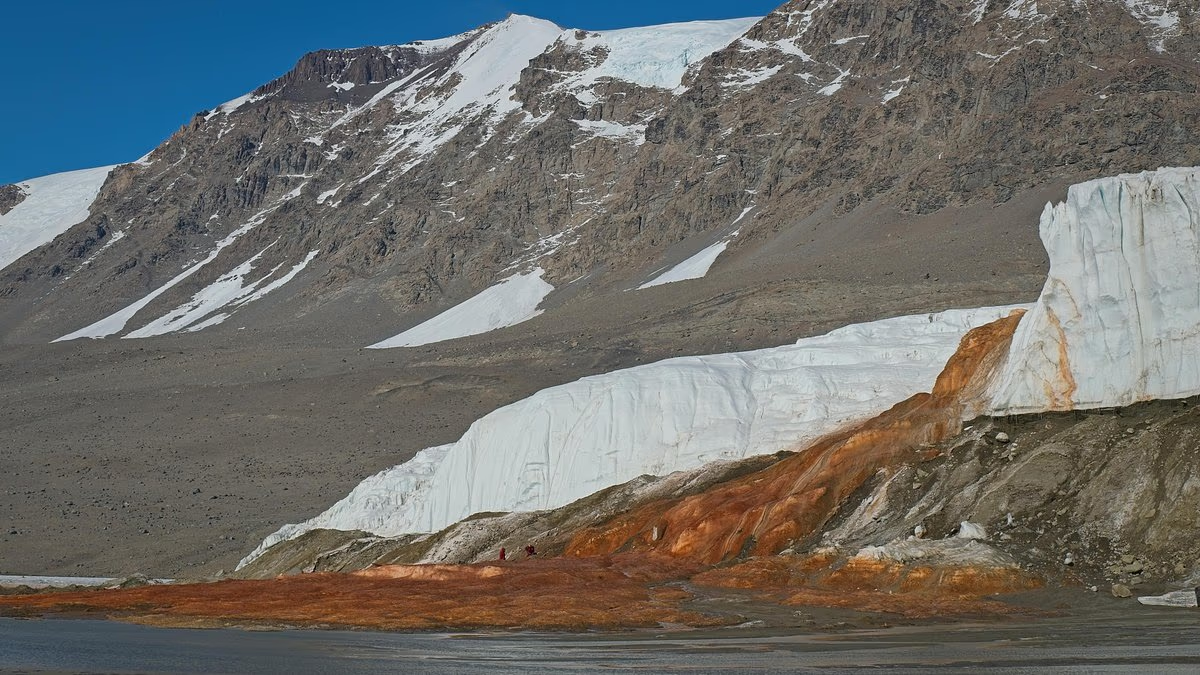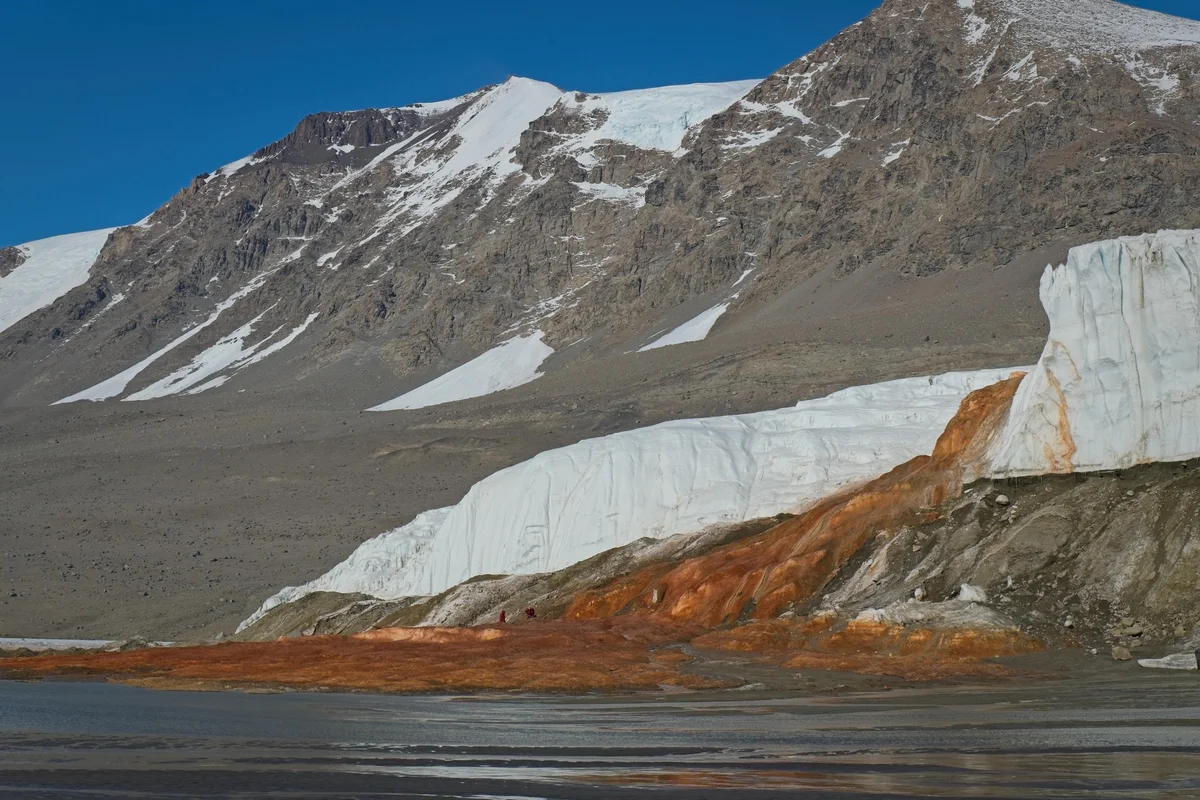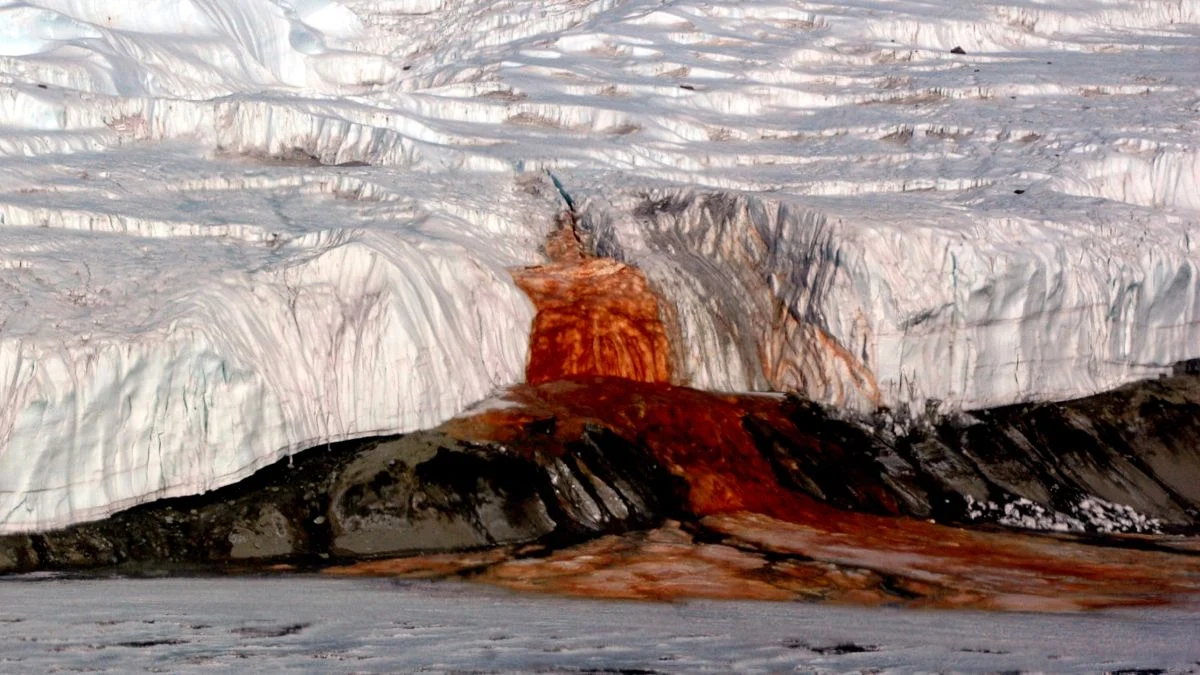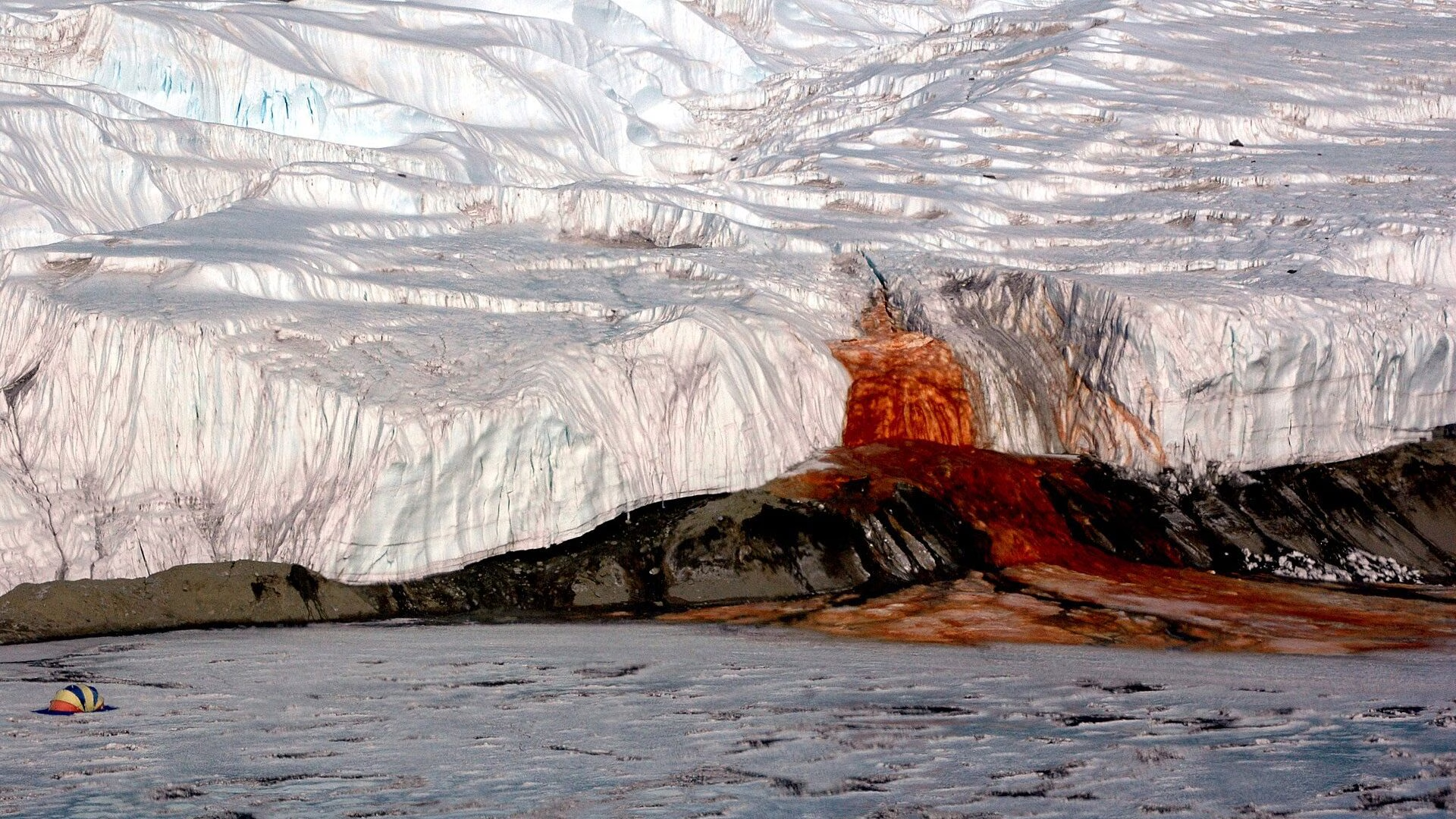
Blood Falls, a mysterious, red-colored waterfall that flows from the edge of an Antarctic glacier, has finally revealed some of its biological secrets, more than a century after its discovery.A research team led by Yale University, the University of California at San Diego, and the J. Craig Venter Institute in California has found a community of complex microbes at the foot of the Taylor Glacier, an ice sheet in the Victoria Land region of eastern Antarctica. The microbial discovery has implications for the resilience of complex cells under extreme environmental conditions, and for the mechanisms by which microbial life adapted to climate change in the distant past.“This potentially brings us to a new understanding of microbial resilience,” said Angela Zoumplis, a postdoctoral researcher in the Department of Earth & Planetary Sciences in Yale’s Faculty of Arts and Sciences, and first author of a new study published in the journal Nature Geoscience. “It tells us something very exciting about how certain organisms can adapt to new conditions and persist in extraordinarily harsh environments.”
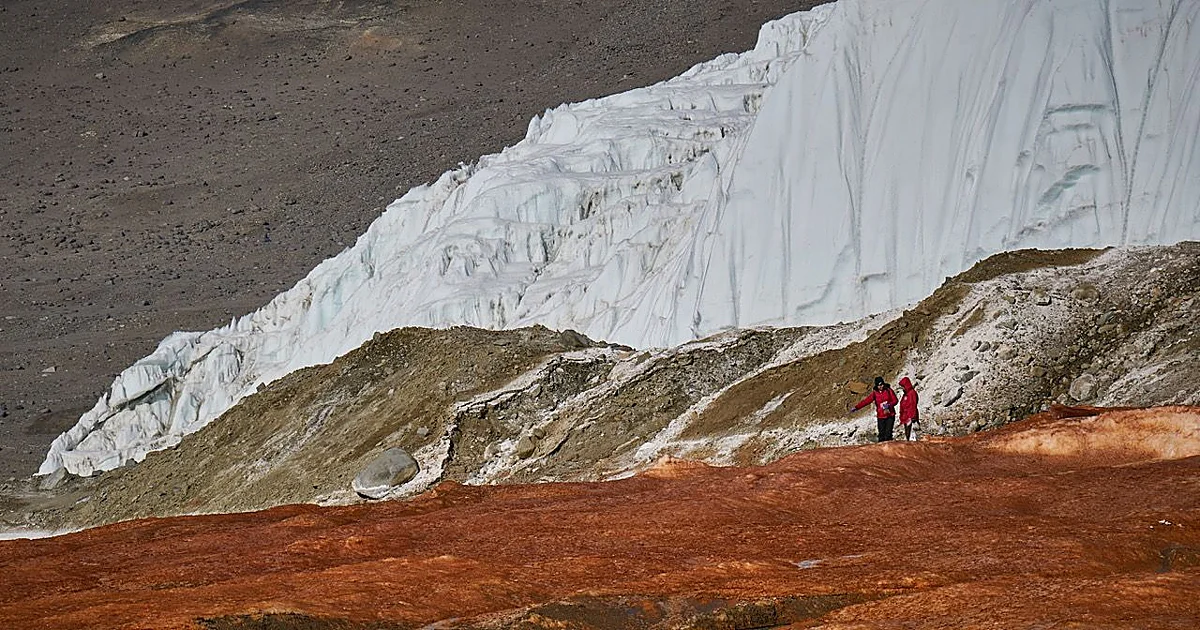
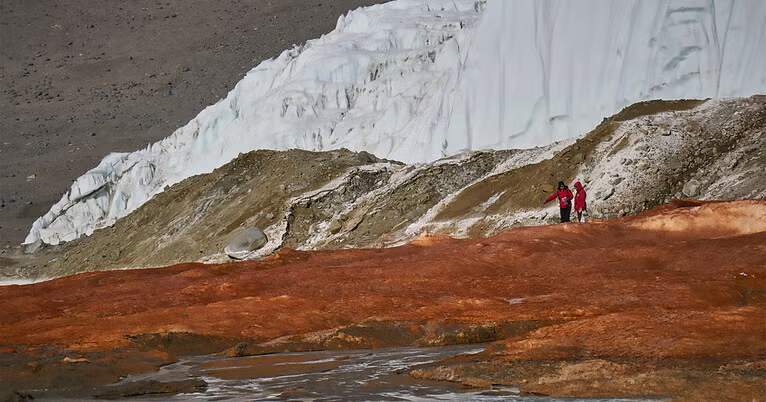
Yale researcher Angela Zoumplis conducting field work at Blood Falls.
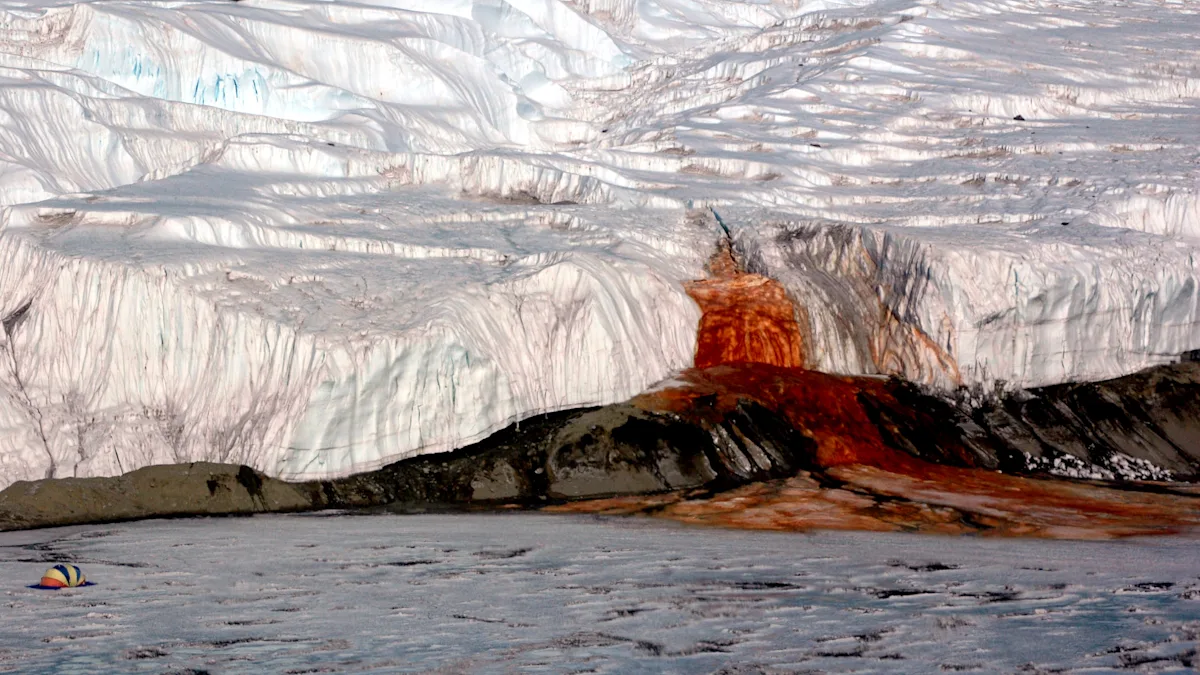
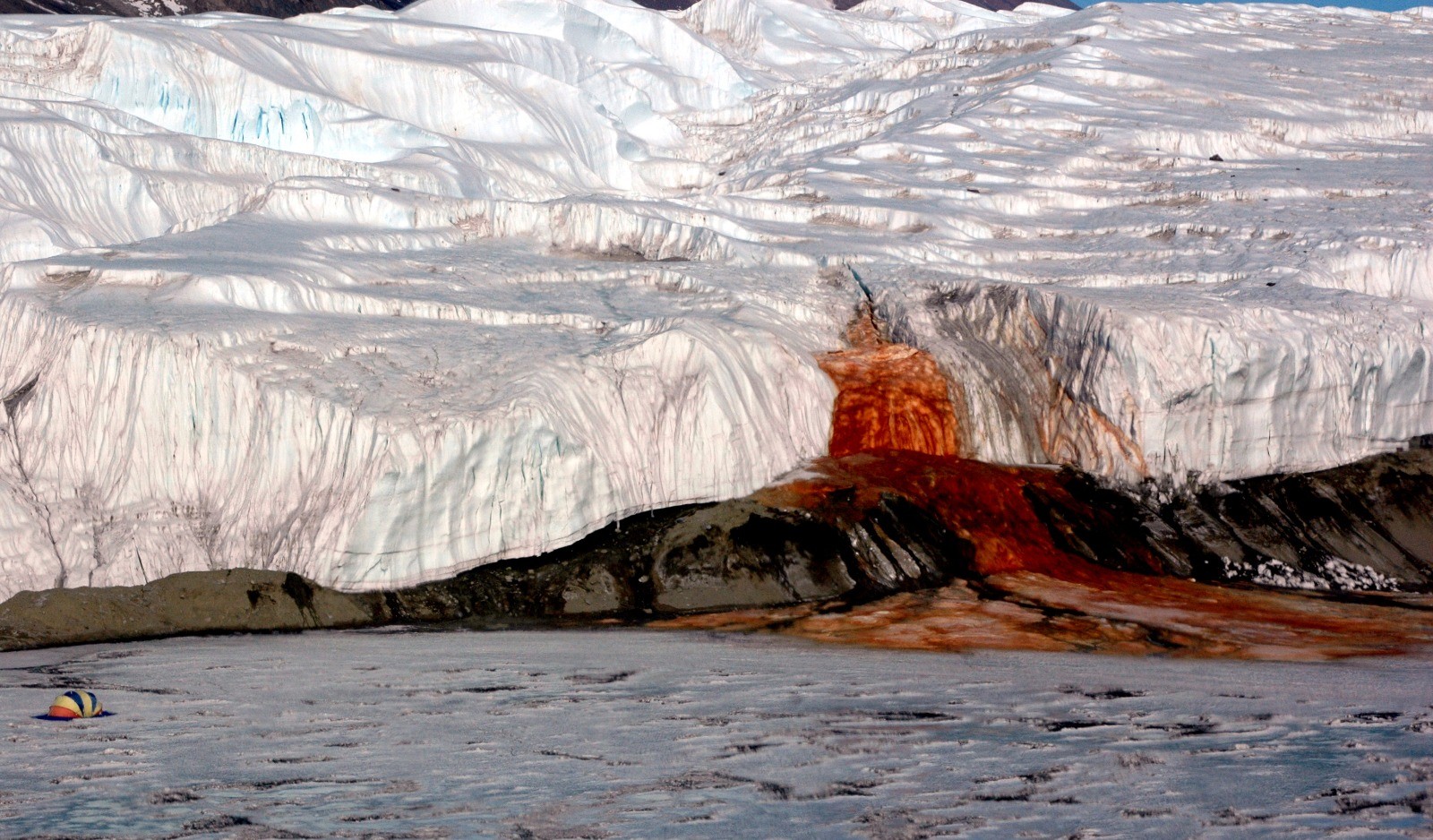
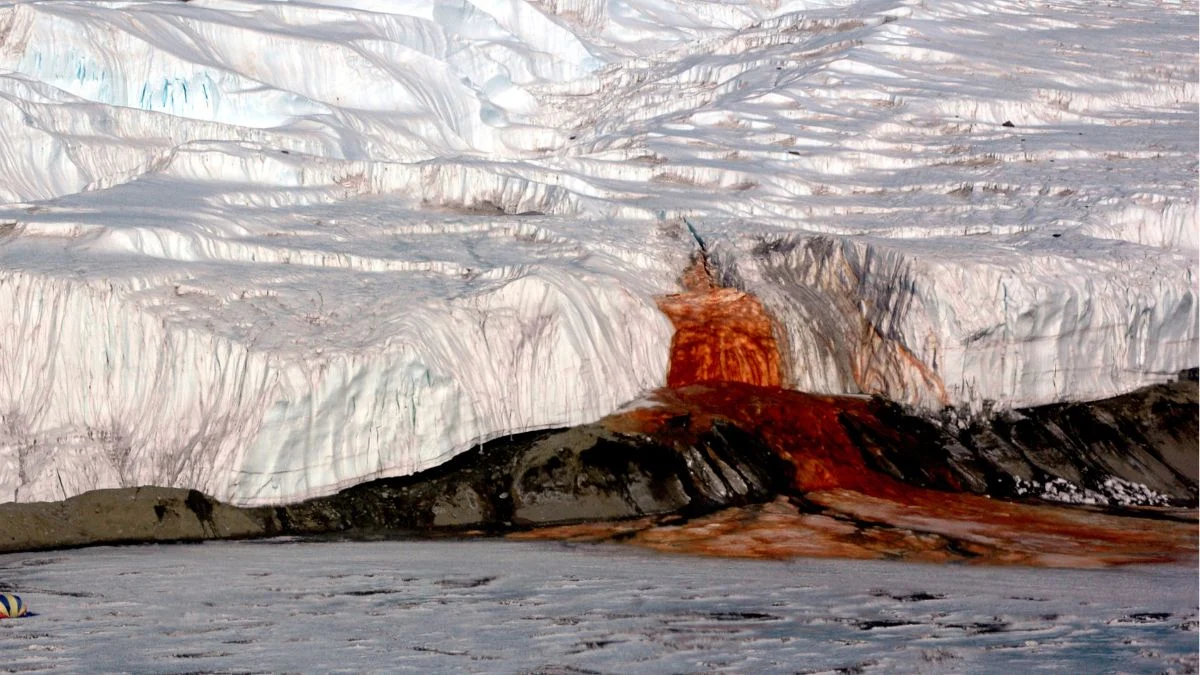
Blood Falls — discovered in 1911 by Australian geologist Griffith Taylor — looks something like an open wound at one end of the 35-mile-long Taylor Glacier. Bright red water sometimes spews from the interior depths of the glacier onto the snow and rocks below. The water is red because of its high iron content, which oxidizes on contact with open air.For decades, scientists have attempted to learn Blood Falls’ secrets.Previous studies by various researchers implied that marine brine — salt water — was likely trapped inside an encroaching glacier during the Pliocene era, about 2.5 million years ago. Researchers have also speculated that simpler microbes in the brine, such as bacteria, may have continued to reproduce within a pocket of flowing water inside the glacier.For the new study, Zoumplis and her co-authors — including researchers from the J. Craig Venter Institute, the University of California at San Diego, Florida Gulf Coast University, and the University of Colorado at Boulder — extracted 167 water, sediment, and aeolian (sediments transported by erosion or wind) samples from Blood Falls and its surrounding area.“We sampled red mud, red ice — anything that was red,” Zoumplis said. “Anything that was potentially coming from the brine.”The shock and surprise of what they found left her and her team gobsmacked.Yes, there were microbes. But not just simple bacteria. They found a wealth of complex eukaryotic microorganism, which are complex microbes that have a nucleus enclosed within a membrane. There were diatoms, haptophytes, dinoflagellates, and ciliates — a grab bag of tiny organisms.“It was a whole community,” she said. “It blew our minds. How could anything more complex than bacteria possibly survive in these conditions?”The researchers are careful not to definitively say that their newly identified microbes originated from the brine trapped beneath the Taylor Glacier more than 2 million years ago. They can speculate, however.