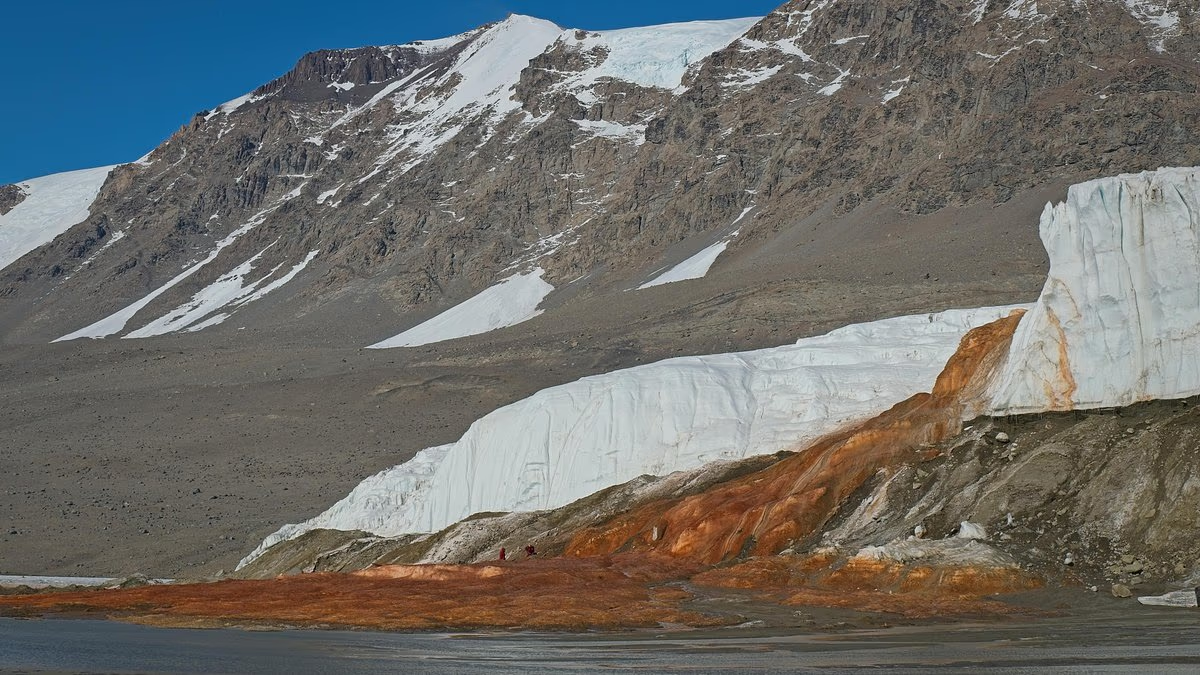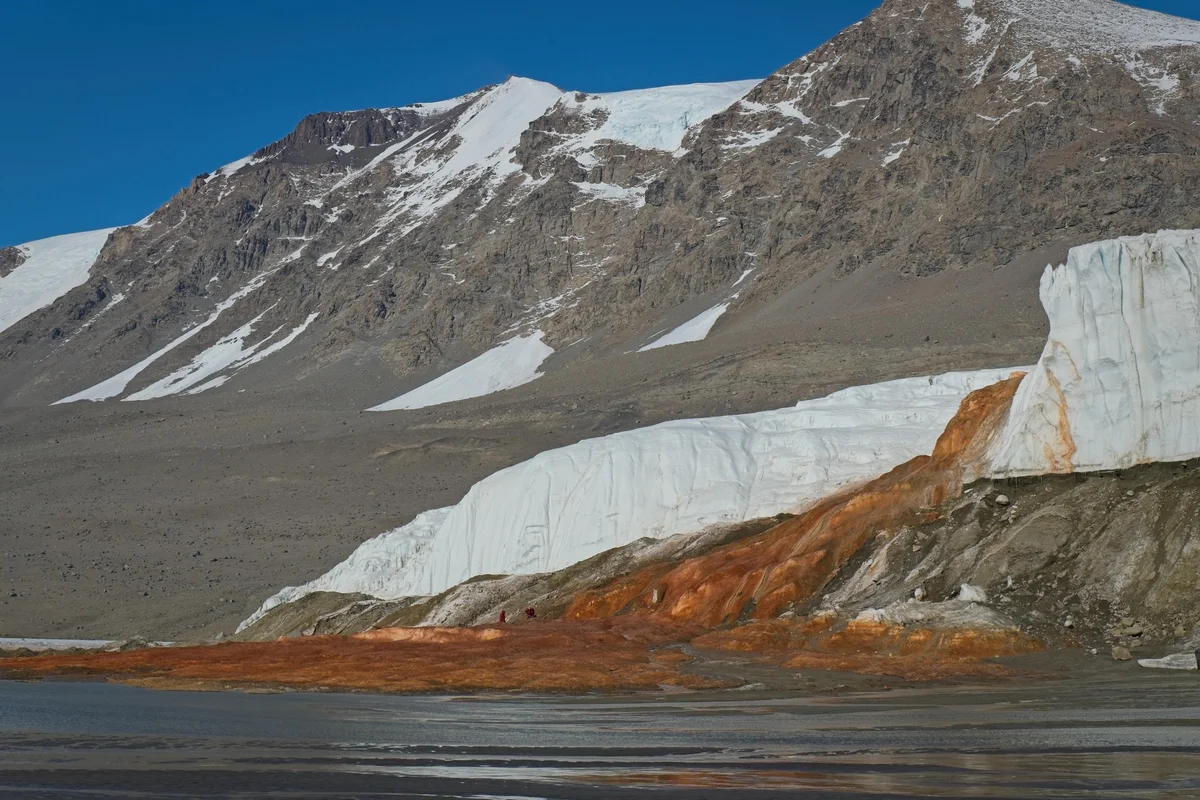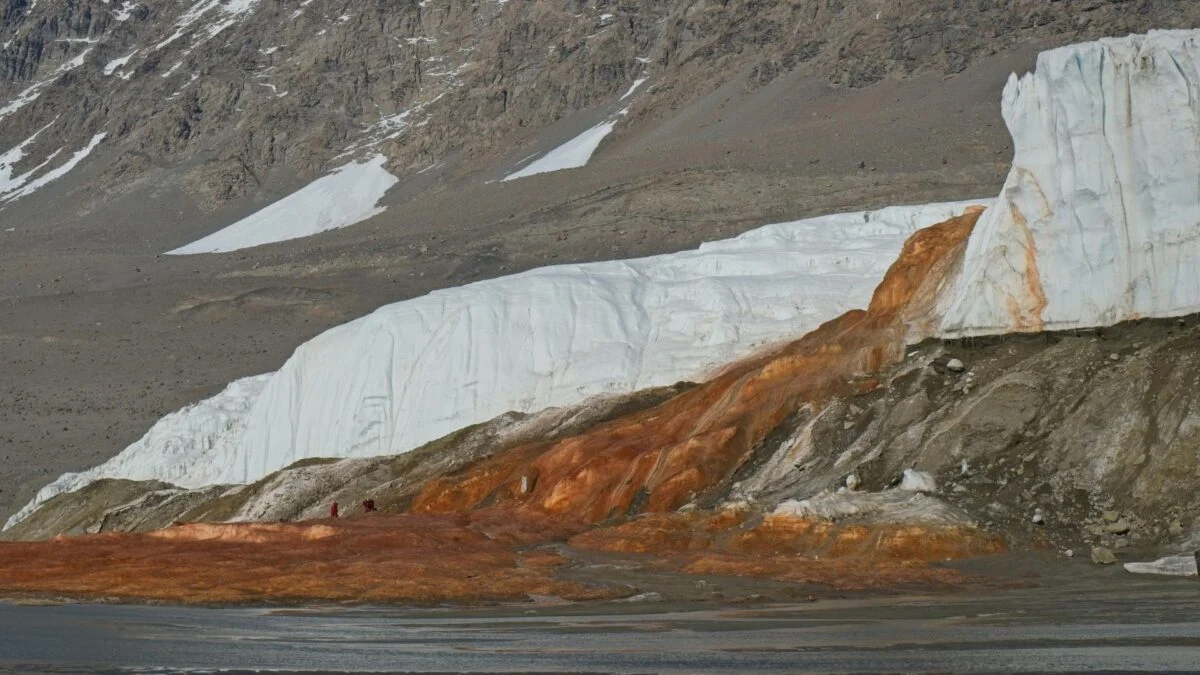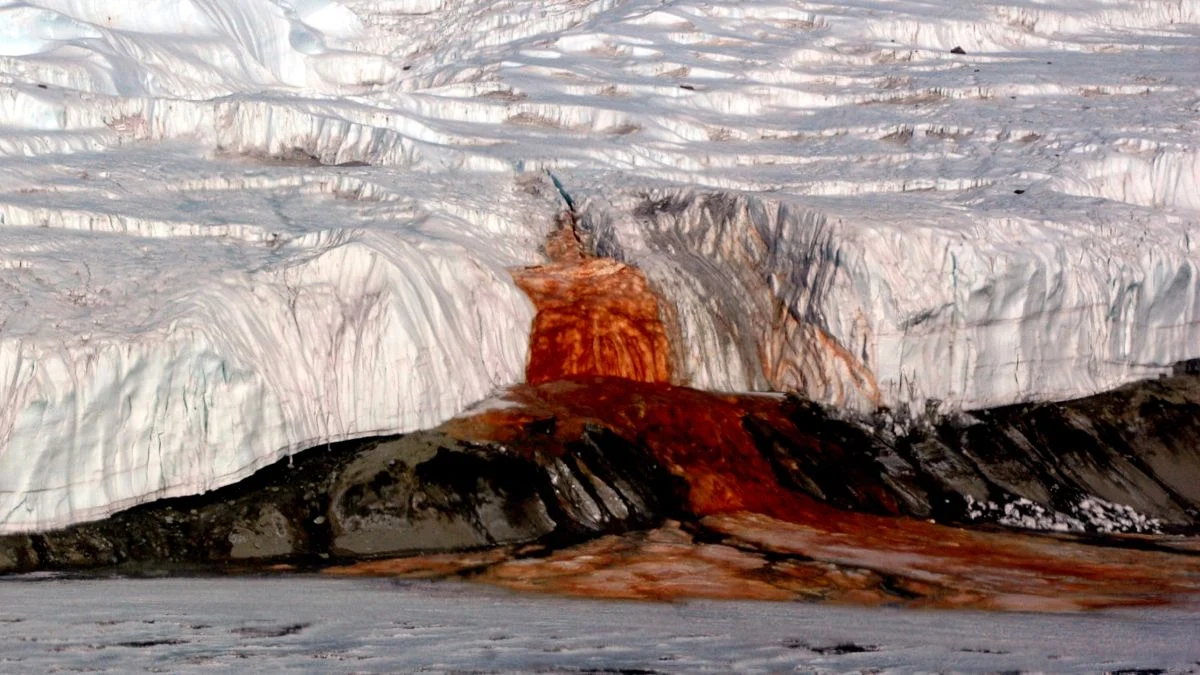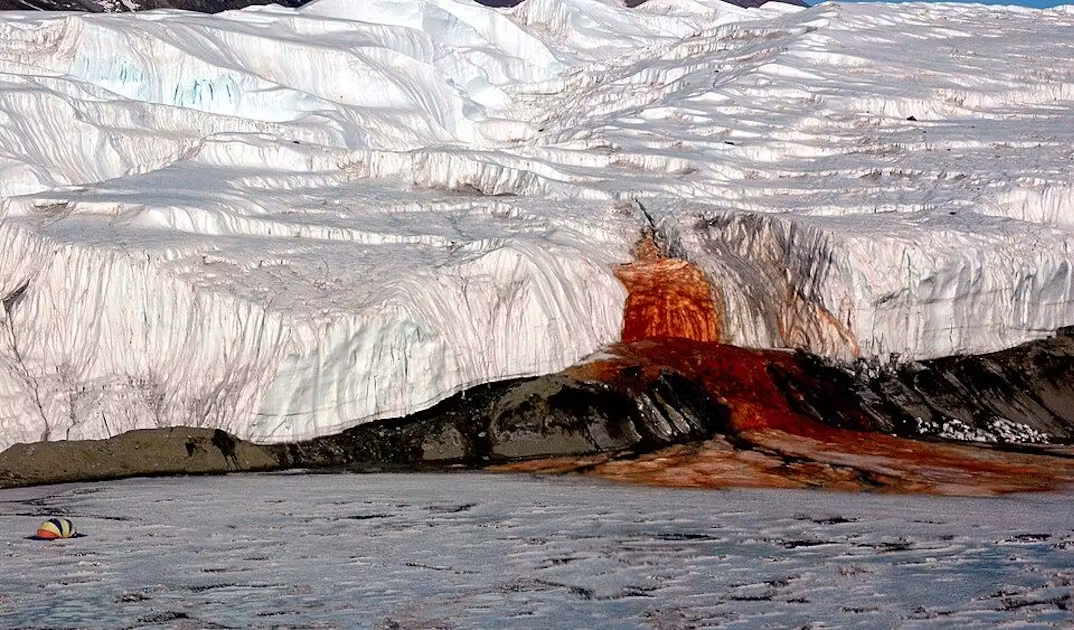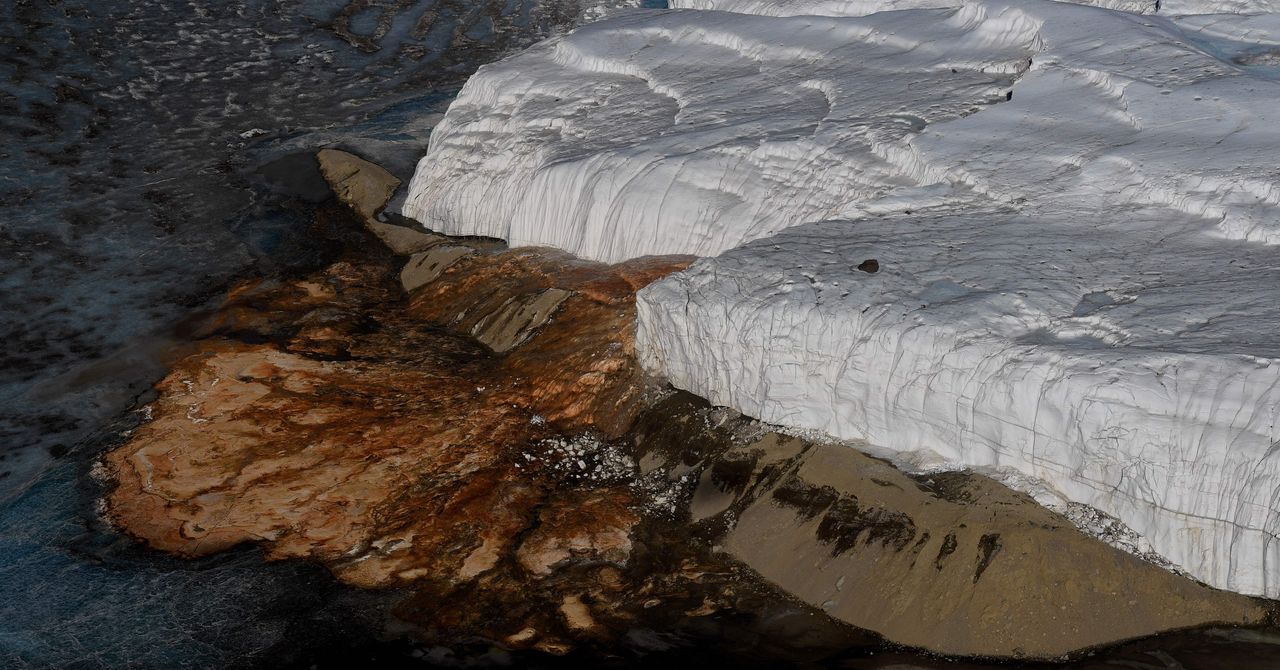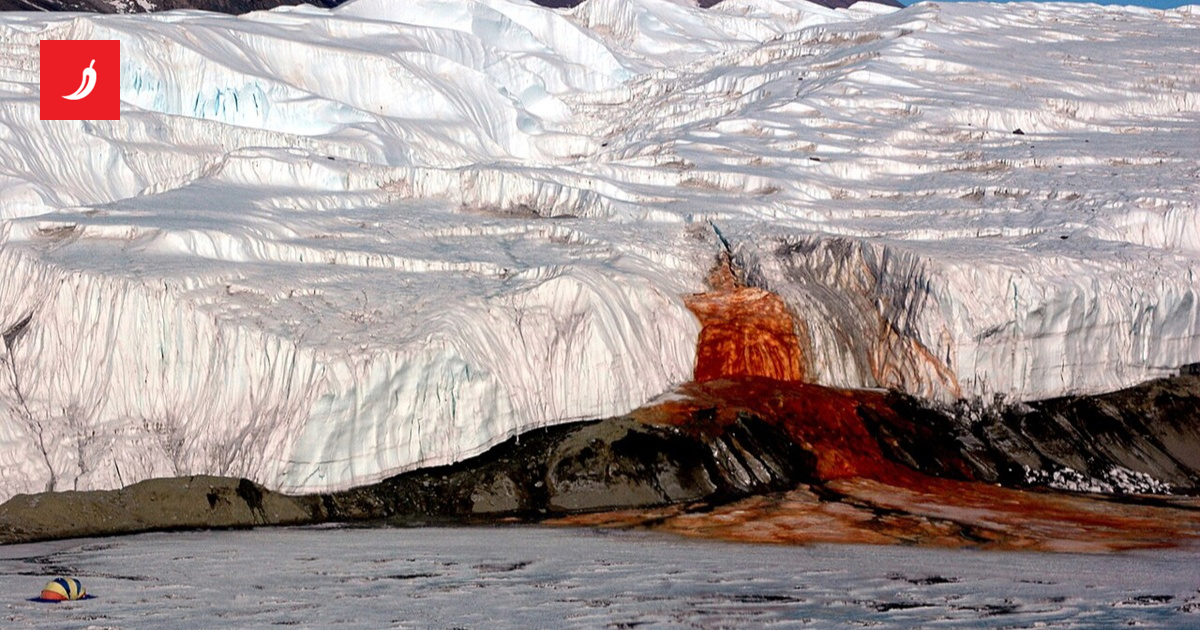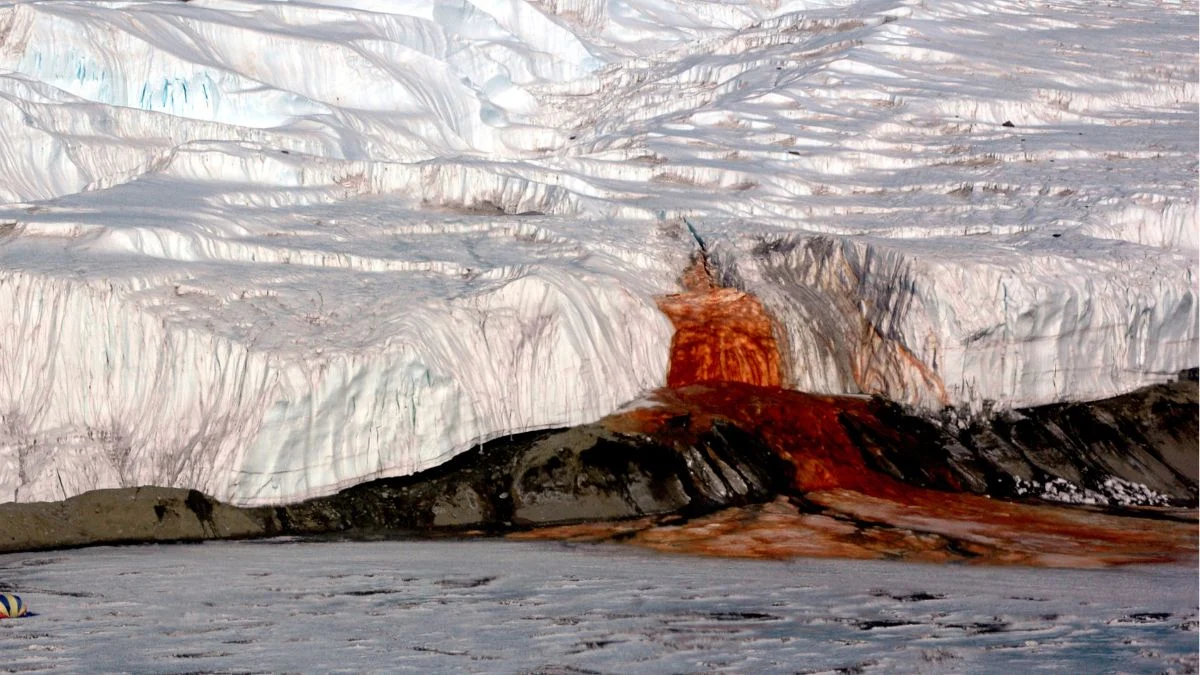
In an arid world of ice and snow, a glacier is 'bleeding'.A deep red flow of water stains the white landscape surrounding it, remaining liquid even at temperatures well below freezing. And it's been doing this for more than a century.This is Antarctica's Blood Falls – and its internal world is even stranger than it looks.A new paper published this year in Antarctic Science has finally shed light on how the falls burst open in the first place. It's the latest piece of a puzzle scientists have been assembling for over a century.When Australian geologist Griffith Taylor first stumbled across the site in 1911, he assumed that red-hued algae were responsible for the color and quickly named the place Blood Falls. But he was wrong – it turned out to be neither blood nor algae.Blood Falls has become a key study site. (NASA)In fact, Blood Falls is the result of slowly oozing, iron-rich saltwater that's been trapped beneath the northern end of the Taylor Glacier for at least 1.5 million years, sealed off when an ancient pocket of seawater got isolated as the glacier advanced.Over time, the water became saltier and saltier – to the point it is now more accurately described as brine, and can no longer freeze at regular temperatures.When this water finally reaches the surface, it meets oxygen and oxidizes, just like rust, hence the red color.For decades, nobody knew exactly how the brine made its way from its source, hundreds of meters below the ice, all the way up to the surface.In 2017, a team led by researchers from the University of Alaska Fairbanks finally traced its route, using radar to map a 300-meter (985-foot) path through a hidden network of pressurized channels inside the glacier.Their discovery solved an even stranger puzzle: How can liquid water move through ice this cold at all?
There's a Waterfall in Antarctica That Bleeds Red – Here's What's Hiding Inside It
In an arid world of ice and snow, a glacier is 'bleeding'.
865 words~4 min read