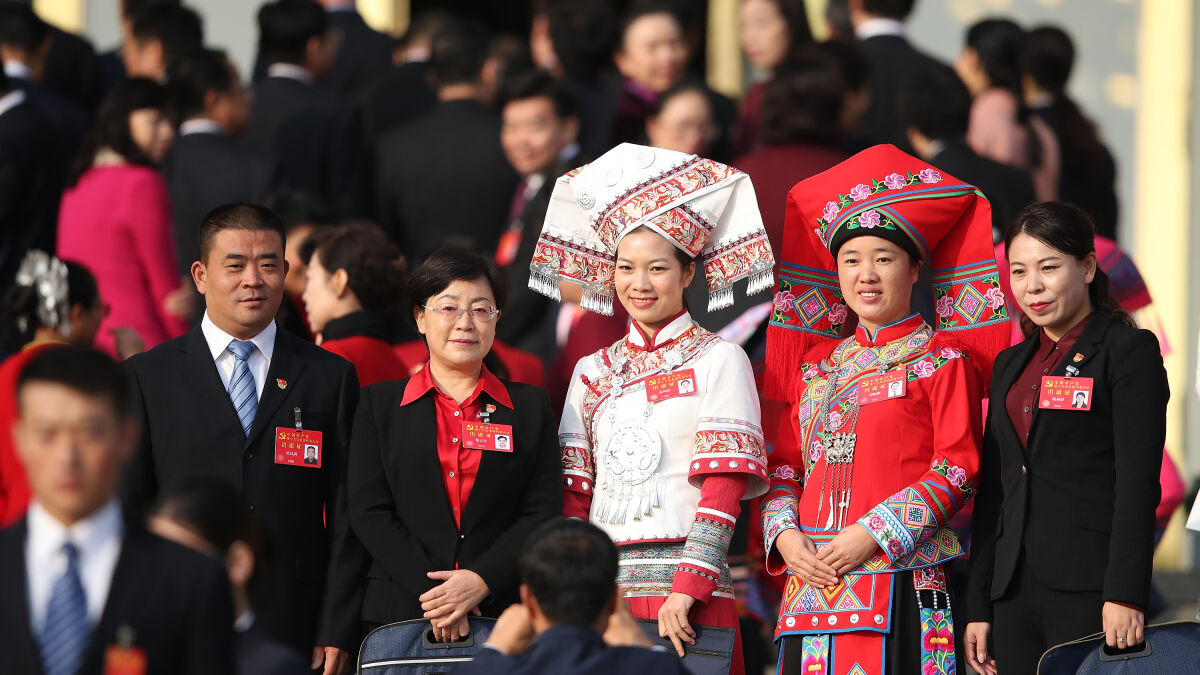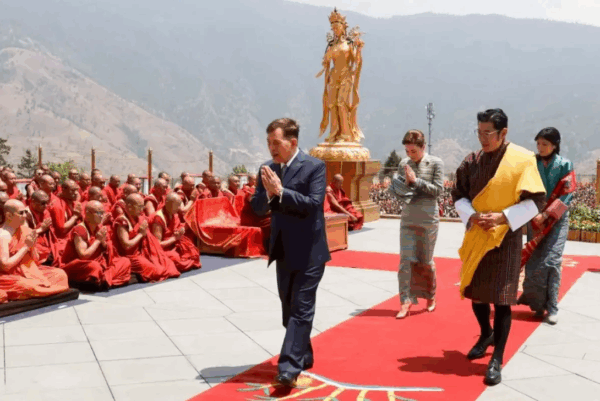
As strategic competition between China and India intensifies, Buddhism has become an increasingly visible instrument of foreign policy. China has positioned itself as a center of Mahayana Buddhist civilization, sponsoring international Buddhist forums, restoring sacred sites, and weaving Buddhist heritage into its Belt and Road Initiative. India, the birthplace of Buddhism, has promoted its own Buddhist heritage by expanding pilgrimage circuits and lending sacred relics abroad.
The focus on China and India obscures a quieter, yet equally significant, story. Buddhist diplomacy is being practiced not only by Asia’s largest powers, but also by two of its smallest states: Bhutan and Singapore.
The cases of Bhutan and Singapore demonstrate how small states can pursue Buddhist diplomacy under different conditions. Their limited geopolitical weight and lack of great power status have encouraged them to cultivate influence through cultural networks and regional cooperation.
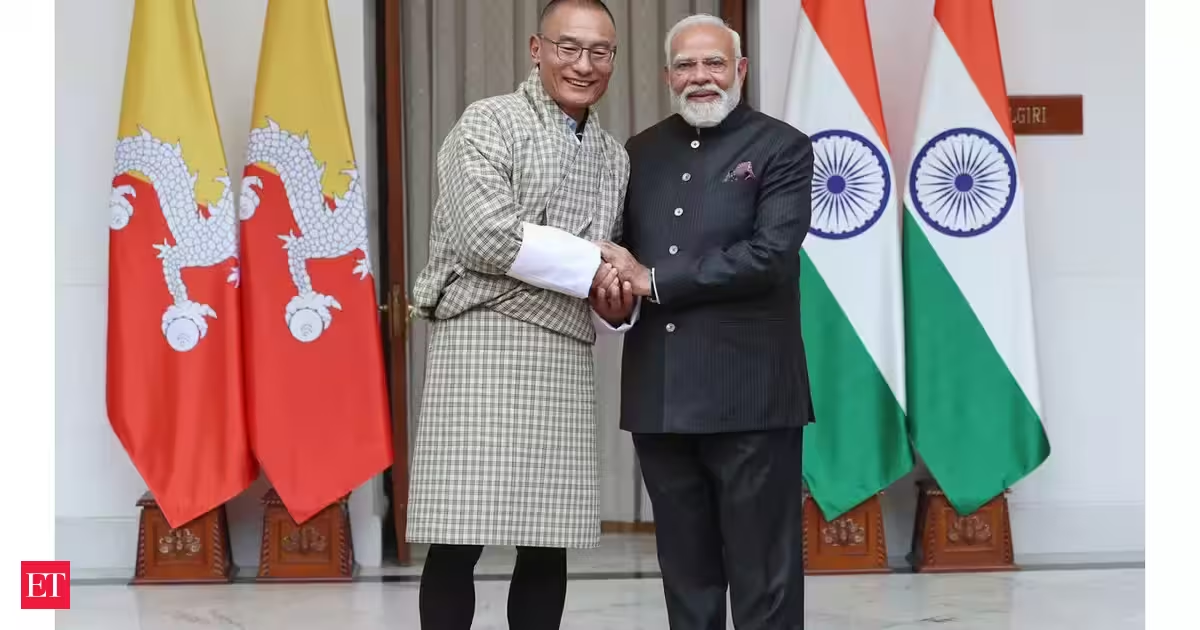
Bhutan, the world’s only official Vajrayana Buddhist kingdom, is a small, landlocked Himalayan state that has placed Buddhist values at the heart of both its domestic governance and its engagement with the world.
This approach owes much to the vision of the Fourth King, Jigme Singye Wangchuck, who developed Gross National Happiness not simply as an alternative measure of development, but as a strategy for reconciling modernization with the preservation of Bhutan’s Buddhist culture and national identity. For a small state situated between India and China, this fusion of Buddhist values and development also served a strategic purpose, turning cultural distinctiveness into a means of safeguarding sovereignty while giving Bhutan an international profile far beyond its size.