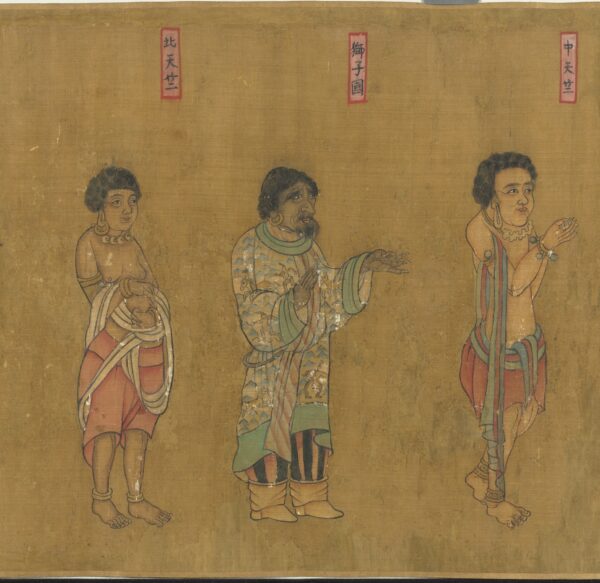
When the Chinese Buddhist monk Faxian traveled to India during the Gupta era over 1,600 years ago, he described what he saw as a sort of paradise:
The inhabitants are prosperous and happy. There are no Boards of Population and Revenue. Those only who farm the Royal demesnes pay a portion of the produce as rent. Nor are they bound to remain in possession longer than they like. The King in the administration of justice, inflicts no corporal punishment; but each culprit is fined in money according to the gravity of his offence; and even in cases where the culprit has been guilty of repeated attempts to excite rebellion, they merely have their right hands cut off. The chief officers of the king have all fixed salaries.
The recent science-fiction novel “The Three-Body Problem” is one of China’s most popular global exports, and a leading exemplar of Sinofuturism, a genre that explores the way in which China will lead the world economically, politically, and technologically in the future. Yet, India, one of a small handful of countries to successfully launch a satellite to the moon, does not feature at all in China’s most prominent work of futurism, in which China cooperates with the Russians, Europeans, Japanese, and Americans to combat an alien threat.