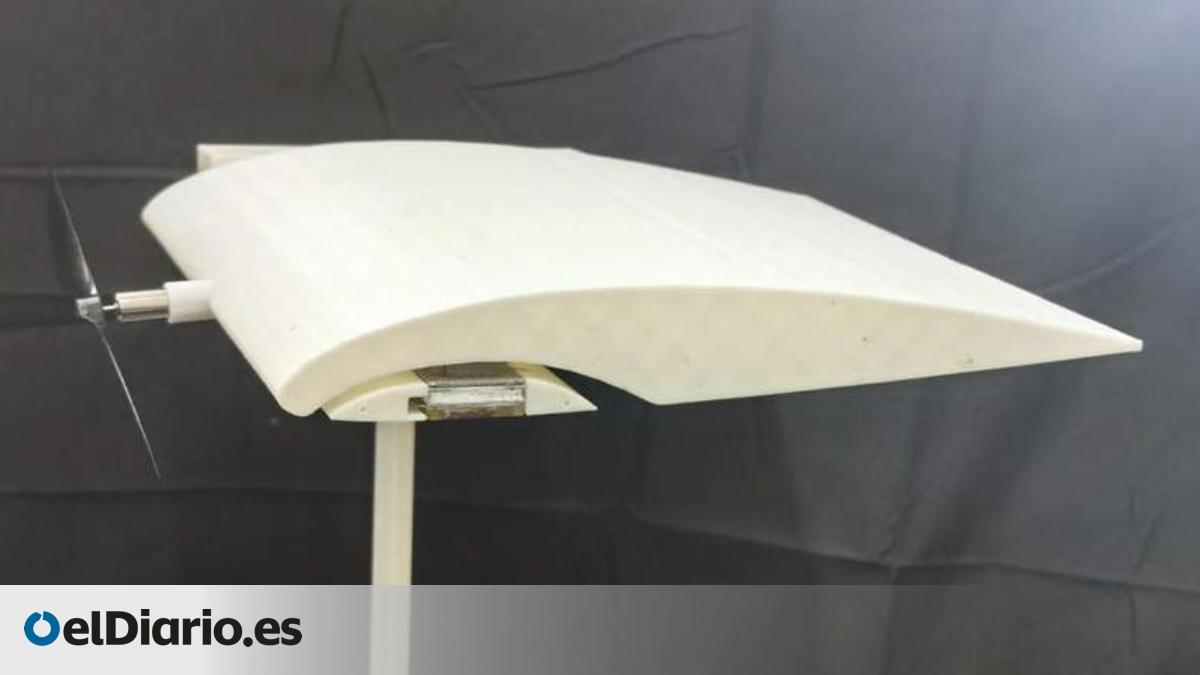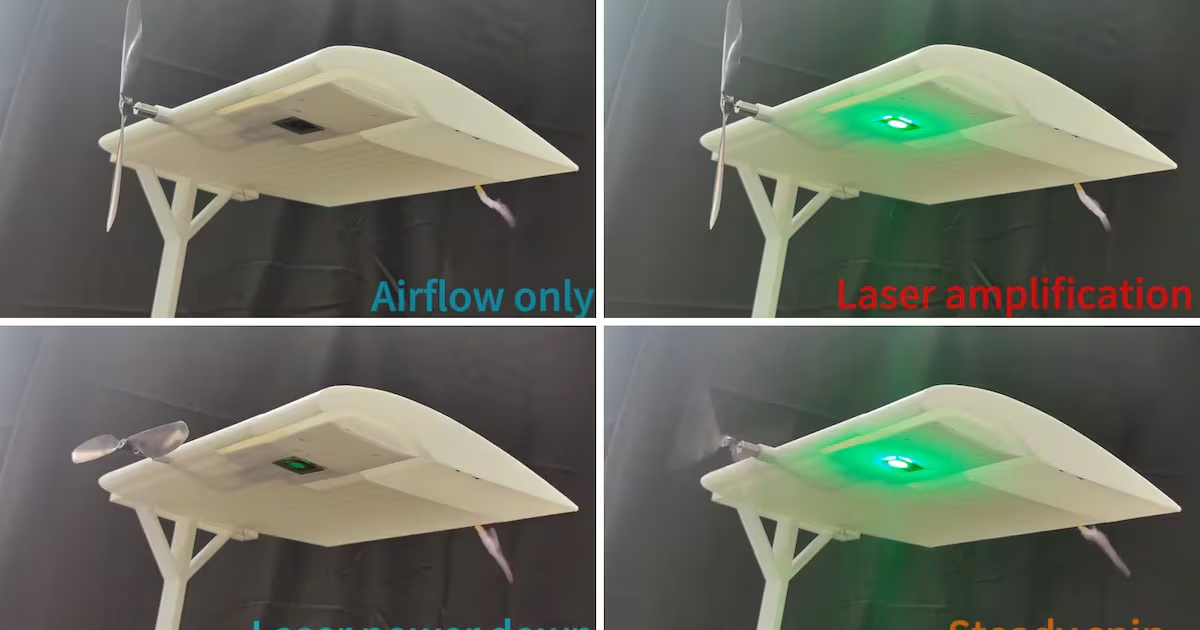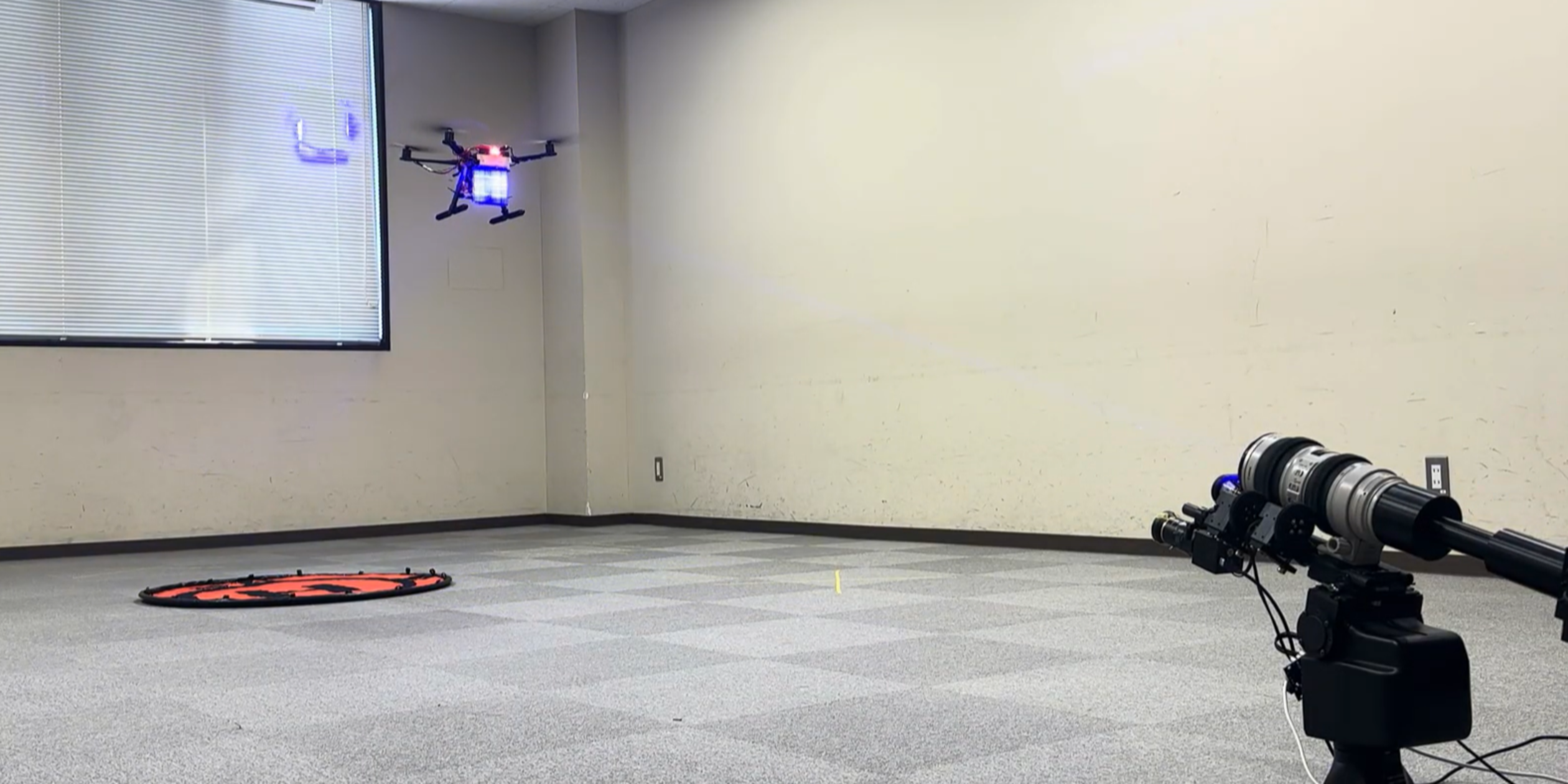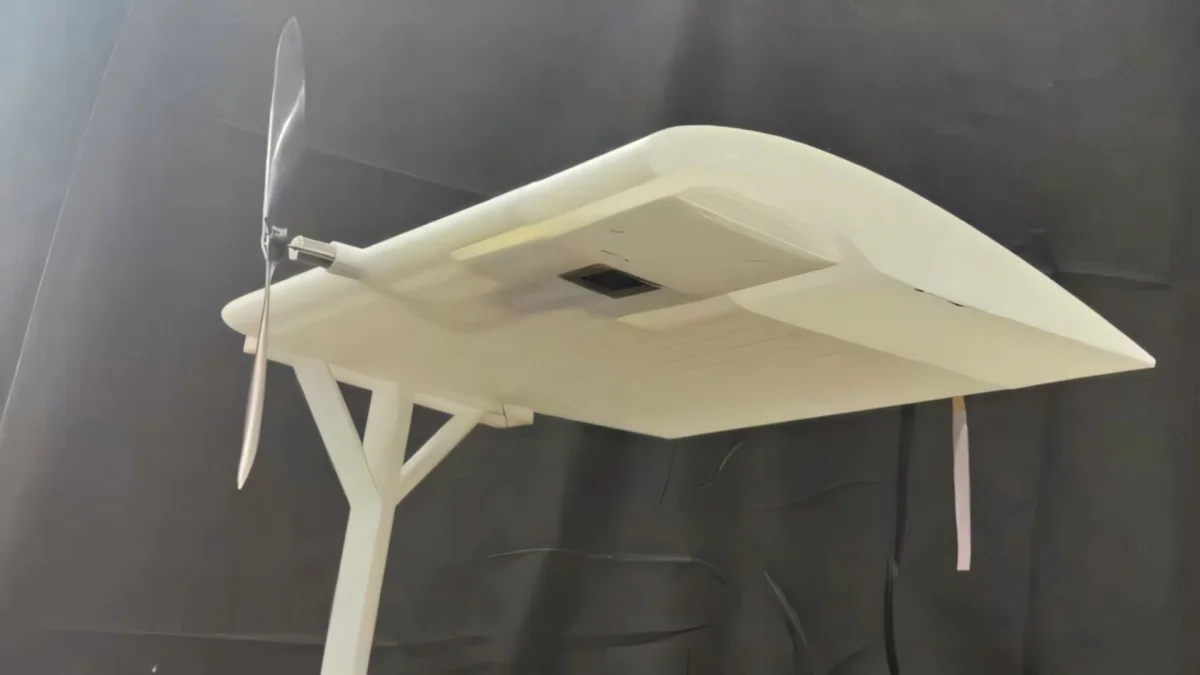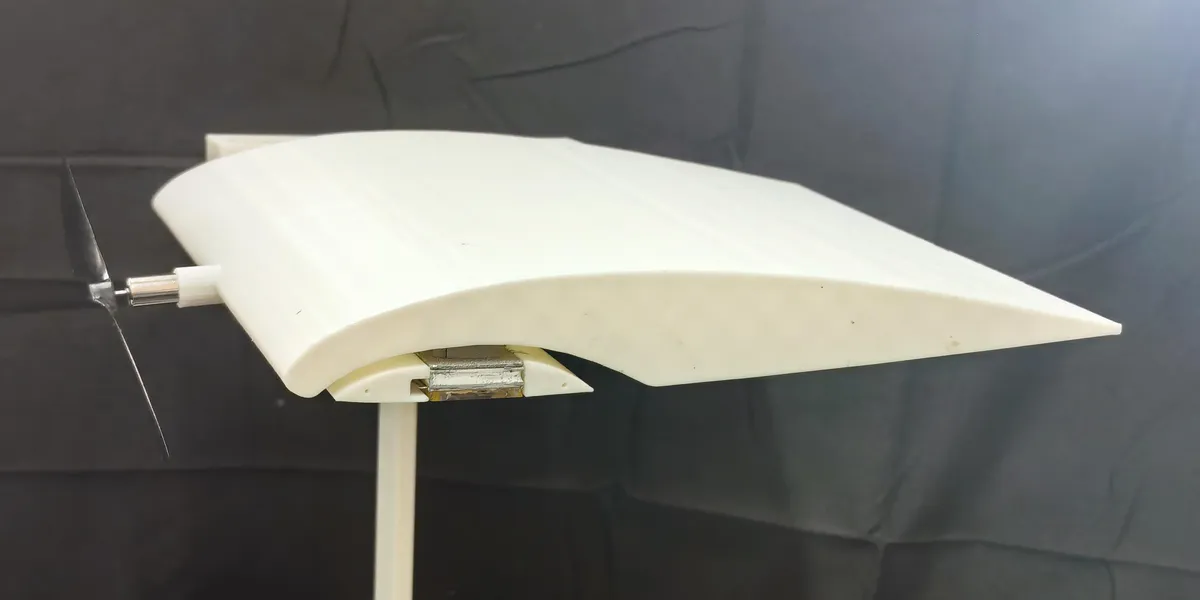
Limited battery life can hinder how useful drones are in responding to disasters, inspecting infrastructure, or delivering items. Now researchers in China have designed a system that could transfer power to a drone mid-flight using lasers. They say it could significantly boost drone flight times.Many drones can stay aloft for less than an hour before they need to land to recharge or swap batteries. That places serious restrictions on their ability to carry out longer tasks such as delivering packages over significant distances, surveying or mapping large areas, or carrying out search and rescue missions.A new proposal from researchers at the Civil Aviation University of China in Tianjin and Tsinghua University in Beijing aims to sidestep the problem by transmitting power to an airborne drone using a laser. The team designed a novel receiver based on perovskites, a class of material commonly used in solar panels. The 2 square centimeter receiver was light enough to be installed under a drone’s wing and efficient enough to drive a propeller. The researchers say it could ultimately make it possible to power and recharge drones on the wing.“A critical practical barrier hindering long-endurance UAV (unmanned aerial vehicle) operations is insufficient battery capacity,” senior author Jianhua Han, an associate professor at the Civil Aviation University of China, wrote in an email to IEEE Spectrum. “In this scheme, ground or airborne transmitters emit laser beams to supply continuous power to in-flight UAVs.”Perovskite Laser Power Receiver DesignThe idea of transmitting power by laser is not a new one, but a major challenge is that blasting a receiver with high-intensity light causes it to rapidly heat up. This can cause conversion efficiency to plummet and ultimately damage the receiver, and so the researchers set out to create a receiver robust enough for long duration power transmission.The team turned to cesium lead bromide perovskite, which is particularly stable, making it suitable for high temperatures and prolonged irradiation. Perovskites generally are lower cost and easier to manufacture compared to other photovoltaic materials. They also have high absorption rates.The researchers stacked the perovskite layer on top of a carbon electrode that collects the current generated by the perovskite, with a thermoelectric layer below that generates electricity from waste heat produced when the laser is trained on the receiver. The work was detailed in a paper published 29 July in Matter & Light.However, the carbon electrode is unfortunately also excellent at converting any incoming photons into heat that aren’t converted by the photovoltaic layer. This quickly warms up the receiver—to as high as 85.3°C—and causes its efficiency to drop. The researchers doped the electrode with antimony selenide nanorods roughly 50 to 80 nm across to protect the perovskite layer. The nanorods have extremely low thermal conductivity and so act as a thermal barrier. Conveniently, they also improve the flow of current from the perovskite layer into the electrode.To test the receiver, the team fired a green, 5 watt laser at its active area, which is 12 square millimeters, while air was blown over its surface to mimic the kind of airflow that would be experienced in flight and boosts the efficiency of the thermoelectric layer. They report a power conversion efficiency of nearly 39 percent, which was enough to drive a 6.7 centimeter propeller at 7,820 rotations per minute.Going a step further, the team then tried integrating the receiver into a stationary model of a fixed-wing drone. To further boost its efficiency, they built air channels into the vehicle’s wing that funneled air over the thermoelectric layer to further aid cooling. When they shone a green laser at the receiver it generated enough power to drive a propeller mounted on the wing at 1,200 to 1,450 rpm for about a minute.Challenges of Laser-Powered UAV FlightThe researchers did not test the device on an airborne drone, and Han admits that relying solely on results from ground-based simulations is a limitation of the study. “Researchers may question whether the favorable laboratory performance can be preserved under outdoor conditions, including natural wind, temperature variation, sunlight interference, and inherent UAV vibration and oscillation,” he wrote.Safely and effectively targeting a moving vehicle with a high-power laser beam will also be a complex engineering challenge, Han concedes. “Laser safety represents the most prominent concern: how to prevent laser beams from interfering with other aircraft and endangering ground organisms.”His team is primarily focused on developing the receiver, but he says other groups are working on beam targeting technologies as well as ways to trigger millisecond-scale laser cut-offs in case something unintentionally crosses the laser beam’s path. And his team is pressing ahead with the next stage of the project, which will involve flight tests on a lightweight drone.“Our clear goal is to achieve laser-powered flight of the UAV,” he wrote. “Even short-term hovering represents a milestone transition from ground proof-of-concept tests to real flight validation.”
Midair Laser Charging Gives Drones a Shot at Endless Search Runs
Researchers in China test a perovskite receiver for in-flight power delivery
807 words~4 min read