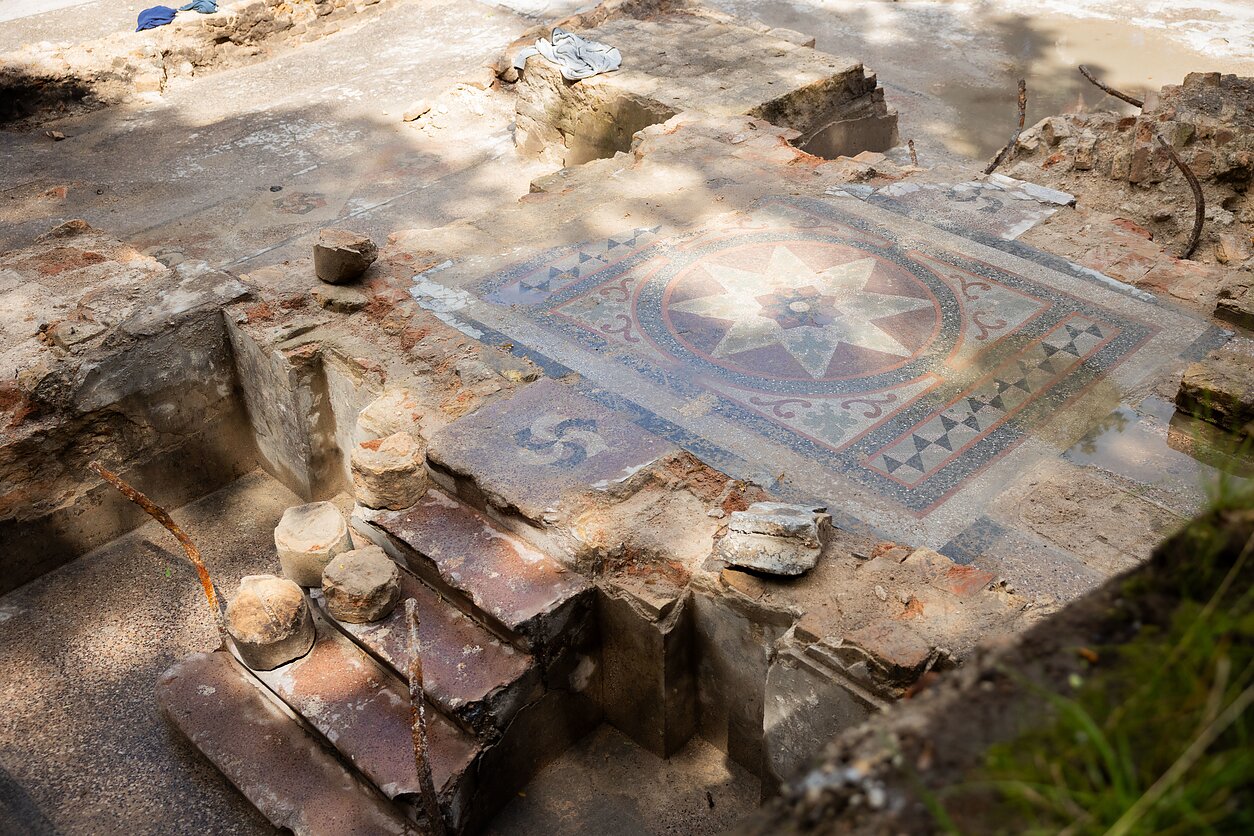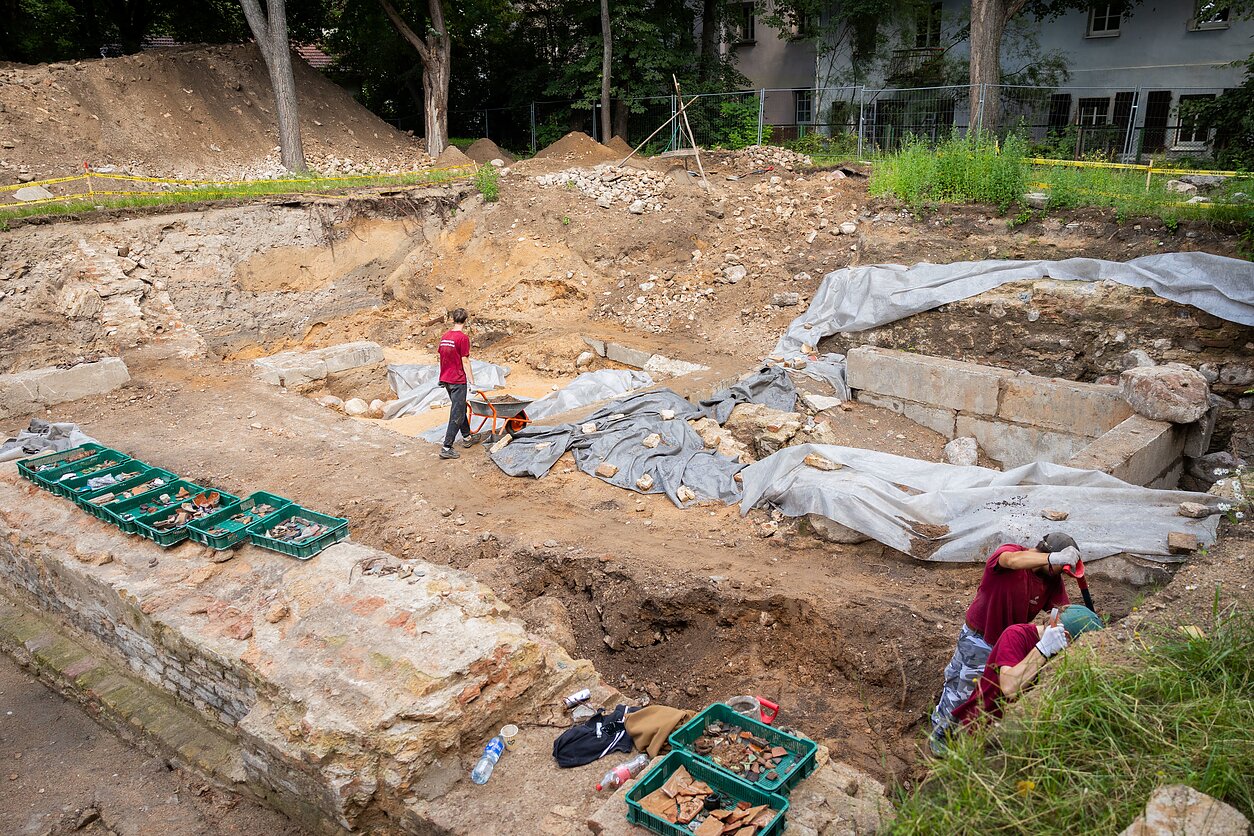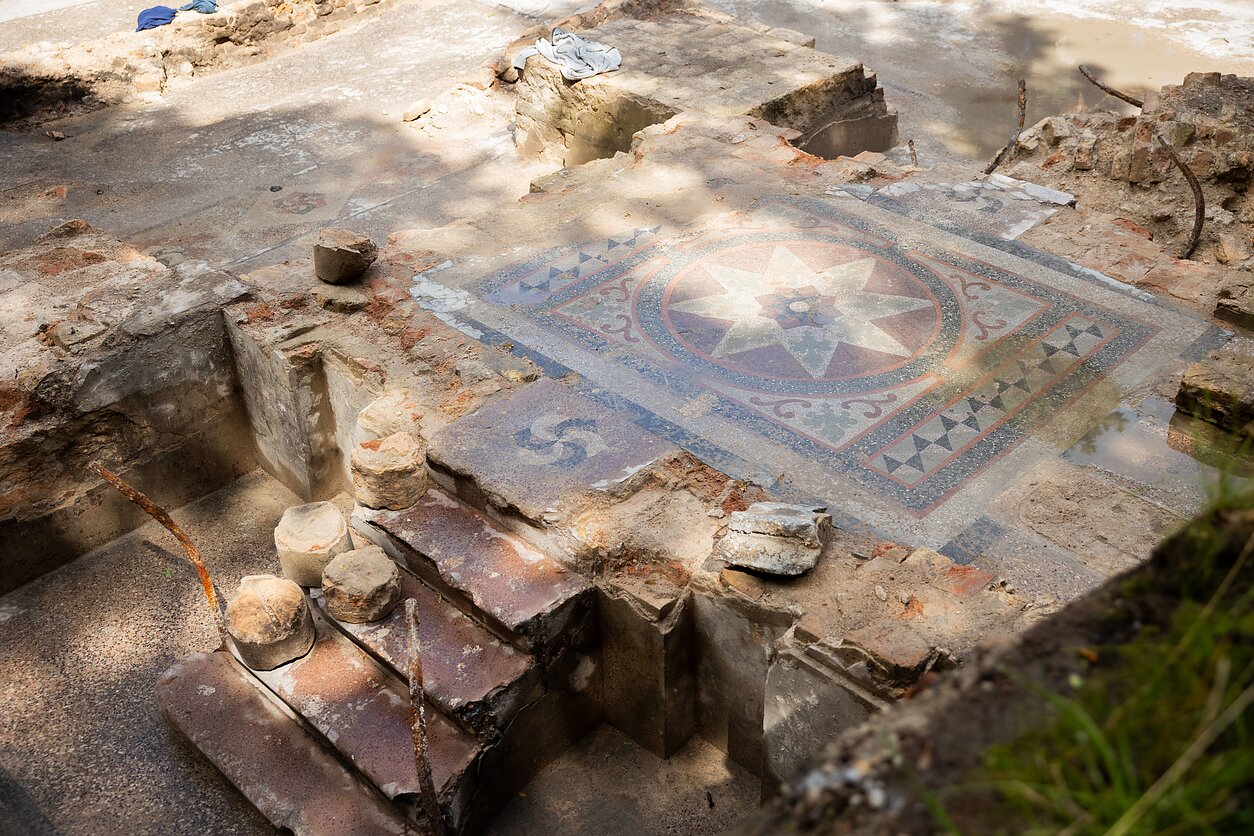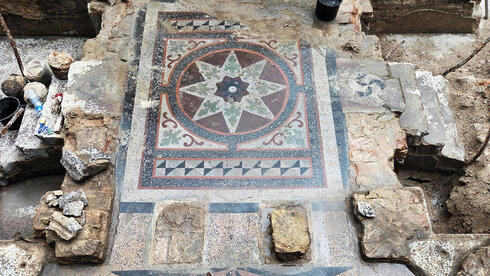
Excavations exposed the central bimah, prayer hall, women’s gallery, colorful terrazzo floors, named seat plaques and a Ten Commandments tablet, offering a personal glimpse into the community that worshipped there for centuries Related TopicsArchaeological excavations carried out over the past month at the Great Synagogue of Vilna in Lithuania have fully uncovered the synagogue’s impressive central bimah, the raised platform on which the Torah scroll is placed when it is read.At the site, associated with the Vilna Gaon, which was destroyed by the Nazis and whose remains were later demolished by the Soviet authorities about 70 years ago, moving finds were discovered, including parts of the prayer hall and women’s gallery, colorful terrazzo floors, seat plaques bearing the names of worshippers and a metal plaque engraved with the Ten Commandments.The bima of the Vilnius Great Synagogue has been fully revealed (Photo: Vilnius Great Synagogue Excavation Project)Research and excavations at the synagogue and the communal complex that developed around it, known as the Vilna Shulhoyf, have been underway since 2011. This is the sixth excavation season conducted by the Israel Antiquities Authority and the Kultūros paveldo išsaugojimo pajėgos Lithuannian excavation company, with funding from the Good Will Foundation and in cooperation with the Lithuanian Jewish (Litvak) Community. The project aims to preserve the synagogue’s remains, make them accessible to the public and develop the site for the benefit of the country’s Jewish community and visitors.GalleryThe colorful, decorated floor of the synagogue bima (Photo: John Seligman, Vilnius Great Synagogue Excavation Project and the Israel Antiquities Authority)Cleaning and conservation work on the bima of the Great Synagogue of Vilnius (Photo: John Seligman, Vilnius Great Synagogue Excavation Project and the Israel Antiquities Authority)One of the synagogue columns found shattered (Photo: John Seligman, Vilnius Great Synagogue Excavation Project and the Israel Antiquities Authority)The excavation directors, Dr. Jon Seligman of the Israel Antiquities Authority and Justinas Rakas of the Lithuanian excavation company, said in a statement that: “The removal of the old school building that covered the historic synagogue enabled us, for the first time, to expose additional extensive and continuous sections at the heart of the building: the main prayer hall, paved with colourful terrazzo floors decorated with floral and geometric patterns; plaques bearing names; and many other finds that offer us a moving, almost personal encounter with the people who prayed here and with the community life that developed around the synagogue over the course of centuries.”Among the finds were dozens of plaques that marked worshippers’ permanent seats. Some were engraved with the names of women who sat in the women’s gallery, others bore men’s names, and additional plaques marked seats designated for members of a large charitable association that was involved in running Vilna’s Jewish community.From right to left: Zenonas Baubonis, Dr. John Seligman and Justinus Rakas from the Vilnius Great Synagogue Excavation Project (Photo: Vilnius Great Synagogue Excavation Project)The facade of the Great Synagogue of Vilnius in a historical photograph (Photo: Unknown; Wikimedia Commons, public domain)Reconstruction of the prayer hall. Plaques bearing the names of the worshippers were discovered in the excavation (Illustration: David Polonsky and Michael Faust)One of the notable plaques marked a seat donated by “Gitel Klachek, wife of the late Yechezkel, Shamash d’Mata” — that is, the city sexton. The Israel Antiquities Authority said the Klachek family was a wealthy and influential family that owned numerous businesses in the streets surrounding the Great Synagogue of Vilna. Yechezkel was apparently a public official who served the city’s Jewish community and handled practical matters, announcements, and errands on its behalf.Among the additional finds, which attest to the religious and communal life that took place in the synagogue over the years, was a small metal plaque engraved with the Ten Commandments.Comments
Nazi-destroyed Great Synagogue of Vilna rises from the ruins
Excavations exposed the central bimah, prayer hall, women’s gallery, colorful terrazzo floors, named seat plaques and a Ten Commandments tablet, offering a personal glimpse into the community that worshipped there for centuries
619 words~3 min read