view more
Modern photonic chips can pack sophisticated optical functions onto devices smaller than a fingernail. They are increasingly used to generate, manipulate, and measure light for applications ranging from communications to sensing. But most of these chips rely on a single material to do the heavy lifting, limiting the range of optical effects they can produce.
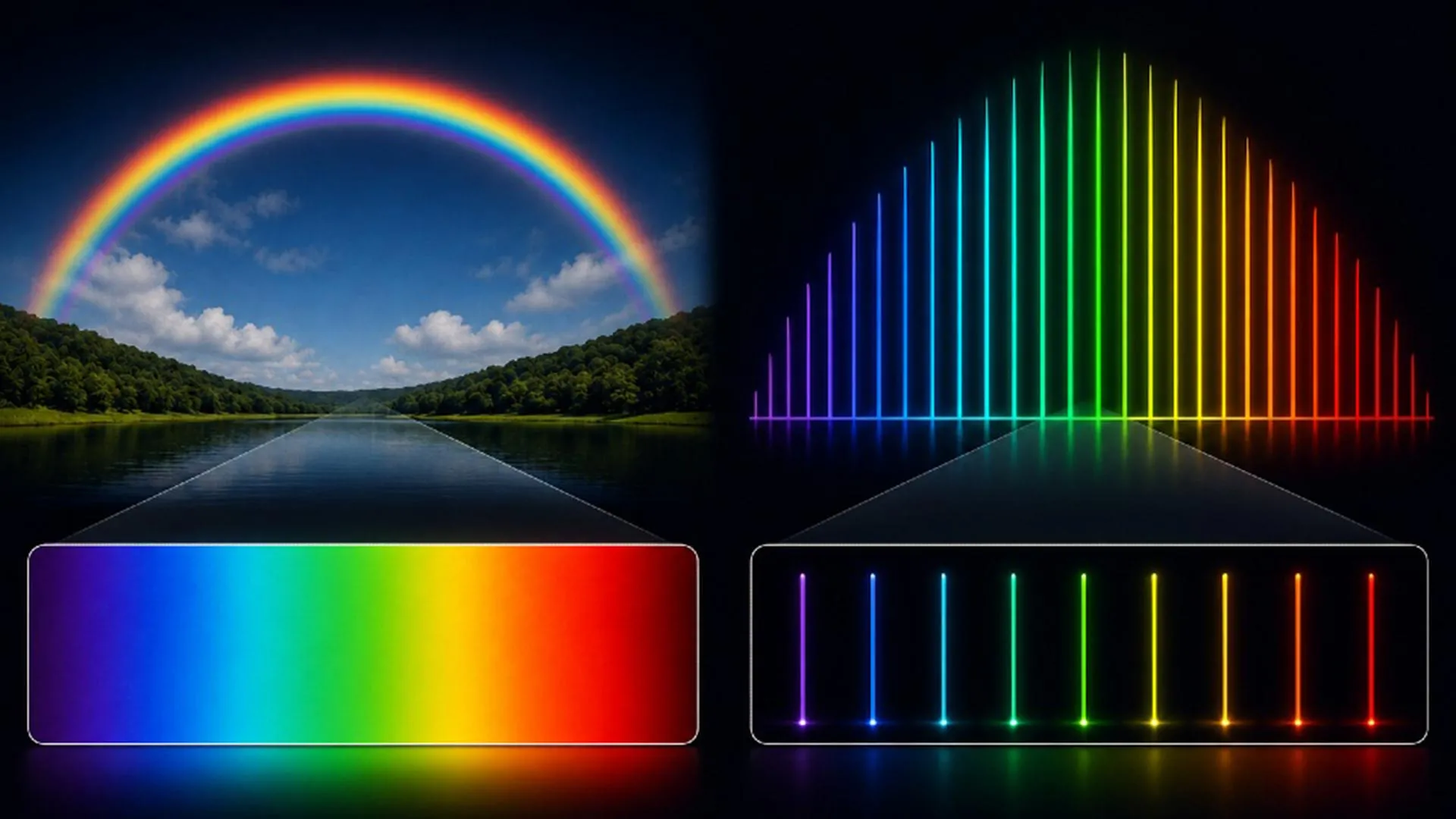
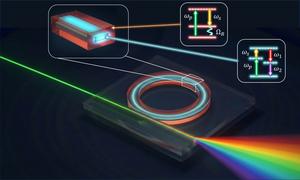
Researchers have now demonstrated a different approach: letting two materials share the work. As reported in Advanced Photonics, scientists combined two nonlinear optical effects that normally occur separately. Their device uses a silicon nitride core to generate optical frequency combs while a surrounding silica layer produces Raman scattering. By harnessing the strengths of both materials at once, the team created a new type of integrated photonic device capable of generating broad ranges of light frequencies on a chip.
At first glance, the idea seems simple. Light traveling through a photonic circuit is usually concentrated in the core of a waveguide, while the surrounding cladding mainly serves to confine the light. The researchers realized that some of the circulating light naturally extends into the cladding. Rather than treating that region as passive, they designed the device so the light could interact strongly with it.