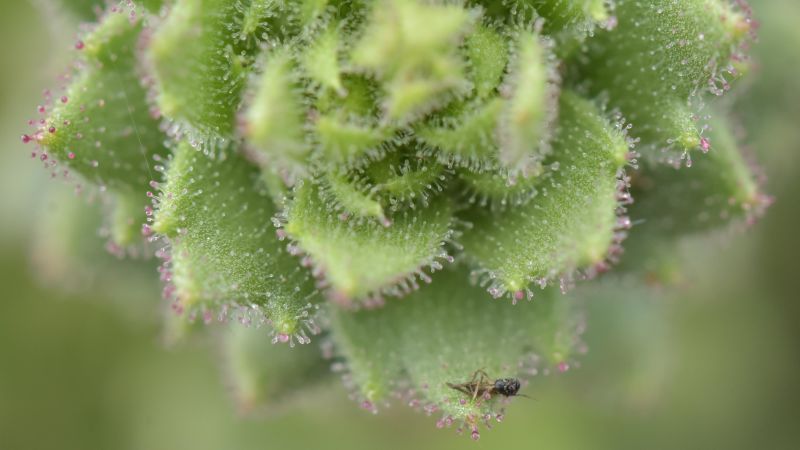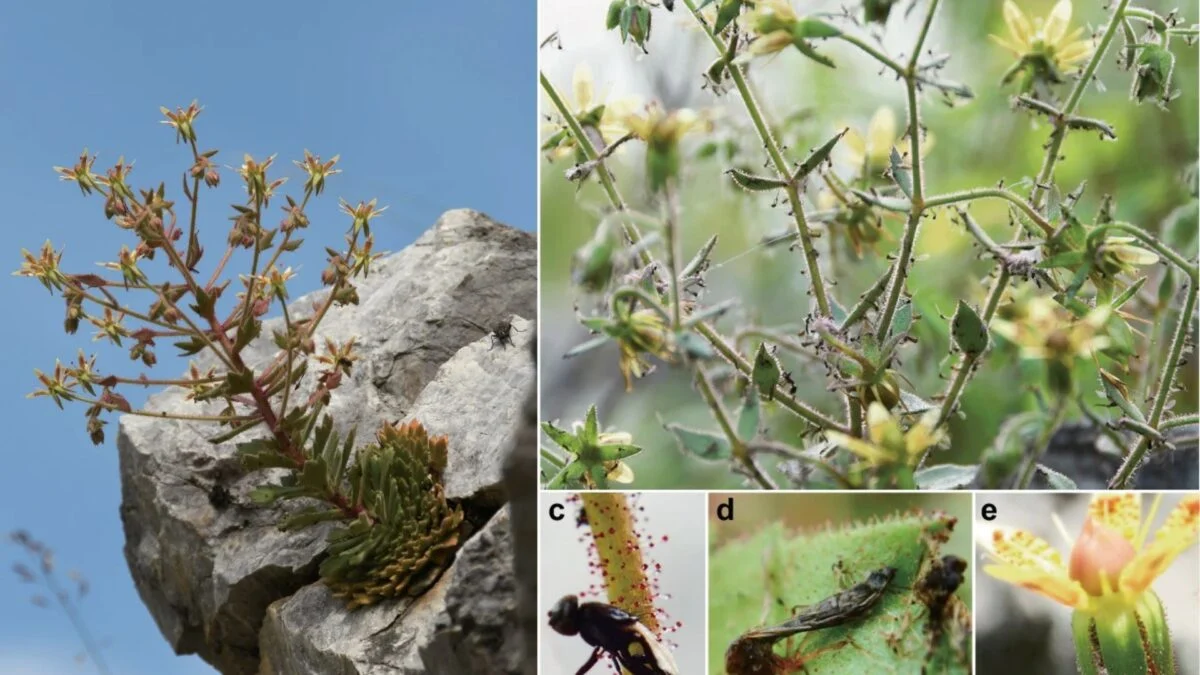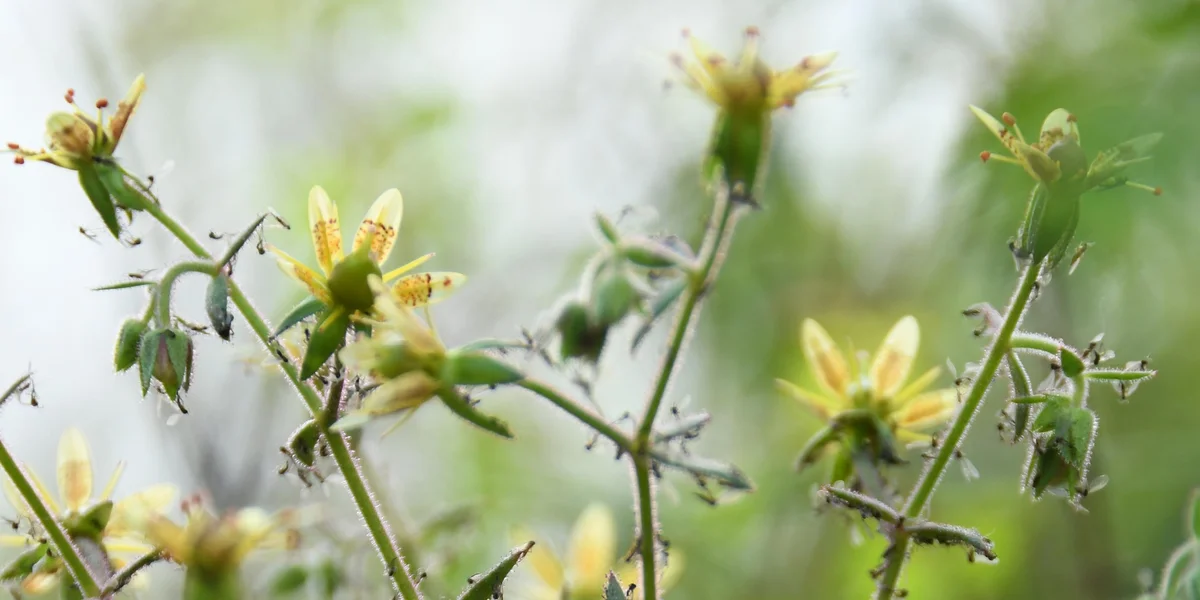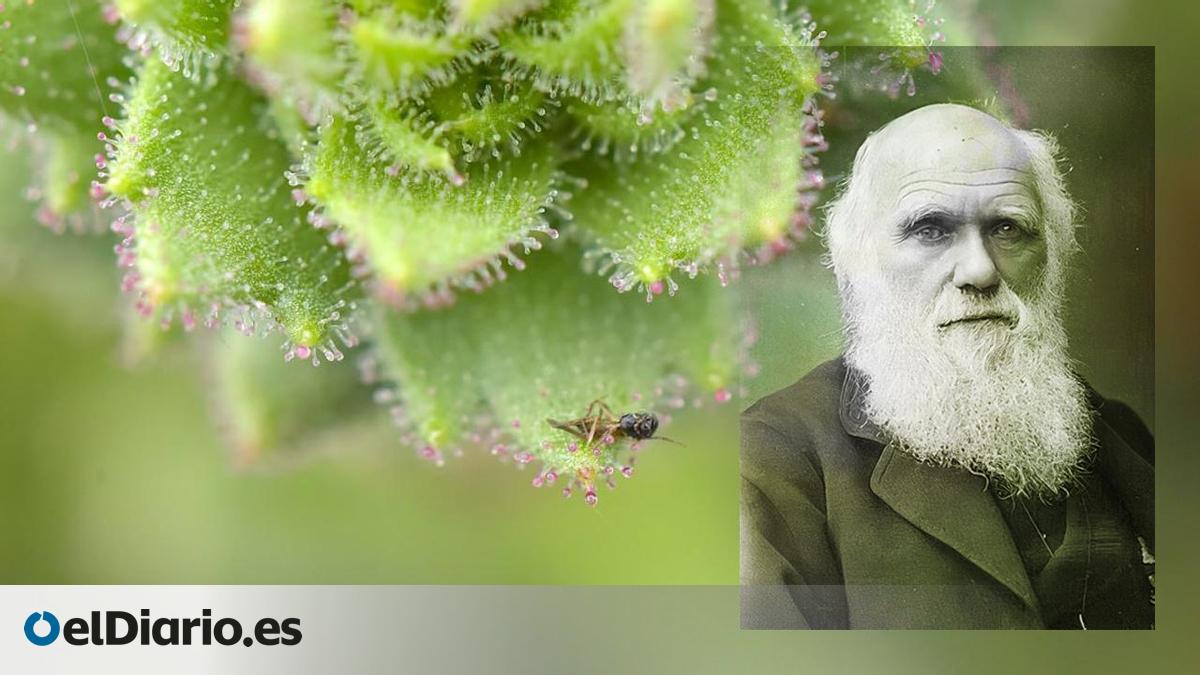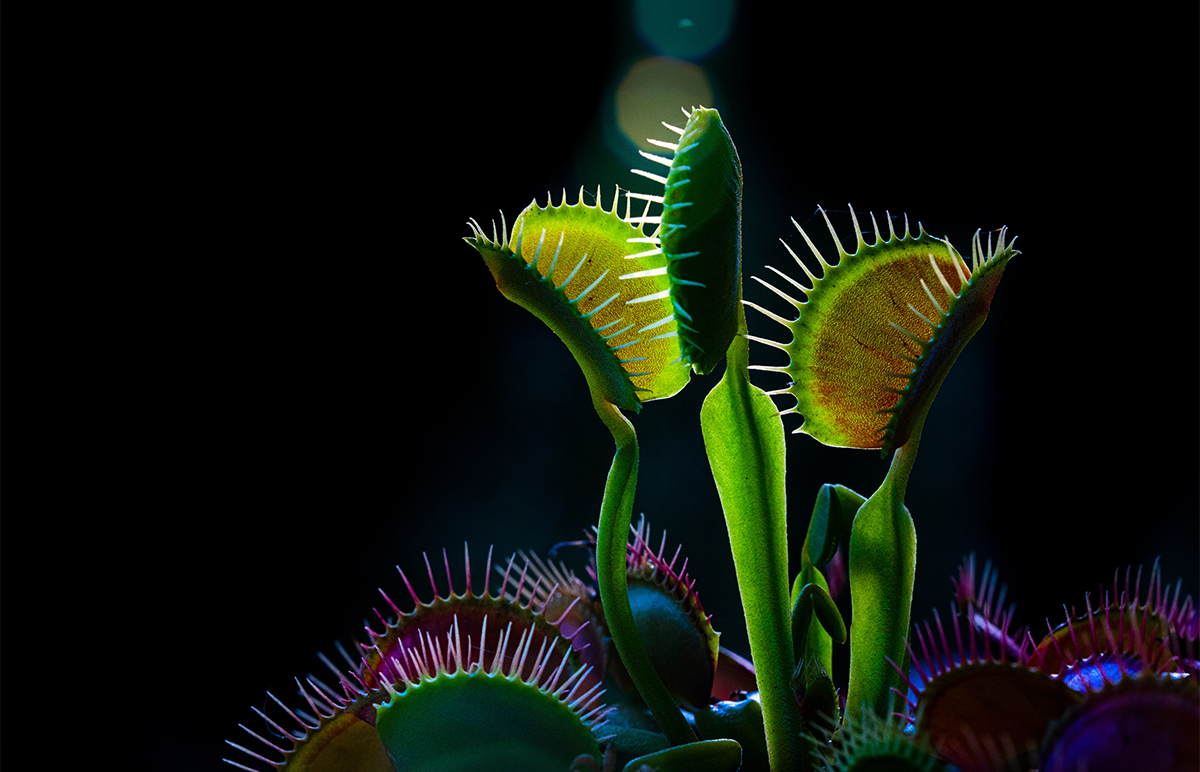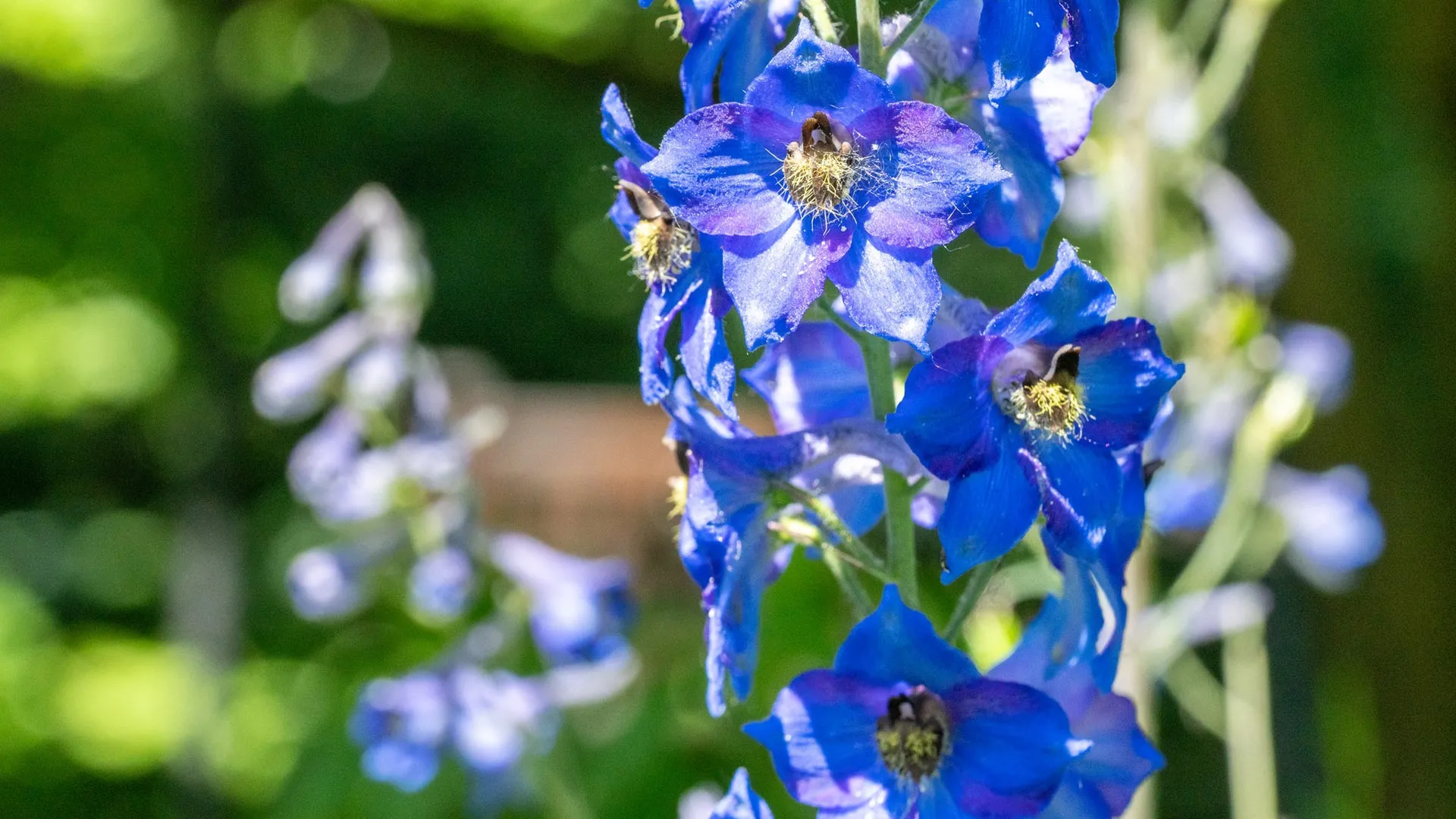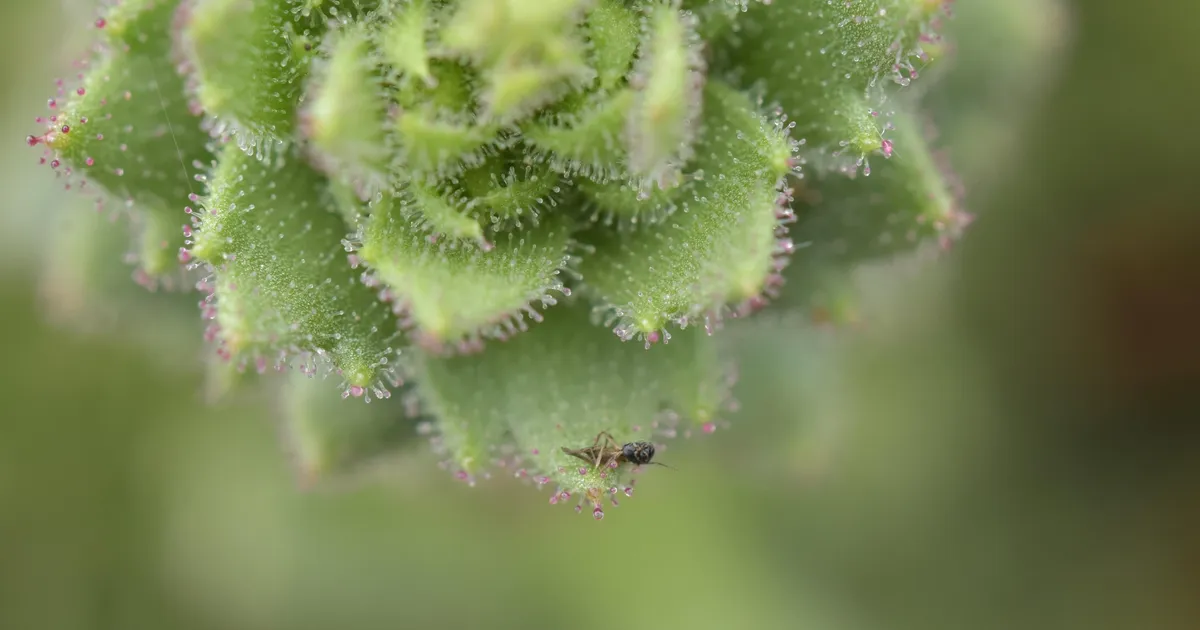
Current sectionScience & HealthSticky hairs on the alpine flower Saxifraga led Darwin to posit that it might eat animals and 150+ years later, that has been shown to be trueShare to FacebookShare to XArticle printing is available to subscribers onlyPrint in a simple, ad-free formatSubscribeComments: Zen reading is available to subscribers onlyAd-free and in a comfortable reading formatSubscribeSticky glandular hairs on Saxifraga candelabrum trapping insect prey. Credit: Xin-Jian ZhangSticky glandular hairs on Saxifraga candelabrum trapping insect prey. Credit: Xin-Jian Zhang06:01 PM • August 04 2026 IDTThe concept of carnivorous plants is fascinating and terrifying, hence the dread inspired by the "Little Shop of Horrors". Plants are supposed to be mindless food, unthinking sessile creatures at the mercy of all motile life forms, from bacteria to cows.But sometimes, under peculiar ecological stresses, the prey becomes the predator.The next step in this extraordinary evolutionary saga is for somebody to identify them as such. How does one categorize a plant as carnivorous – meaning it obtains nutrients by eating small animals, in contrast to all its green brethren that gain their nutrients from the soil? Based on the famed Venus fly trap, one might think the answer to be trivial. But it took more than 150 years for a dainty alpine flower that the father of evolutionary theory Charles Darwin suspected to be carnivorous, to be proven so.The true nature of Saxifraga candelabrum was belatedly outed in Nature Communications on Tuesday by Tao Deng of the Chinese Academy of Sciences in Kunming and colleagues in Nature Communications. Said plant ekes out a living at high elevations in the Qinghai-Tibet Plateau and Hengduan Mountains in China, and the characteristic that rang Darwin's bells in the year 1875 were sticky hairs on its leaves. Saxifraga candelabrum. Found in high elevations in the Chinese Qinghai-Tibet Plateau and Hengduan Mountains. Credit: Xin-Jian ZhangSaxifraga candelabrum. Found in high elevations in the Chinese Qinghai-Tibet Plateau and Hengduan Mountains. Credit: Xin-Jian ZhangBased on that unusual botanical feature, he posited that at least some species of Saxifraga, which is a whole group of alpine flowering plants, might be carnivorous because why else would they have such a feature. The whole point of having glue on one's leaves is to trap insects. But his thesis that it consumed bugs had remained unproven, until now.No question that Saxifragans are sticky and one can easily see many bugs helplessly stuck to their foliage. But merely trapping insects does not a botanical carnivore make, Deng and the team point out. There needs to be corroborating evidence that they attract the insects, and having trapped the creatures, that the plant digests them.Saxifraga candelabrum. While Darwin suspected it was carnivorous, it's only just been proven. Credit: Xin-Jian ZhangSaxifraga candelabrum. While Darwin suspected it was carnivorous, it's only just been proven. Credit: Xin-Jian ZhangIndeed, the new study provides proof of carnivory in Saxifraga candelabrum based on multiple lines of evidence, showing that the plant does attract, does trap, and does heartily digest insects, from which it gains precious nitrogen.First thing, Deng and his colleagues checked S. candelabrum growing in alpine areas of the Qinghai-Tibet Plateau-Hengduan Mountains in China and observed insects present on the glandular hairs of 43 out of 45 surveyed specimens. How many insects? A square meal's worth: mature plants averaged 71 trapped insects each, most of which were caught on the hairs.Common butterwort (Pinguicula). A carnivorous plant that catches insects with the mucus on its leaves. Its purple flowers bloom in summer. Credit: tamu1500/ShutterstockCommon butterwort (Pinguicula). A carnivorous plant that catches insects with the mucus on its leaves. Its purple flowers bloom in summer. Credit: tamu1500/ShutterstockProving the delicate plants were digesting the insects was done first by identifying the presence of phosphatase - an enzyme commonly found in other carnivorous plants – in S. candelabrum, ergo it can potentially digest prey. Then the team fed plants with fruit flies (our friend Drosophila) that had been labeled with a stable form of nitrogen and lo, in the appropriate time, the researchers observed a marked increase in said nitrogen in the plant, compared with non-carnivorous plants. It got that nitrogen from the flies.That would sound like case quite closed but the team adds that they identified genomic similarities between S. candelabrum and other carnivorous plants.Tropical pitcher plants (Nepenthes), a species of carnivorous plants that drowns prey in its pitcher trap. Credit: Egoreichenkov Evgenii/ShutterstockTropical pitcher plants (Nepenthes), a species of carnivorous plants that drowns prey in its pitcher trap. Credit: Egoreichenkov Evgenii/ShutterstockHence they conclude that Darwin was most likely right and the sticky, hairy plant is carnivorous. Which means that carnivory in plants may be (a little) more widespread than we had realized, Deng and the team say.Presently only 14 families of carnivorous plants are known, some quite lovely, with five basic trapping mechanisms: snap traps like our Venus, pitchers filled with aromatic digestive juices, the divine equivalent of fly paper in sundews (including Saxifraga), suction traps in bladderworts and the "eel-trap" aka "lobster-trap" in corkscrew plants.Carnivorous lance-leaved sundews (Drosera adelae) growing in a pot filled with dark volcanic gravel. Tiny tentacles on the leaves secrete a glue to trap prey. Credit: shufilm/ShutterstockCarnivorous lance-leaved sundews (Drosera adelae) growing in a pot filled with dark volcanic gravel. Tiny tentacles on the leaves secrete a glue to trap prey. Credit: shufilm/ShutterstockNote that Venus fly traps in the house are a recipe for disappointment. You might be able to keep them alive for a while but even if you do, you won't notice any significant diminishment in the population of flies. It's easier to get better at taking out the garbage.Why do Venus fly traps survive in the wild eating small animals yet flop over and die in our homes?They're fussy and meeting their needs over time is tricky. Overwatering rots the roots, underwatering causes them to dehydrate and die; they hate the metals and minerals in our water supply and will beg silently for natural rain or if lacking that, distilled water. They want at least six hours of direct sunlight, say experts who have kept them alive; and if you plant the poor thing in good nutritious soil, it will die. It wants to starve and eat flies. But don't force feed it – obesity is not a thing in Venus fly traps but over-nutrition is. Also note that they do have a period of dormancy in the winter but if it's not just inert but black and rotting, it's dead.In the NewsVindicated! A Plant That Darwin Thought Was Carnivorous Really IsA Concentration Camp Turned Paintball Arena Is Testing Serbia's Holocaust MemoryNew Bases, Razed Villages: IDF Entrenching Itself Deep Inside Southern LebanonThe Time Has Come to Move Beyond Zionism and Become IsraelisIsraelis Abroad Removed From Voter Rolls Ahead of Upcoming ElectionRemembering and rebuilding two years laterICYMIThis Israeli ultra-Orthodox Feminist Activist Has a Warning for U.S. JewsNetanyahu Says Israel Has 'Special Forces' Ready if He's Arrested on NY VisitHow Israel's Elbit Armed the United Arab EmiratesTwo Female Israeli Soldiers Die by Suicide as IDF Mental Health Crisis DeepensDozens of IDF Soldiers Desert Sde Teiman Base in Protest of Commander'I Tried, I Got Crushed by AIPAC': Andy Levin Is All-in for El-Sayed
Vindicated! A plant that Darwin thought was carnivorous really is
Sticky hairs on the alpine flower Saxifraga led Darwin to posit that it might eat animals and 150+ years later, that has been shown to be true
1,191 words~5 min read