Story audio is generated using AI
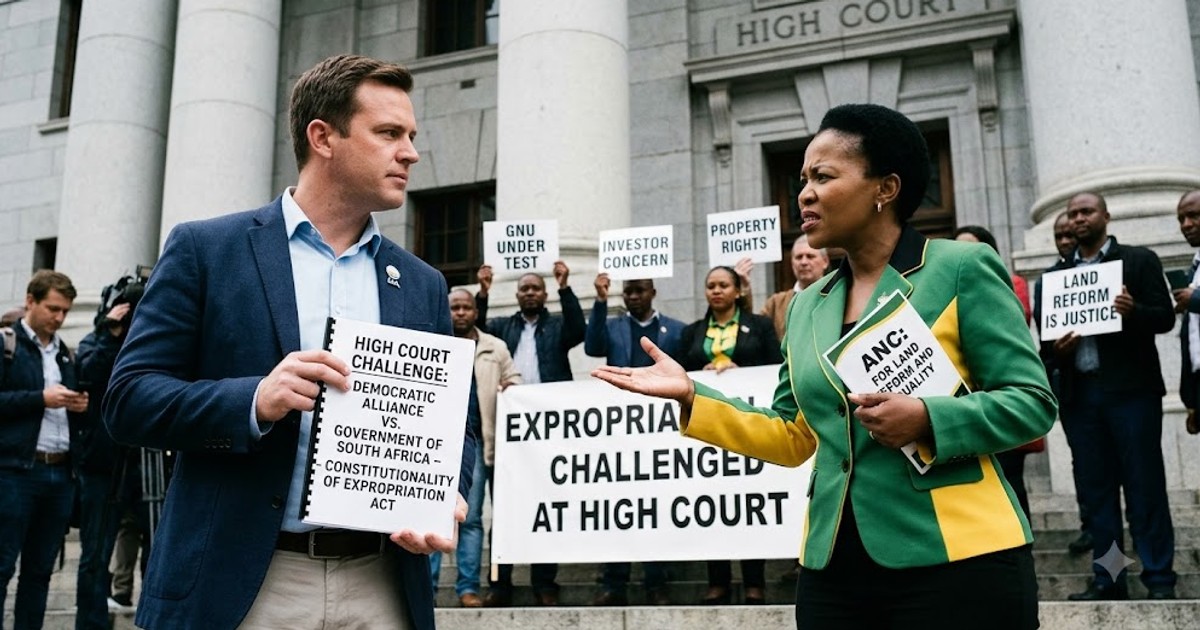
The Institute of Race Relations (IRR) on Tuesday told the Western Cape High Court that key provisions of the Expropriation Act unlawfully tilted South Africa’s constitutional compensation framework in favour of reduced or no compensation.The research and policy organisation is strongly opposed to expropriation without compensation, arguing it violates constitutional property rights, amount to state confiscation and threaten all forms of private ownership.The court is hearing a consolidated challenge to the act that the institute, together with lobby group AfriForum, the DA and other applicants raised. Together they are argue that parts of the legislation are unconstitutional. The respondents — President Cyril Ramaphosa, minister of public works and infrastructure Dean Macpherson, minister of land reform and rural development Mzwanele Nyhontso, parliament and the EFF — are expected to begin presenting their arguments after the applicants conclude their case.The IRR is challenging sections 12(2)(e), 12(3) and 12(4) of the Expropriation Act, which regulate how compensation is determined and identify circumstances in which nil compensation may be just and equitable.Case by caseThe institute argued in court that Parliament cannot predetermine outcomes that the Constitution requires to be decided on a case-by-case basis.Advocate Karl Borgström, appearing for the institute, argued that some parts of sections 12 of the act improperly directed officials towards lower compensation by identifying specific categories of property that should attract reduced awards. This was instead of requiring the “just and equitable” balancing exercise prescribed by section 25(3) of the Constitution.“The constitution requires an equitable balance between the public interest and the interests of those affected,” Borgström told the court. “These provisions put a thumb on the scale in favour of reduced compensation.”He also argued that although nil compensation may be constitutionally permissible in exceptional cases, parliament cannot legislate categories that steer administrators towards that outcome before all the relevant circumstances have been weighed.Borgström submitted that the act replaces what the constitution intended to be an objective constitutional inquiry with a legislative instruction favouring lower compensation in specified cases.“Legislation must mean something,” he said. “If parliament identifies these specific factual situations, they must be doing something. The problem is that what they do is create downward pressure on compensation.”He argued this was particularly problematic because compensation is initially determined by government officials rather than judges.Guidance requiredCiting a Constitutional Court precedent, Borgström argued that administrators cannot be expected to perform the same constitutional analysis as judges and that they require legislation that provides clear guidance rather than provisions capable of producing unconstitutional outcomes.According to the IRR, the constitution requires officials to assess all relevant circumstances before determining compensation. But the impugned provisions single out particular factual scenarios that place a “thumb on the scale” in favour of lower compensation before that balancing exercise has taken place.Borgström also challenged provisions dealing with unused land, arguing that the act unfairly singles out property held for future development despite Constitutional Court judgments recognising there is nothing inherently unlawful about holding property for resale or investment.“There is nothing wrong with property speculation,” he told the court, adding that property owners routinely hold land as an investment and should not automatically face reduced compensation because of how they use it.He further argued that the act creates a new concept of abandonment unknown to South African common law and could unfairly reduce compensation payable to beneficiaries of land restitution if land restored to them is later expropriated. The legislation also, he submitted, improperly allows previous state investment in land to be used as a factor reducing compensation, and that raises constitutional concerns where one organ of state expropriates property owned by another.Although the IRR accepted that land reform is a constitutional imperative and that nil compensation could be constitutionally permissible in exceptional circumstances, Borgström argued that those outcomes must flow from the constitutional balancing exercise required by section 25(3), not from legislation that effectively predetermines the result.He also argued that if parliament intended the disputed provisions merely as examples or guidance with no legal effect, they served no meaningful legislative purpose. If, however, they were intended to influence compensation decisions, then they unlawfully distorted the constitutional framework governing expropriation.