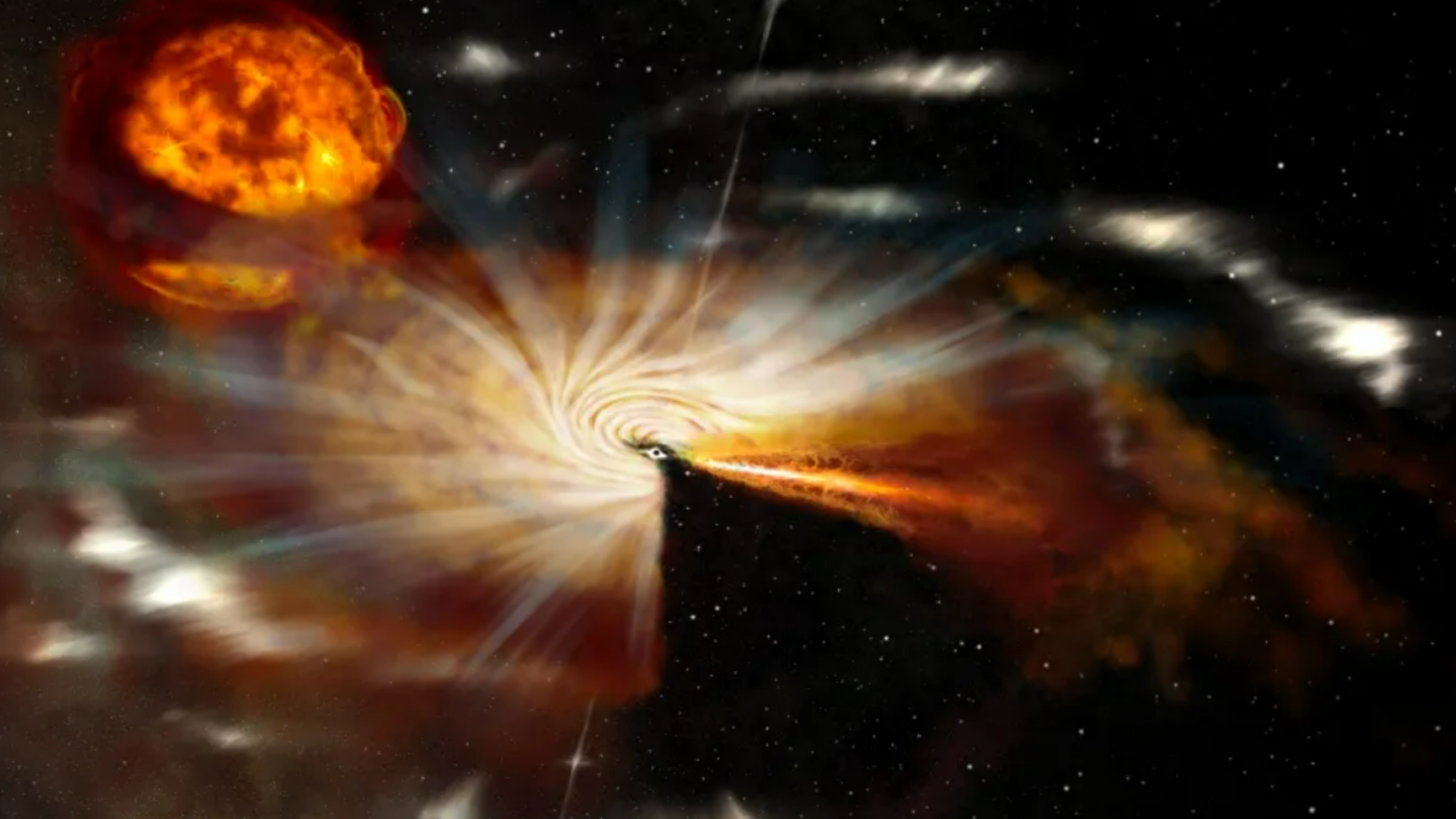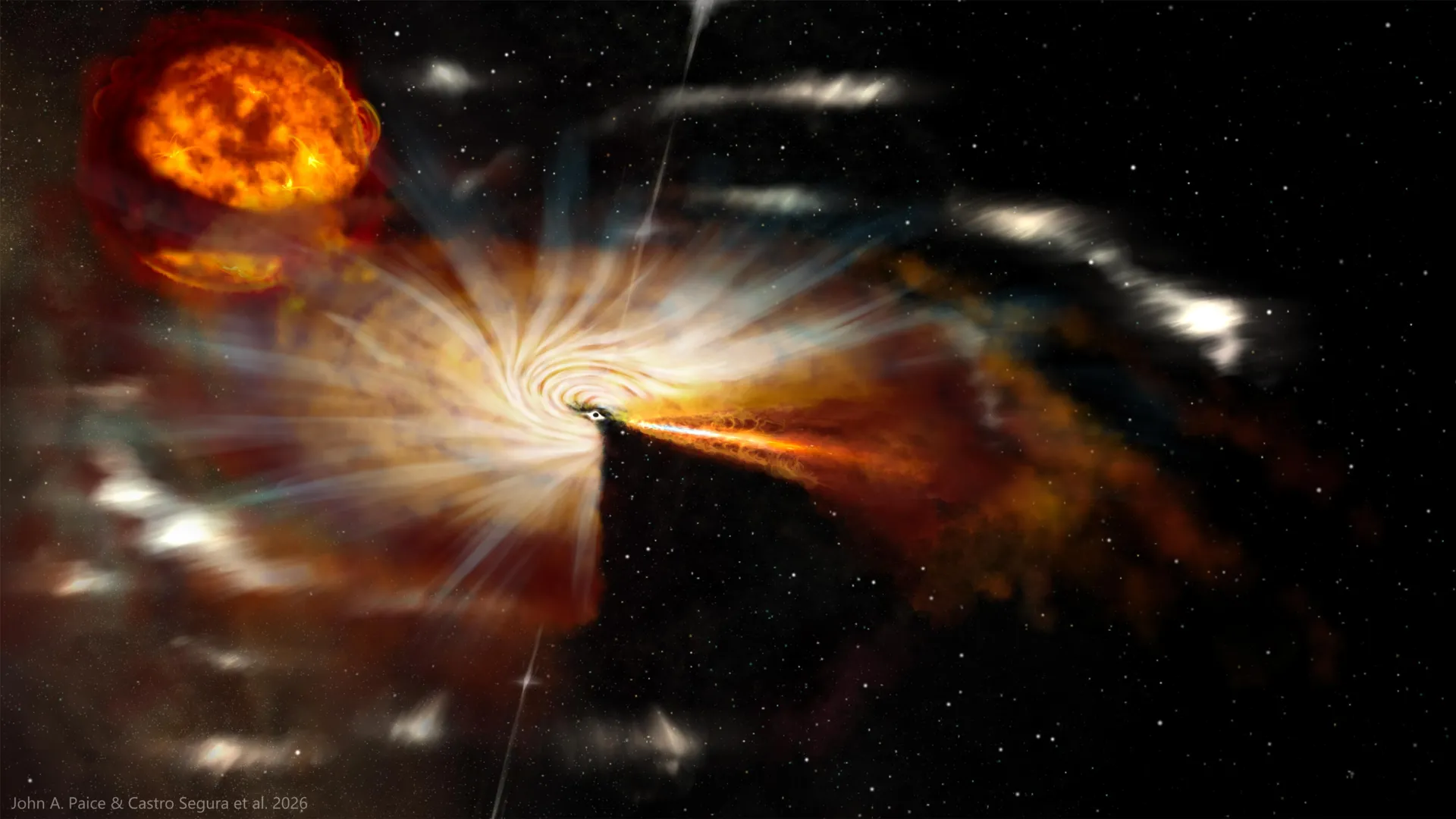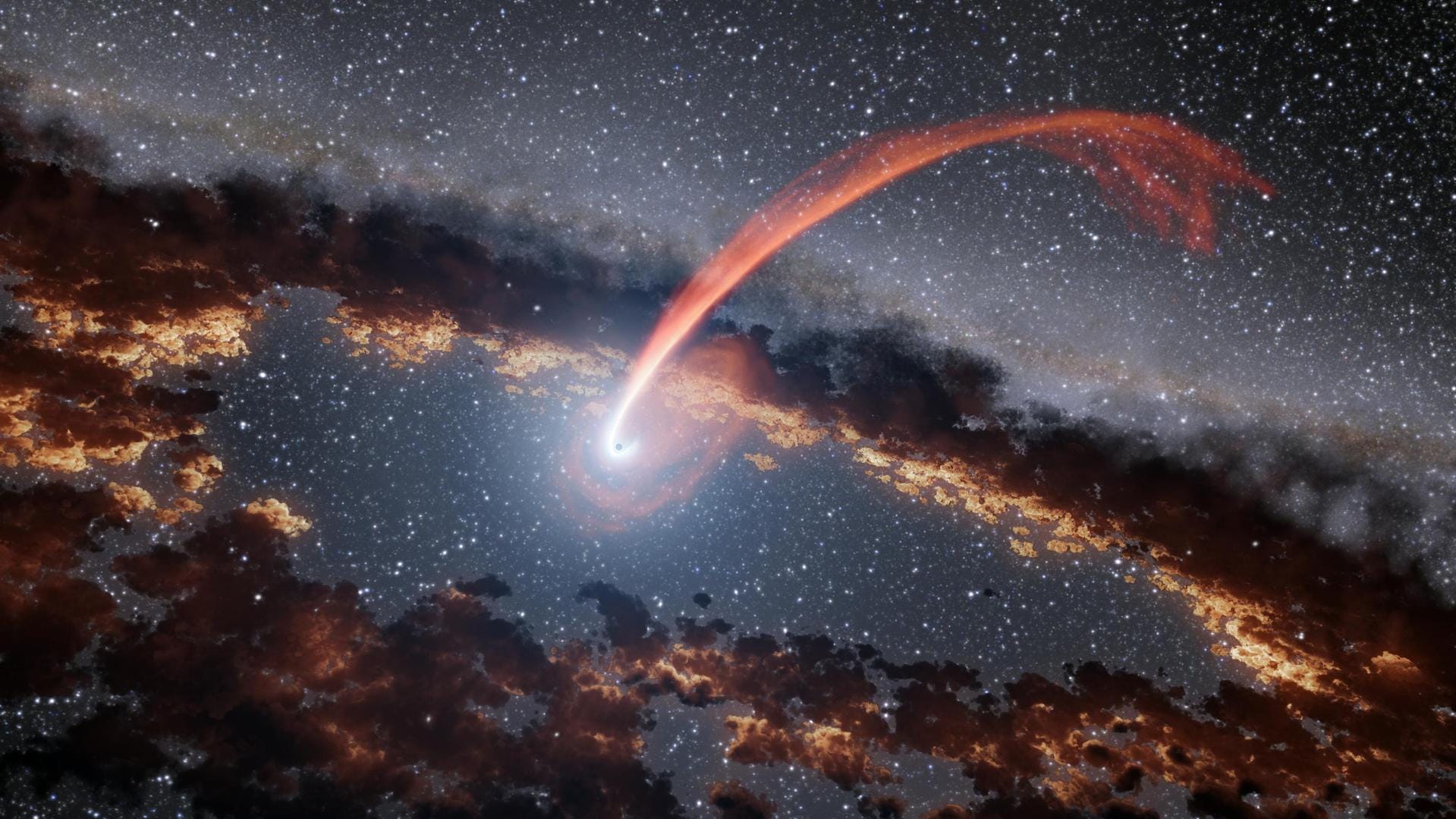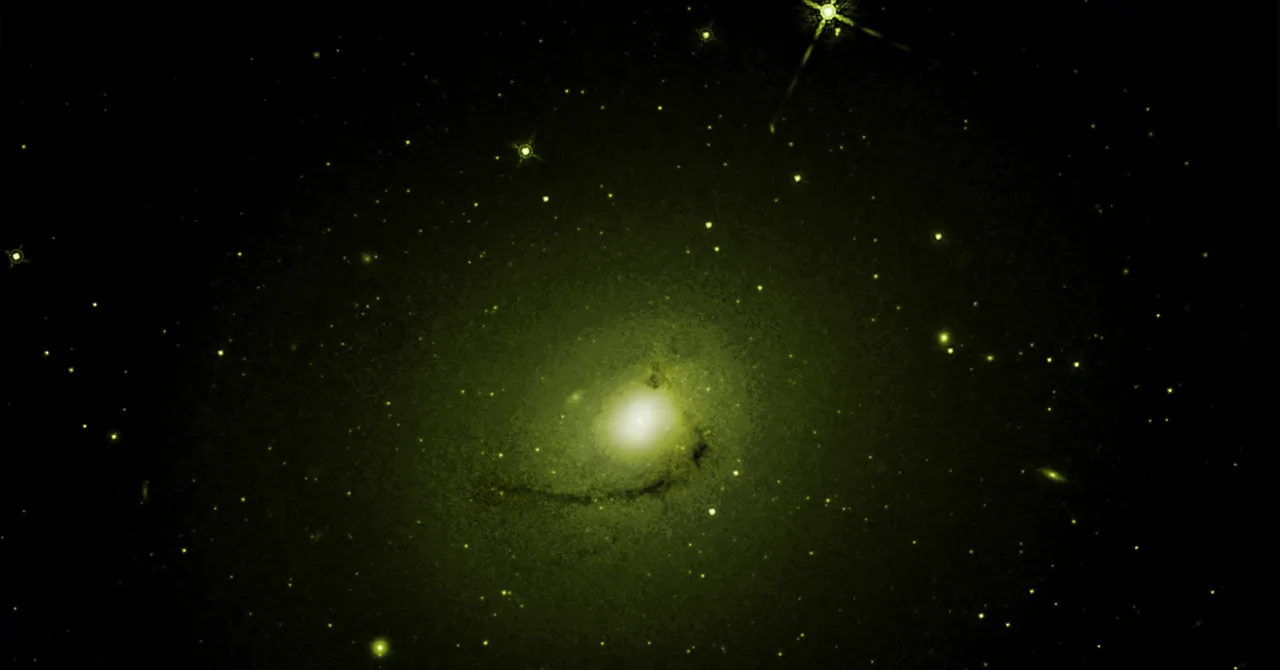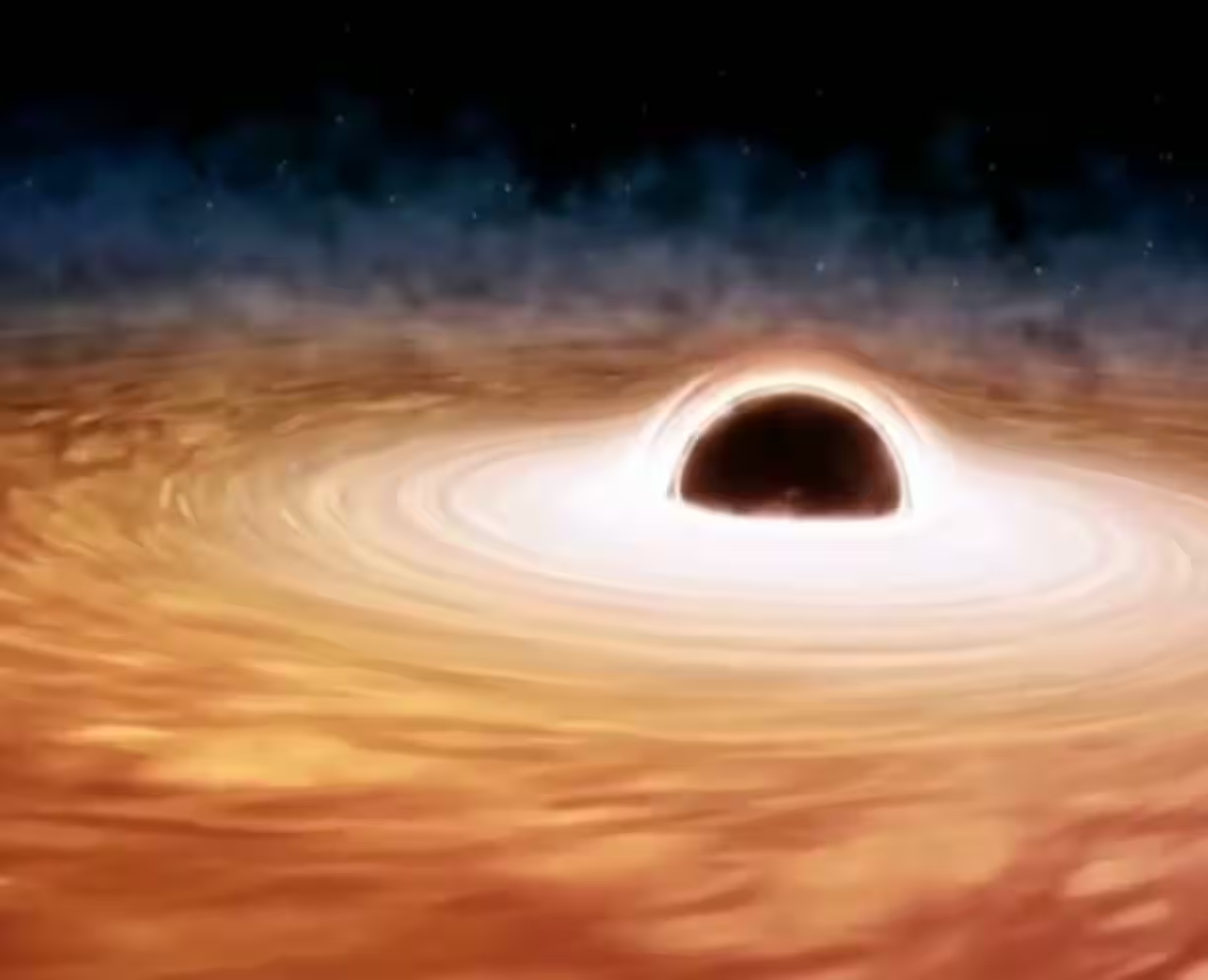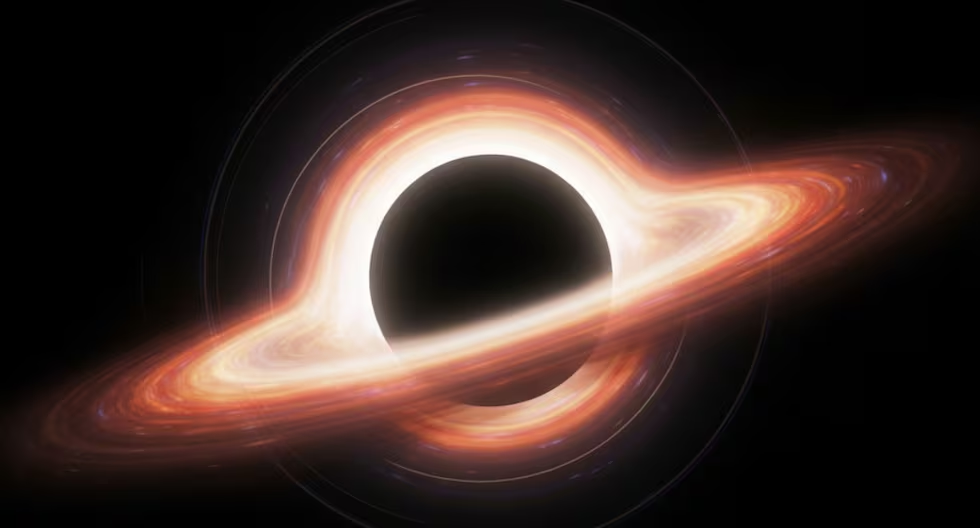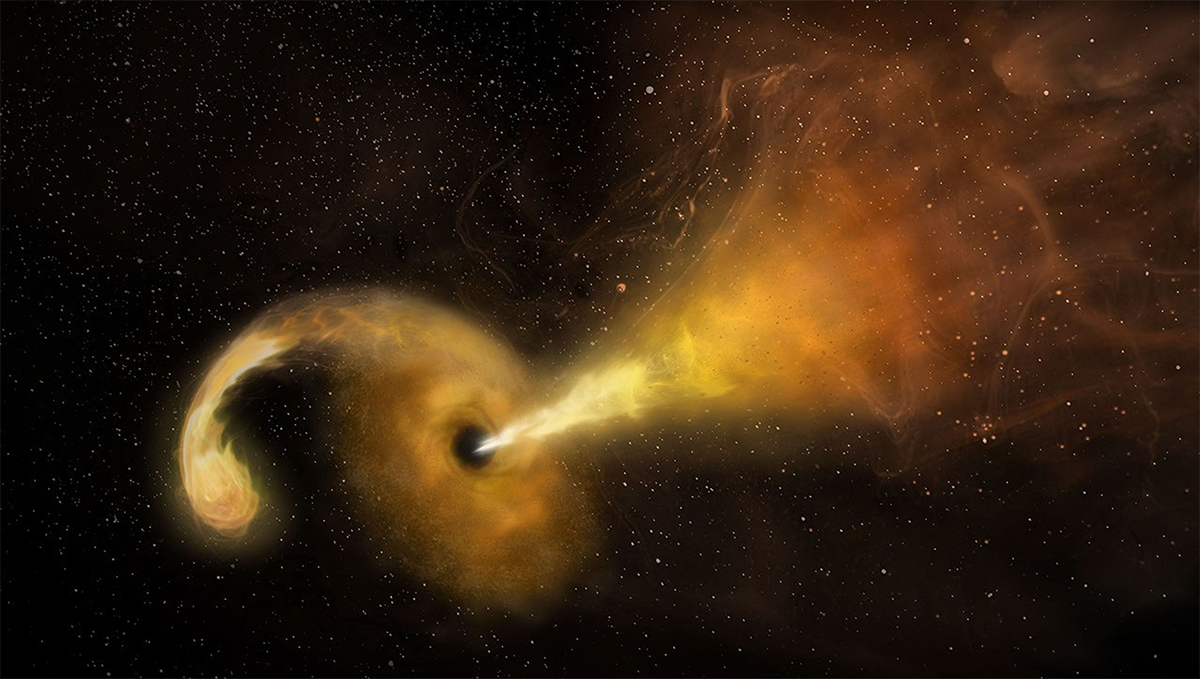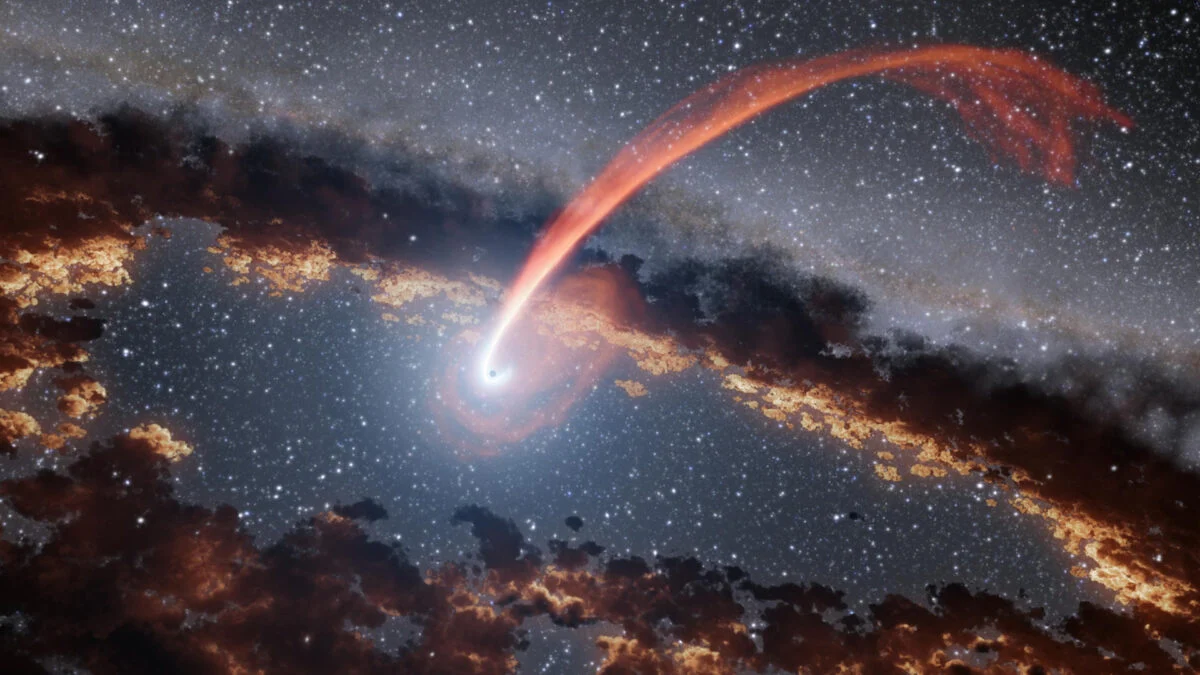
Black holes are typically seen as enormous, bottomless pits with an insatiable appetite for cosmic matter—if anything, that’s probably the one thing people know about them. But it seems the universe had other ideas. Even black holes get indigestion from swallowing too much stuff, according to a recent paper published in Monthly Notices of the Royal Astronomical Society. Researchers came to this conclusion after studying high-resolution optical records of a black hole eruption from 2023. The unprecedented event allowed astronomers to pick apart a specific black hole’s behavior over time. Through their research, the team saw that the black hole didn’t endlessly consume matter, but rather eventually redistributed a substantial portion of its meal back into space. “People often imagine black holes simply swallowing everything around them,” Noel Castro Segura, the study’s lead author and a postdoctoral researcher at the University of Warwick in the U.K., said in a statement. “What we’re seeing is a much more complex process. Matter falls in, the system processes it, and a surprising amount is expelled again.” A flash in the cosmos Swift J1727.8−1613 consists of a black hole surrounded by a swirl of superheated stellar material pulled from a nearby star. Astronomers first got wind of the black hole system in 2023, when it erupted in an extremely luminous X-ray burst that reached Earthbound laboratories. Since then, researchers have used the Very Large Telescope in Chile to “watch this feeding process unfold in real time as vents have rarely been observed in such quality,” according to media release by the University of Warwick.
Even Black Holes Can Get Indigestion. Unsurprisingly, Their Farts Are ‘Massive’ Expulsions of Gas
A high-res movie of a black hole’s “meal” suggests that it’s less a bottomless pit than it is a complex digestive system.
551 words~3 min read