view more
University of Warwick-led astronomers discover the cosmic digestive system of a black hole – showing that even when black holes appear faint, they’re not simply bottomless pits.
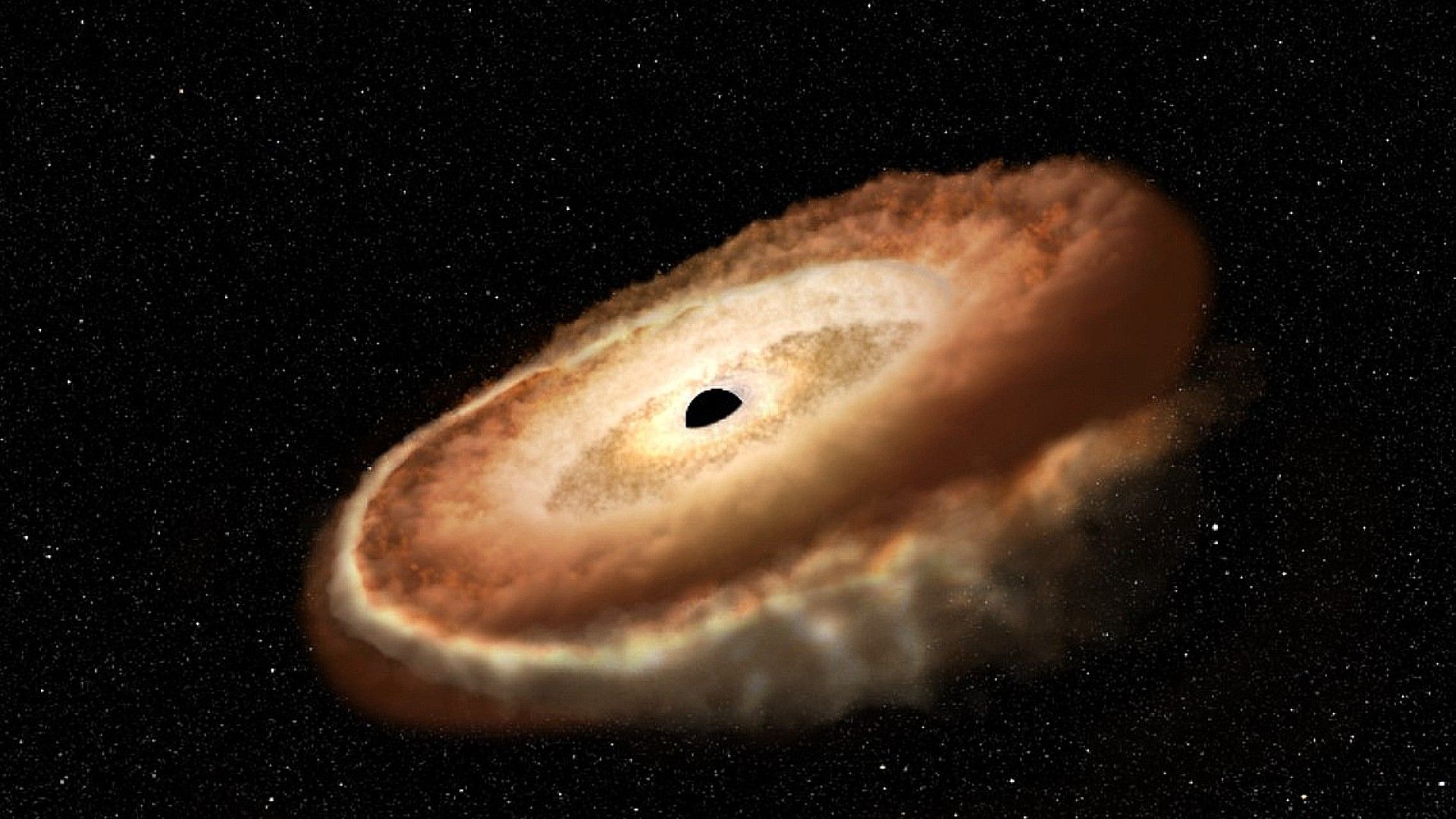
Black holes are often portrayed as cosmic gluttons that swallow everything that comes too close. But new observations of a dramatic black hole outburst – led by Warwick Postdoctoral Fellow Dr Noel Castro Segura – suggest the reality is much messier.
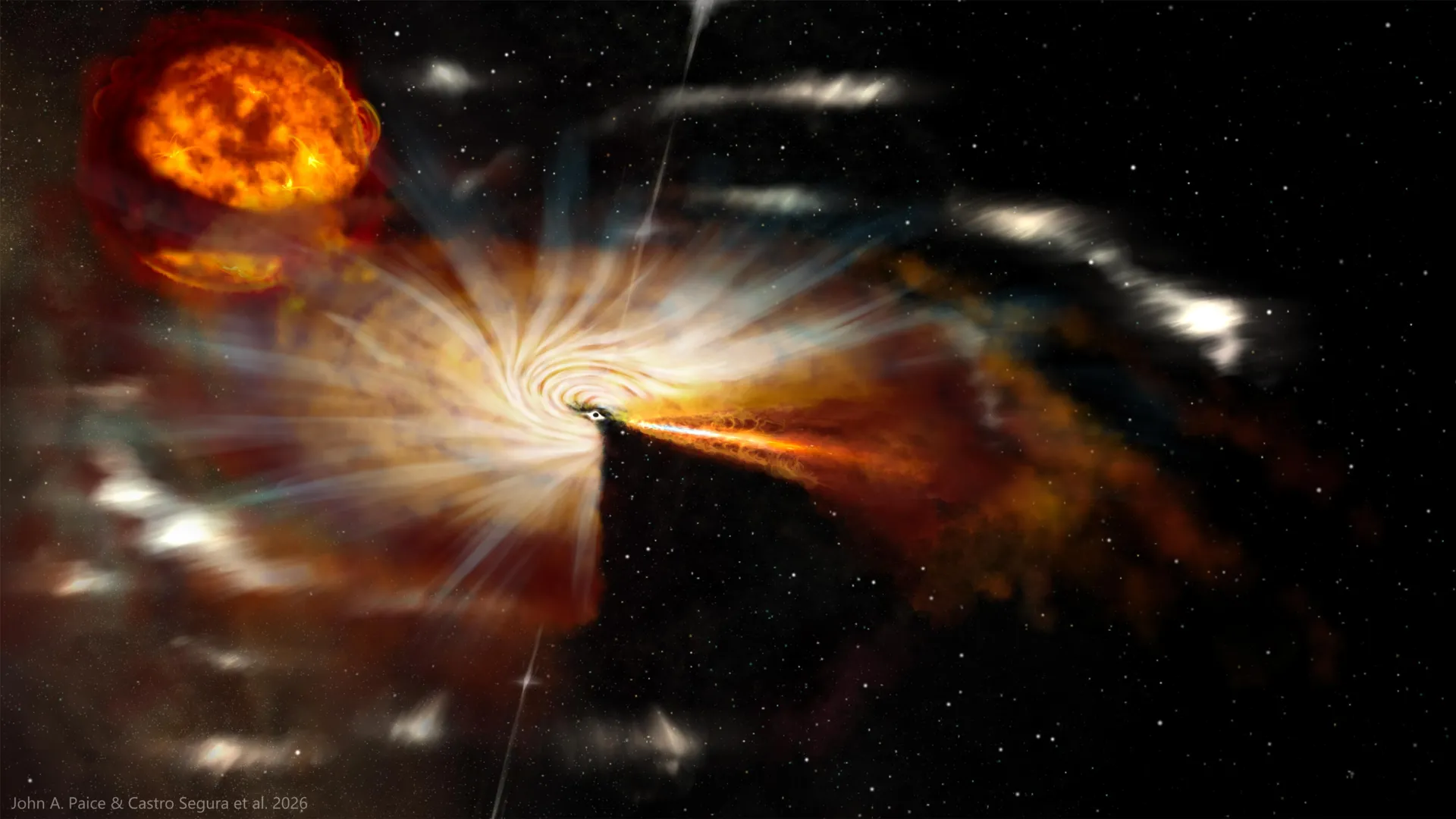
Using the European Southern Observatory’s Very Large Telescope (VLT), astronomers have followed the newly discovered black hole system, Swift J1727.8−1613, through a spectacular 2023 eruption.
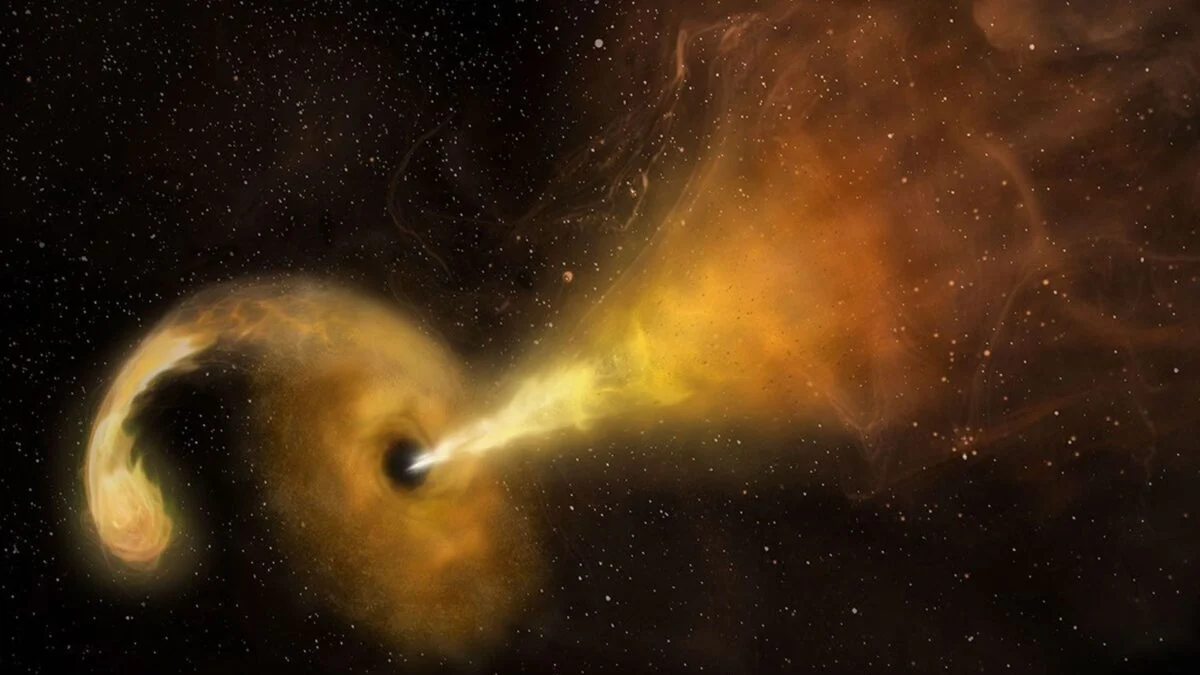
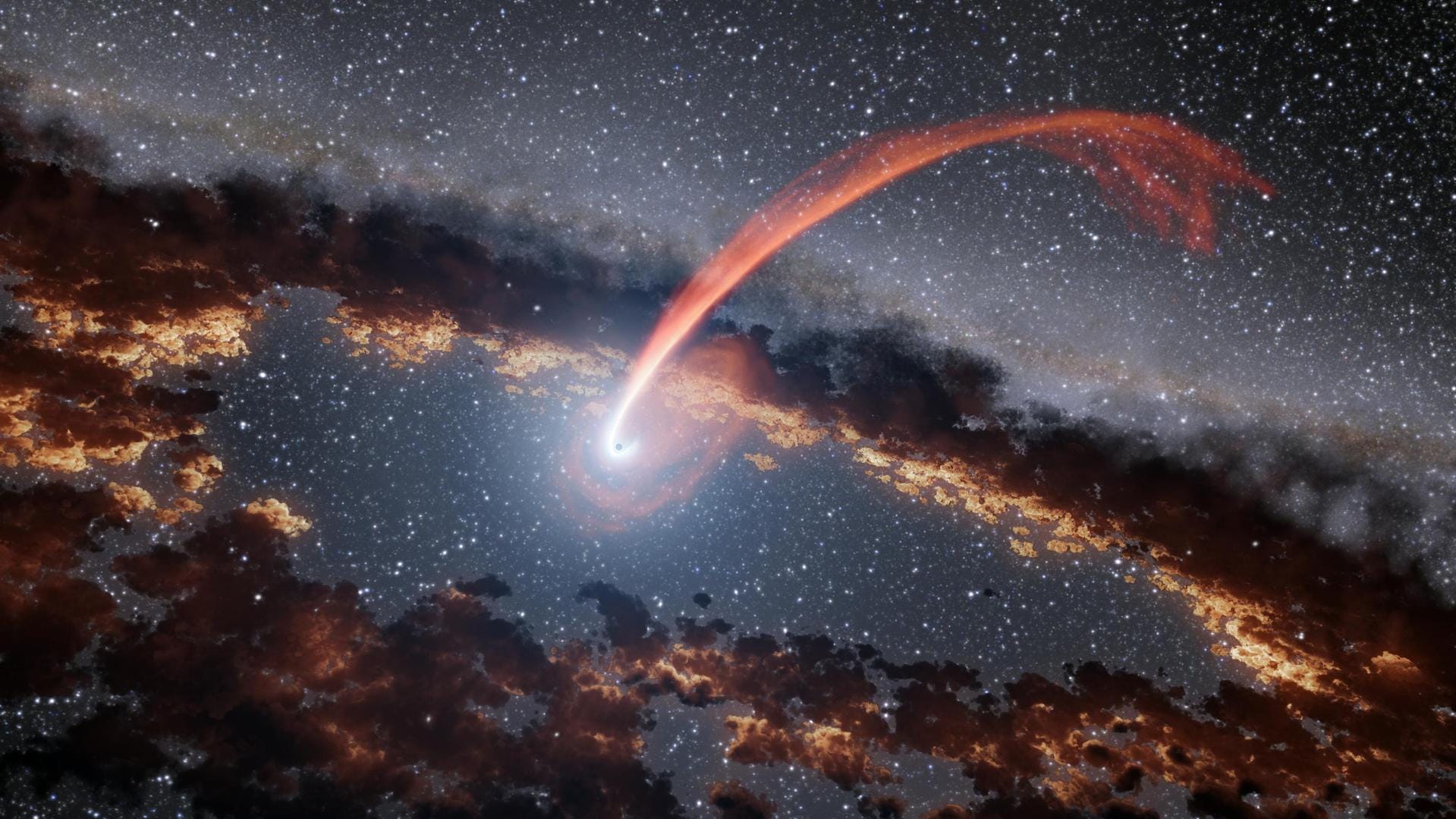
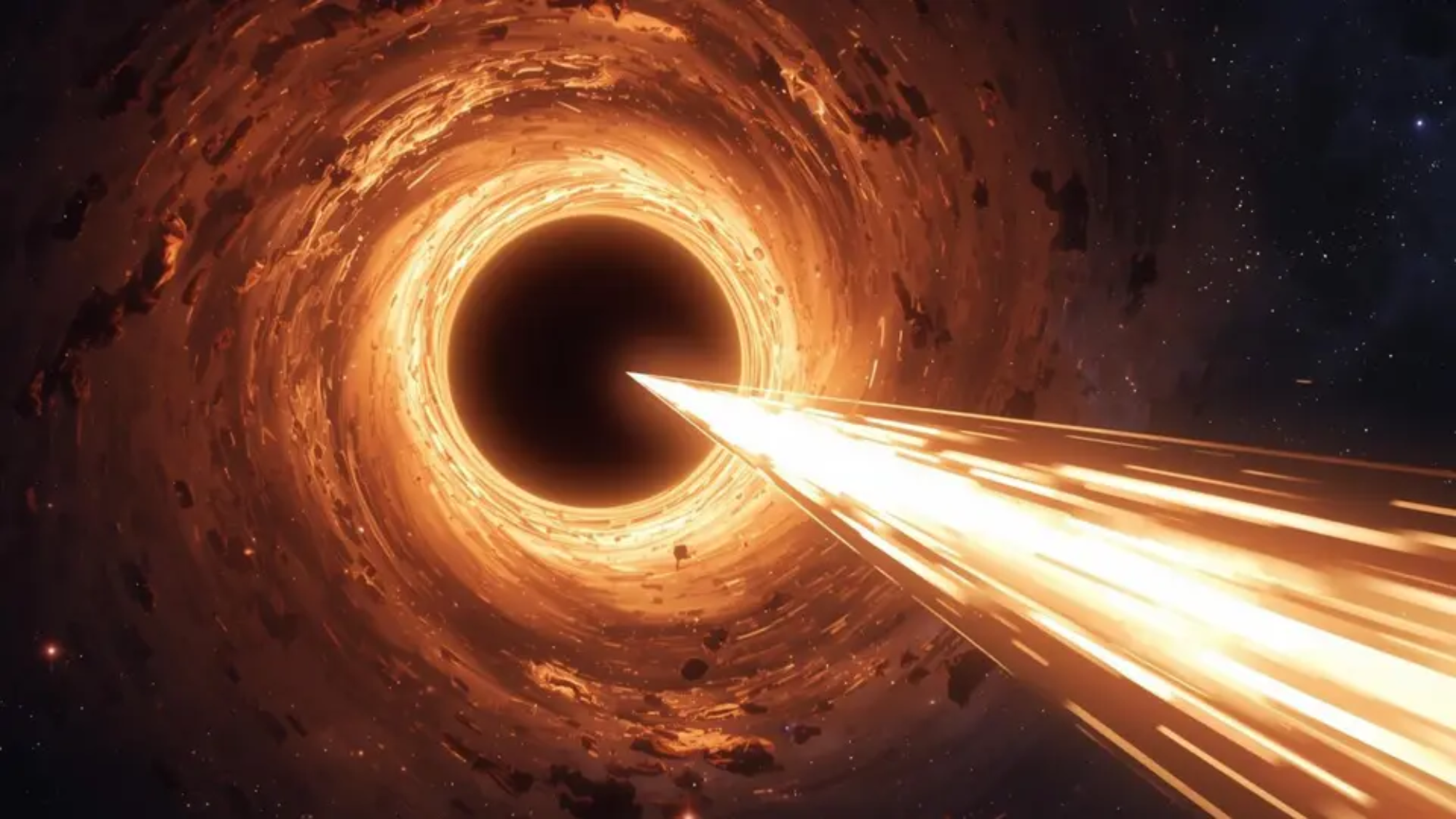
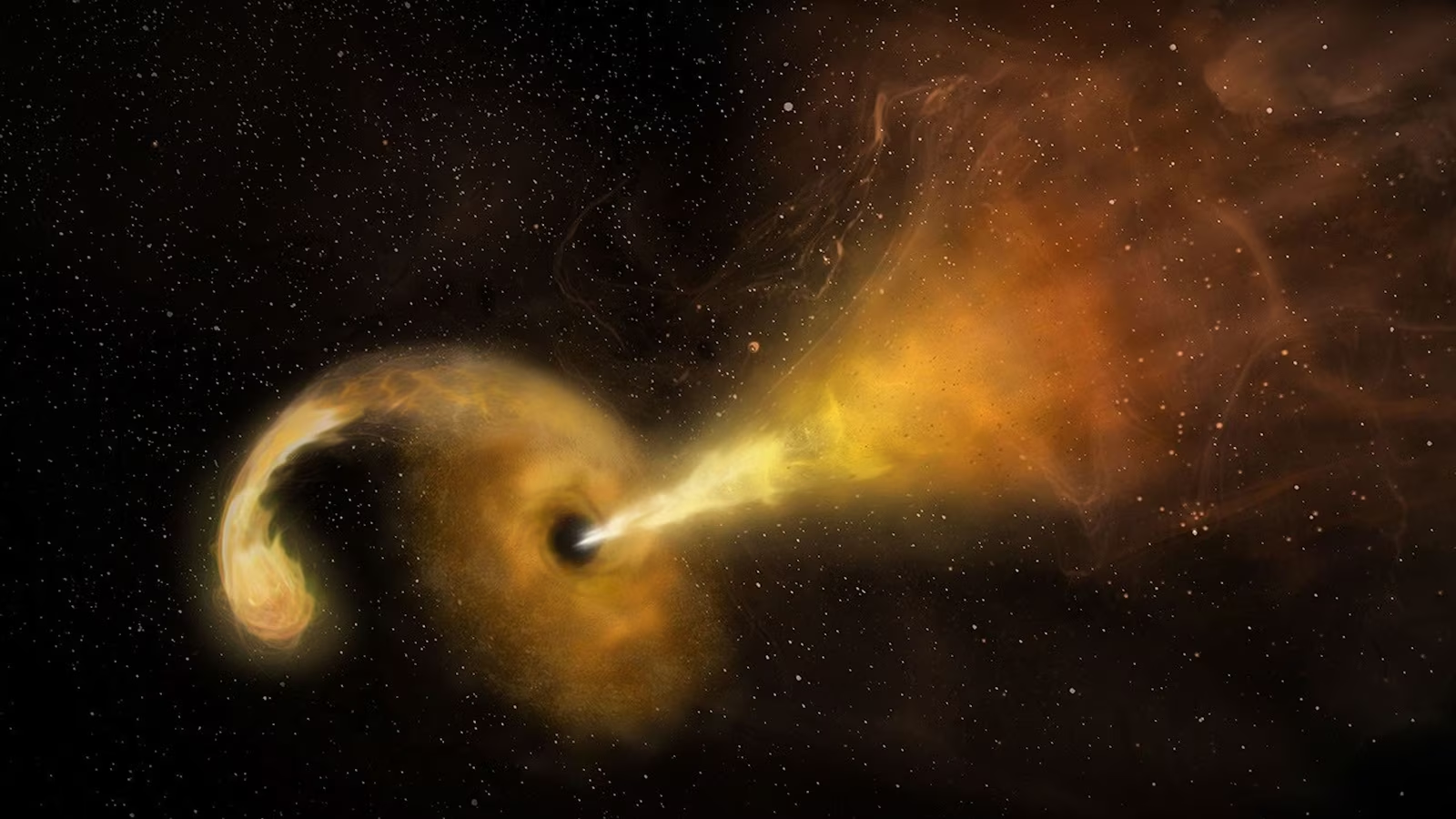
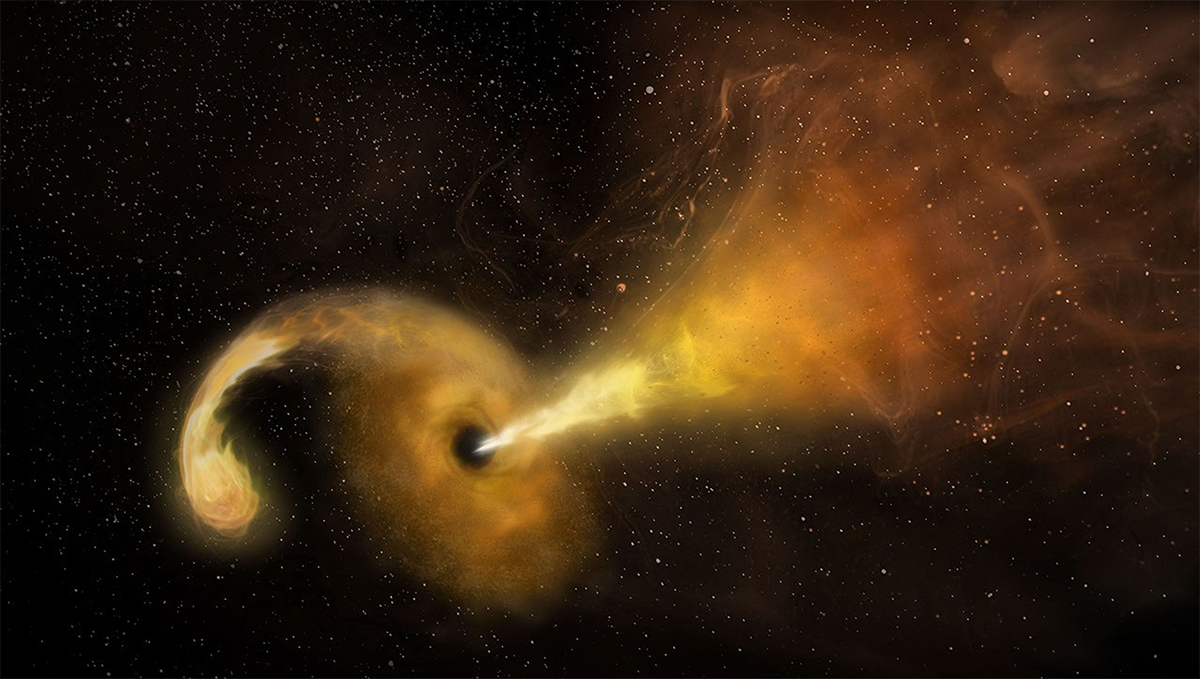
Astronomers found that as the black hole consumed gas from a nearby star, it simultaneously launched some of that material back into space in the form of jets and winds. Critically, the massive outflows of material happen when black holes are very faint, when its activity is very low, much lower than previously thought – meaning black holes may behave less like bottomless pits and more like powerful cosmic digestive systems.