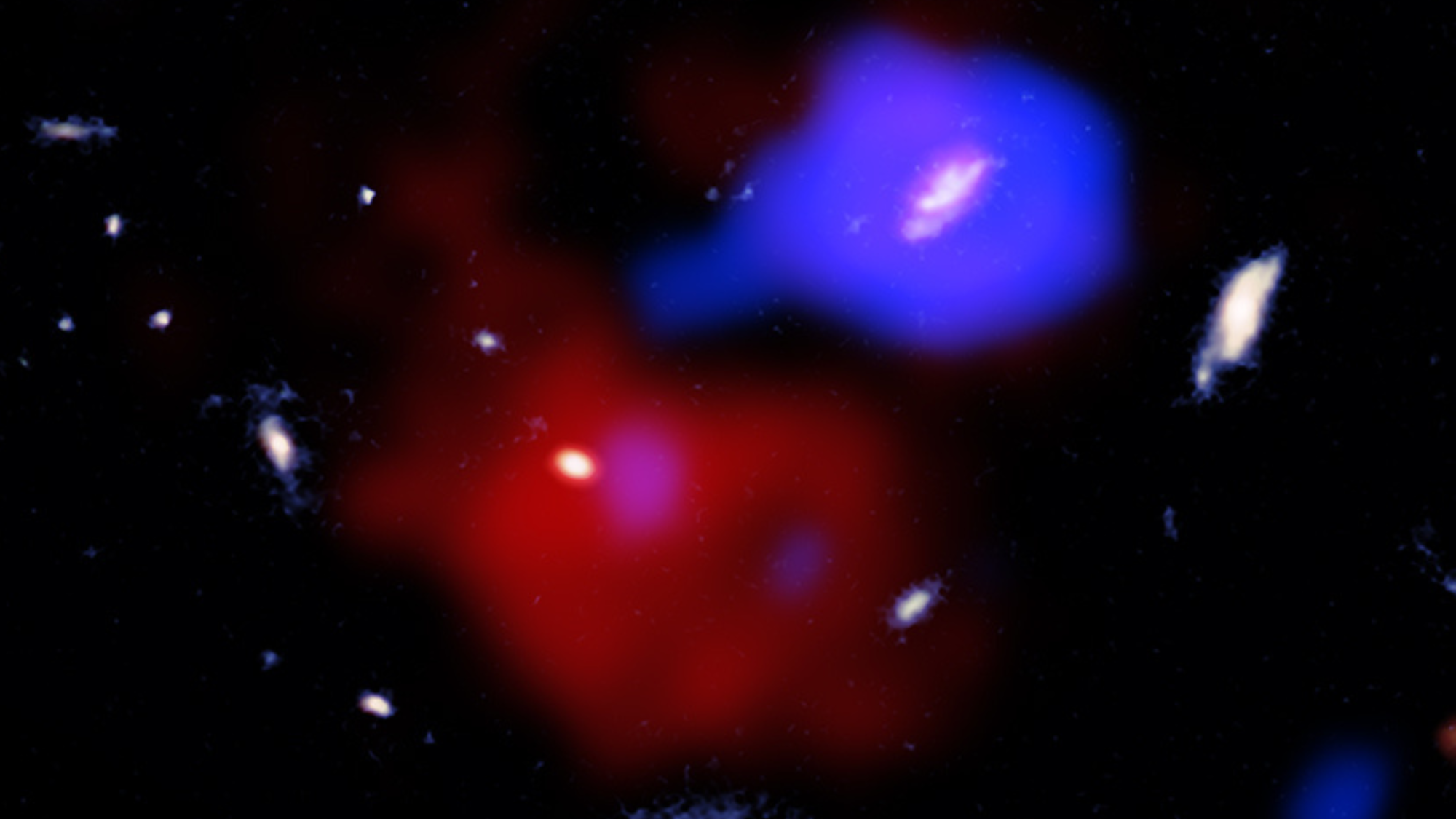
The red potato galaxy MQN01 J004131.9-493704.
(Image credit: X-ray: NASA/CXC/Univ. Milano-Bicocca/W. Wang et al.; Infrared: NASA/ESA/CSA/STScI; Radio: ESO/NRAO/NAOJ/ALMA; Image processing: NASA/CXC/SAO/N. Wolk & P. Edmonds)
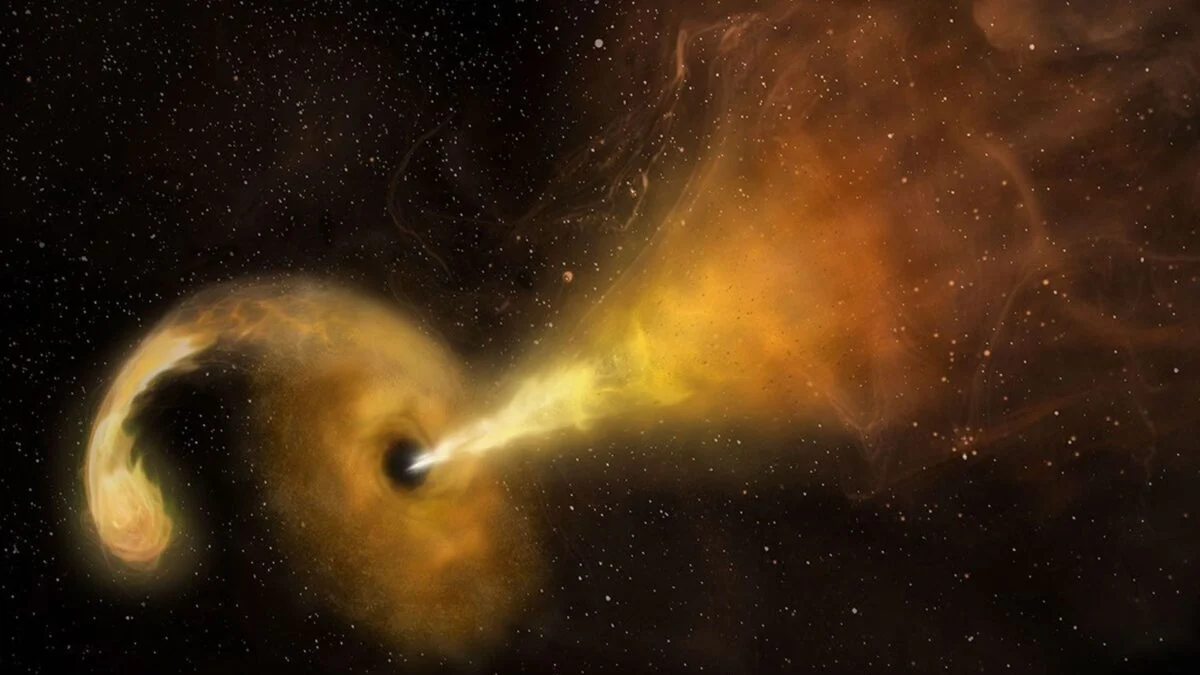
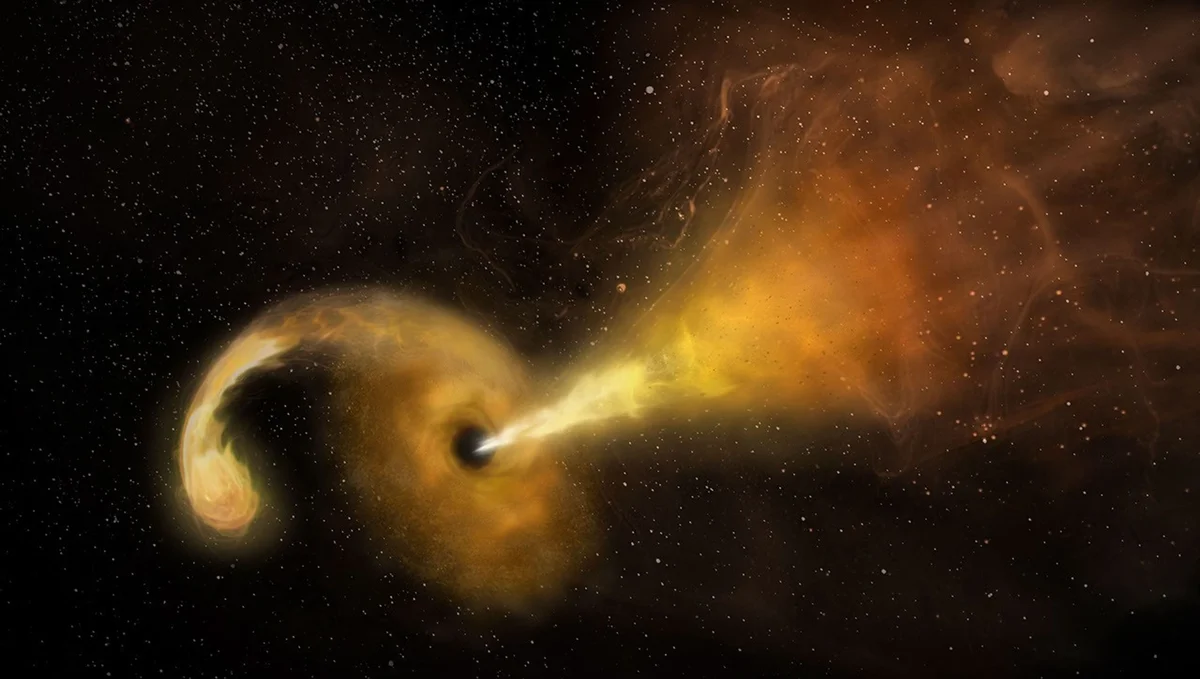
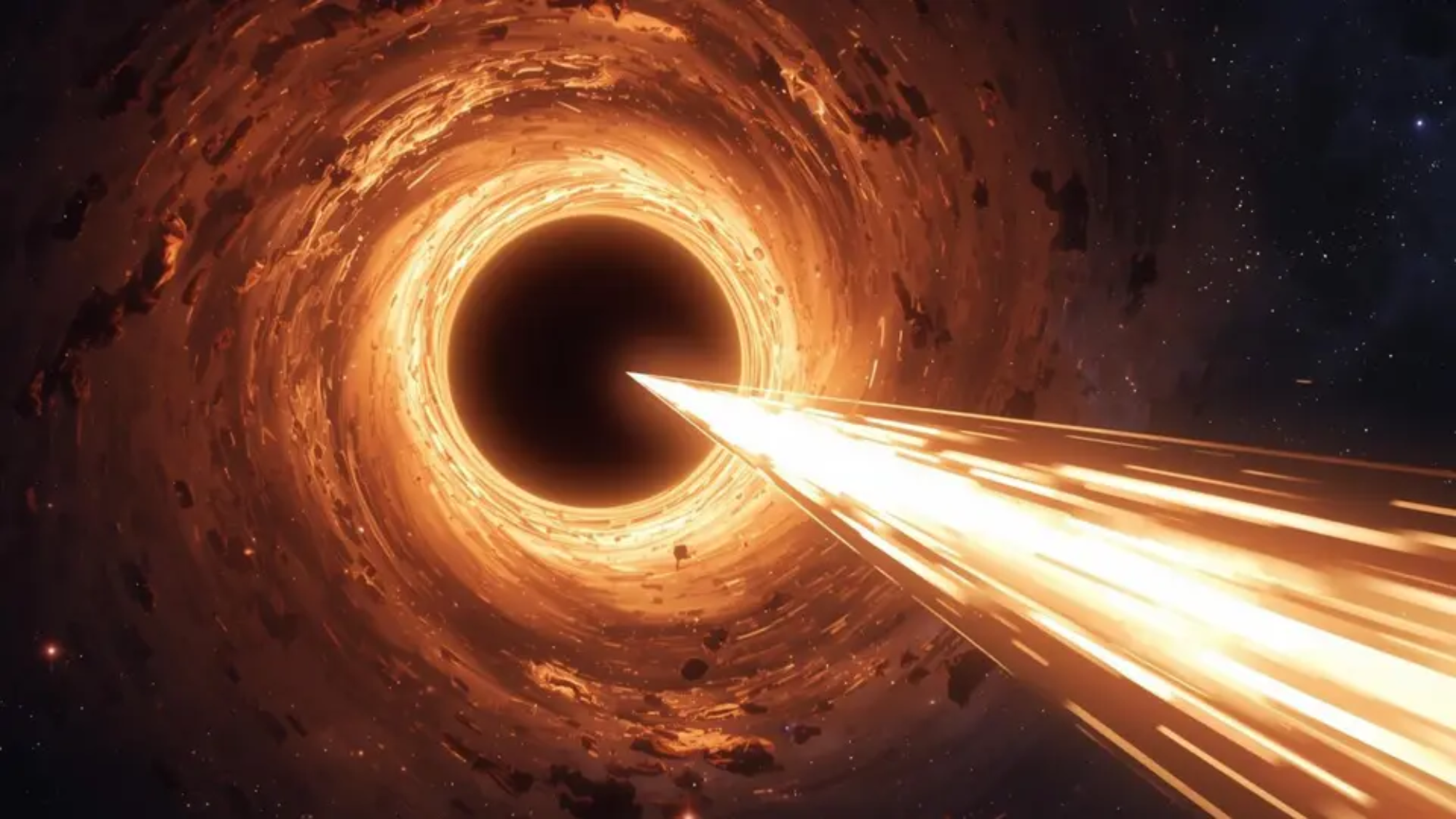
Using the Chandra X-ray spacecraft, astronomers have seen a supermassive black hole jet churning and "cooking" gas surrounding a galaxy nicknamed the "red potato." And this potato is seen as it was when the universe was around 2 billion years old.The galaxy in question is officially designated MQN01 J004131.9-493704 and is located about 11.7 billion light-years from Earth at the intersection of a vast cosmic web along which galaxies formed in the early universe. Originally discovered by the James Webb Space Telescope (JWST), the odd, blob-like appearance of the galaxy is why it has such a peculiar nickname.The red potato sits in a cosmic "pot" of cold and dense gas. This is a little puzzling, as this should mean that stars are actively forming around it, but that isn't happening. New research offers an explanation: a supermassive black hole in the vicinity of the red potato is churning and heating the galaxy's pot of gas. This could be preventing the gas from cooling and collapsing to birth stellar bodies.“Stars are not forming like we thought they would, so we went searching for the reason why," team leader Weichen Wang of the University of Milan-Bicocca in Italy said in a statement. "We found there may be a cook in this cosmic kitchen."An unexpected chefA supermassive black hole's interference with the red potato was first indicated by the fact that its surrounding gas is unexpectedly turbulent in comparison to similar gas clouds around similar galaxies.Wang and colleagues set about hunting for the source of this turbulence with Chandra. That's when they found a black hole jet pointed toward the red potato, which they reasoned must be slamming into this ancient galaxy's gas envelope."If the black hole's jet is stirring up the gas around the red potato, it could greatly slow down how quickly the galaxy can acquire new, fresh material to form stars," team member Sebastiano Cantalupo of the University of Milan-Bicocca said in the statement. "With the energy from the stirring, the galaxy will starve and not be able to produce new stars at the rate expected for similar galaxies at the same cosmic epoch."