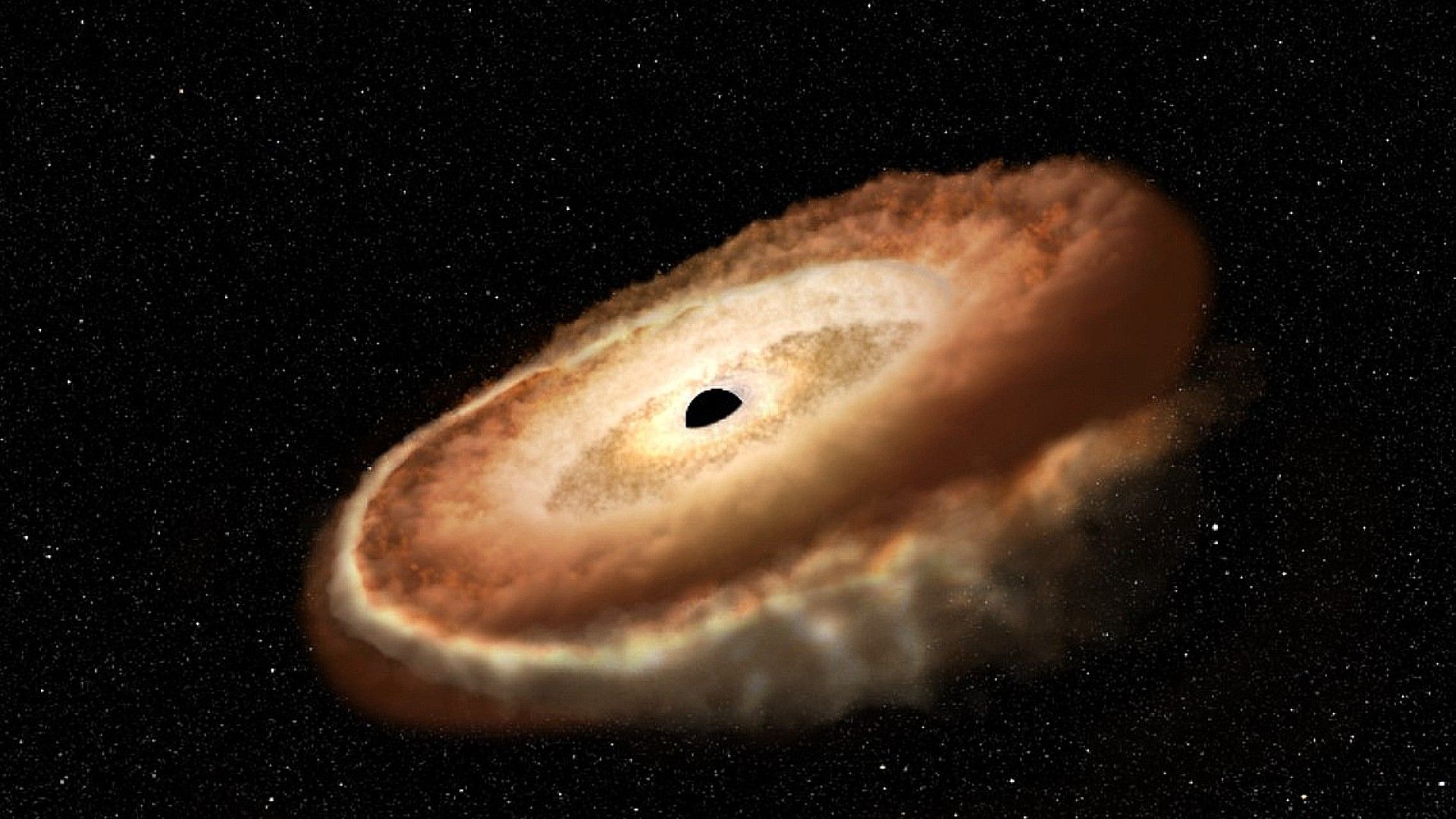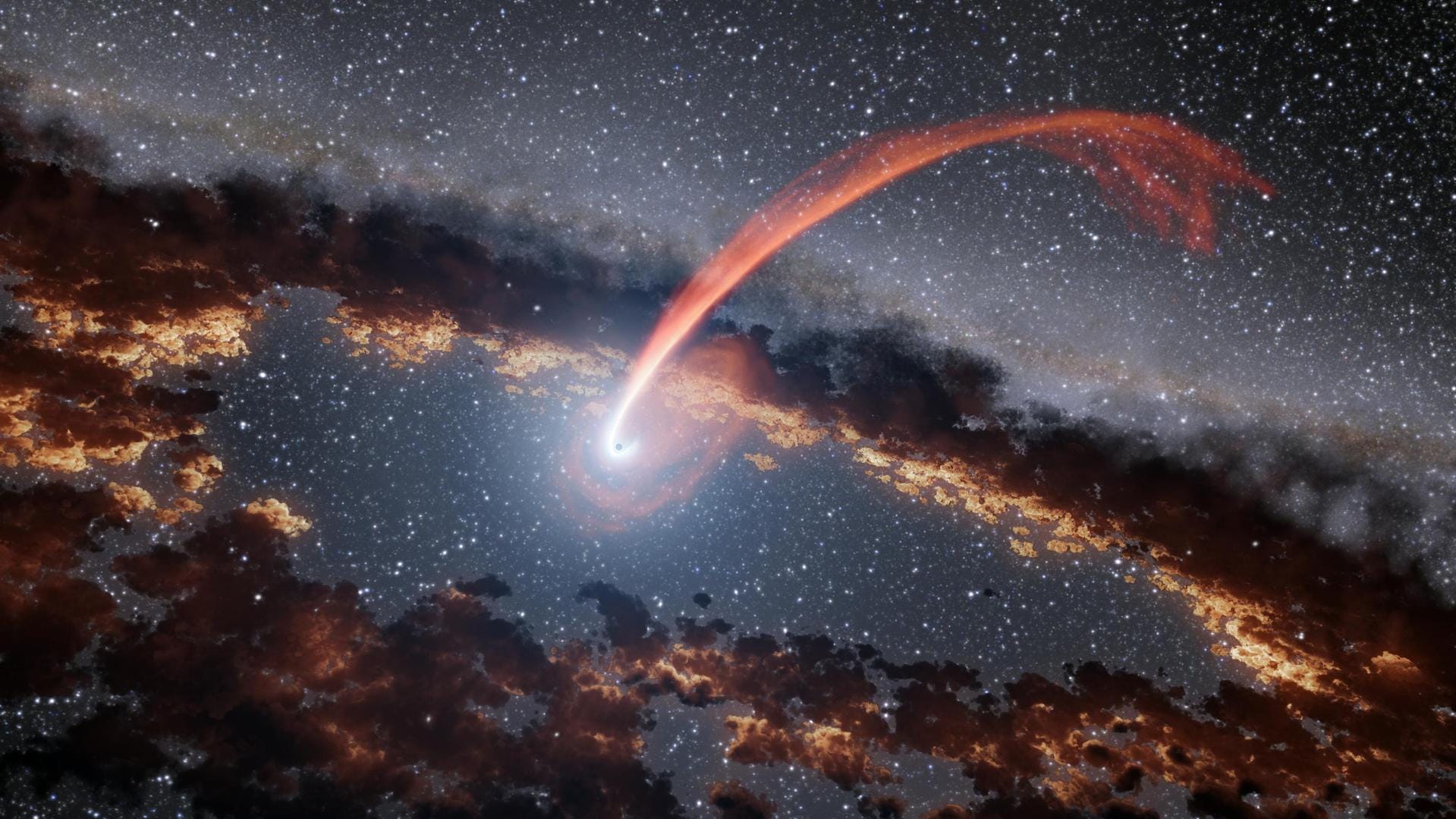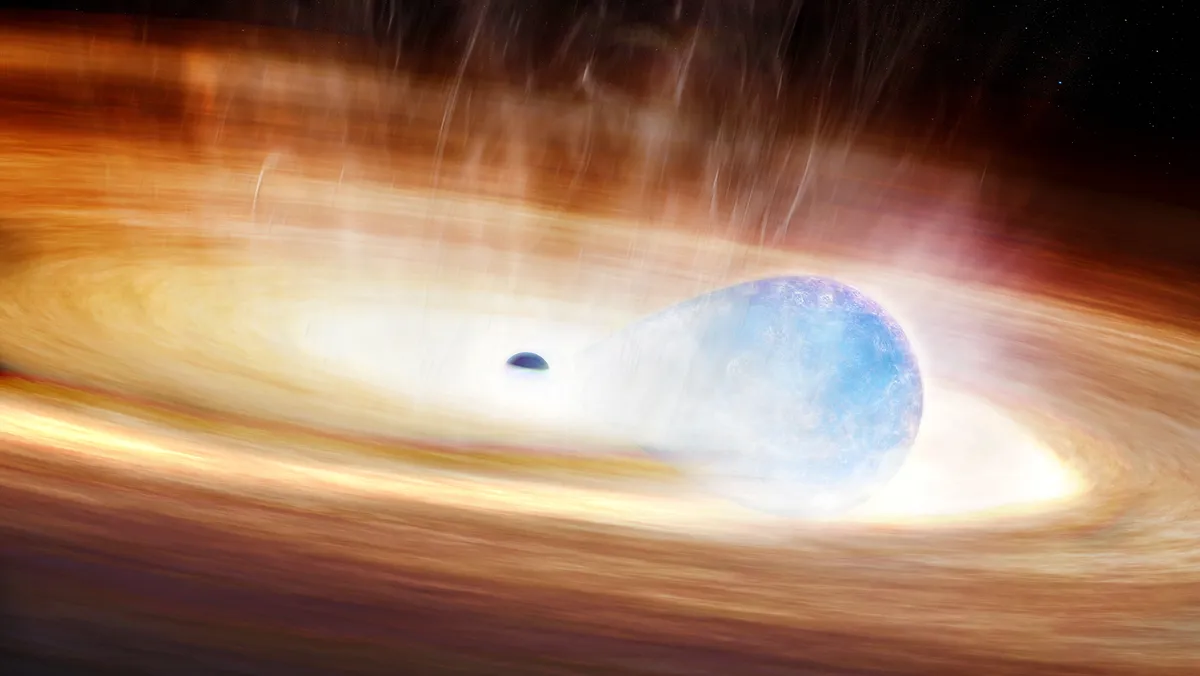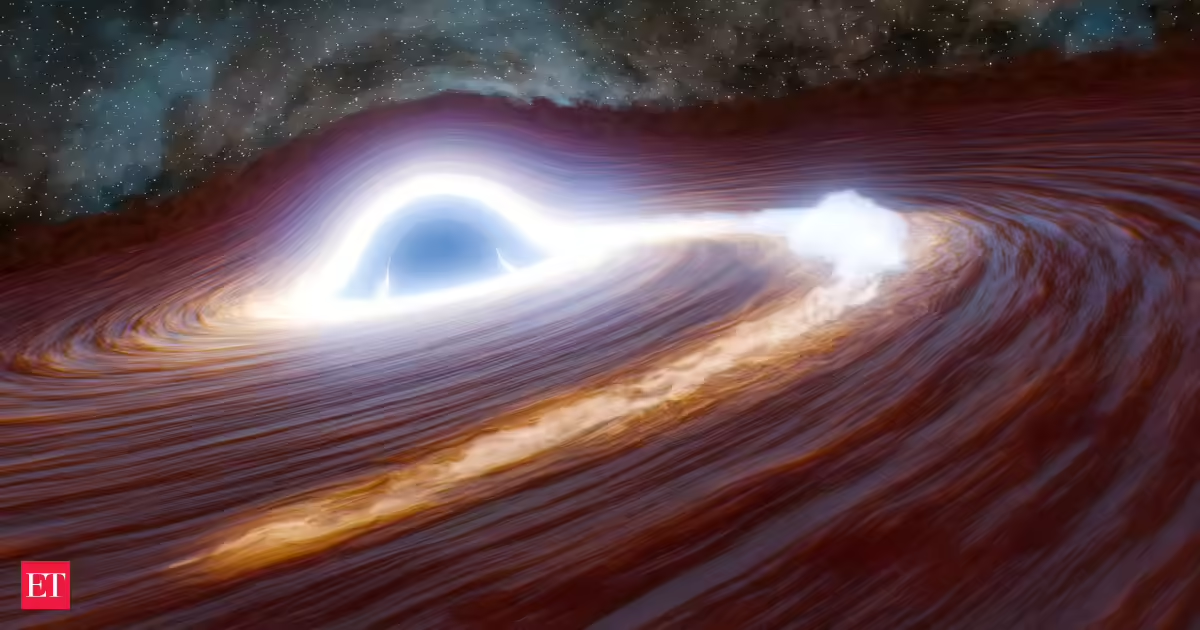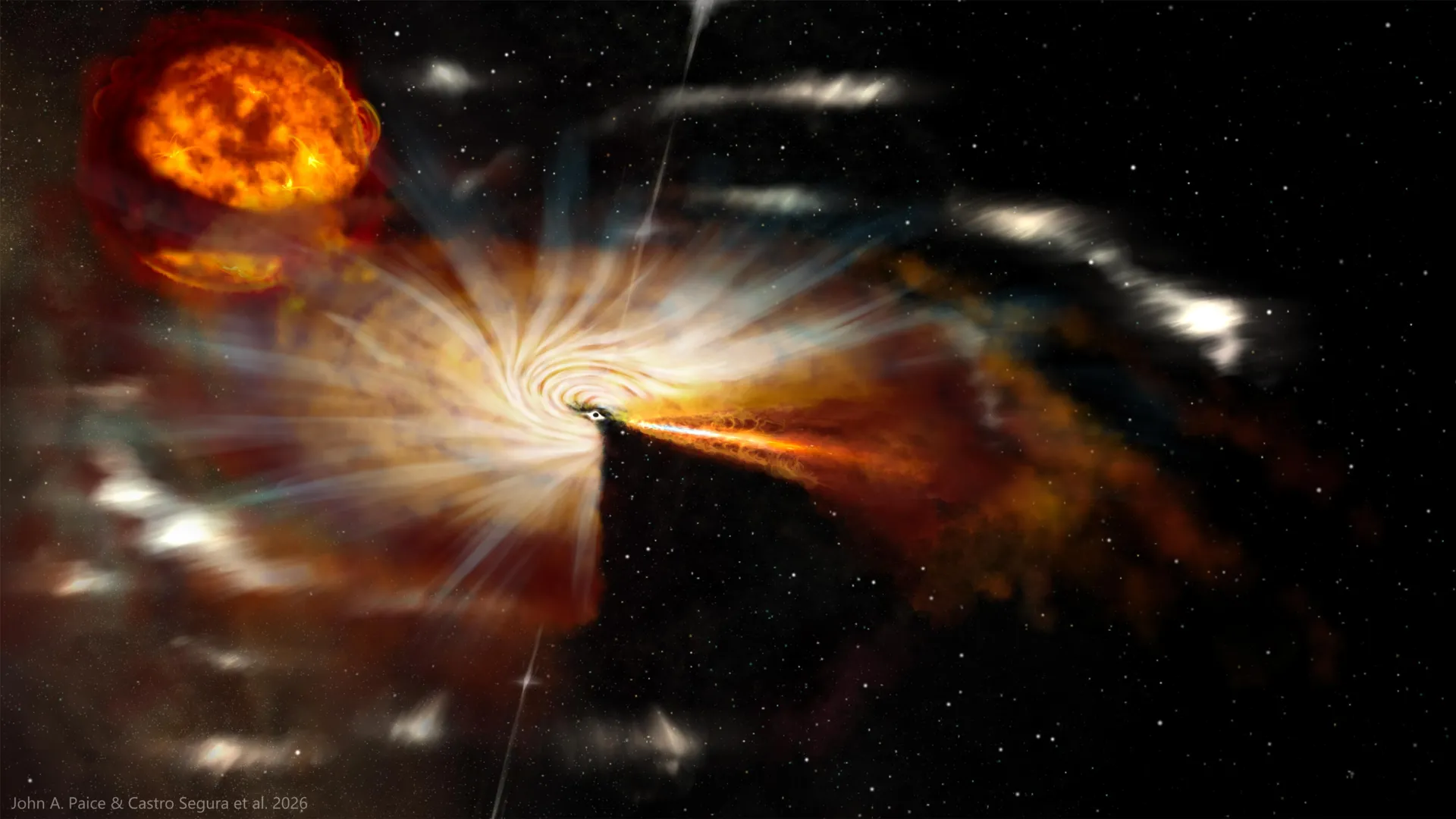
Astronomers led by the University of Warwick have uncovered what they describe as a kind of cosmic digestive system around a black hole. Their observations show that even when a black hole appears faint, it may still be actively expelling large amounts of matter rather than simply swallowing everything nearby.
Black holes are often pictured as unstoppable cosmic gluttons. However, new observations of a dramatic outburst led by Warwick Postdoctoral Fellow Dr. Noel Castro Segura reveal a far more complicated feeding process.
Using the European Southern Observatory's Very Large Telescope (VLT), the team tracked the recently discovered black hole system Swift J1727.8−1613 throughout a spectacular eruption in 2023.
A Black Hole That Eats and Expels Matter
As the black hole pulled gas from a nearby star, it also sent some of that material back into space through powerful jets and winds. The researchers found that these large outflows can continue even when the black hole becomes extremely faint and its activity falls to levels much lower than scientists previously expected.