New observations from the James Webb Space Telescope, or JWST, are giving astronomers their clearest look yet at how supermassive black holes obtain the gas they need to grow.
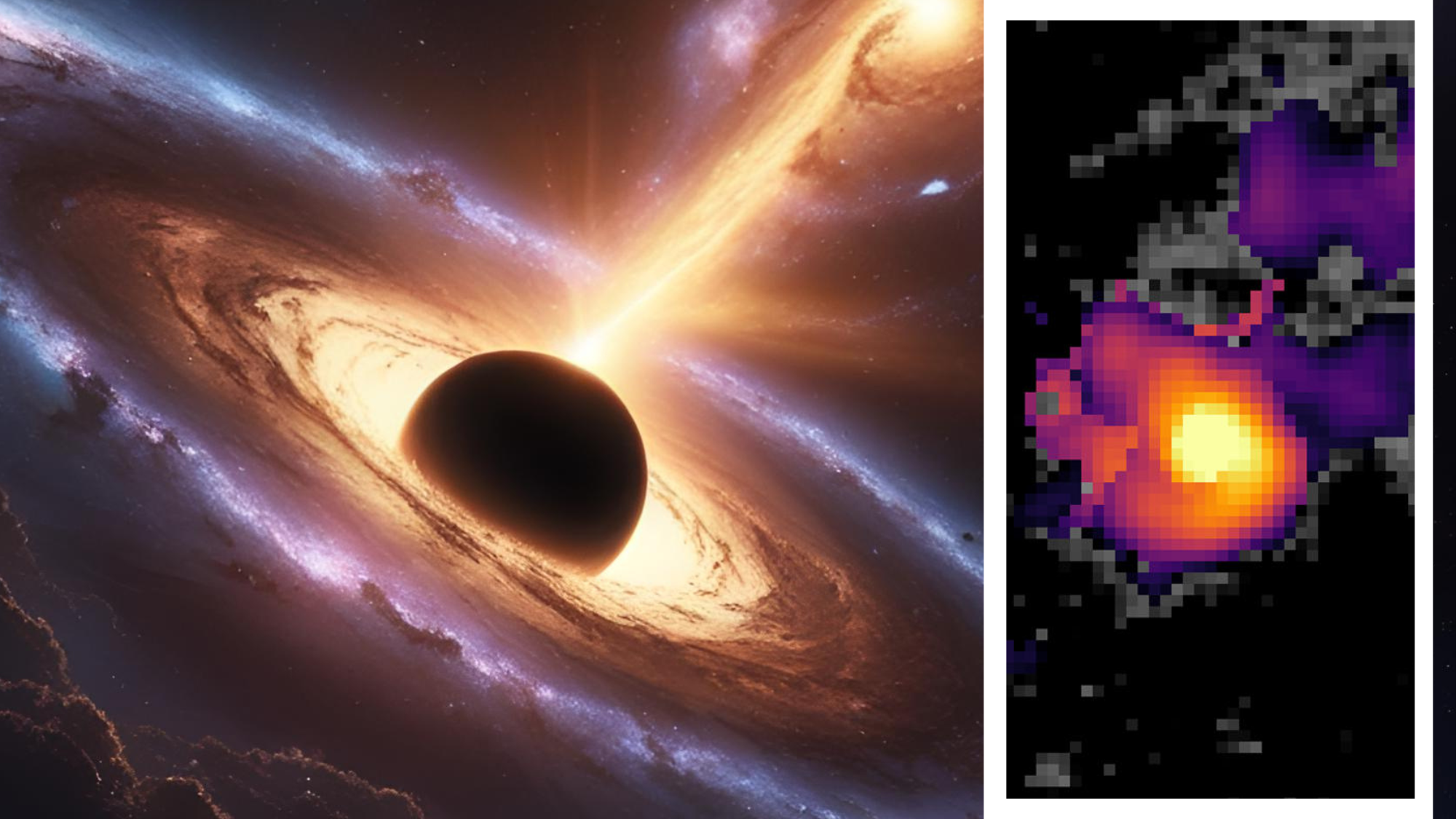
The images reveal long strands of gas linking a galaxy's hot outer atmosphere to a rapidly rotating disk surrounding its central black hole. That disk acts as the final reservoir of material before gas falls inward and fuels the black hole.
An international research team led by the Université de Montréal, with contributions from Michigan State University, carried out the observations and analyzed the results. Their findings, published in the July 14 issue of The Astrophysical Journal Letters, help address a question that has challenged astronomers for decades.
"JWST observations are offering us thousands of new facts and measurements, and I can report it's a lot to absorb," said Megan Donahue, MSU University Distinguished Professor of physics and astronomy. "We are all working together to solve the astrophysics questions about how these black holes get their fuel and how they interact with their host galaxy."
How Supermassive Black Holes Affect Galaxies