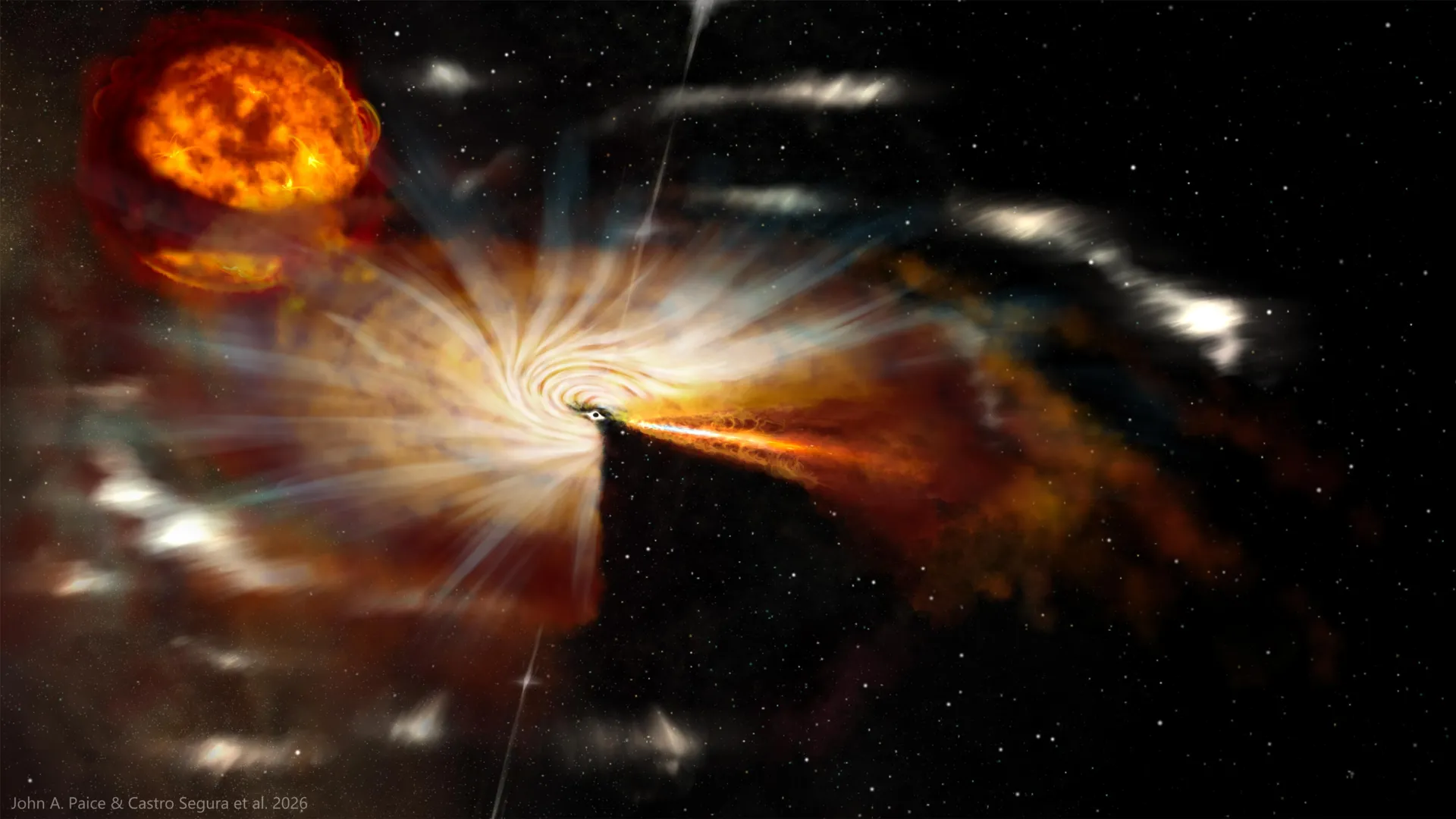
(Image credit: John A. Paice/ Castro Segura/ et al)
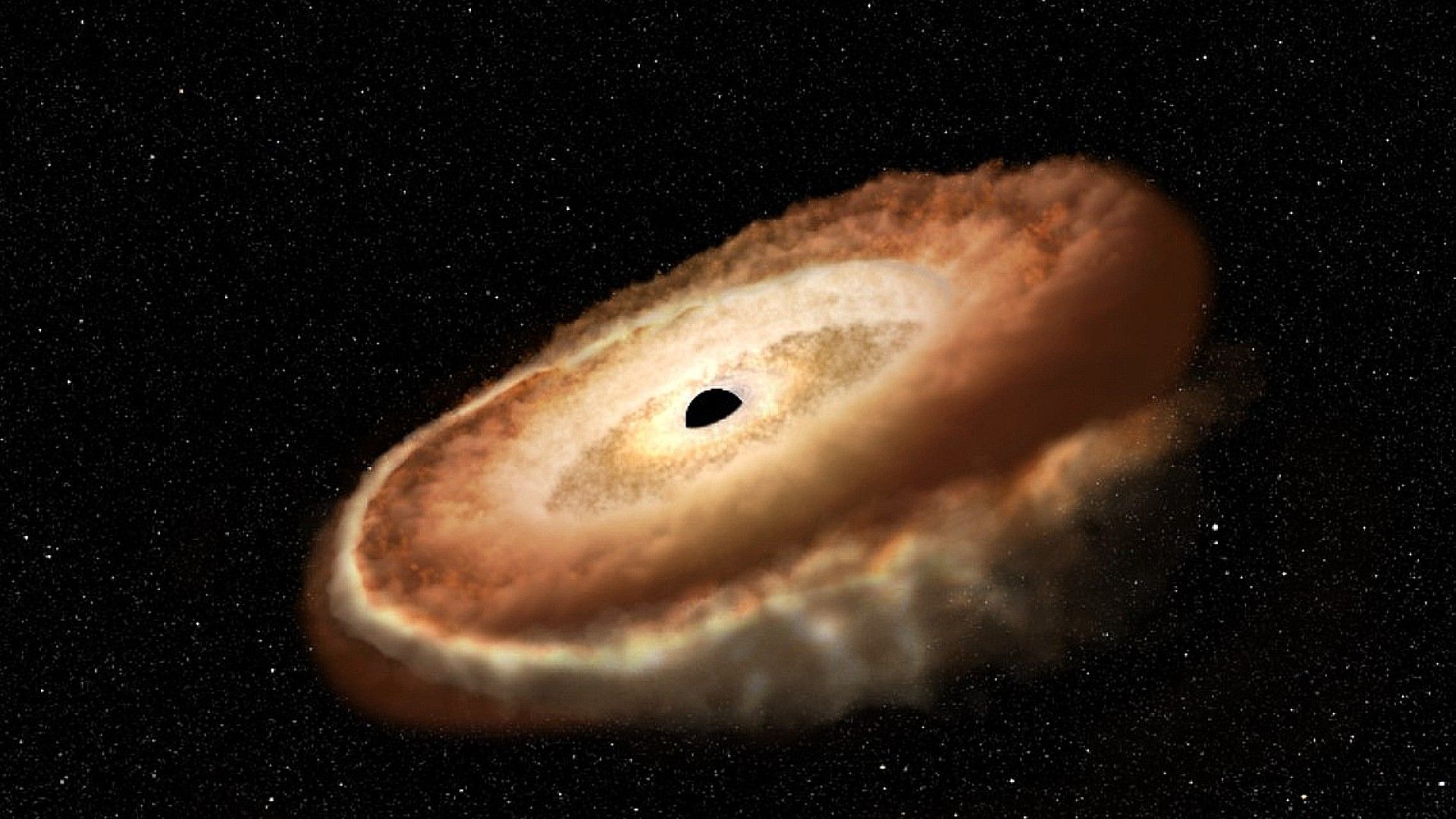
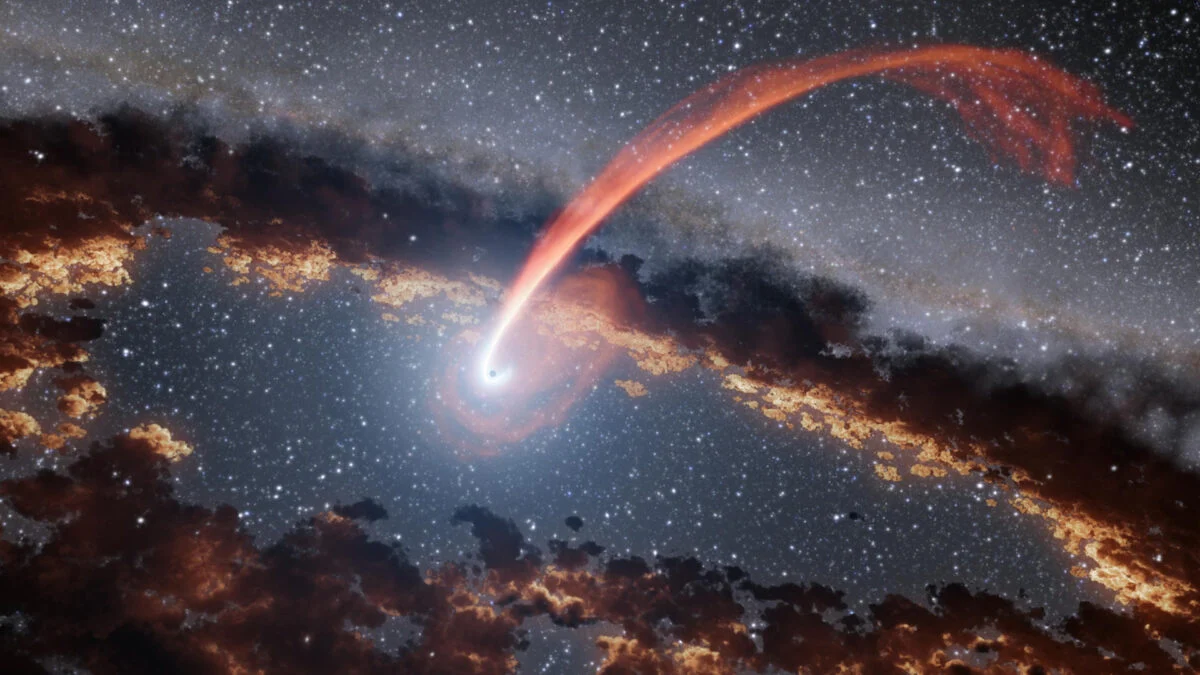
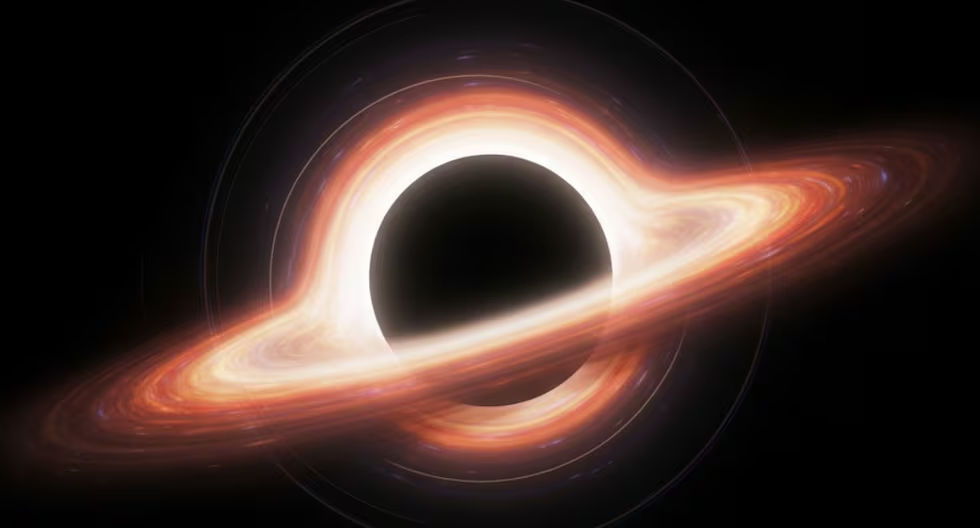
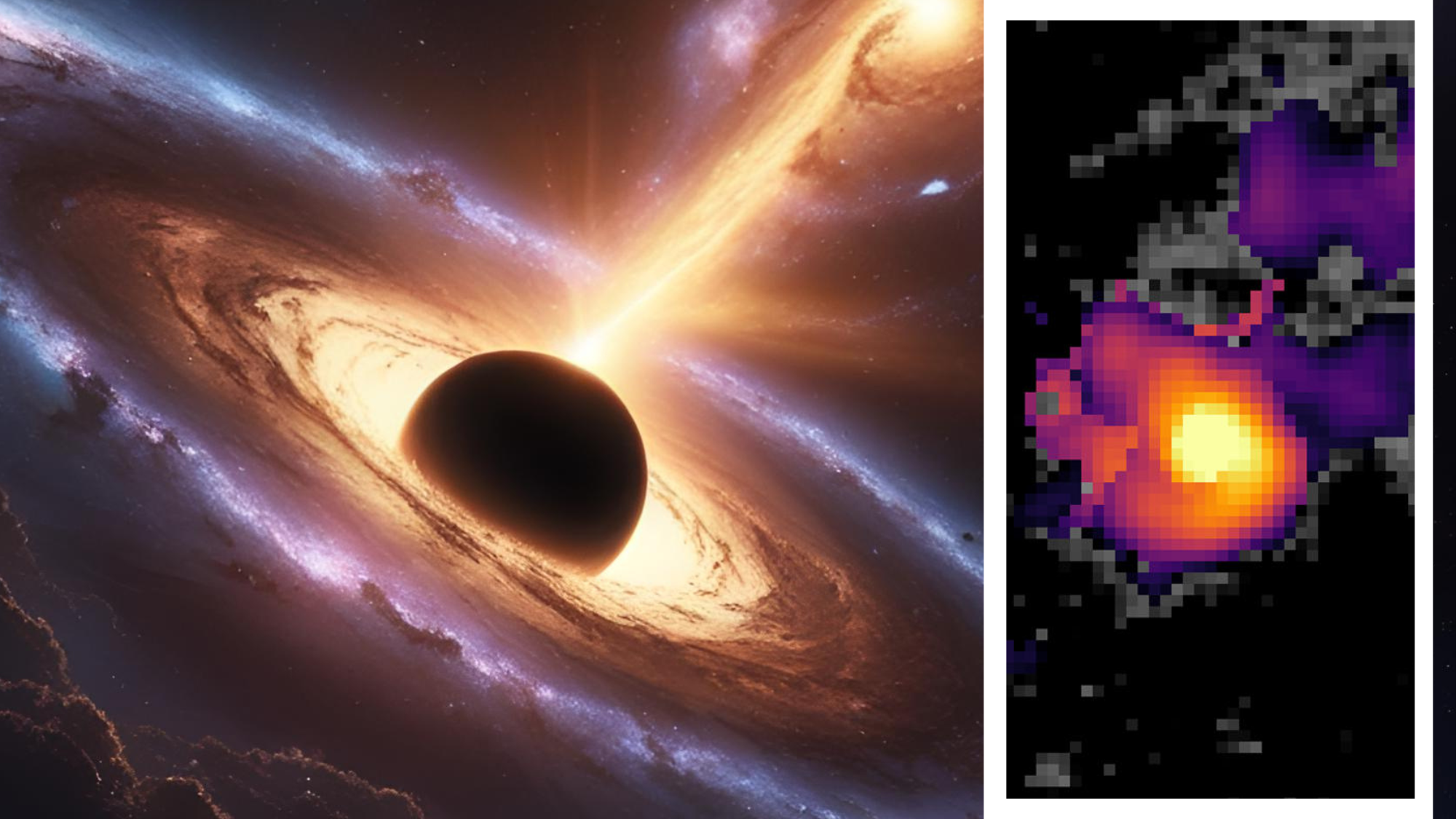
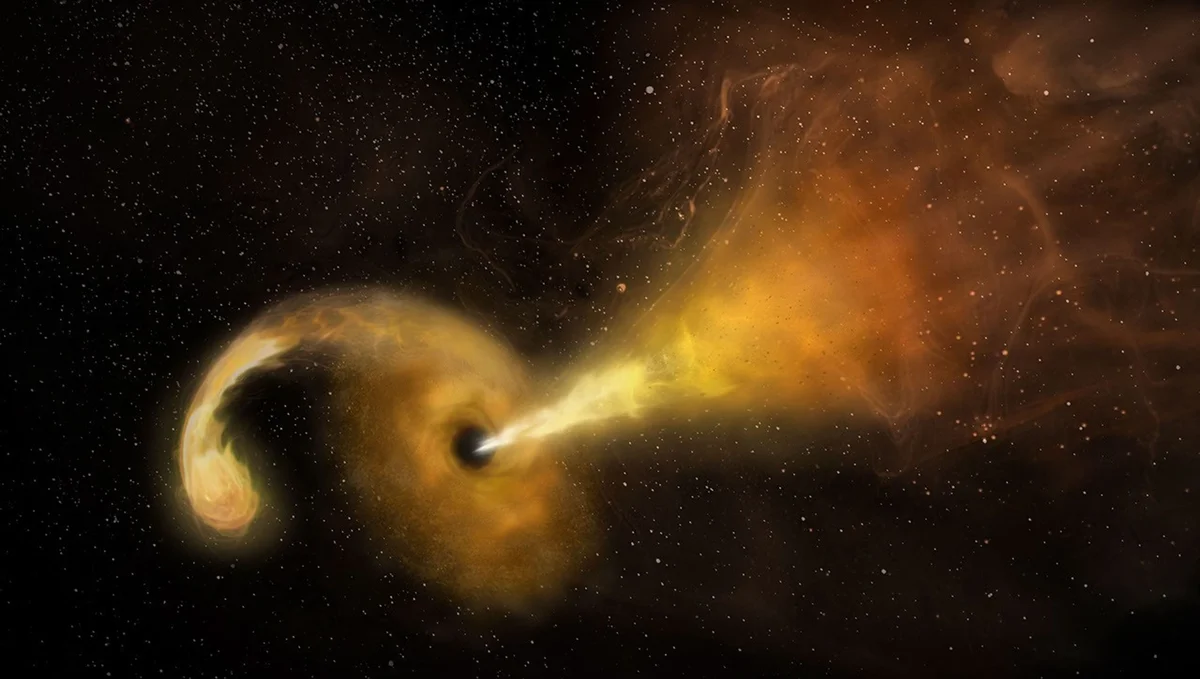
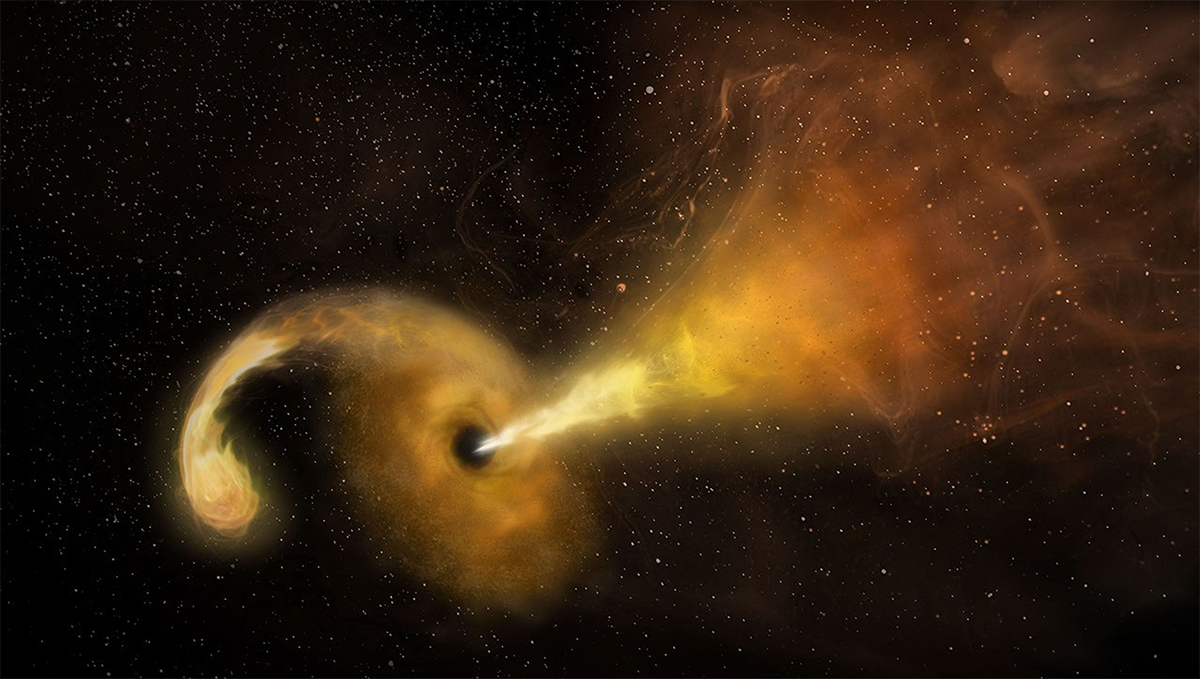
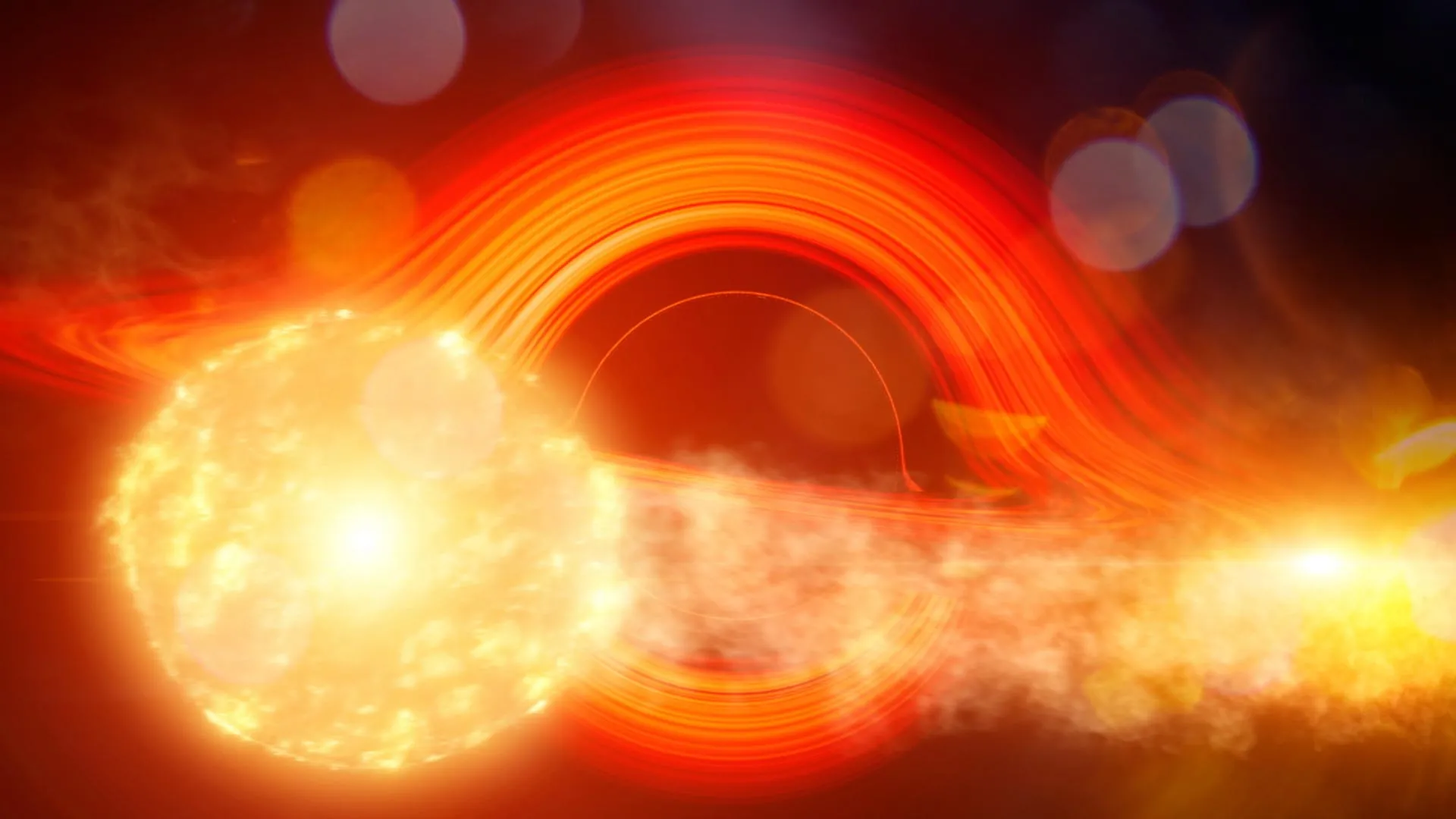
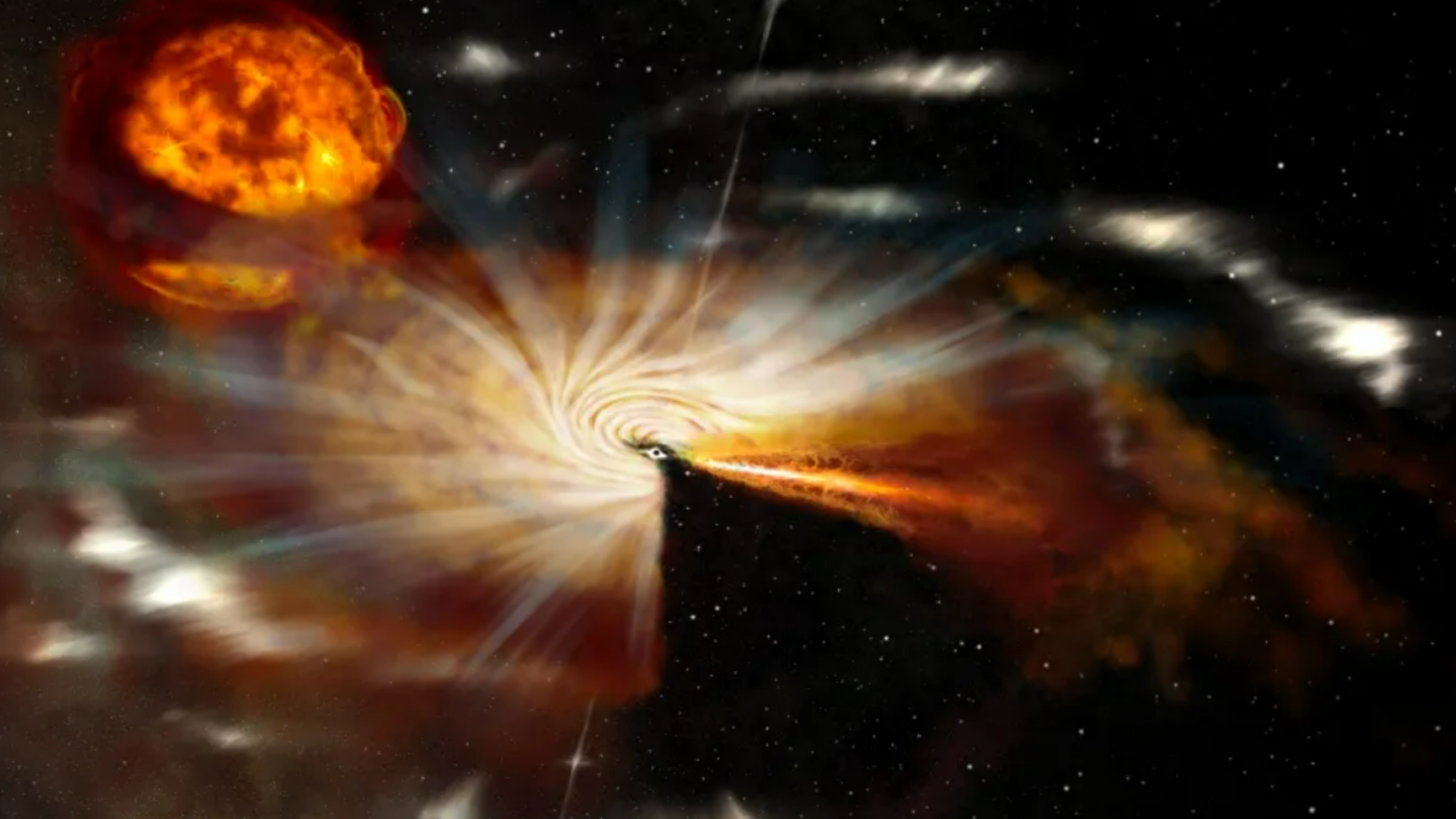
Astronomers have used the Very Large Telescope (VLT) to observe the violent outflow of material from a distant black hole. The observation once again shows that even the hungriest black holes are extremely messy eaters, while also revealing the "digestive processes" of these cosmic titans in unprecedented detail.The research focuses on the black hole system Swift J1727.8−1613, located around 8,800 light-years away, and a violent bout of cosmic indigestion and the bright eruptions the system triggered back in 2023. That episode is what initially led to the discovery of Swift J1727.8−1613 in 2023, and it resulted in the system becoming one of the brightest X-ray sources in the sky over Earth.A team of astronomers has now discovered that as this black hole greedily stripped a star of its stellar material, some of this matter was consumed, but other stellar material was blasted back into space as high-speed jets and powerful black hole winds. They also found that the most massive outflows of material happened when the black hole's feeding activity was much lower than previously thought. The upshot of this is the conclusion that black holes aren't quite the "bottomless pits" scientists had assumed, but are far more like complex cosmic digestive systems."People often imagine black holes simply swallowing everything around them," team leader Noel Castro Segura of the University of Warwick in the UK said in a statement. "What we're seeing is a much more complex process. Matter falls in, the system processes it, and a surprising amount is expelled again."The changing face of a feeding black holeSwift J1727.8−1613 consists of a black hole surrounded by a swirling platter of material pulled away from a companion star. This matter still has angular momentum, or rotation, so it can't directly fall to the black hole, but instead forms this structure, called an accretion disk. The immense gravitational influence of the black hole generates intense tidal forces and friction in the accretion disk, superheating it and causing it to glow brightly.The observations of this glowing disk conducted by Segura and colleagues differ from previous studies of black hole outbursts because their detailed study allowed them to watch the Swift J1727.8−1613 system change over time as it fed on a star.