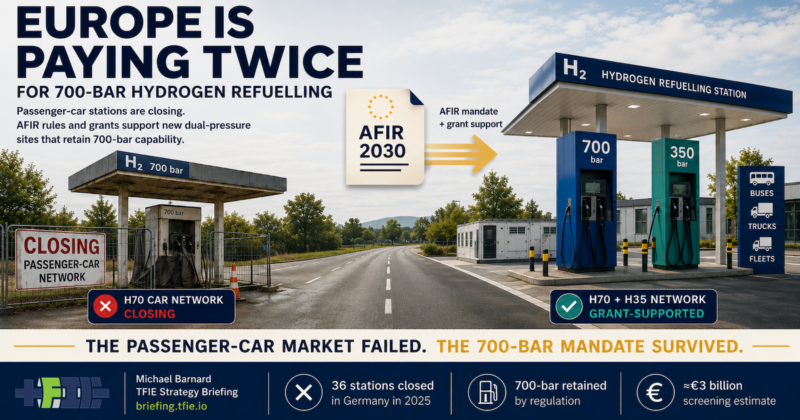
Europe is closing passenger-car hydrogen stations while AFIR rules and grants support new dual-pressure sites that retain 700-bar capability.
Support CleanTechnica's work through a Substack subscription, on Patreon, or on Stripe. Help us produce all of the high-quality, original content we publish week after week despite the challenges of content-scraping AI, antisocial media, inflation, and other hurdles.
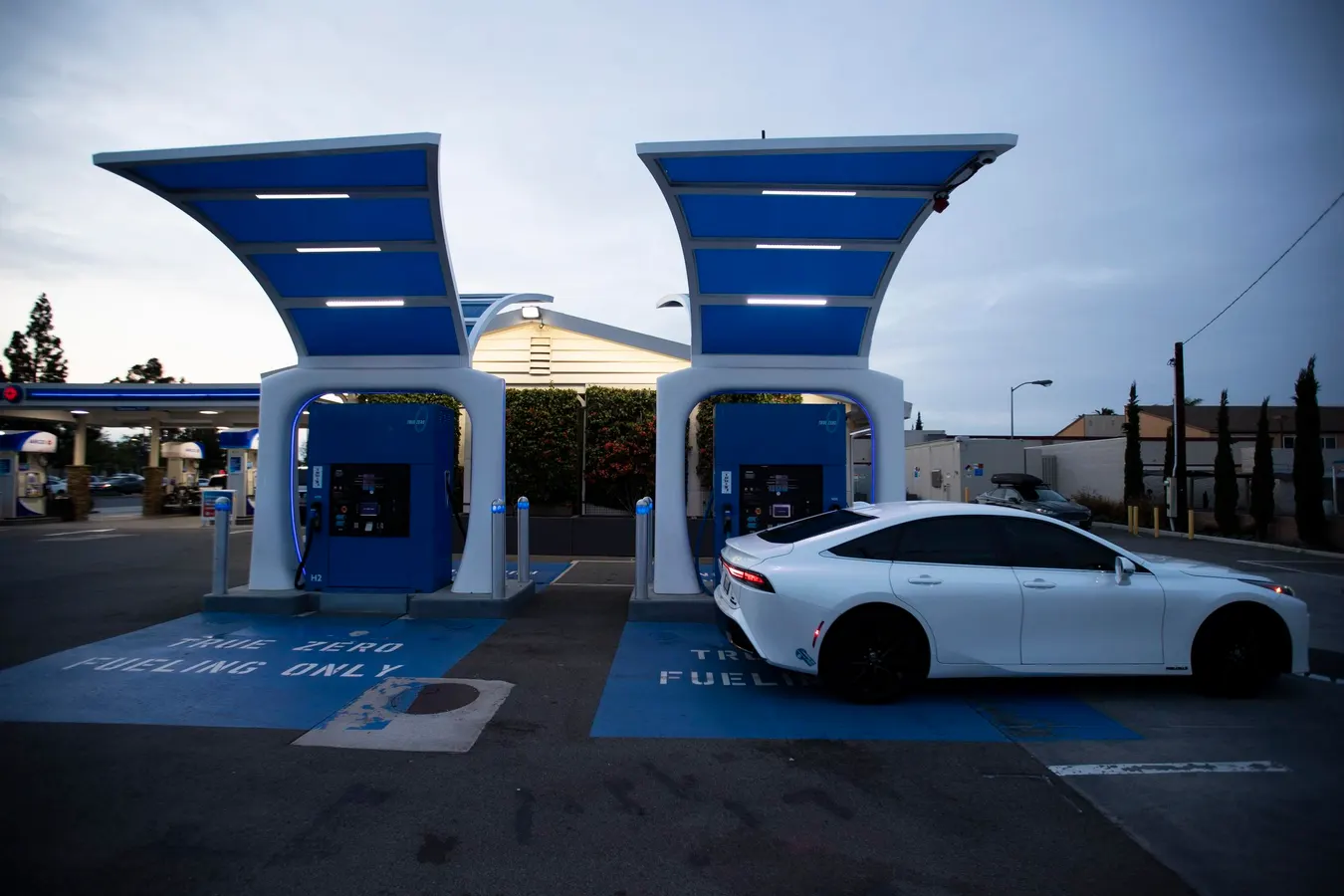
Europe’s public hydrogen refuelling network is not growing, but shrinking slightly. It is, however, changing shape. The part built for passenger cars is shrinking, while a new generation of dual-pressure stations is carrying 700-bar capability forward into the bus and truck layer.
Germany closed 36 first-generation hydrogen refuelling stations during 2025. Twenty-two were small stations explicitly identified with the 700-bar passenger-car market, and another 14 locations followed at the end of the year. H2 Mobility’s explanation was practical rather than ideological. The passenger-car market did not appear at the expected scale, and many early stations could not be economically adapted to the throughput and technical requirements of buses and trucks.
At the same time, H2 Mobility and other European operators are commissioning larger stations offering both 350-bar and 700-bar refuelling. Some of that is normal modernization. Small, early stations are being replaced by larger commercial-vehicle infrastructure. The policy issue is that the high-pressure capability justified originally by hydrogen cars is being retained across many of the replacement sites.