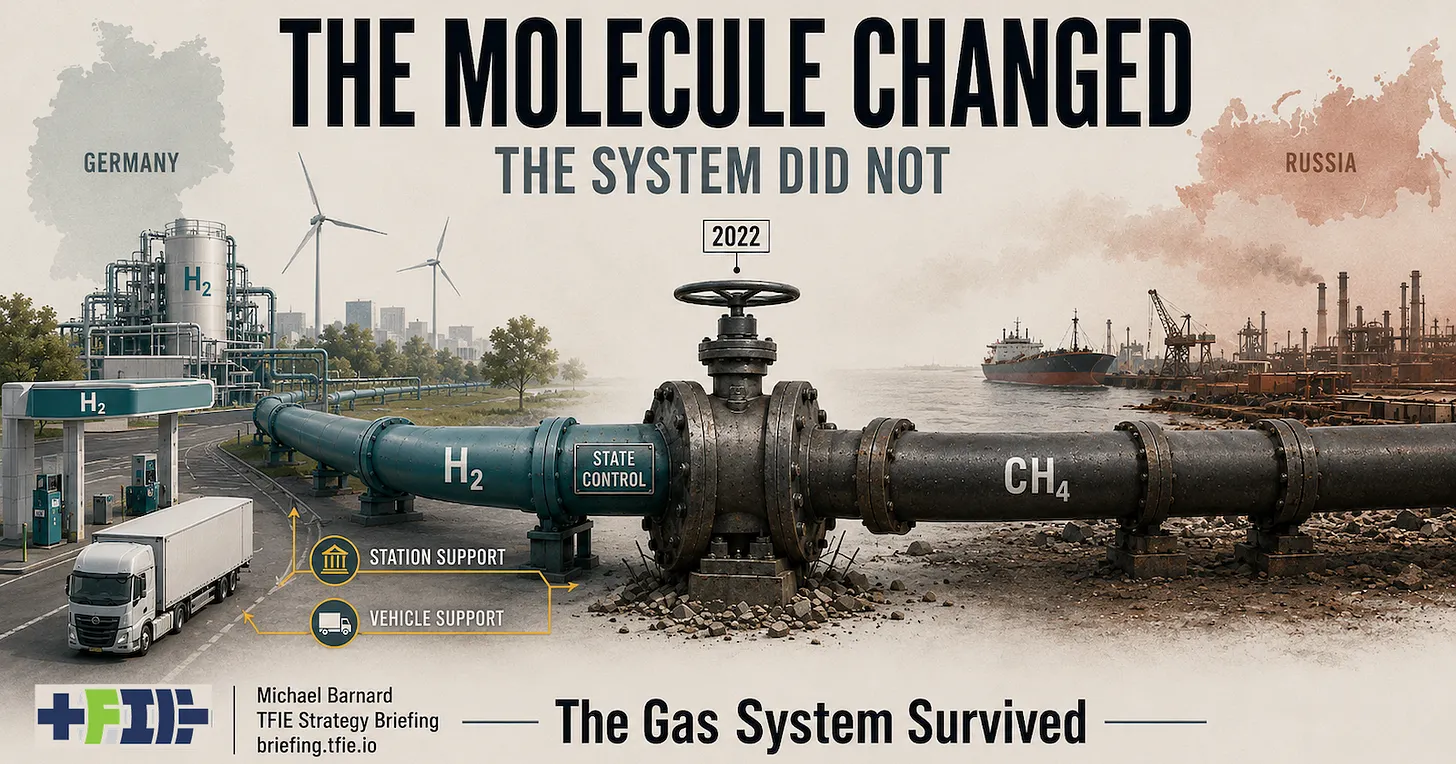
Germany’s hydrogen strategy changes the molecule while preserving much of the gas-system infrastructure, institutional logic and public-risk model.
Support CleanTechnica's work through a Substack subscription, on Patreon, or on Stripe. Help us produce all of the high-quality, original content we publish week after week despite the challenges of content-scraping AI, antisocial media, inflation, and other hurdles.
Germany’s hydrogen strategy keeps producing numbers that sound like market evidence until the subsidy structure is examined. Its latest hydrogen freight program attracted 526 applications seeking €455 million from a €220 million fund, including 71 applications for refueling stations and 455 for vehicles or fleets. That sounds like pent-up commercial demand. The terms tell a different story.
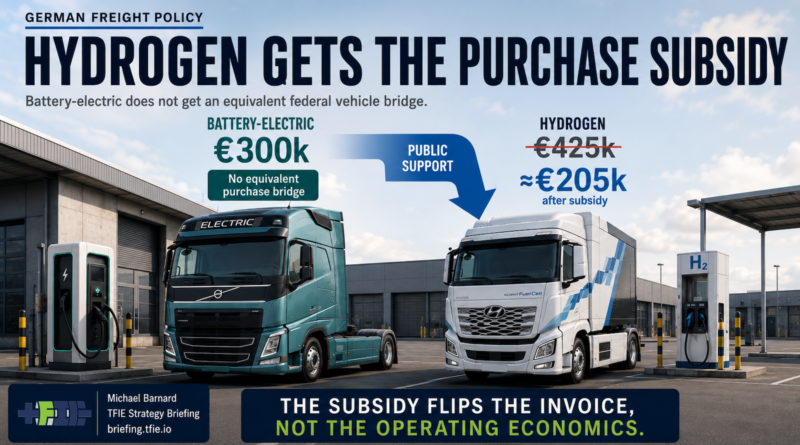
The program can pay up to 50% of a station’s eligible investment cost and up to 80% of the additional cost of a hydrogen truck over a conventional vehicle. Preferred applications combine stations with fleets, and the subsidized vehicles need to cover only 10% of a station’s daily capacity. Applications under those conditions prove that companies are interested in grants. They do not prove that freight operators want to buy hydrogen trucks, pay for hydrogen and support refueling stations without them.