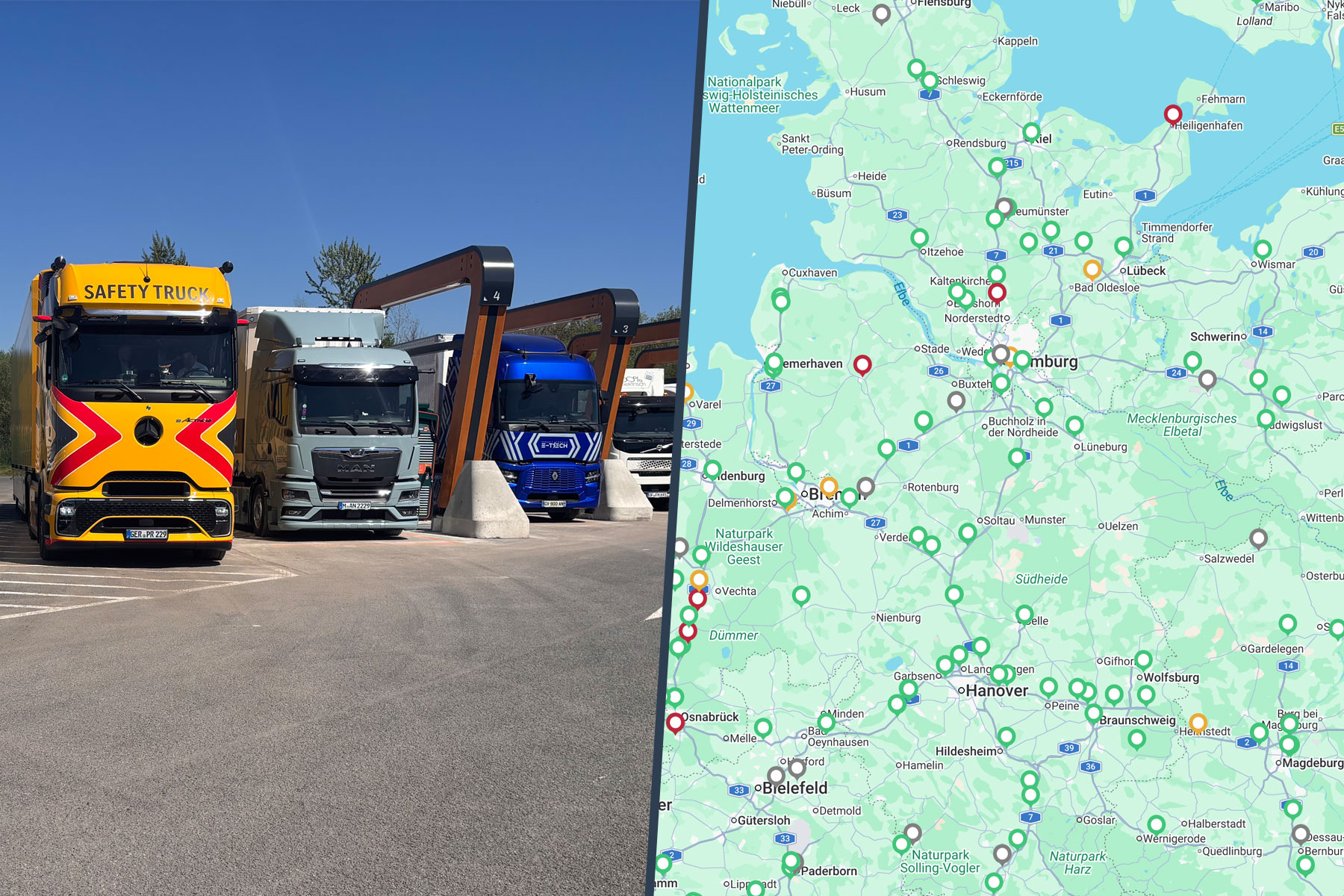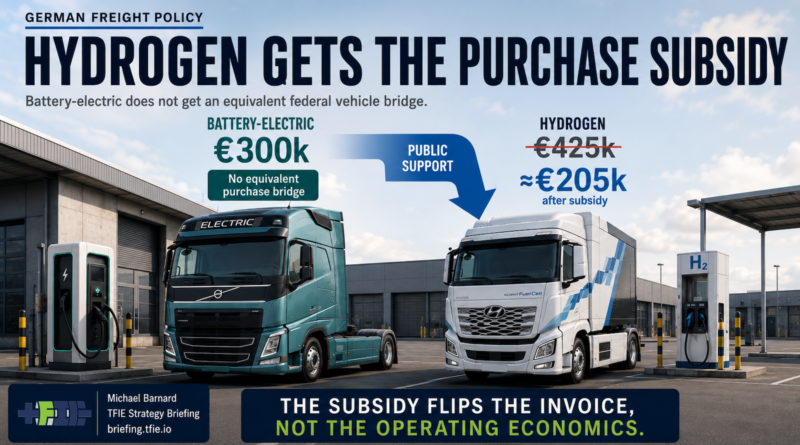
Germany’s subsidy can reduce the operator-facing cost of an illustrative €425,000 hydrogen truck toward €205,000, below an unsubsidized battery-electric truck at about €300,000.
Support CleanTechnica's work through a Substack subscription, on Patreon, or on Stripe. Help us produce all of the high-quality, original content we publish week after week despite the challenges of content-scraping AI, antisocial media, inflation, and other hurdles.
Germany’s latest hydrogen truck programme attracted 526 applications seeking €455 million from a €220 million funding pool. That has been presented as evidence that hydrogen freight is finally finding a market. A more revealing fact sits inside the programme design: Germany is offering purchase support for hydrogen trucks while battery-electric trucks appear to have no comparable current federal vehicle-purchase subsidy.
The hydrogen programme can cover up to 80% of a vehicle’s additional eligible cost relative to diesel and as much as 50% of eligible station costs. This is not a minor technology-neutral incentive available equally to competing zero-emission drivetrains. It directly reduces the sticker-price disadvantage of hydrogen trucks while helping build the specialized stations they require. Germany’s visible federal support for battery-electric freight is now concentrated more heavily on charging infrastructure, motorway corridors and other operating-system components.