Story audio is generated using AI
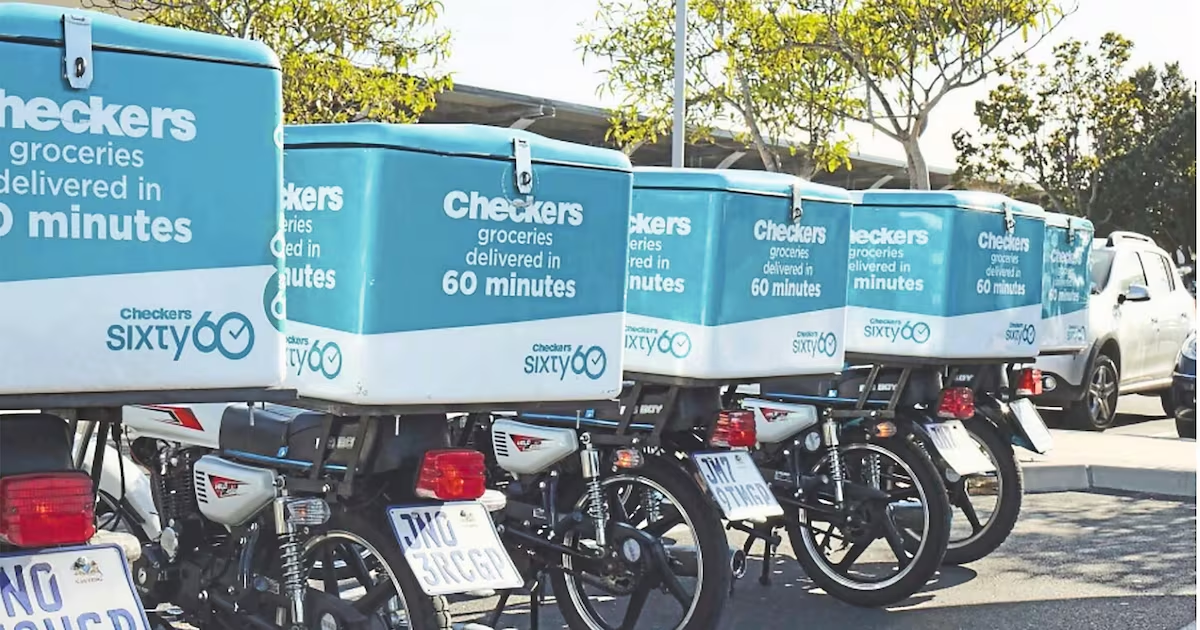
South Africa’s retailers have weathered years of load-shedding, inflation and weak consumer spending, but the next growth frontier will demand a radically different playbook.According to Euromonitor International, retailers, particularly those selling food, can no longer rely on opening more stores or competing on price alone. Future winners will be those that build digital ecosystems, use consumer data more effectively and make shopping as seamless as possible. “Africa remains a major growth opportunity, but growth is not happening evenly,” said Christy Tawii, regional insights manager at Euromonitor International, during a recent retail briefing.“It is not the same across industries, markets or consumer groups.”While traditional growth drivers remain under pressure, shifts in consumer behaviour are creating new opportunities for retailers prepared to adapt.Shoppers increasingly expect convenience, quality, personalised offers and frictionless experiences. Euromonitor estimates that seven in 10 consumers actively look for ways to cut costs while still improving their quality of life. Retailers are investing heavily in loyalty programmes, mobile apps, delivery platforms and customer engagement tools that make shopping easier and more relevant.Euromonitor said consumers are rewarding retailers that save them time, whether through rapid delivery services, integrated payments, personalised promotions or seamless omnichannel experiences.“Consumers are making deliberate spending decisions. They are asking where they can find better value, greater convenience and products that make life easier,” said Tawii.One of the strongest themes to emerge from Euromonitor’s analysis is the rise of retail ecosystems. Retailers are increasingly extending beyond selling products to offer interconnected services that include payments, e-commerce, delivery, rewards programmes and financial services. “It’s no longer enough to have a lot of products. The question is whether you’re offering the right products that solve consumers’ problems,” Tawii said.“Companies that are winning are not simply selling products. They are removing friction from the customer journey.”South African retailers have been among the continent’s most aggressive adopters of this model.Shoprite’s Checkers, for example, has transformed from a traditional supermarket chain into a broader ecosystem through its Sixty60 delivery platform, digital rewards programme and expanding convenience offering.Woolworths has taken a similar route by strengthening its food, beauty and financial services businesses while deepening customer engagement through its loyalty platform. Pick n Pay has also expanded its services beyond groceries.The objective is increasingly to keep customers within a retailer’s ecosystem rather than merely driving individual transactions. Although Africa’s demographic story remains compelling, Euromonitor cautioned against viewing the continent as a single market. Rapid population growth, urbanisation and a young consumer base continue to attract long-term investment. However, opportunities vary significantly across countries, categories and income groups. Rather than pursuing blanket expansion strategies, retailers need to identify specific markets and consumer segments where demand is growing fastest. “Success depends on being present in the right markets, not simply being present across Africa,” said Tawii. Consumer spending in Africa is expected to reach $2.5-trillion by 2040, according to Euromonitor. Grocery retail continues to dominate Africa’s retail landscape, driving more than $91.6bn in sales in 2025.While food retail remains dominant, Euromonitor expects some of the fastest growth to come from sectors such as electronics, health products and lifestyle-related categories.Another opportunity lies in private-label products. Retailer-owned brands, once viewed largely as lower-cost alternatives, have gained credibility as quality has improved and consumers have become more price conscious. South Africa already ranks strongly on private-label penetration in several categories, reflecting growing trust in retailer brands, said Euromonitor. Increasingly, these products are being positioned not only on affordability but also on premium quality, health, and sustainability. “Private labels have moved beyond being simply a cheaper alternative. Consumers are buying these products because they trust them,” said Tawii.Euromonitor warned retailers against focusing solely on Generation Z. While younger consumers are influencing purchasing decisions and future consumption trends, millennials remain the biggest spending cohort as they enter peak earning years, buy homes and raise families.The challenge for retailers is therefore to build strategies that engage customers across multiple life stages. “Brands shouldn’t only focus on acquiring customers. They should find ways to grow with consumers throughout every stage of life.”Personalisation, targeted marketing and data-driven customer insights are becoming critical as consumers demand products and experiences tailored to their specific needs. “Tomorrow’s consumer is diverse, more connected and expects brands to understand their lifestyle, values and needs.”Euromonitor said the retailers most likely to succeed will be those that understand consumers better, use data more effectively, invest in digital ecosystems and make shopping increasingly effortless. Business Times