Story audio is generated using AI
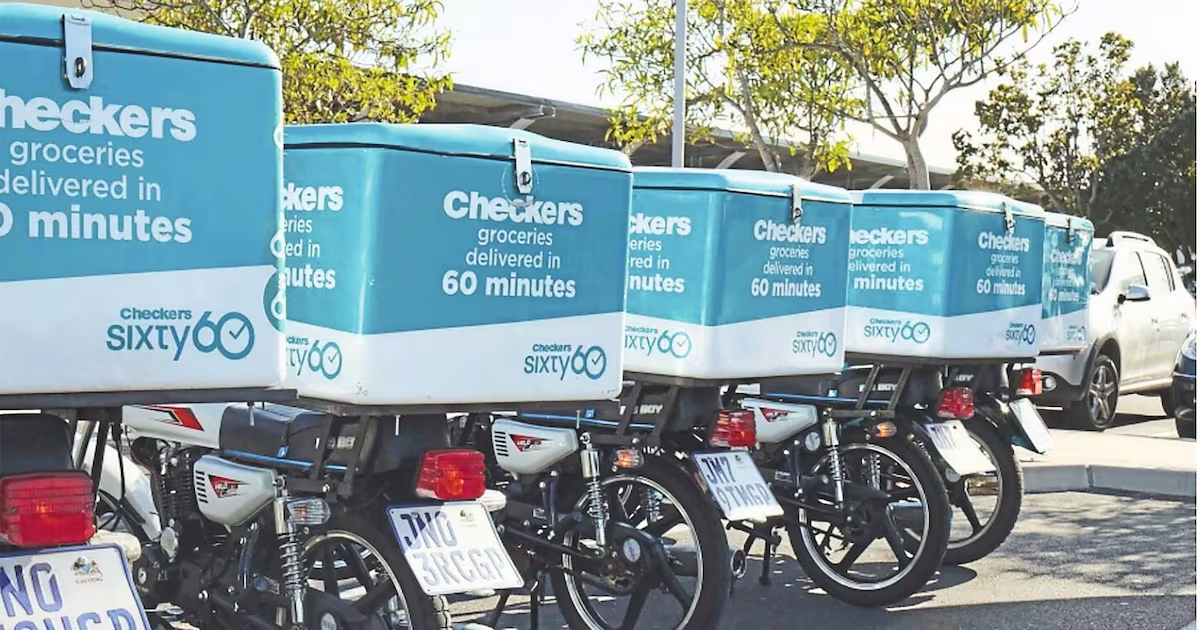
South Africa’s biggest retailers are ramping up investment in on-demand commerce, but rather than replacing physical stores, the shift is reinforcing their role as fulfilment hubs while forcing shopping centre owners to rethink how their properties operate.The race to deliver groceries, clothing and general merchandise within an hour has intensified over the past year.Pick n Pay has expanded its clothing offering onto the Pick n Pay asap! platform, Checkers Sixty60 now fulfils orders from selected Checkers Hyper stores, while Shoprite Sixty60 continues to be rolled out in phases.TakealotNOW has expanded one-hour deliveries in major cities; Amazon is growing its local presence with the launch of Prime at R59 a month, and Chinese online retailers Temu and Shein continue to gain market share in apparel.Independent property analyst Keillen Ndlovu said the rapid growth of on-demand retail is changing the role of physical stores rather than making them obsolete.Read: Takealot leads and China dominates SA’s e-commerce“Online retail is no longer competing with physical stores. Increasingly, stores have become part of the online fulfilment network. For grocery retailers in particular, the store is both a shopping destination and a distribution point,” he said.Woolworths has added another “dark store” to support Woolies Dash, as retailers increasingly look beyond traditional stores to handle rising online demand. The shift is changing the type of space retailers need, with fulfilment centres becoming an increasingly important part of the retail property landscape.The shift is also changing how shopping centres are designed and managed. Landlords such as Attacq at Mall of Africa have introduced dedicated facilities for delivery drivers, including covered parking, charging points and ablutions, recognising riders as a growing part of the retail ecosystem. By separating delivery activity from shopper areas, centres are adapting to rising online demand without disrupting the traditional retail experience.Yet despite the momentum behind online retail, South Africa’s largest retailers continue to invest heavily in physical stores.Shoprite, which operates 2,747 supermarkets in South Africa, added a net 262 stores in the first half of its 2026 financial year and has confirmed plans to open another 123 stores in the second half. Pepkor, with more than 6,650 stores across its retail brands, plans to add about 200 stores in the 2026 financial year after opening a net 89 stores in the first half. Mr Price, which operates more than 3,180 stores, plans to open another 180 stores in the 2027 financial year, while Woolworths expects to add 55 stores next year.Ndlovu said the continued expansion of store networks suggests retailers still regard physical outlets as strategically important despite rising digital sales.“Retailers are pursuing an omnichannel strategy because customers want choice. The challenge for shopping centre owners is to ensure their centres remain relevant by investing in food, entertainment, leisure and other experiences that cannot be replicated online.”TFG is taking a different approach. Following the rapid growth of its Bash online platform, the retailer plans to optimise its footprint by closing about 400 underperforming stores over time, beginning with about 100 stores in the financial year of 2027.Retailers are pursuing an omnichannel strategy because customers want choice. The challenge for shopping centre owners is to ensure their centres remain relevant by investing in food, entertainment, leisure and other experiences that cannot be replicated online.— Keillen NdlovuRetail landlords are also seeing evidence that physical expansion remains part of retailers’ strategies. Vukile Property Fund, whose largest South African tenant is Pepkor, noted in its results for the year ended March that retailers continued to show an increased appetite for store openings. The group said leasing activity completed during the 2026 financial year was valued at R1.5bn, comprising 634 transactions, including 483 renewals and 151 new deals.Ndlovu said the contrasting strategies reflect the different economics of retail sectors rather than a divide between online and physical retail.“The online model takes time to become profitable because retailers first need to reach sufficient scale before the economics start working. There will eventually be an optimal level where online sales account for a meaningful share of total revenue, but that does not mean physical stores become redundant. People will continue going to shopping centres because not every purchase can or should be made online.” Consumer behaviour and geography will continue to shape the pace of online adoption, he said.“It depends on age, income, demographics, location and the product being purchased. There are many categories where consumers still want to see, touch, feel, experience or even smell a product before making a buying decision. “Online shopping will also continue to be much stronger in urban areas than in rural and township markets, where long delivery distances, higher logistics costs and, in some cases, safety concerns make last-mile delivery less efficient,” Ndlovu said.