Before the Panamanian land bridge formed about 3 million years ago, mammals on the two continents were isolated — or so biologists thought. New fossils show that they found ways to mix long before that.
By Robert Sanders
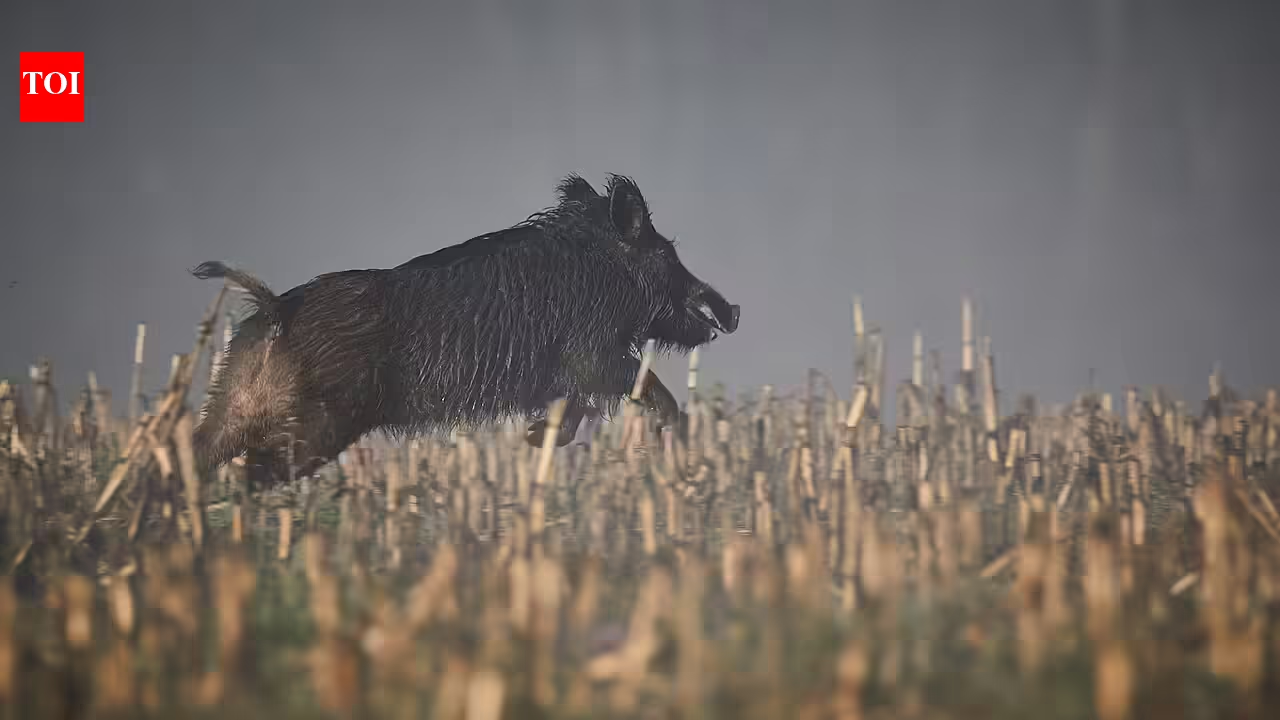
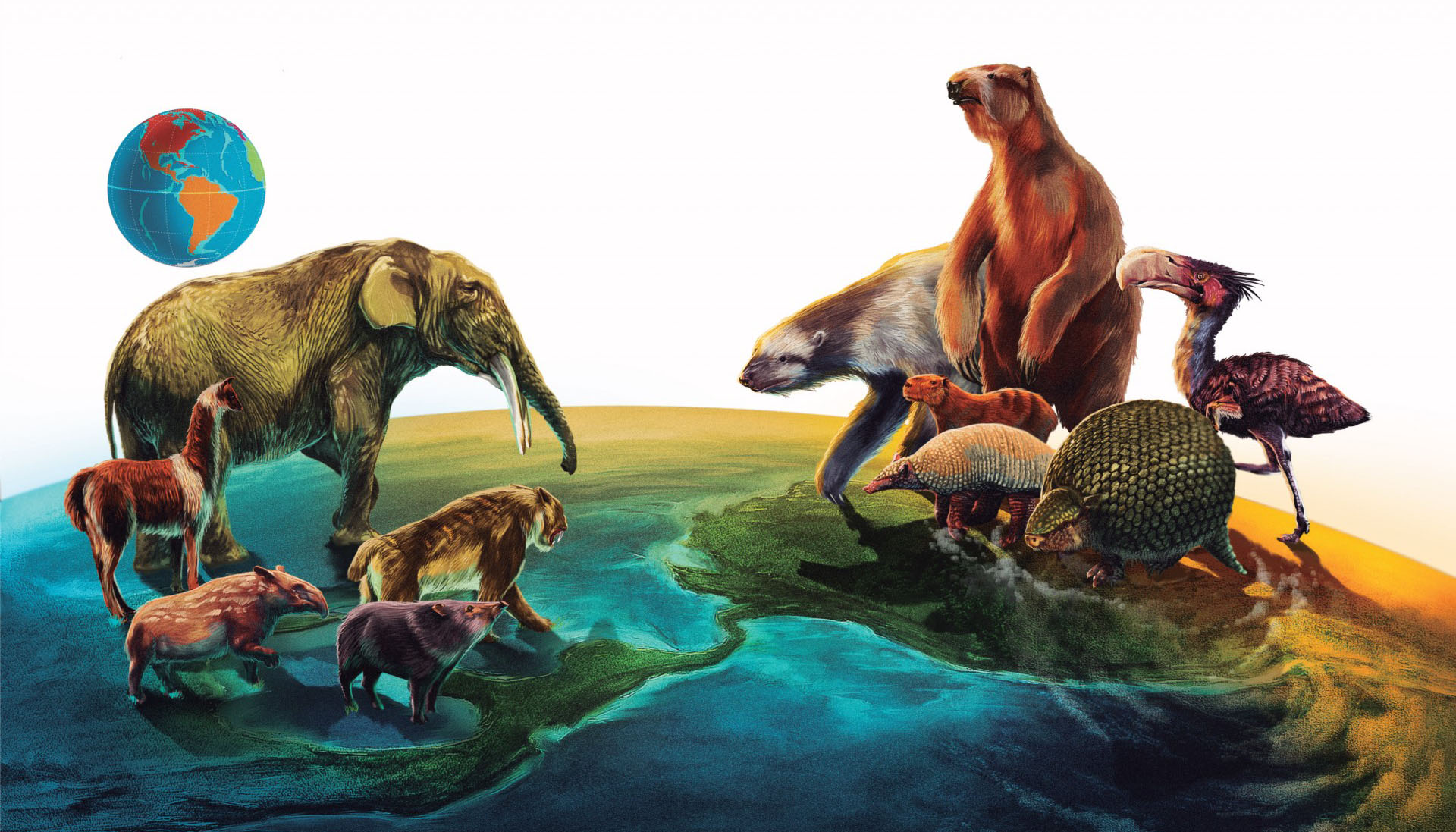
UC Berkeley researchers have found fossil evidence that animals from different latitudes of North America and South America mixed long before the Panamanian land bridge permanently linked the two continents about 3 million years ago. Since around 10 million years ago, mammals — primarily small ones like sloths and coatis — found a way across the watery barrier. Only larger mammals had to wait for the permanent land corridor. This illustration depicts (left) large North American mammals — counterclockwise from top, mammoths, llamas, tapirs, peccaries and saber-toothed cats — waiting in a kind of holding pen in Mexico for the bridge to form. In South America, the mammalian interchange involved, counterclockwise from top, ground sloths, marsupials, capybaras, armadillos, glyptodonts and, incidentally, terror birds. While North American mammals took over in South America, only about 10% of North American mammals today are derived from mammals that originated in South America.