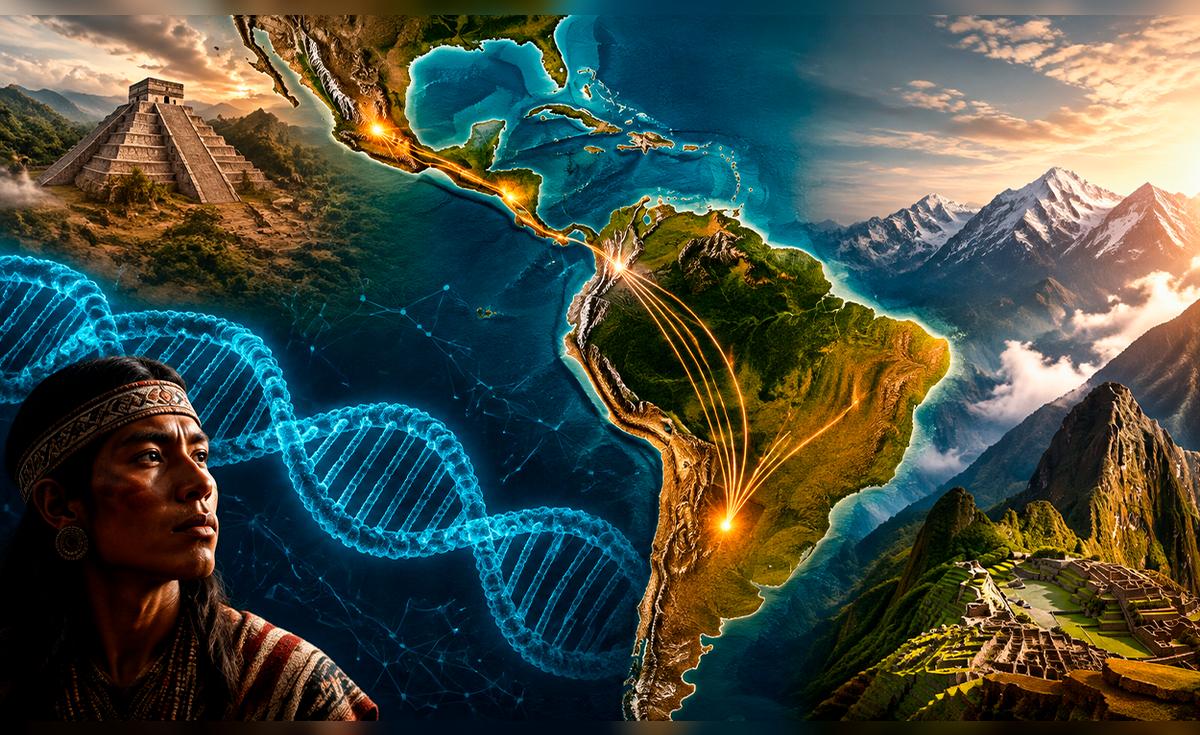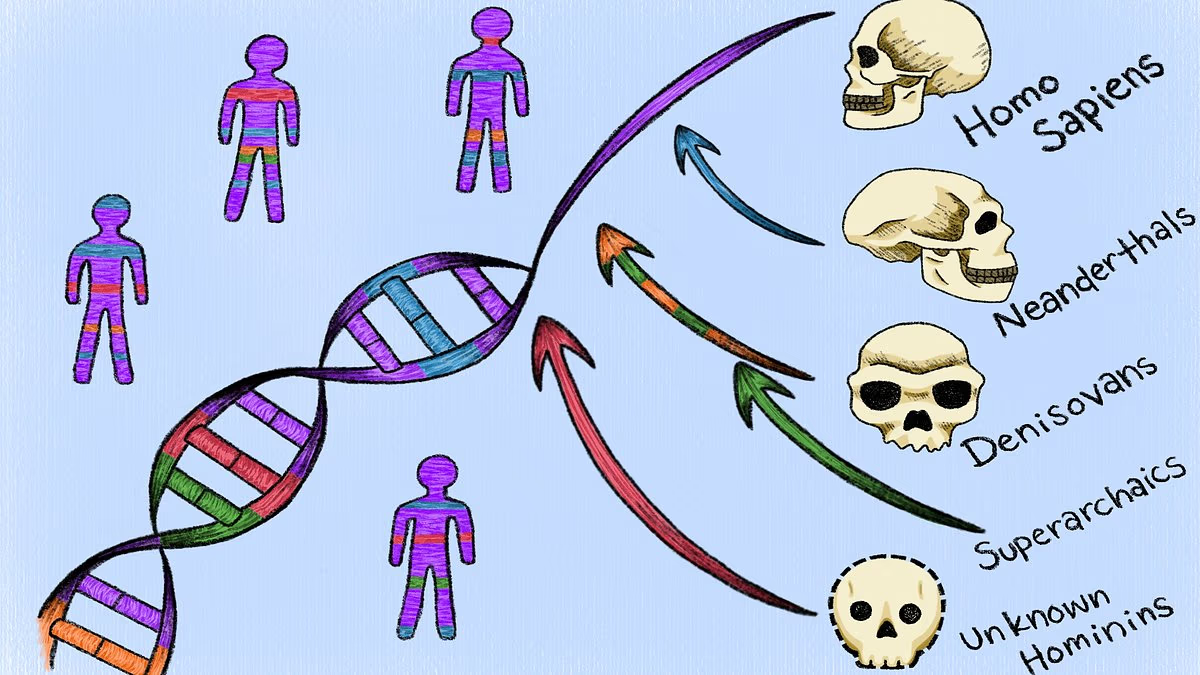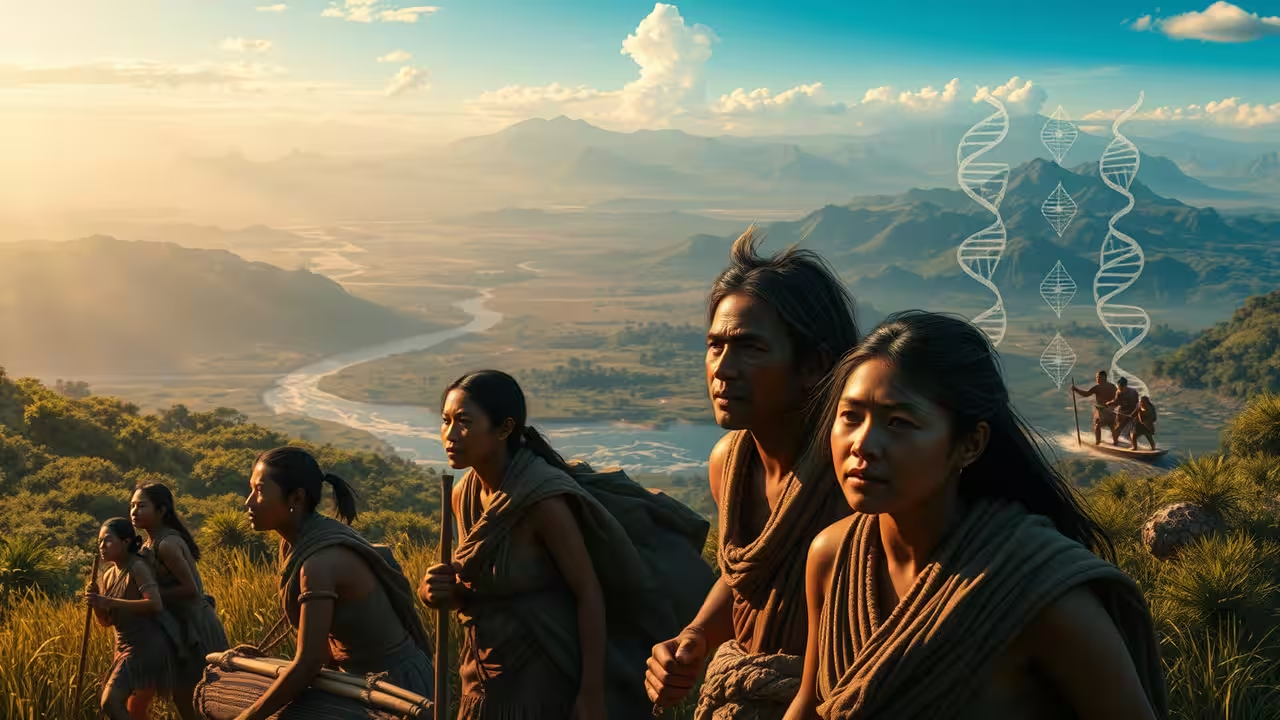
A sweeping new genetic study has added a fascinating twist to the story of how humans first settled the Americas. By analysing nearly two hundred Indigenous genomes, researchers have found evidence of three separate migration waves into South America, including one that was completely unknown until now. The study also uncovered traces of a mysterious ancient population from Asia, whose genetic fingerprint still lingers in Indigenous American communities today. Beyond migration history, the research sheds light on how genes tied to fertility, metabolism and immunity helped early settlers adapt to some of the planet's toughest environments, from the Amazon rainforest to the high altitude Andes, offering the most detailed picture yet of Indigenous American genetic diversity.Largest genetic dataset of Indigenous Americans till dateThe research comes from the Indigenous American Genomic Diversity Project, an international collaboration that sequenced 128 new genomes from people living across Argentina, Bolivia, Brazil, Colombia, Ecuador, Mexico, Paraguay and Peru. Combined with 71 previously published genomes, the dataset covered 45 populations and 28 language families, nearly tripling the number of Indigenous genomes available to scientists. The findings were published in the journal Nature. Study first author Marcos Araújo Castro e Silva, a researcher at the Spanish National Research Council's Institute of Evolutionary Biology, noted that until this project, only two Amazonian Indigenous populations had been genetically studied in detail, which limited how representative earlier research really was.Three waves of migration and a previously unknown arrivalOne of the most striking discoveries was that South America was settled in at least three distinct waves. The earliest of these dates back more than nine thousand years, followed by a separate genetic lineage, still visible today among the Quechua people of Peru, that moved through Central America into South America around the same period. But the genomes also revealed something scientists had not documented before, a third and previously unrecognised dispersal into South America that appears to have happened at least 1,300 years ago, linked to Mesoamerican related groups. Interestingly, this timing loosely overlaps with the decline of Teotihuacan, though researchers are careful to note that the genetic data does not point to any single dramatic event. Instead, it suggests a much slower and more layered process of contact and movement between Mesoamerica, the Caribbean and South America over centuries.An ancient Asian ghost lineage hidden in the genomePerhaps the most intriguing part of the study is the discovery of an ancient genetic signal the researchers named Ypykuéra, meaning ancestor in the Indigenous Tupi language of Brazil. This ghost lineage appears to trace back to an ancient Asian population that also contributed genes to early Australasian groups, the ancestors of people who eventually settled Australia, New Zealand and the Pacific Islands. What makes this lineage particularly unusual is that it has left no known fossil trace anywhere in the world, yet its genetic echo has persisted at low but steady levels in Indigenous American populations for more than ten thousand years. Study co-author Tábita Hünemeier, who heads the Human Population Genomics Lab at the Institute of Evolutionary Biology, said the findings reinforce just how complex and layered the peopling of the Americas truly was, shaped in part by ancestral groups that still have no archaeological or fossil record at all.Natural selection shaped survival in new environmentsBeyond mapping migration routes, the study also examined how natural selection acted on Indigenous American populations once they settled into radically different environments. Genes linked to immune function, energy metabolism, fertility, fetal growth and even resistance to malaria showed clear signs of positive selection. Some of these same gene variants were also found in modern Australasian populations, hinting that certain traits inherited from the ancient Ypykuéra lineage may have offered a survival advantage as people adapted to life in places as different as the Amazon basin and the high altitude Andes mountains.Colonisation left a lasting genetic scarThe study also confirmed something historians have long suspected, that European colonisation caused a massive and lasting drop in Indigenous genetic diversity. Hünemeier explained in a statement shared by Arizona State University, that colonisation wiped out roughly ninety percent of Indigenous populations, triggering genetic bottlenecks through population collapse, forced displacement, disease and enslavement. Even so, researchers found genetic continuity stretching back more than nine thousand years in certain regions, a sign of remarkable resilience despite centuries of upheaval.Study co-author Carlos Eduardo Amorim, an anthropologist at Arizona State University, said Indigenous American populations have historically been underrepresented in genomic research, leaving significant gaps in scientific understanding of human evolution and health. This new dataset, he said, offers the most comprehensive view yet of Indigenous American genetic diversity and evolutionary history, filling in pieces of the human story that have long remained missing.
Scientists discover previously unknown Asian 'ghost population' hidden in Indigenous American DNA
A sweeping new genetic study has added a fascinating twist to the story of how humans first settled the Americas. By analysing nearly two hundred Indigenous genomes, researchers have found evidence of three separate migration waves into South America, including one that was completely unknown until now.
780 words~4 min read