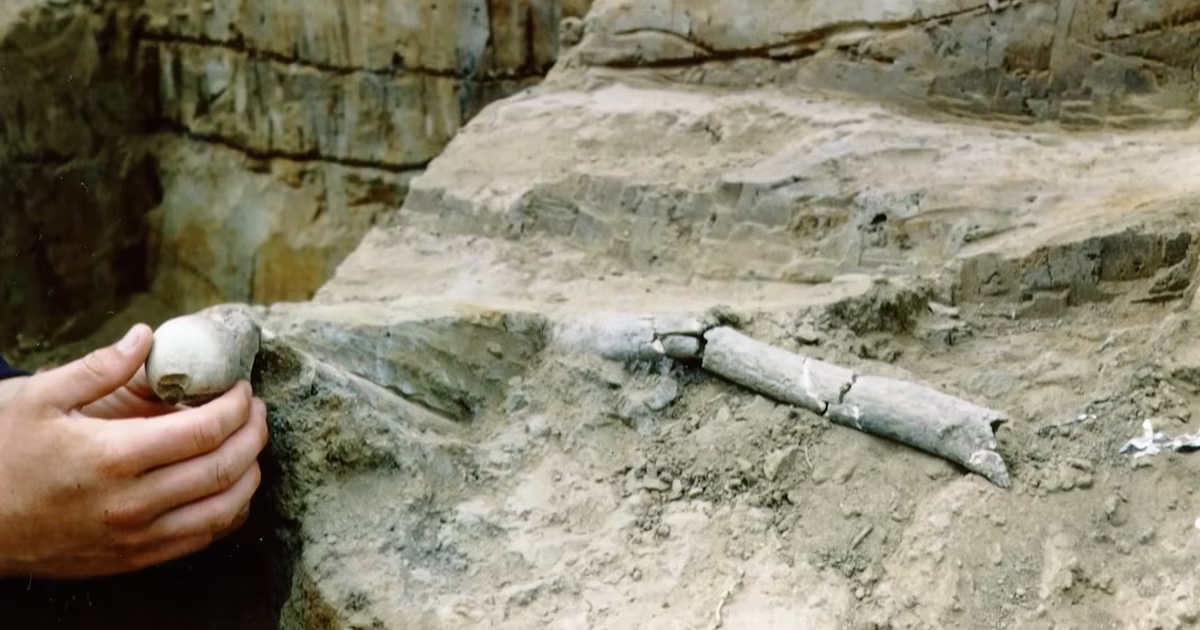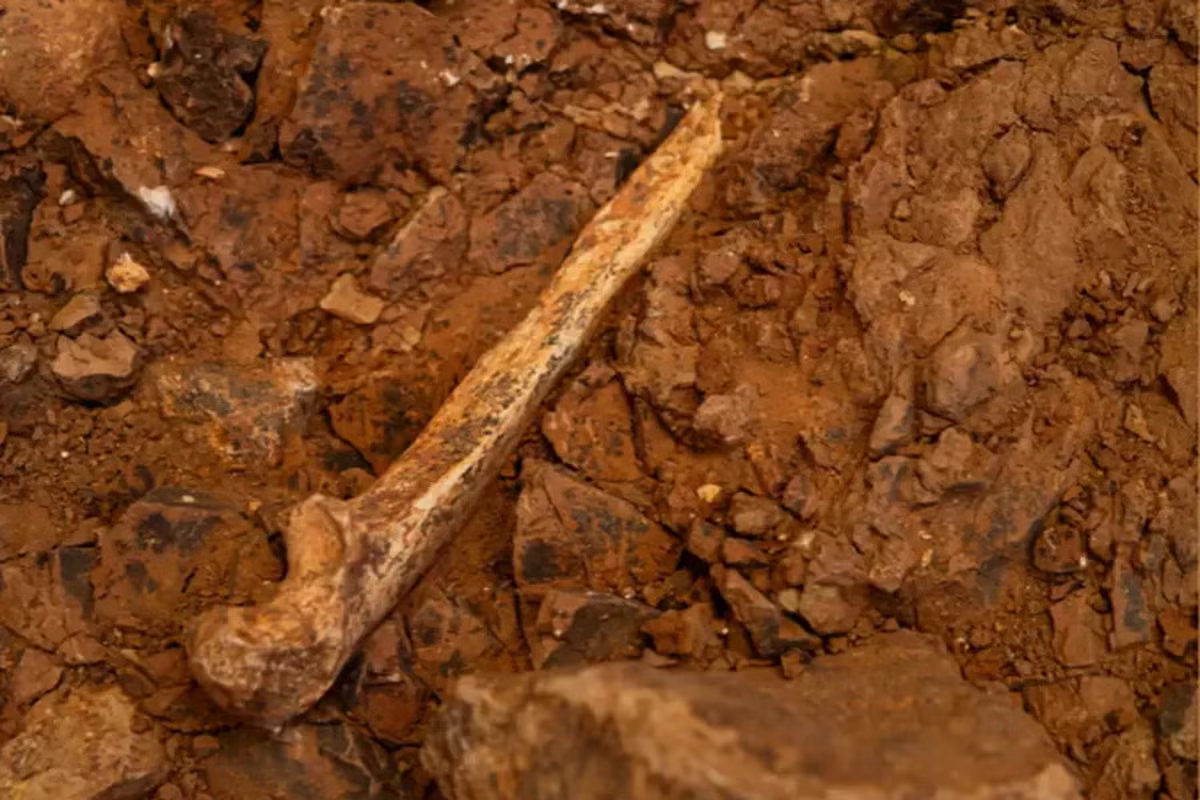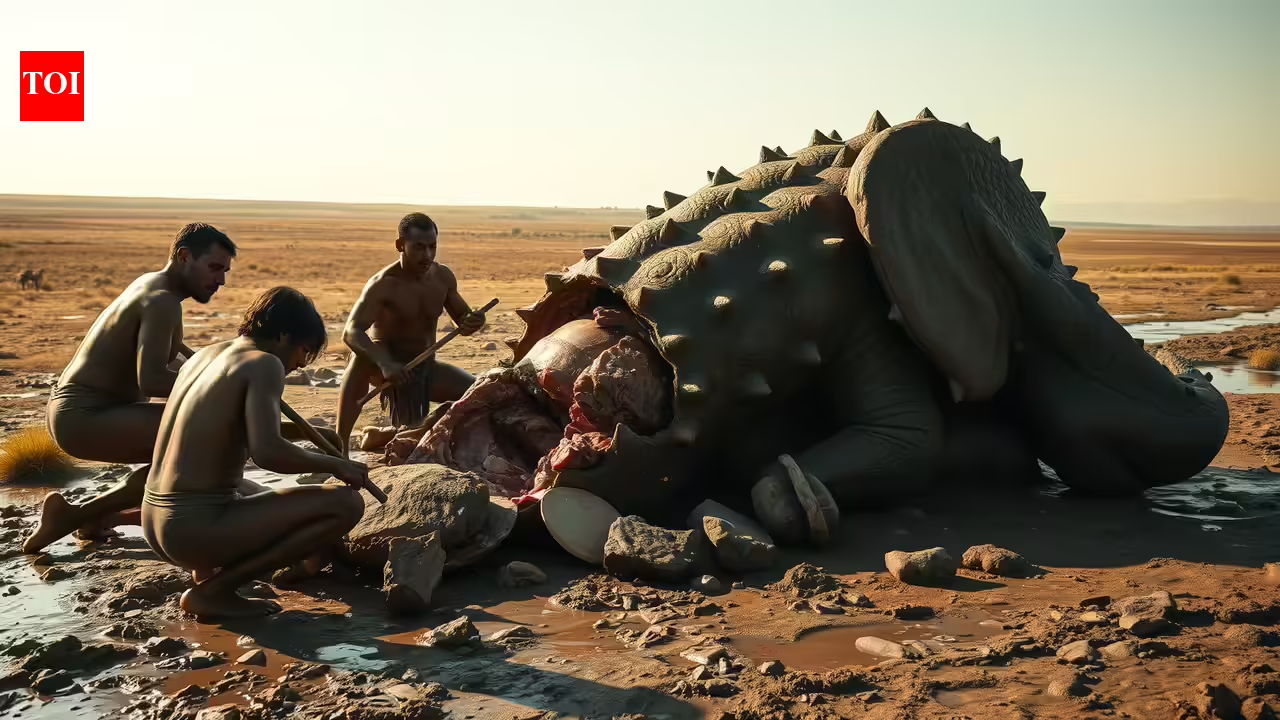
Scientists working in Argentina have come across something that could shake up what we know about how early humans reached South America. Cut marks found on the bones of a giant, extinct armadillo relative suggest people were already living there roughly 20,000 years ago, way earlier than most researchers used to think. For years, the go to explanation was that the first humans got to the Americas by crossing a land bridge from Siberia into Alaska about 13,000 years ago. But over the past decade or so, a bunch of discoveries across both North and South America have started pushing that timeline back, and this find adds another piece to that puzzle.What is a glyptodont and why does it matter hereThe animal at the heart of all this is called a glyptodont, and this particular one belonged to a species known as Neosclerocalyptus, basically picture a giant armadillo covered head to toe in thick bony armor. Its bones turned up along the banks of the Reconquista river just outside Buenos Aires, including parts of the pelvis, tail and a chunk of its shell. Researchers carbon dated a piece of the pelvic bone and got an age of around 21,000 years, which lined up nicely with the age of the sediment layer it was sitting in.How scientists figured out humans were involvedTo work out whether these marks came from people or something else, the team took detailed photos and made 3D scans of the bones. A lot of the marks had a clear V shaped groove, which usually points to stone tool cutting rather than animal teeth, since teeth tend to leave rounder, U shaped gouges instead. All in all, they counted 32 separate cut marks scattered across different bones. After running the pattern through some statistical checks, the researchers felt confident these cuts were far too consistent to be random, meaning someone had cut this animal on purpose.Why other explanations did not hold upBefore settling on humans as the cause, the team also had to rule out a few other possibilities. Scavenging animals usually chew things up in a rounder shape, and natural decay after death tends to look nothing like clean, intentional cuts. In this case, there was good evidence the body got buried pretty quickly after it died, which would have kept it safe from the usual damage caused by weather or hungry scavengers wandering by. That made it a lot easier to argue these marks were made with tools, not by nature just doing its thing.What the cuts tell us about how the animal was butcheredWhat is interesting is that the cut marks were not scattered randomly. They followed a pattern that looks almost like a step by step butchering job, mostly concentrated around the pelvis and tail, both areas packed with meat. This suggests whoever was responsible knew exactly what they were doing, going straight for the biggest muscle groups to get the most food out of a single kill. You can read the full study, published in the journal PLOS One.Why this changes the timeline for humans in South AmericaAccording to the team behind this research, the find pushes back the known timeline of humans interacting with large ice age animals in southern South America by close to 6,000 years compared to other sites in the region. Study co-author Miguel Delgado, a paleoanthropologist at the National University of La Plata in Argentina, thinks early humans may have gone after animals like this one specifically because of their size, around 300 kilograms, and the sheer amount of meat packed onto their bones.Not everyone is convinced just yetOf course, not every expert is fully sold on this. Loren Davis, an archaeologist at Oregon State University who had no part in the study, said the team's methods were solid but pointed out that no actual stone tools have turned up at the site so far, which does leave a gap in the evidence. He also said researchers still need to draw a clearer line between marks made by humans and the many natural ways bone can get damaged over thousands of years. Delgado agrees there is more work to do, but he also mentioned that only a small part of the site has been dug up so far, so there is a real chance more evidence, maybe even actual tools, could still be sitting there waiting to be found.
A giant armadillo relative found in Argentina may have helped feed some of South America's earliest humans 20,000 years ago
Scientists working in Argentina have come across something that could shake up what we know about how early humans reached South America. Cut marks found on the bones of a giant, extinct armadillo relative suggest people were already living there roughly 20,000 years ago, way earlier than most researchers used to think.
731 words~3 min read