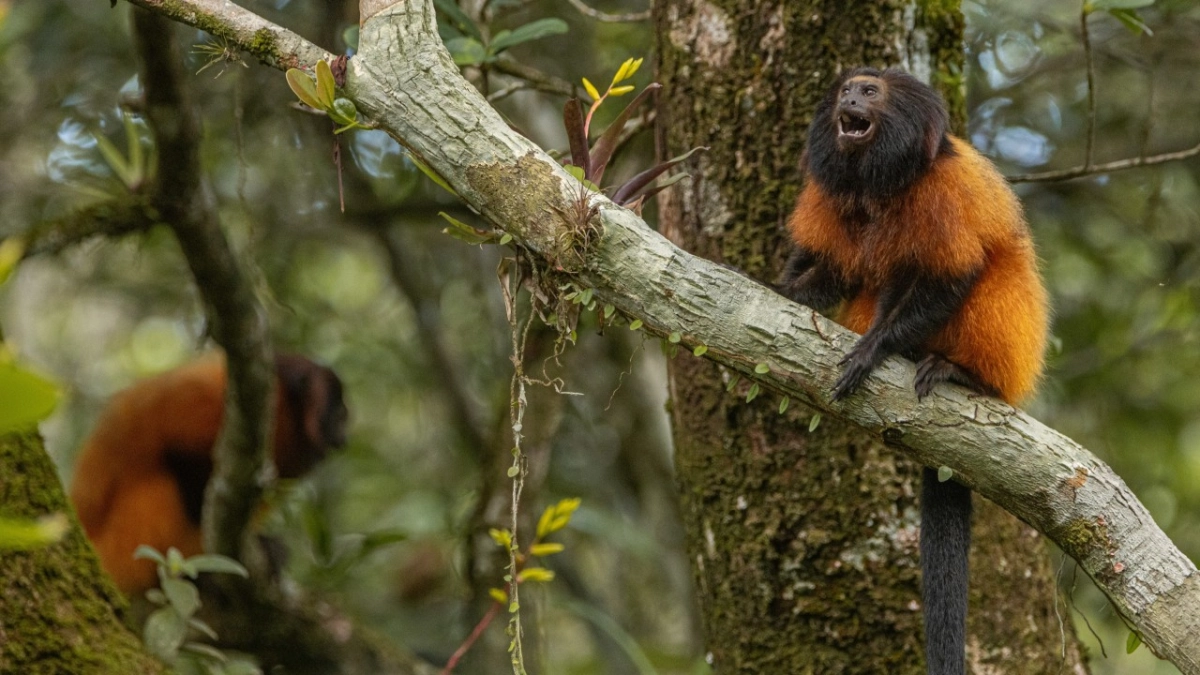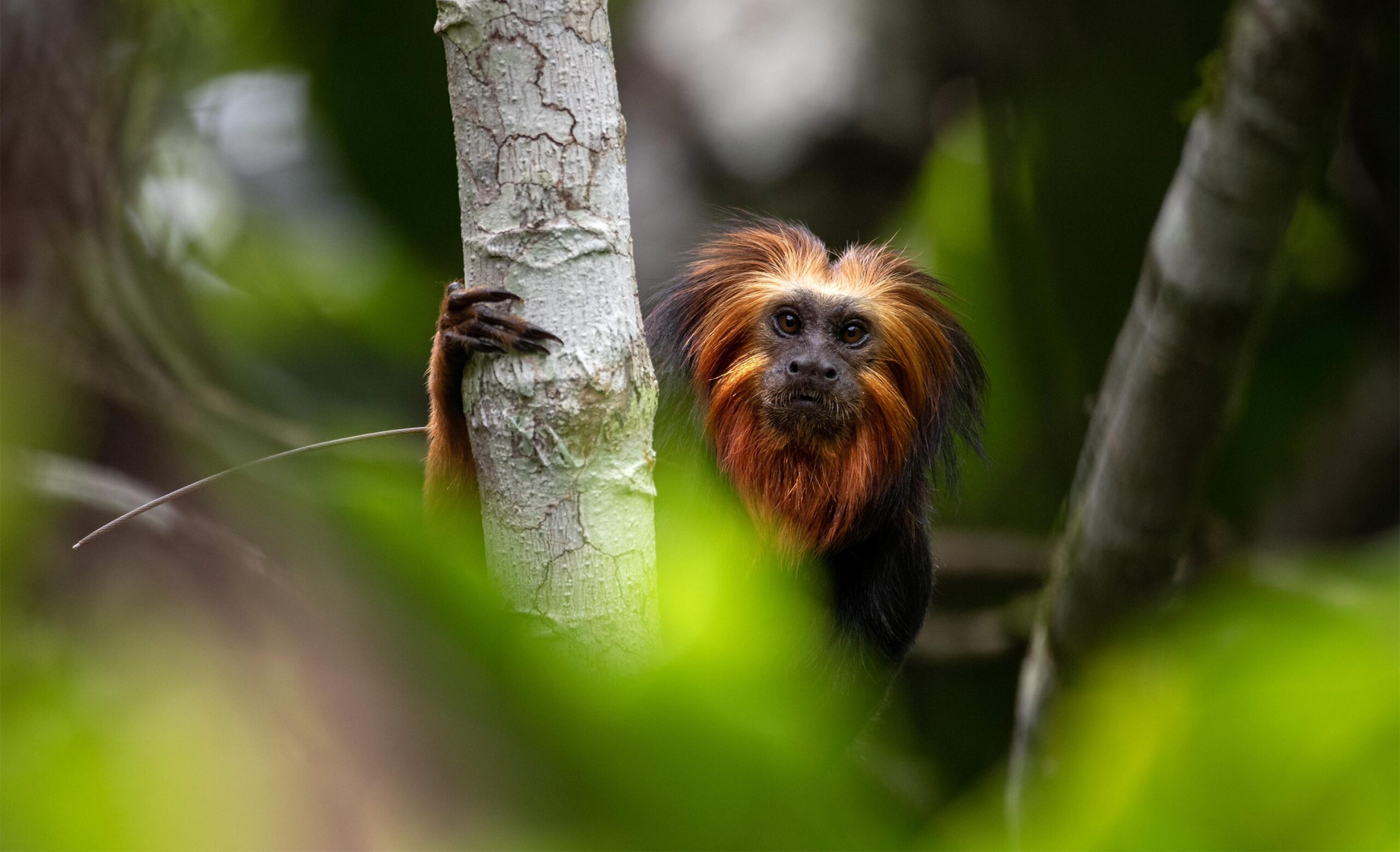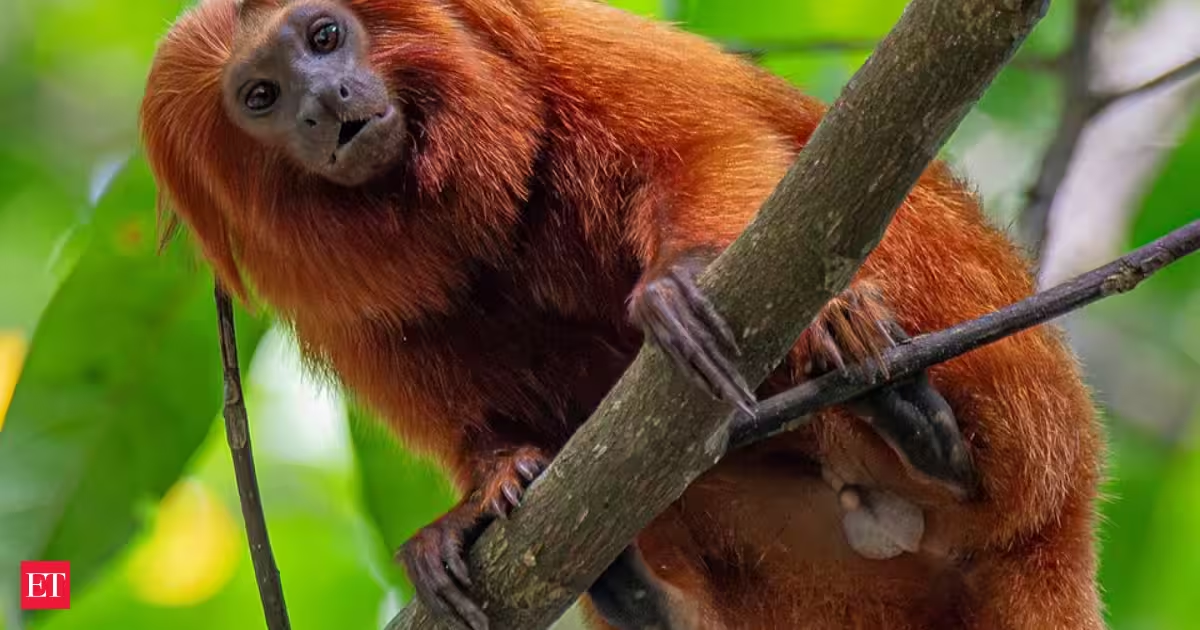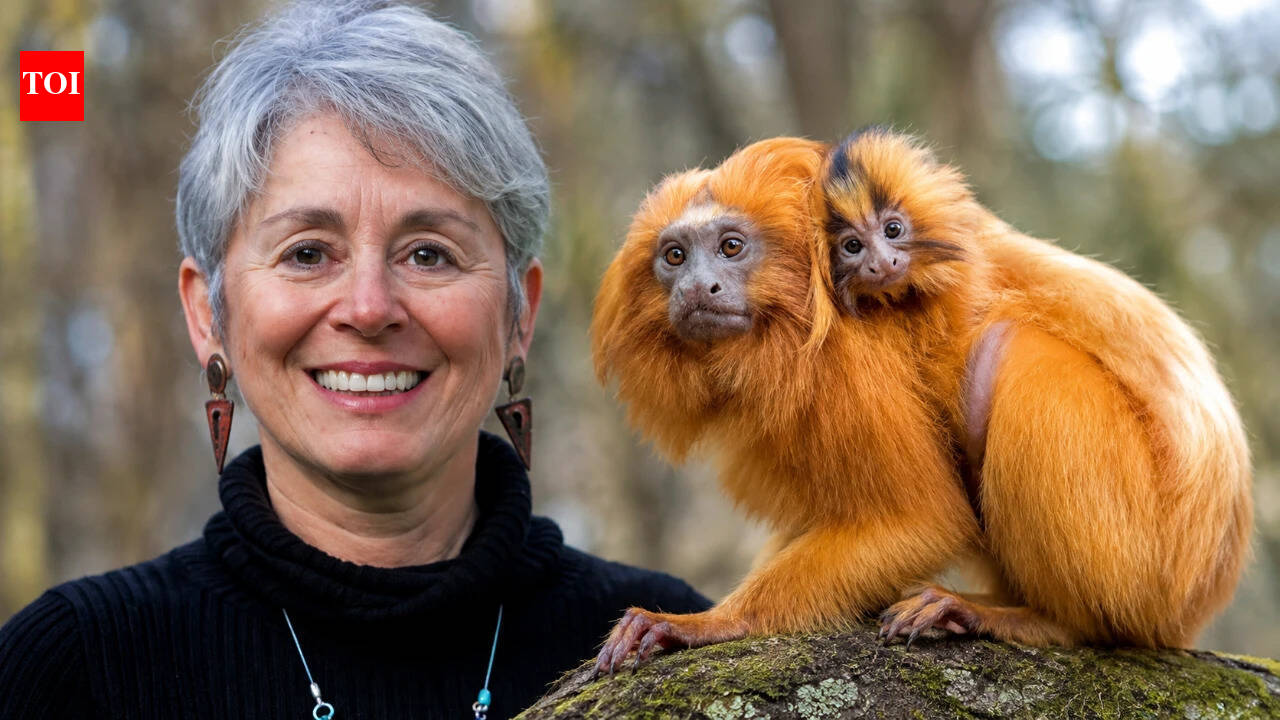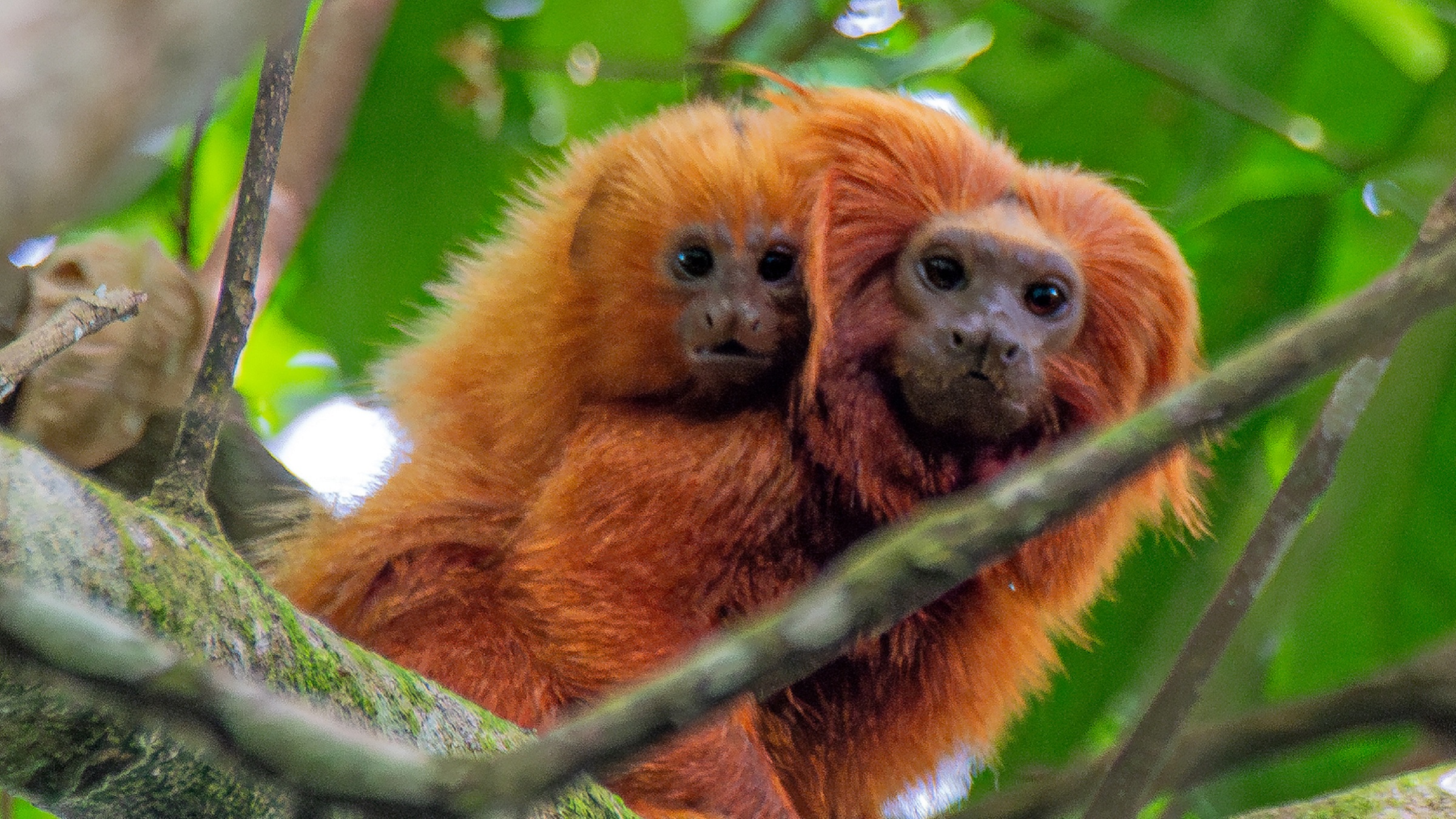
Golden lion tamarins, an endangered species of monkey endemic to Brazil’s Atlantic Forest, are susceptible to yellow fever: An outbreak in 2017-2019 wiped out roughly 30% of the population.A new study finds that certain environmental factors, including habitat connectivity and human population, were linked to higher numbers of deaths during the outbreak.Scientists have identified areas where tamarins could be at high risk for yellow fever transmission, which could help guide vaccination efforts and help protect the monkeys in the event of another deadly outbreak.
After a two-hour drive from the airport in Rio de Janeiro, you reach a special park dedicated to a special animal in Brazil’s Atlantic Forest. There, you can take a guided tour through the green and perhaps catch a glimpse of vibrant orange: The pelage or furry coat of one of this region’s most famous resident, the golden lion tamarin.
Between 2017 and 2019, a yellow fever epidemic killed roughly 30% of the population, leaving only 2,500 alive. This small, endangered monkey, which nearly went extinct in the 1970s, is relegated to fragmented forests in the state of Rio de Janeiro, about 2% of their original territory, according to conservation nonprofit Save the Golden Lion Tamarin.