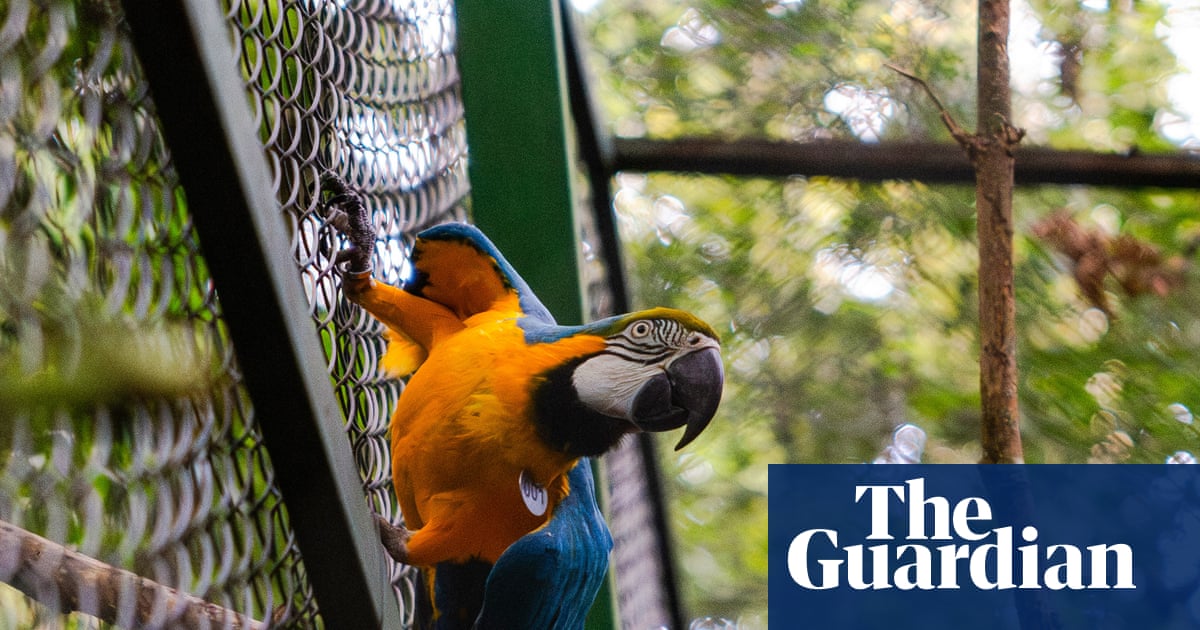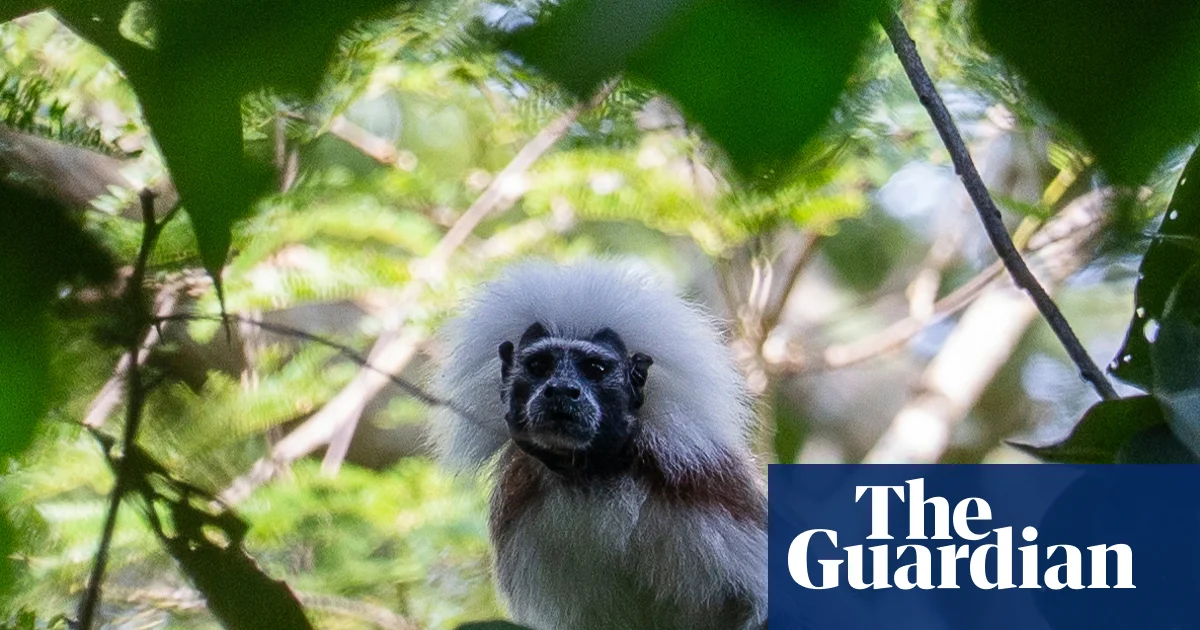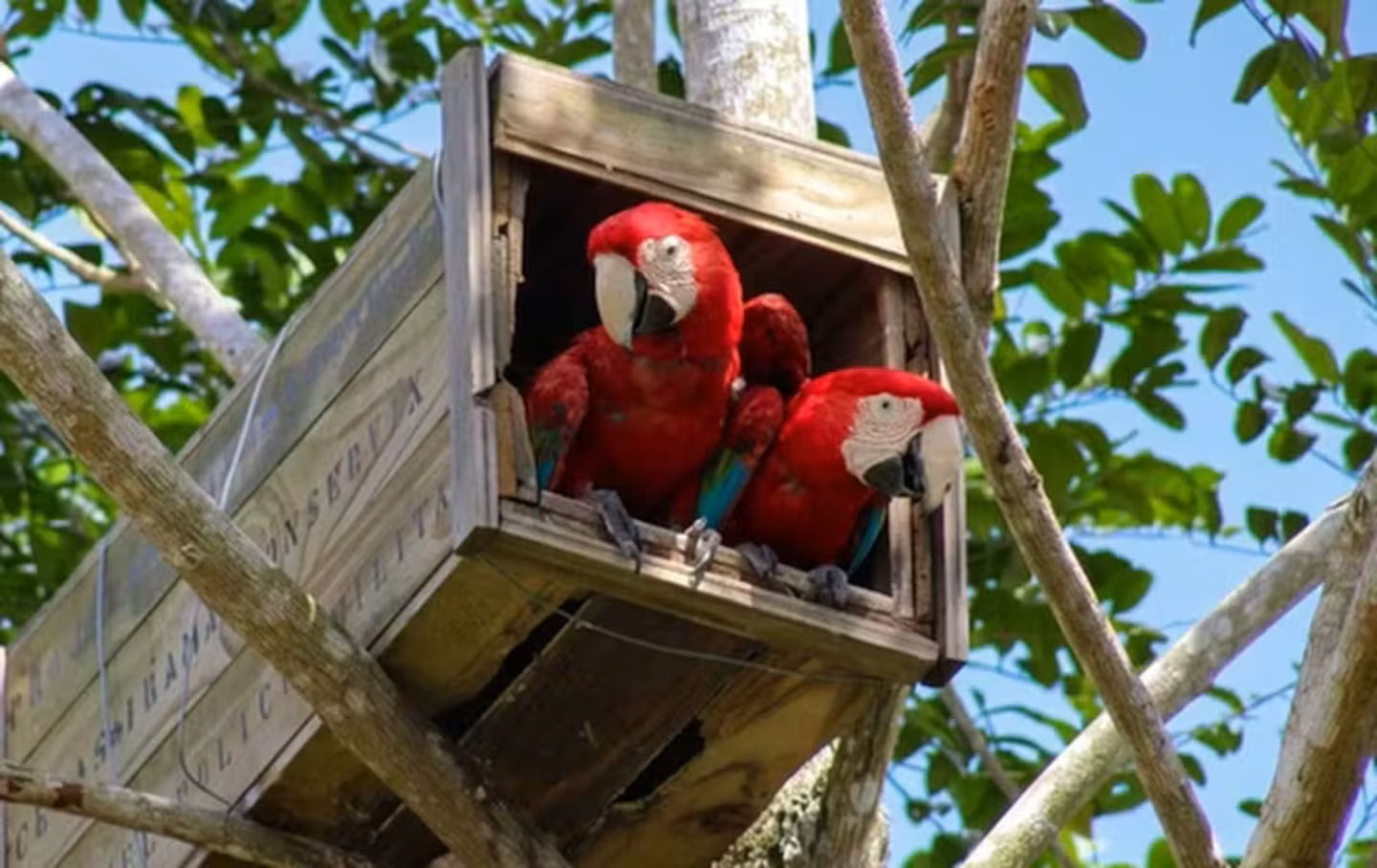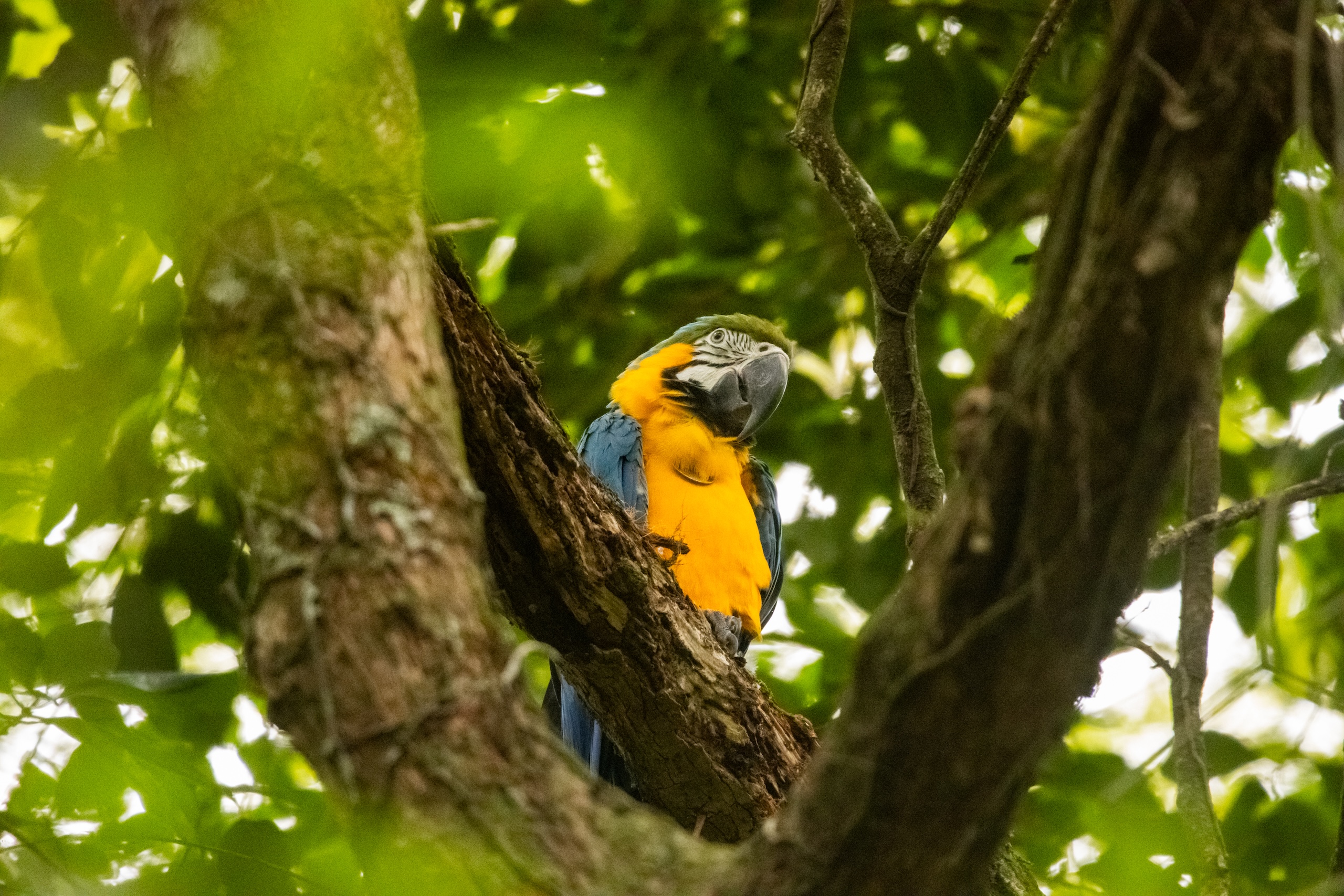
Rewilding efforts in Tijuca National Park on the outskirts of Rio de Janeiro have been reintroducing species previously extinct in the area, such as agoutis, howler monkeys, toucans, and now, blue‑and‑yellow macaws.The return of the animals is aimed at reviving the “empty forest,” since they’re essential for seed dispersal and regeneration of the Atlantic Forest.Studies show that toucans introduced in Tijuca 50 years ago have already reprised their ecological role, interacting with plant species from their original diet.Despite the progress, challenges persist, such as adaptation of the species to their new home; the latest to be released, the macaws, have had to be recaptured and are now undergoing new training.
In 2008, biologist Alexandra Pires had just completed her doctoral thesis, which described how agoutis, a large guinea pig-like rodent, were important for the regeneration of plant species in Brazil’s Atlantic Forest. When she told this to Ivandy Castro‑Astor, a researcher at Tijuca National Park, in the hills outside Rio de Janeiro, she learned that the rodents no longer existed there. Proof of this were the abundance of seeds from a tree known in Brazil as cutieira or “agouti tree” (Joannesia princeps), which were rotting on the forest floor.