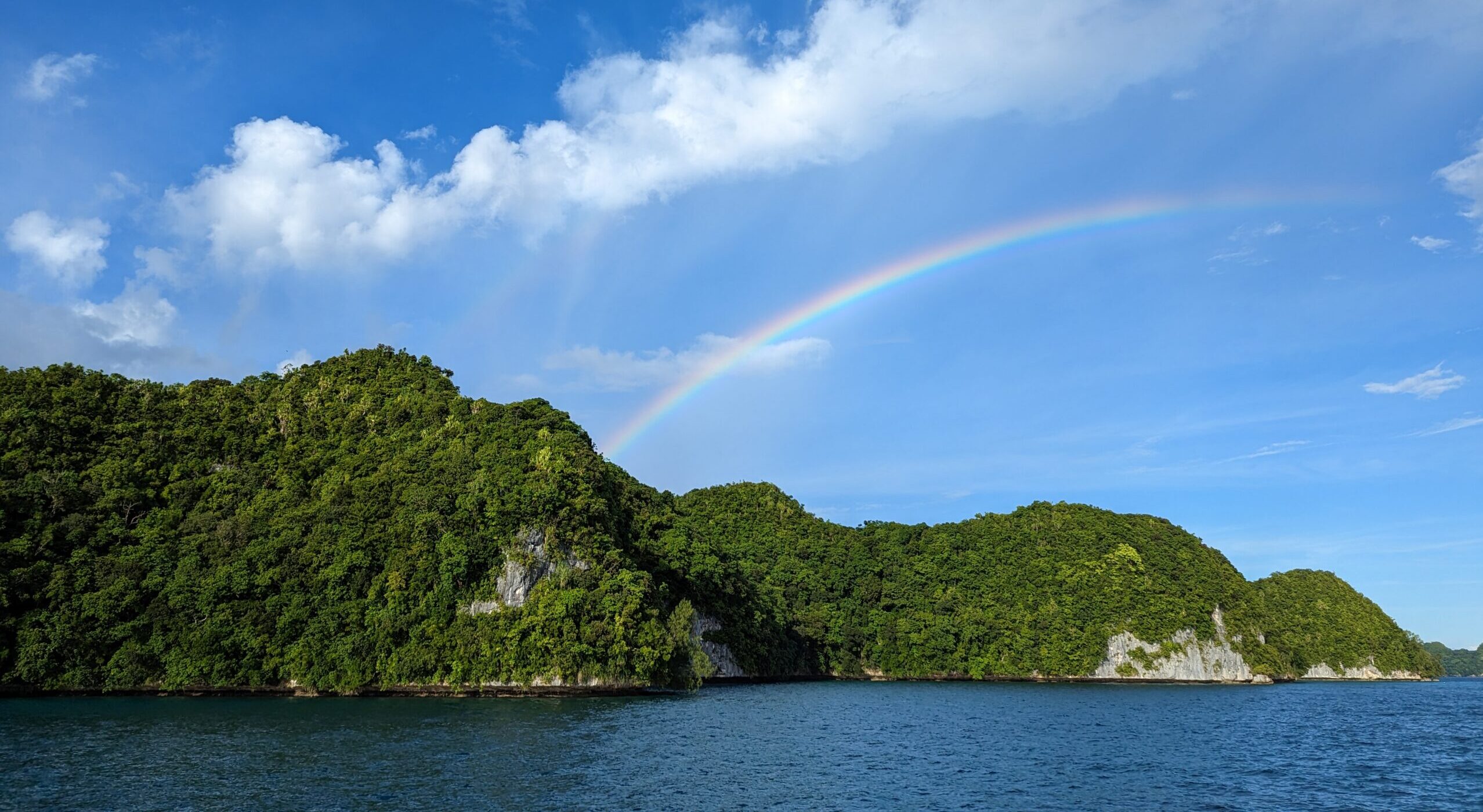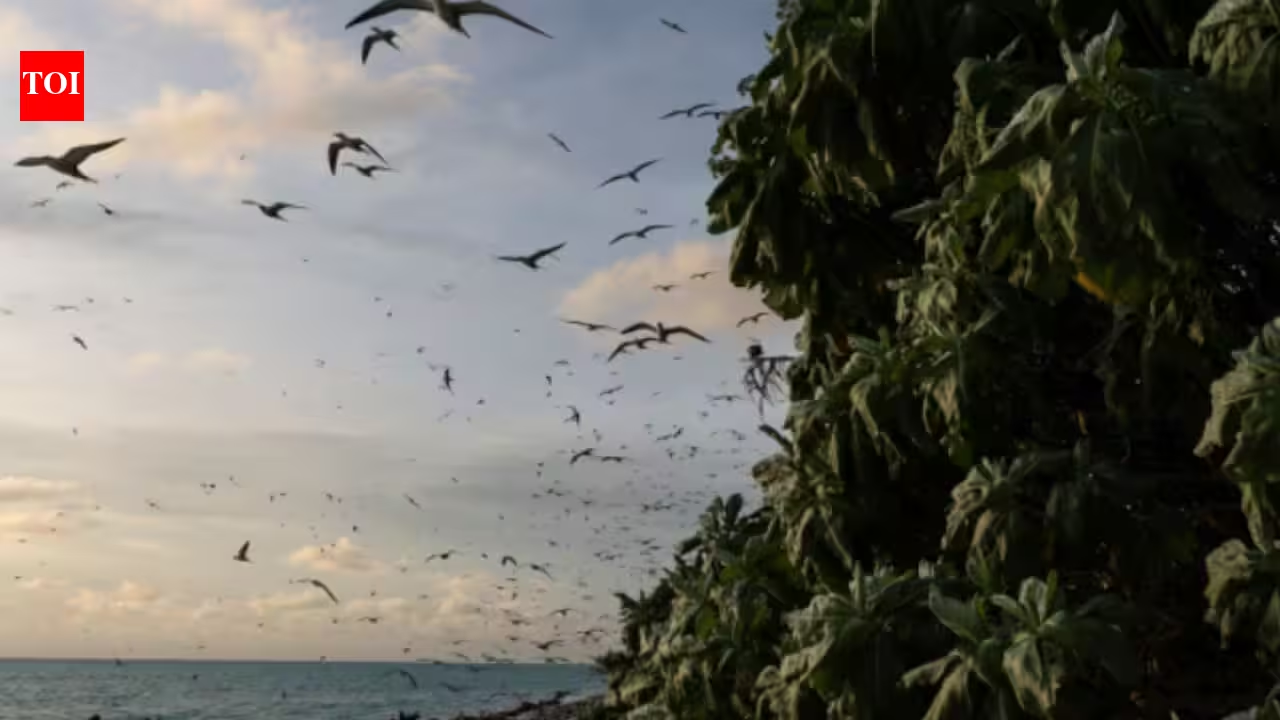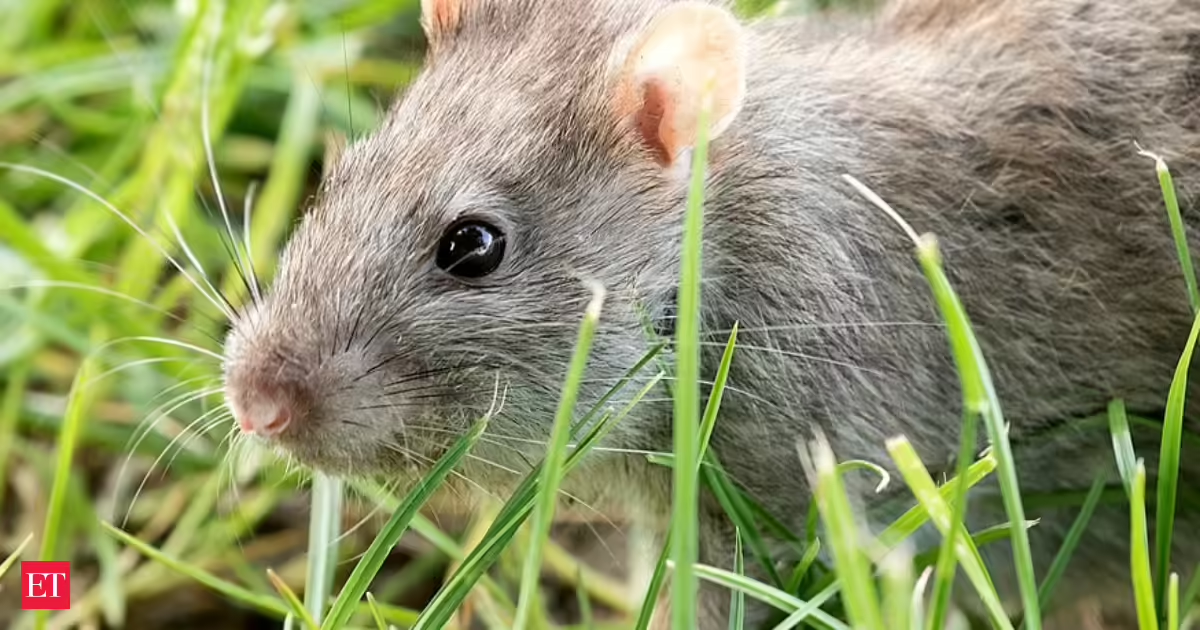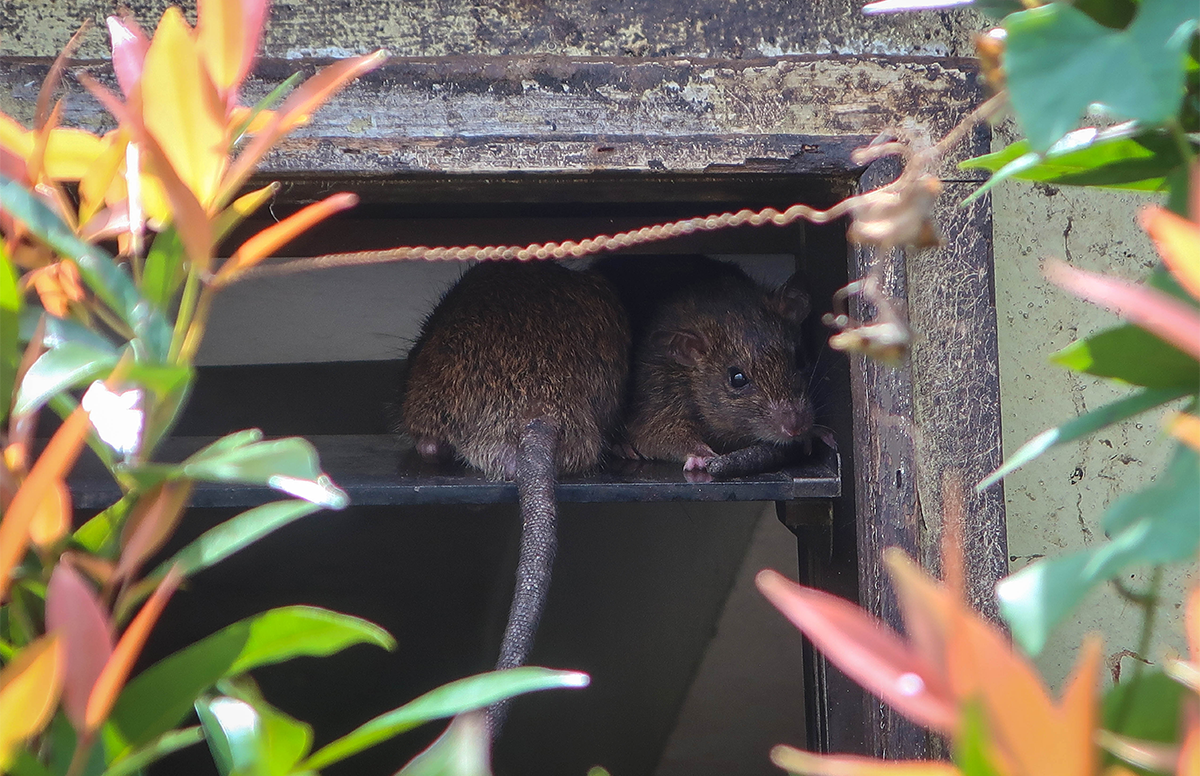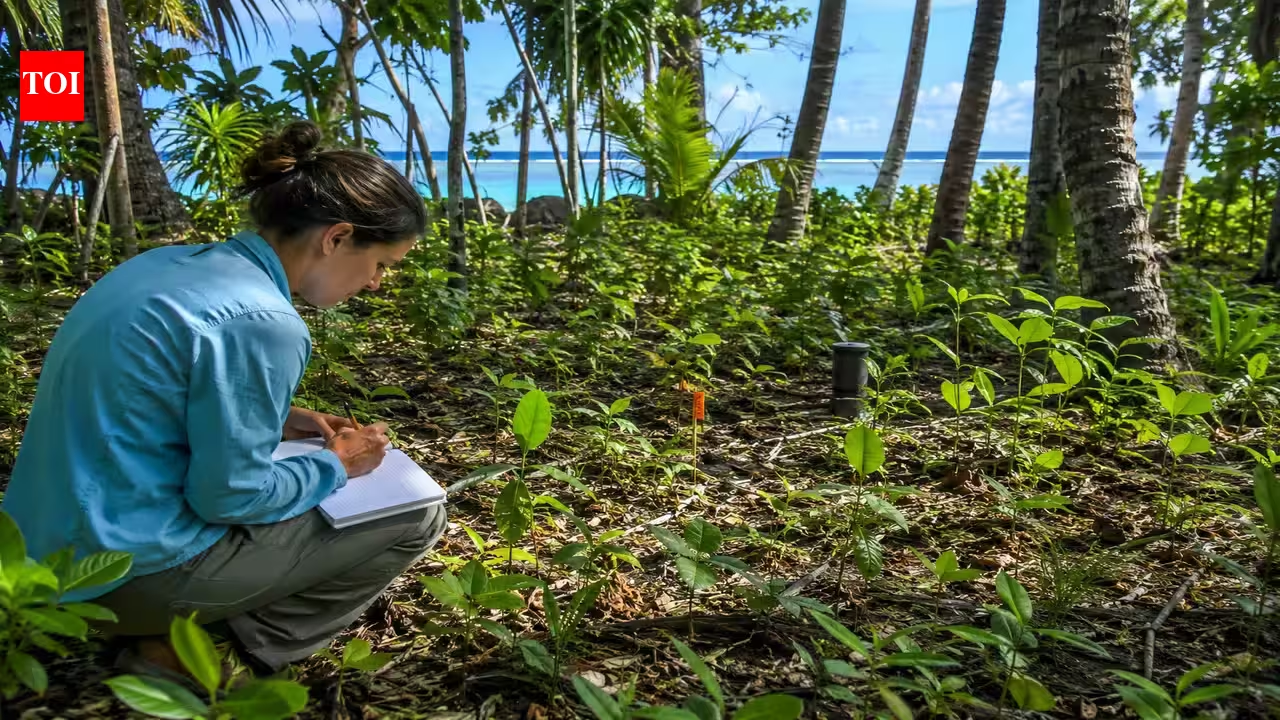
The representation of a biologist surveying young native tree seedlings in a tropical forest, reflecting the dramatic increase in seedling recruitment recorded after rats were eradicated. Image Credits: ChatGPT.In 2016, biologist Coral Wolf surveyed the dense tropical forest of Palmyra Atoll in the central Pacific, five years after conservationists had removed invasive black rats from the remote atoll. The survey revealed a forest floor filled with young native trees, a striking change documented through post-eradication monitoring. Rats had long fed on seeds and seedlings, potentially preventing many native trees from replacing older generations.According to a study published in PLOS ONE, researchers found that fewer than 150 seedlings of five native tree species were present before rat eradication, compared with 7,756 seedlings recorded in 2016, five years after the invasive rats were removed. This represented an increase of about 5,440% in native seedling recruitment. The researchers concluded that rat eradication had strongly released native trees from the effects of rat seed predation and herbivory, allowing recruitment to increase substantially.A forest held back by ratsPalmyra Atoll lies about 1,000 miles south of Hawaii and consists of a group of small, heavily vegetated islands surrounding three central lagoons. Its tropical forests provide habitat for seabirds, land crabs, insects and other species, while the surrounding shallow reefs form another important part of the ecosystem. The atoll is protected as part of the Palmyra Atoll National Wildlife Refuge and is managed in partnership with The Nature Conservancy.According to the U.S. Fish and Wildlife Service, black rats were probably introduced to Palmyra Atoll during the Second World War and, with few natural predators and abundant food, their population eventually reached an estimated 30,000. The rodents fed on seabird eggs and chicks, land crabs, seeds and young plants, placing sustained pressure on the island's wildlife and making it difficult for many native trees to regenerate because their seeds were often eaten before they could grow into saplings.One of the most important trees affected was Pisonia grandis. The large native tree forms an important part of Palmyra's tropical forest and provides nesting and roosting habitat for seabirds. Before the rat eradication, researchers found no Pisonia seedlings in 55 monitoring transects, despite the presence of mature trees producing seeds. The problem was not necessarily a lack of reproduction. The issue was what happened after the seeds reached the ground.Five years without ratsIn June 2011, the U.S. Fish and Wildlife Service, The Nature Conservancy and Island Conservation completed a coordinated operation to eradicate invasive black rats from Palmyra Atoll after more than seven years of planning. The effort was designed to remove the rodents while limiting risks to the atoll's native wildlife. Researchers had already established vegetation monitoring plots before the eradication, allowing them to compare native tree regeneration after the rats were gone.A U.S. Fish and Wildlife Service employee wearing a blue shirt wades in the ocean water at Palmyra Atoll National Wildlife Refuge, April 15, 2023. Image Credits: Wikimedia Commons.The effect travelled beyond the treesThe effects of removing rats extended beyond tree regeneration. Palmyra's forests and seabird colonies are closely connected, with trees providing nesting and roosting sites while seabirds transport nutrients from the ocean to land through their droppings. These nutrients help support the island's terrestrial ecosystem and can eventually reach surrounding coastal waters.The eradication also affected other parts of the food web. According to a study published in Restoration Ecology, researchers used stable-isotope analysis to examine how removing rats affected the diets and ecological roles of land crabs on Palmyra Atoll. They found changes in the trophic ecology of the crabs after eradication, including numerical recovery among two carnivorous crab species. The findings showed that removing the rodents altered interactions between species beyond the immediate effect on vegetation.The forest response was not uniform. Coconut palms also increased after the rats disappeared, alongside the recovery of native tree seedlings. The result showed that eradication did not simply return Palmyra to an earlier ecological state. Instead, removing a major source of pressure allowed different species and ecological relationships to respond in different ways.For researchers, Palmyra became a striking example of how invasive species can reshape an entire island ecosystem. The surge in native seedlings showed the effect of removing a major source of seed predation, while changes in land crabs and vegetation suggested that the impact of rat eradication extended beyond individual species and into wider food-web interactions.
In 2016, a biologist entered a remote Pacific Atoll five years after its rats were removed; she documented a 5,000% explosion in native tree seedlings
In 2016, biologist Coral Wolf surveyed the dense tropical forest of Palmyra Atoll in the central Pacific, five years after conservationists had removed invasive black rats from the remote atoll. The survey revealed a forest floor filled with young native trees, a striking change documented through post-eradication monitoring.
730 words~3 min read