Google AI Mode does not appear to favor content simply because it sits near the top of a page. Research from SALT.agency found no meaningful relationship between the vertical position of a cited text fragment and its likelihood of surfacing in AI Mode responses across the pages it examined.
That finding matters for publishers and SEO teams trying to understand how Google AI Mode selects supporting material. The available evidence points away from a universal above-the-fold formula and toward a more familiar discipline: publishing well-structured content that directly addresses the reader's need. The research also identifies a recurring pattern in highlighted material: descriptive subheadings followed by clear opening sentences.
What SALT's AI Mode research measured
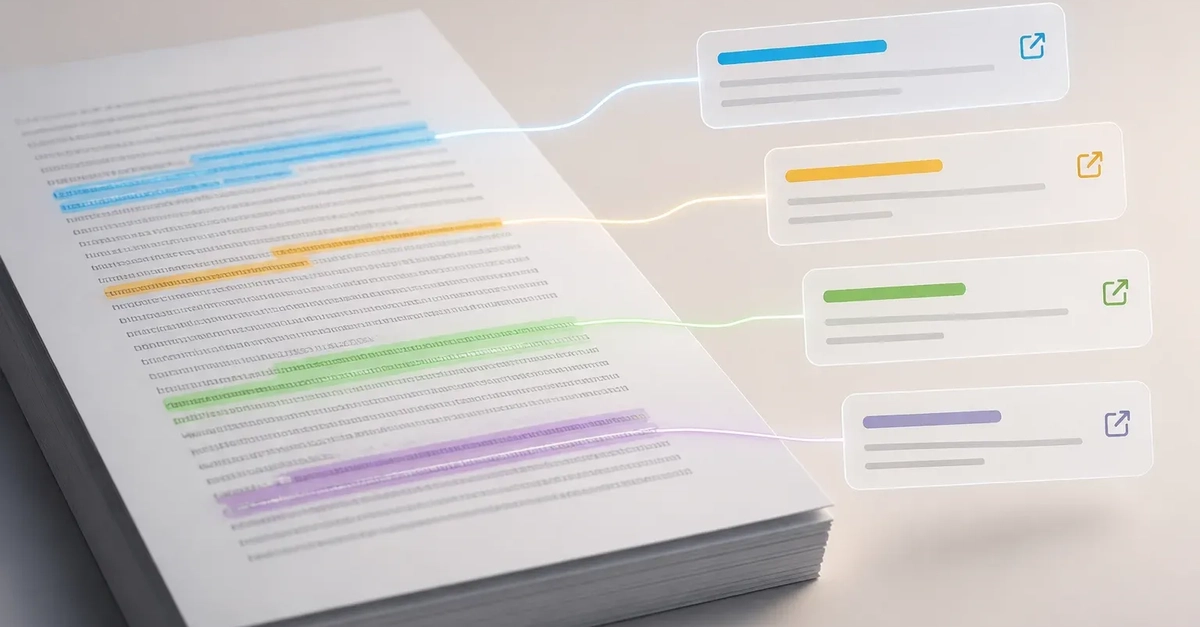
In its research into whether content structure improves AI Mode surfacing, published December 30, 2025, SALT.agency analyzed 2,318 unique URLs cited by AI Mode across travel, e-commerce, and SaaS. The researchers used a Chrome bookmarklet and a 1920 by 1080 viewport to record the vertical location of the first highlighted text fragment on each page.
The study recorded average cited-fragment depths of roughly 2,400 to 4,600 pixels across the three verticals. Some cited material appeared much farther down a page, including at depths above 60,000 pixels. Despite those differences, the analysis found no consistent citation advantage for content located near the top of a page.